Newsletters





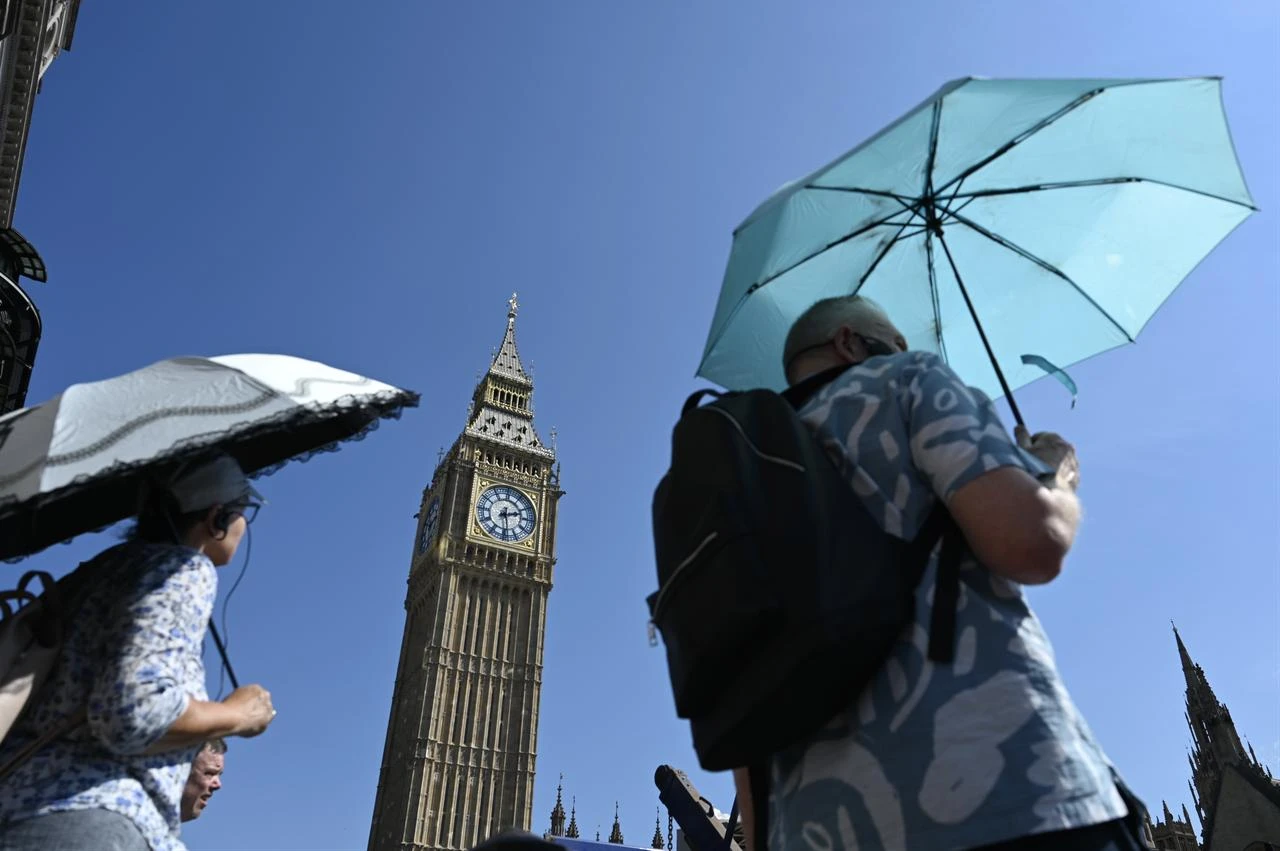
Western Europe is on track to record its hottest summer ever in 2026, as extraordinary heat waves linked to climate change bring drought, wildfire risk, and multiple deaths across the region, climate officials say.
Heat waves in Europe and Britain started unusually early this year, in May. Five heat waves have been recorded across Britain and Western Europe since May, with numerous heat-related deaths reported.
Britain's Met Office has said this summer is very likely to be the country's hottest on record, with a similar forecast for Western Europe.
Samantha Burgess, strategic lead for climate at the Copernicus Climate Change Service (C3S), part of the European Center for Medium-Range Weather Forecasts (ECMWF), addressed questions on this year's extreme temperatures and their effects.
Burgess said the heat waves in May and June were "more unusual" than those in July, listing France, southern Britain, parts of Germany, the Netherlands and Belgium, parts of Spain, Hungary, the Czech Republic, Austria and parts of Switzerland among the hardest-hit regions.
The heat waves have brought dry conditions, with some parts of Europe seeing no significant rainfall for more than six weeks, Burgess said, adding that heat and drought have "extremely" raised wildfire risk.
Temperatures in Western Europe have been particularly high, with June and July readings more than 3 degrees Celsius (37.4 degrees Fahrenheit) above the region's long-term average, Burgess said.
Burgess said the rest of August still needs to be observed for temperature anomalies, but added: "Given the anomalies created by the heat wave we are facing, I forecast that this will be the hottest summer on record for Western Europe. I think this probability is extremely strong for Western Europe. In previous years, extreme heat was largely concentrated in Southern and Eastern European countries. This year, the weight has shifted to Western Europe."
Looking at Europe's regional map, Burgess said temperatures were below average across large parts of Eastern Europe, though this month's temperatures were likely to run above average, adding that almost nowhere in Europe has been spared exposure to extreme heat.


Burgess said high temperatures have left some parts of Europe with their driest soil since 1979, with the dryness concentrated particularly in northern Spain, France and large parts of Britain, Belgium, the Netherlands, parts of Germany, Austria, Switzerland, the Czech Republic and Hungary.
This aligns with anomalies in monthly average river flow, Burgess said, with the Rhine, Seine and Danube rivers recording their lowest levels on record.
Burgess said the layered effects of this summer's climate change were clearly disrupting daily life.
Assessing the impact on global temperatures of an El Nino event currently intensifying daily in the tropical Pacific, Burgess said global sea surface temperatures are at their highest level recorded for this time of year.
A strong El Nino adds 0.2 degrees Celsius to average global temperatures, Burgess said. "So we expect temperatures to rise later this year because of El Nino. 2027 is likely to be the hottest year on record. Compared with the previous El Nino event, ocean temperatures are already higher than those measured at this point in the year. And there are still three to four months for the El Nino event to develop."
Burgess said the El Nino could raise the risk of drought and wildfires in Australia and Indonesia, and seasonal flood or drought risk in the eastern Pacific and South America, while it could bring heavier winter rainfall to Europe.

According to Copernicus data published this week, July 2026 was the second-hottest July on record globally, with global ocean surface temperatures reaching a July record of 20.96°C (69.7°F).
Western Europe saw its highest recorded June-July average temperature at 21.62°C (70.9°F). July 2026 was the third-hottest July on record for Western Europe.
Following July's high temperatures, the likelihood of 2026 becoming the hottest year on record has been calculated at 69%, according to US-based research organization Berkeley Earth, up from 12% the previous month.
The probability that this year's global temperature rise will exceed 1.5°C above the 1850-1900 pre-industrial average is also 99%.
Globally, 2024 remains the hottest year on record, with global temperature rise reaching 1.55°C above the pre-industrial average.


 Set as preferred source
 Set as preferred source



 1 min read