Newsletters


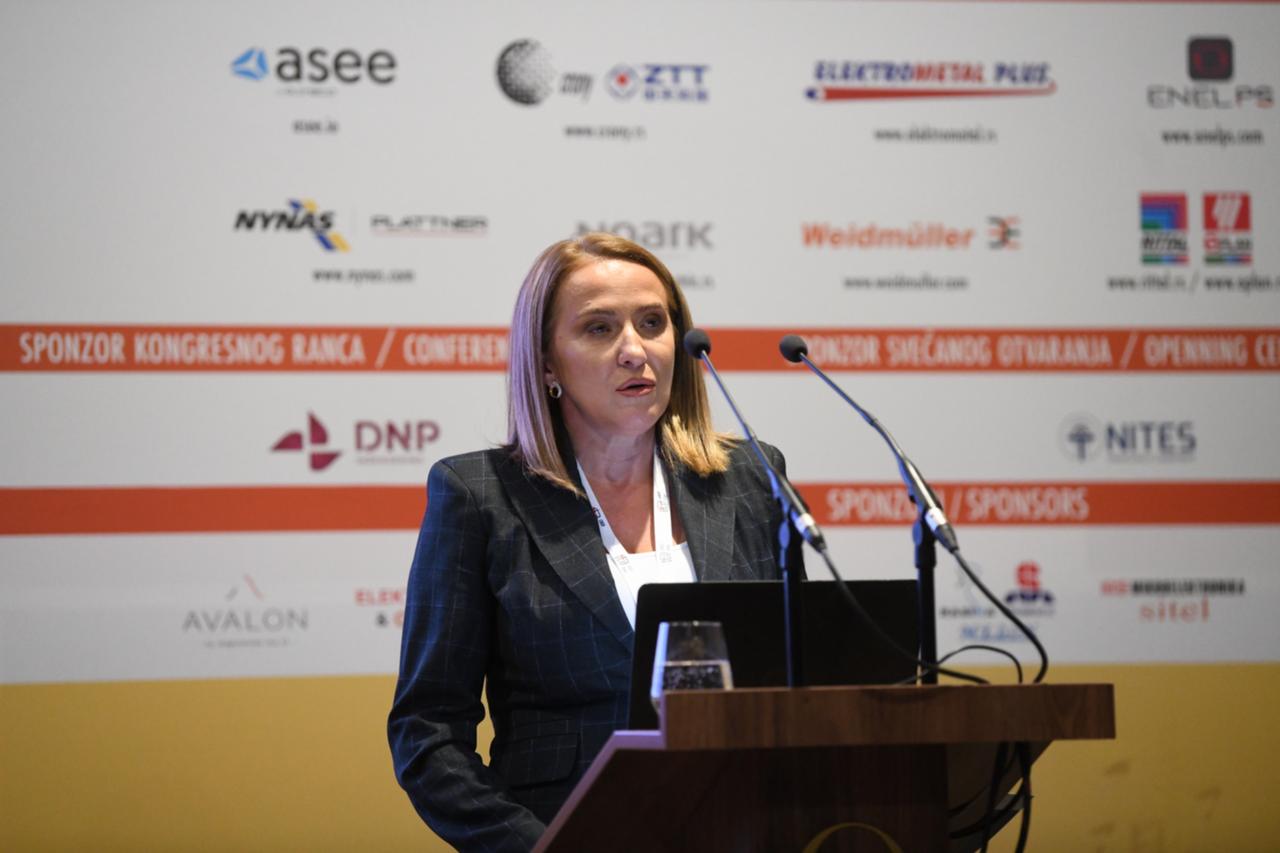


The European Union on Tuesday rebuked a Serbian cabinet minister who said she would have expelled Albanians from Kosovo had she held power during the 1990s Balkans conflict, with Brussels warning that there is "no place in Europe for rhetoric justifying and advocating ethnic cleansing."
Public Administration Minister Snezana Paunovic made the comments during a weekend interview on Serbian television station Kurir, saying she would have ensured that anyone who "feels less like a citizen" in Kosovo "leaves and goes to their homeland," had she been in the position of the late strongman Slobodan Milosevic during the 1998-1999 war.
Paunovic, who was born in Kosovo, drew a distinction between her hypothetical approach and outright killings, but the framing nonetheless provoked immediate backlash from European officials and opposition politicians alike.
EU spokeswoman Anitta Hipper, responding to a journalist's question at a Brussels press briefing, said the remarks "run counter to the values of human dignity, reconciliation, accountability."


At home, Serbian opposition parties called on Paunovic to step down. She refused. In a statement carried by local news outlet Danas, the minister said she would not renounce the policy of her Serbian Socialist Party, the political vehicle founded by Milosevic himself.
"We are a party that led Serbia in indescribably difficult historical circumstances, a party that made great sacrifices," she said.
The Socialist Party, known by its Serbian acronym SPS, was the dominant force in Serbian politics during Milosevic's rule throughout the 1990s.
Milosevic was overthrown in 2000, subsequently arrested and transferred to the International Criminal Tribunal for the former Yugoslavia in The Hague on charges of crimes against humanity. He died in 2006 before a verdict was reached.
The comments drew sharp condemnation from Pristina as well. Kosovo's Labour Minister Andin Hoti called the remarks "proof that Serbia has not yet been freed from Milosevic's genocidal ideology and from the criminal policy that brought wars, massacres and historical shame."
The Kosovo war, which ended in June 1999 following a NATO bombing campaign against Serbian forces, killed around 13,000 people.
Though Kosovo declared independence in 2008, Serbia has never recognised it, and relations between Belgrade and Pristina have remained a persistent fault line in Balkan geopolitics.
The episode comes as both countries remain in an EU-mediated dialogue process aimed at normalising their relationship, a process that has repeatedly stalled over core issues of sovereignty and recognition.


 Set as preferred source
 Set as preferred source


 1 min read
 1 min read