Newsletters


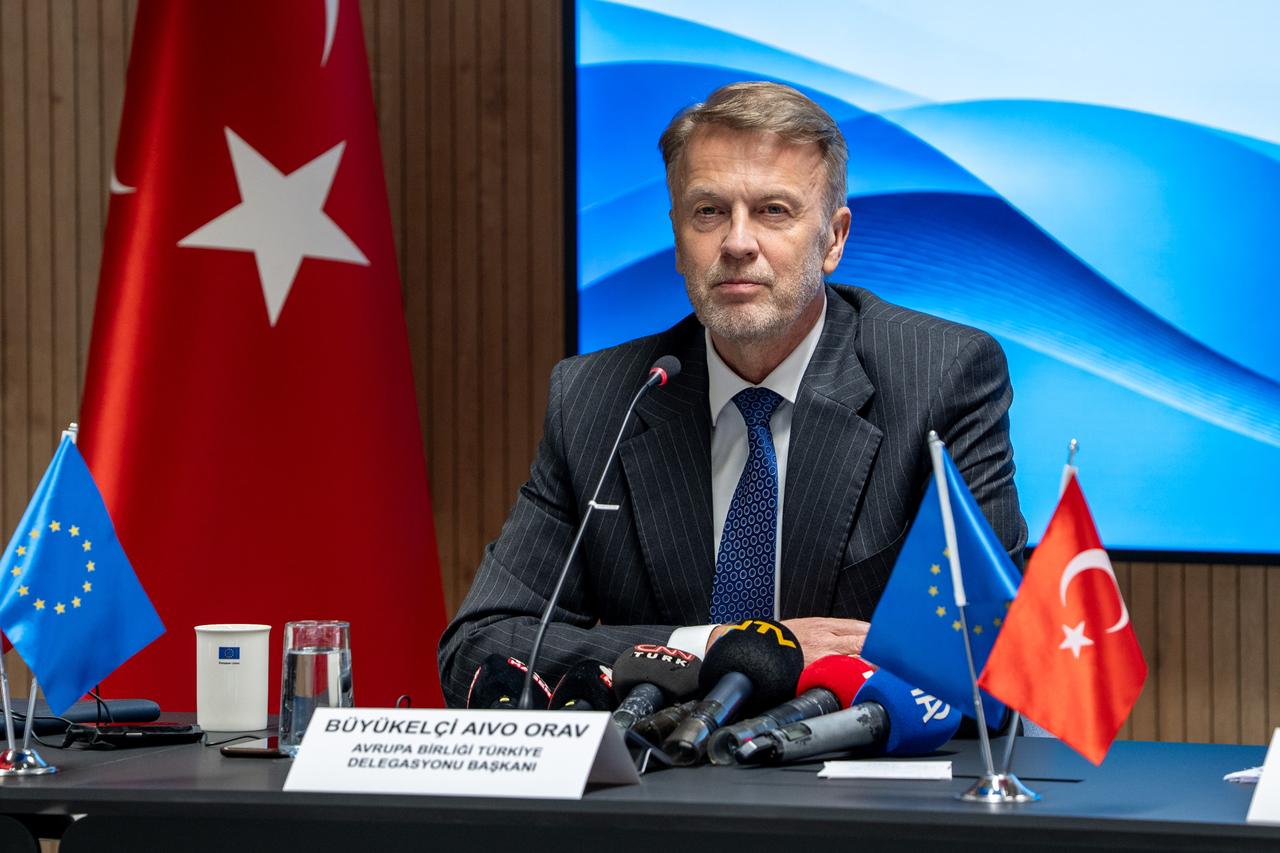


Negotiations on including Türkiye in the European Union’s "Made in Europe" framework are still ongoing, said Ambassador Aivo Orav, head of the EU Delegation to Türkiye, adding that the bloc expects Türkiye's help to make progress.
Orav also said the EU and Türkiye need each other, naming security, trade and connectivity as perhaps the three most important reasons.
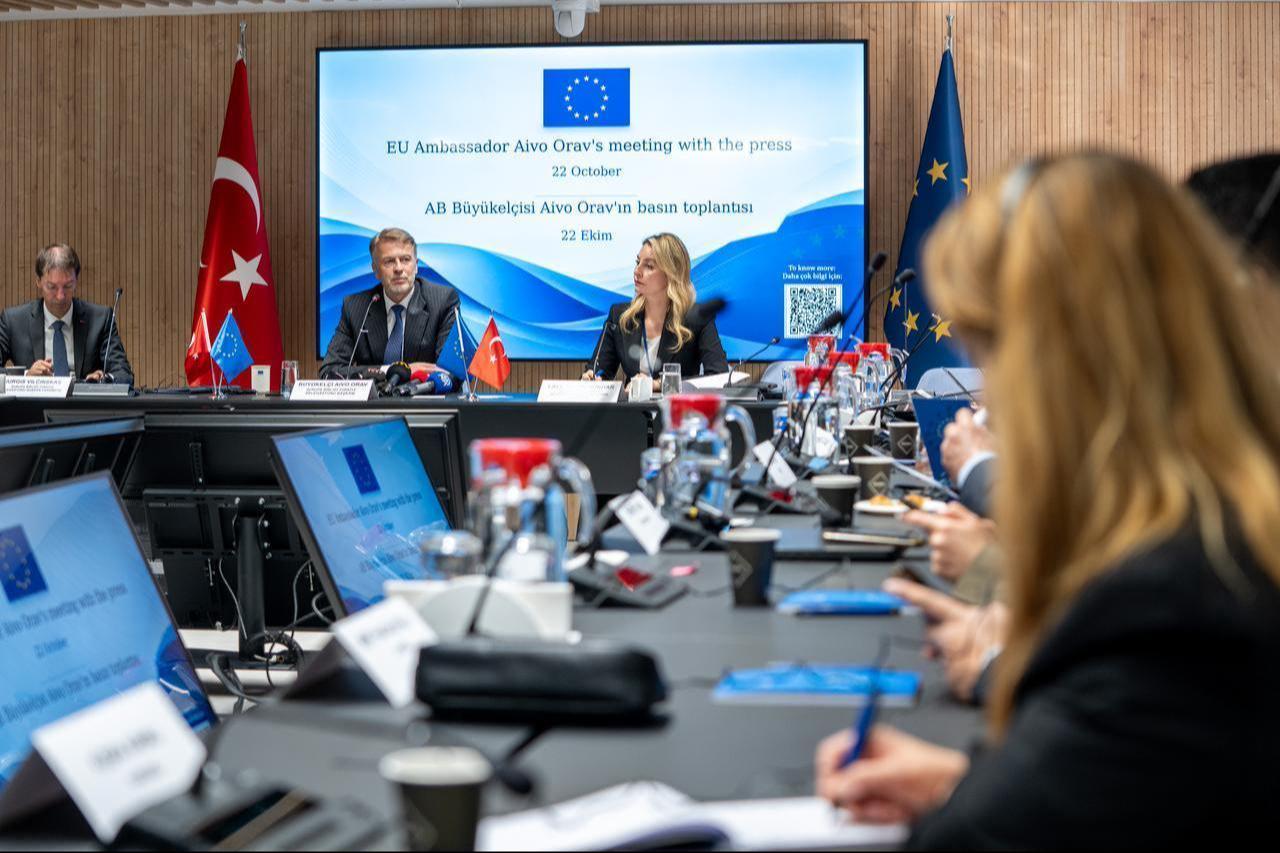
The envoy met with members of the press at the EU Delegation to Türkiye in Ankara, where he briefed reporters on Türkiye-EU relations and answered questions on Thursday.
Answering reporters’ questions, Orav said negotiations on the process of including Türkiye in the "Made in Europe" framework are continuing. He said the 27 member states, as well as the European Council and the European Parliament, are negotiating among themselves.
Orav said the issue has come up in his own meetings as well as in high-level talks, adding the EU expects Türkiye's help for progress to be made.
On the Security Action for Europe (SAFE) program, Orav said Türkiye and other countries cannot join the program or receive EU loans.
"They can join joint procurements of European Union member states as partners. Türkiye can also benefit from up to 15%, and in some cases up to 35%, of the loans received by member states," he said.
The envoy said the defense budgets of all EU member states have risen significantly and will increase further when they receive loans under SAFE.
"No one is preventing these member states from carrying out joint military or defense projects with Türkiye. And the fact is, Türkiye is making extensive use of this opportunity," he said.

Orav said he has served as head of the EU Delegation to Türkiye for about seven months. He said he was in Türkiye 15 years ago as Estonia's ambassador to Ankara.
Since taking office, he and his team have met with government officials, politicians, mayors, businesspeople, academics, students, civil society organizations and project partners, Orav said. He said he listened to ideas and concerns in all these meetings.
Orav said these meetings helped provide new ideas and also allowed them to ease concerns.
"One of the simplest outcomes of these meetings: ‘The European Union needs Türkiye, and Türkiye needs the European Union.’ Why? There are many reasons, but perhaps the most important three are security, trade and connectivity," he said.
The envoy noted that EU-Türkiye relations are shaped by Ankara's status as an EU candidate country, and two elements are very important in this regard.
First, under financial support provided to candidate countries, Türkiye has received €6.8 billion ($7.61 billion) in support from June 2021 to 2027, he said.
Orav said the EU welcomes the European Investment Bank’s return to Türkiye, adding infrastructure projects have become more concrete as a result.
He said President Recep Tayyip Erdogan opened the Cerkezkoy-Kapikule High-Speed Train Line two weeks ago, with EU Commissioner for Enlargement Marta Kos in attendance.
Orav said the EU closely follows developments in Türkiye as a candidate country and publishes its analysis in an annual report. A new report is expected within a few weeks, he said.
He noted many mutual high-level visits have taken place in the past six months and said hosting the NATO Summit in Ankara this year was a great success.
Asked about the EU’s position on the Libyan House of Representatives’ approval of the 2019 memorandum of understanding between Libya and Türkiye on delimiting maritime jurisdiction areas, Orav referred to statements by EU officials.
On security, Orav pointed to a period in which the world has become more complex and the world order has been shaken.
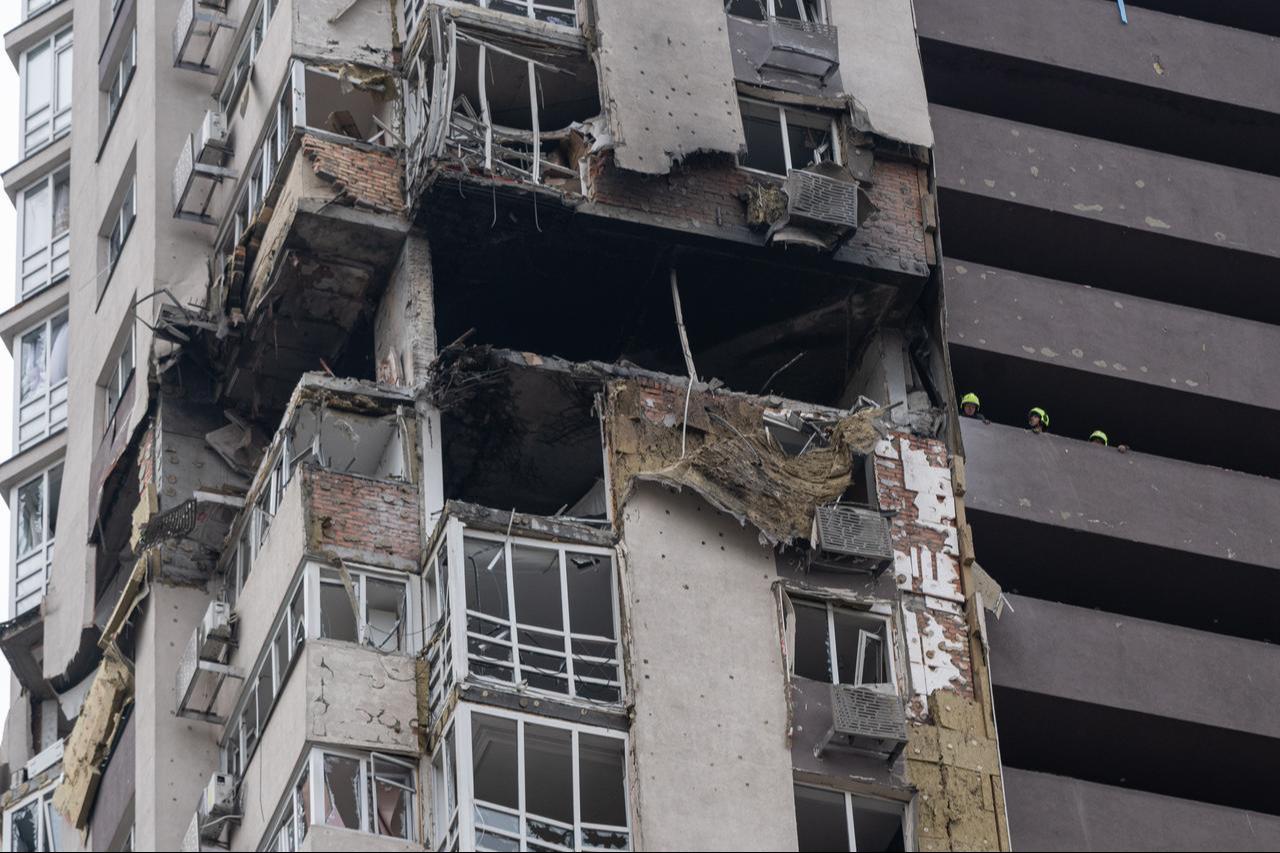
"Türkiye has a unique position and location. In the West, there is the stable and reliable partner, the European Union, and in the northeast, a new opening with Armenia. But in the north and east, there is war," he said.
Orav stressed the Russia-Ukraine war is the biggest challenge and security threat for the EU. He said the EU appreciates Türkiye's steps on navigation issues in the Black Sea, energy prices and the negotiation process between Russia and Ukraine.
Orav underlined any peace reached between Russia and Ukraine must be just and lasting.
"This means the aggressor must not be rewarded and must be held accountable. Because if the aggressor is rewarded this time, the security architecture not only in Europe but across the whole world will come under major threat," he said.
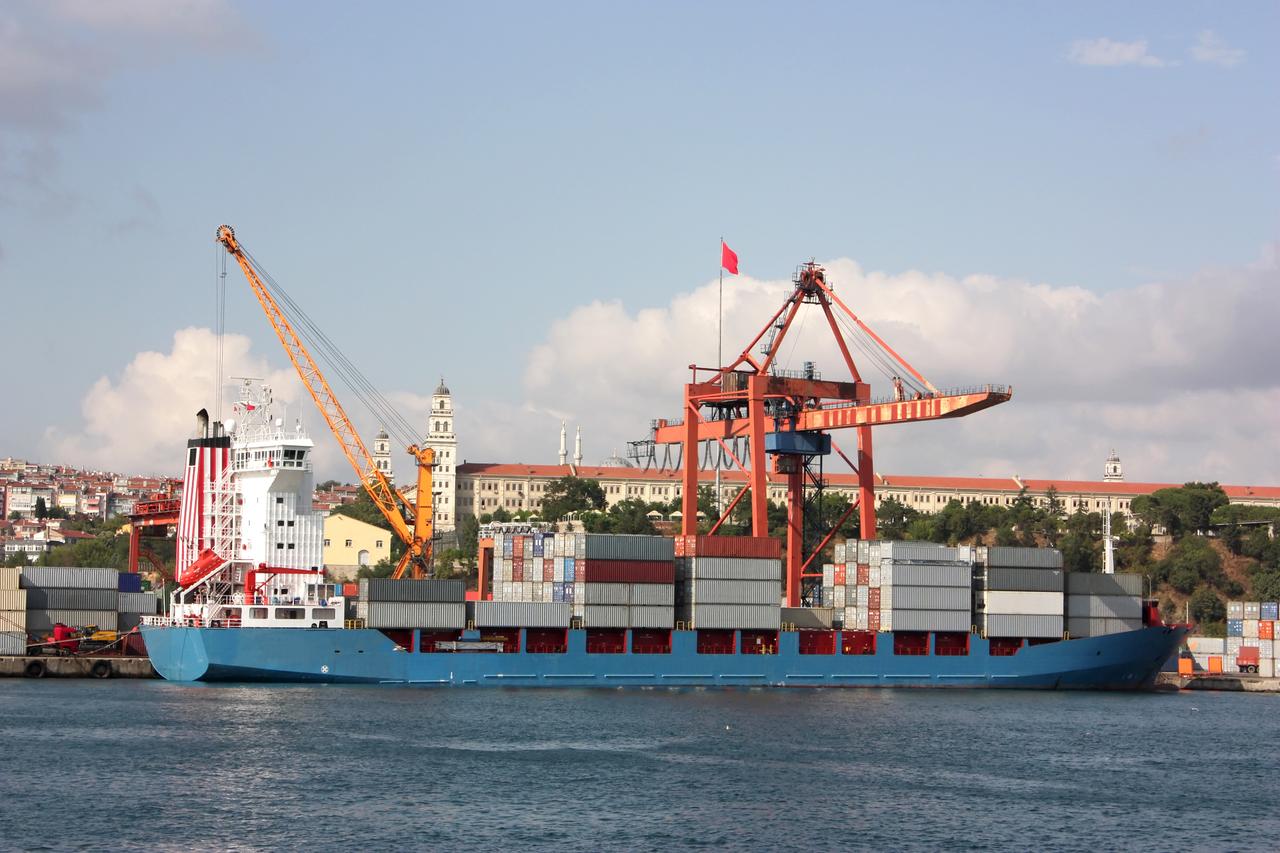
On trade, Orav recalled the Customs Union between Türkiye and the EU has been a very big success. He said trade volume between Türkiye and the EU stood at €218 billion ($244.2 billion) in 2025.
On connectivity, Orav said Türkiye’s location is certainly important. He said the corridor between two continents matters for transport, energy and digital fields, adding this connection should become faster, greener and more resilient.
Orav also highlighted the importance of the Middle Corridor for connectivity.
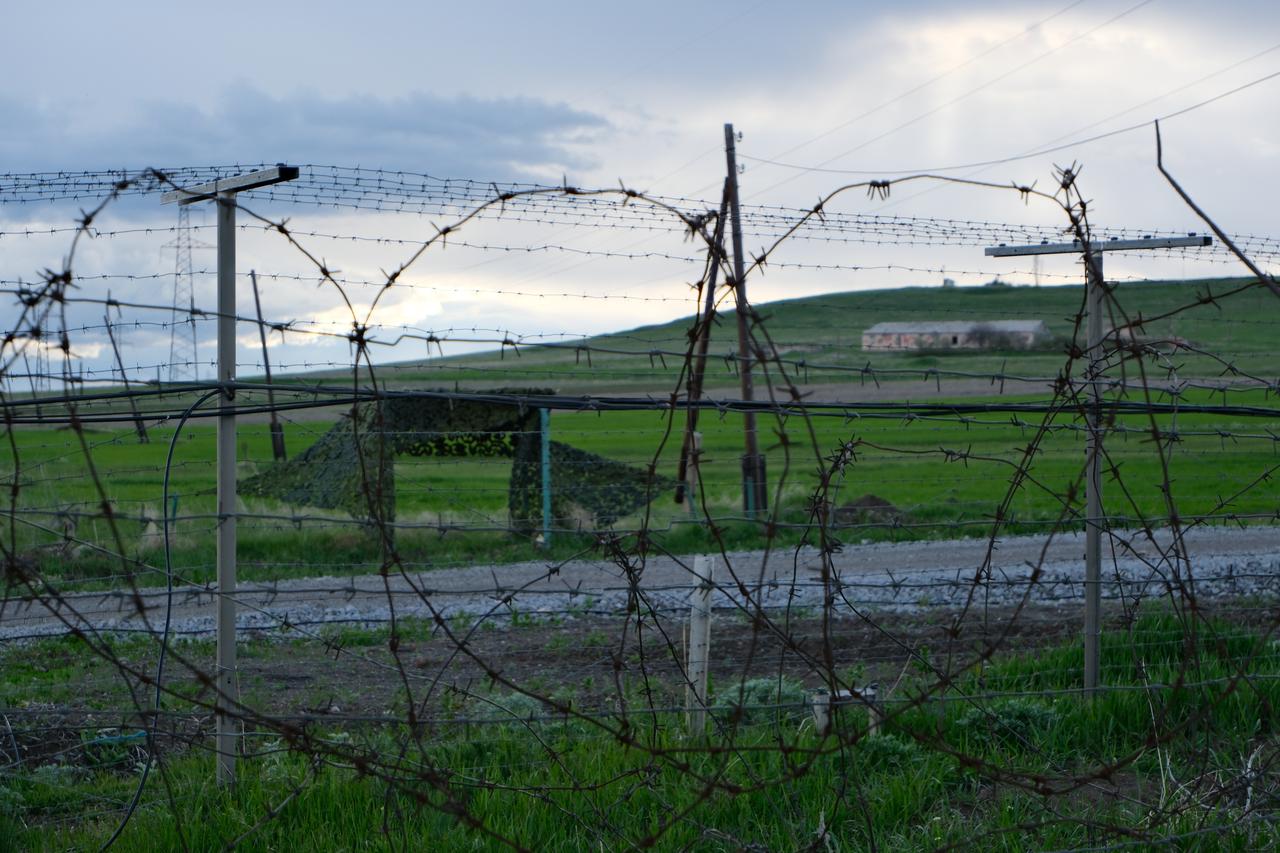
"I want to talk about the normalization process with Armenia. One day, when the border between Türkiye and Armenia opens, it will offer great opportunities to all of us. Not only for Türkiye and the European Union, but also for Armenia and neighboring countries," he said.
Orav said visa liberalization has also come up in his meetings.
"The issue of visa liberalization is truly important for both sides. There are six benchmarks that must be completed in order to move forward on visa liberalization," he said.
Orav said officials told him in his meetings that they had received instructions at the highest level to fulfill these benchmarks.
Türkiye's relations with the EU began under the Ankara Agreement, signed with the European Economic Community on Sept. 12, 1963, and in force since Dec. 1, 1964. The Customs Union entered into force on Jan. 1, 1996. Türkiye’s candidacy for full membership was confirmed at the EU summit in Helsinki on Dec. 10-11, 1999, and accession negotiations began on Oct. 3, 2005.
Thirteen chapters have been opened in the accession process, one of which has been provisionally closed. Under a December 2006 EU Council decision, eight chapters cannot be opened, and other chapters cannot be provisionally closed, on the grounds that Türkiye does not apply its Additional Protocol obligations to the Greek Cypriot administration.
Orav said the Made in Europe negotiations continue among the 27 member states, the European Council and the European Parliament.


 Set as preferred source
 Set as preferred source


 2 min read
 1 min read