Newsletters


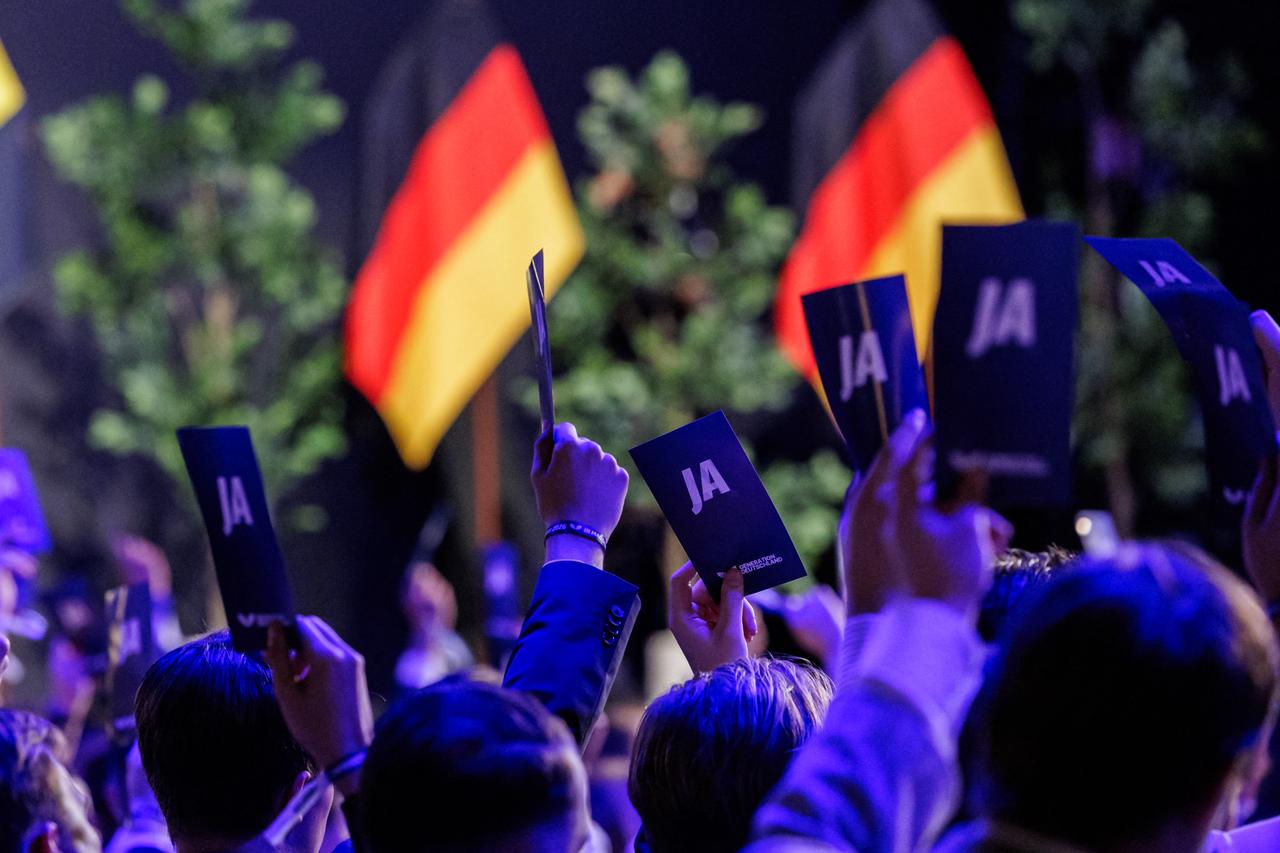


The rise of the far-right Alternative for Germany (AfD) ahead of critical state elections in September is fueling concerns over Germany’s economic future, as economists warn that the party’s anti-immigrant policies could damage the labor market and economic growth.
Elections will be held in Saxony-Anhalt on Sept. 6, and in Berlin and Mecklenburg-Vorpommern on Sept. 20.
Recent polls indicate that the Left Party and the anti-immigrant AfD could emerge as the strongest groups in the three states.
The AfD, known for its anti-immigrant rhetoric, is campaigning on migration, housing and security themes, while economists and business groups warn that its policies could weaken investment, worsen labor shortages and threaten Germany’s export-oriented economic model.
Political polarization has intensified in the capital, Berlin, ahead of elections scheduled for Sept. 20.
The coalition of Chancellor Friedrich Merz’s Christian Democratic Union (CDU) and the Social Democratic Party (SPD), which currently governs the city, is assessed to be losing support.
The resignation of Berlin state leader Kai Wegner and the low name recognition of CDU candidate Stefan Evers have made the election outcome more uncertain.
A three-party left-wing coalition made up of the Left Party, the Greens and the SPD is also seen as a possibility after the vote.
According to the latest survey by German polling company INSA, the AfD ranks third across Berlin with 17%.
The AfD has also linked Berlin’s housing crisis to immigrants and is campaigning on a promise to allocate social housing only to “locals.”

As political debates intensify, the AfD’s economic program and ideology are drawing sharp criticism from the business world.
Analyses in the German press have examined the possible economic risks if the AfD comes to power under five main headings: declining prosperity, labor shortages caused by migration policies, export losses tied to scenarios of leaving the eurozone, possible budget deficits and the risk that climate policies could increase external dependence.
According to these assessments, economic policies implemented by populist governments could reduce production by an average of 10% in the long term.
For Germany, that would mean an economic loss of about €450 billion.
The fact that 93% of companies in Germany see the rule of law as the most important investment criterion also raises concerns that international investment could stall if democratic institutions are damaged.
The AfD’s rhetoric on mass deportations and opposition to migration is also triggering concerns over a serious labor crisis as Germany’s population ages.
Experts predict that if migration stops, Germany could face a labor shortage of 7 million people over the next 15 years.
Migrants currently generate 11% of eastern Germany’s gross domestic product, or €68 billion, and 14% of Germany’s overall GDP, or €572 billion.
The party’s policy of leaving the European Union and the eurozone through a Brexit-like process is seen as one of the biggest threats to Germany’s export-oriented model.
A possible exit is estimated to cause €700 billion in losses over five years and put 2.5 million jobs at risk.
Under that scenario, household incomes in Saxony-Anhalt are projected to fall by more than 6%.
On the fiscal side, analysts warn that the AfD’s tax and pension promises would create a €180 billion hole in the budget.
The proposed tax system would support high-income earners rather than low-income groups, according to the assessments.
The party’s opposition to renewable energy and climate policies focused on renewed dependence on Russian gas would also increase Germany’s external dependence and vulnerability in energy.
Reint Gropp, president of the Halle Institute for Economic Research (IWH), warned that state economies would suffer major damage if the AfD comes to power.
Gropp said xenophobic policies would be destructive for the economy.
“In a state governed by the AfD, annual economic growth could fall by between 0.5% and 1%,” Gropp said.
“People are voting for this party not based on economic realities, but out of longing for an imaginary ‘blue-eyed, blond German world’ that no longer exists,” he added.
Experts say Germany’s shortage of skilled labor and the growing number of retiring German citizens mean current economic growth can only be sustained with the help of immigrants.
According to the data, many sectors could face collapse if the added value created by immigrants disappears.
Across Saxony-Anhalt, immigrants make up between 33% and 40% of workers in food production, construction, gastronomy and logistics.
One in every five doctors working in the state is also a foreign national.
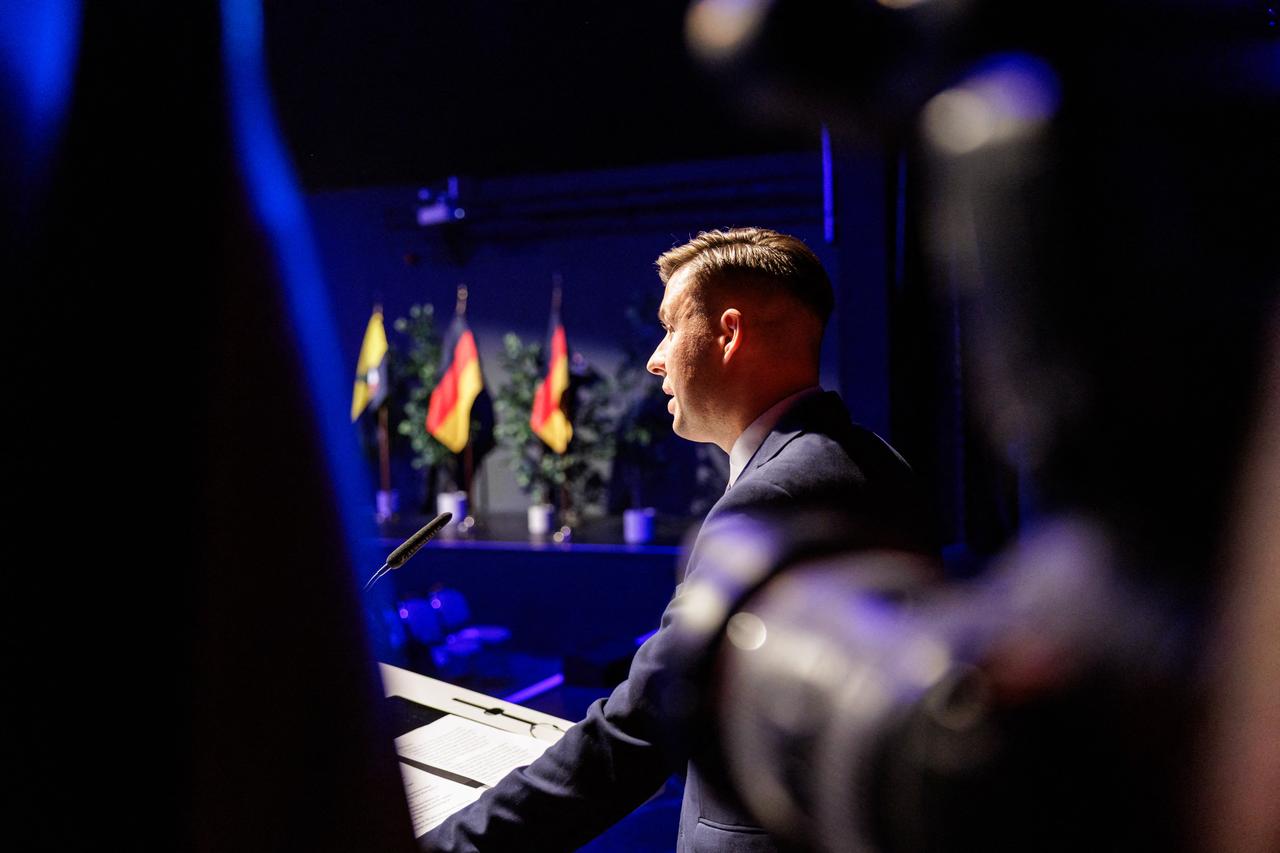
In Saxony-Anhalt, which votes Sept. 6, the AfD is far ahead in surveys with 42%.
It is followed by the CDU with 22% and the Left Party with 13%.
The SPD, Greens, Free Democratic Party (FDP) and Sahra Wagenknecht Alliance (BSW), which are near the 5% threshold, face the risk of remaining outside parliament.
While other parties continue their policy of “political isolation” against the AfD, the party is aiming to form a government alone in the state.
Saxony-Anhalt is one of Germany’s most economically disadvantaged states, with GDP per capita 14% below the national average.
Like other former East German states, it lags behind western regions and is aging rapidly.
Forecasts suggest the region could lose 13% of its working-age population over the next 10 years, while the population over 67 is expected to rise by 8%.
A possible defeat at the ballot box could also increase internal party pressure on Chancellor Friedrich Merz, risking political deadlock in Berlin and wider turbulence across the European Union.
Carsten Brzeski, global head of macro research at ING and chief economist for Germany, said in an analysis that the state elections would shake federal politics, describing the process as “Germany’s hot political autumn.”
Brzeski said regional elections are both local contests and a measure of the federal government’s popularity.
“The results of the elections in the three states will determine the political climate in Berlin and may even have the power to bring the current coalition government to an early end,” he said.
Brzeski said the government has been slow to implement structural reforms that could revive the stagnating economy, allowing the far right to feed off public frustration.
He said markets and the business world should pay more attention to the AfD’s rise.
“The AfD’s economic policy is still like a surprise bag where it is unclear what will come out,” Brzeski said.
“What they really want is unclear, and there are major contradictions between their promises. When party programs are examined, it is seen that the AfD is the structure with the largest financing gap in the budget,” he added.
Referring to IWH’s cost analysis of the AfD’s election program, Brzeski said the party creates an annual financing need of about €2.5 billion, while its demonstrable savings promises amount to only €243 million.
“Less than 10 cents of every euro promised can be financed,” Brzeski said.
“The resulting deficit of at least €2.2 billion corresponds to one-quarter of the state’s total tax revenues,” he added.
“But the painful situation for those who believe costs and economic realities win debates is that even after this report was made public, the AfD’s rise in the polls continued,” Brzeski said.


 Set as preferred source
 Set as preferred source


 2 min read
 1 min read