

 Newsletters


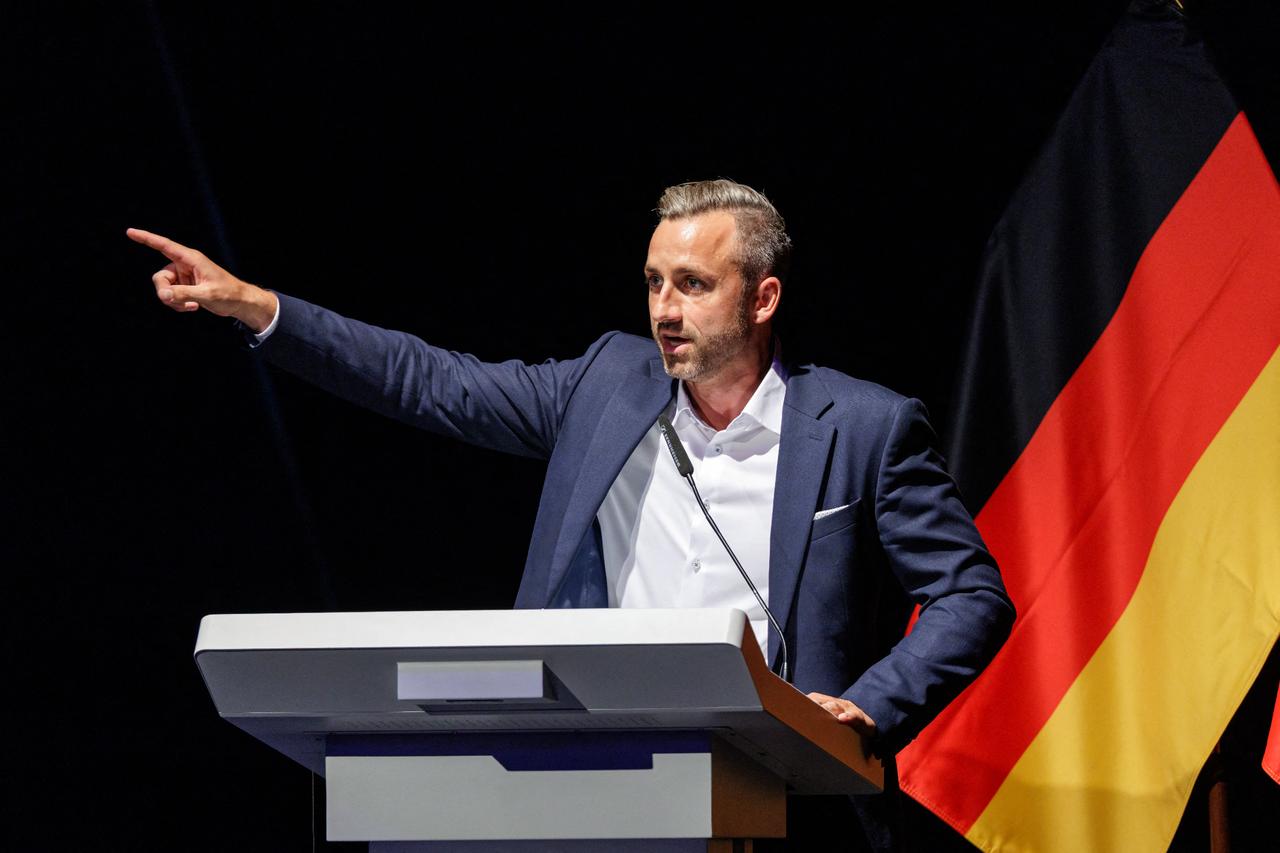


As a far-right regional election victory looms in an ex-communist eastern German state, many migrants are preparing to leave, fearing the Alternative for Germany (AfD) party’s threatened “deportation and remigration offensive.”
The anti-immigration, Islamophobic and Russia-friendly party is expected to score a historic win next week in the small state of Saxony-Anhalt, with hopes of securing its first governing majority.
For Syria-born cardiologist Ayman Alyoussef, head physician at a clinic in the picturesque town of Quedlinburg, the prospect is deeply unsettling.
“I fear that hatred of foreigners will spread,” Alyoussef said.
Alyoussef, who arrived in Germany in 2014 and is now a German citizen, said he has been welcomed by patients and colleagues but sometimes faces hostility on the streets, as do his wife and daughter, who wear Muslim headscarves.
“There are patients who arrive at 3 a.m. with a heart attack. I am able to get them through an acute crisis,” Alyoussef told Agence France-Presse (AFP).
“Afterwards, they are very grateful when they realize that a foreigner helped them,” he said.
“But out on the street, they don't know that I am a cardiologist. They think I am just a foreigner receiving assistance from the city. That is why they say they don't want someone like me here. That is the problem.”

Many foreign-born residents in Saxony-Anhalt share similar experiences and fears.
Last week, about 150 migrant-run restaurants, kiosks and barber shops in the state capital Magdeburg temporarily closed their doors to protest what they warned was an increasingly xenophobic climate.
The Refugee Council support group said many migrants had already reported “experiences of racism and social exclusion.”
It said talk of mass deportations had sparked growing “fear and uncertainty.”
Afghan migrant Rezwaan Talash, 24, who arrived in Germany six years ago and works in a Magdeburg computer repair shop, said he was worried about his future.
“Whether I'll still have my life the way it is now, that's a question and a fear that's always on my mind,” he told AFP.
Talash, who also volunteers with a migrant support group, said “quite a few people from Saxony-Anhalt have recently moved away because it could be unsafe here for us after the elections.”
“We don't want everything we've worked to achieve here so far, starting a calm, good life here, to suddenly go up in flames,” he said.
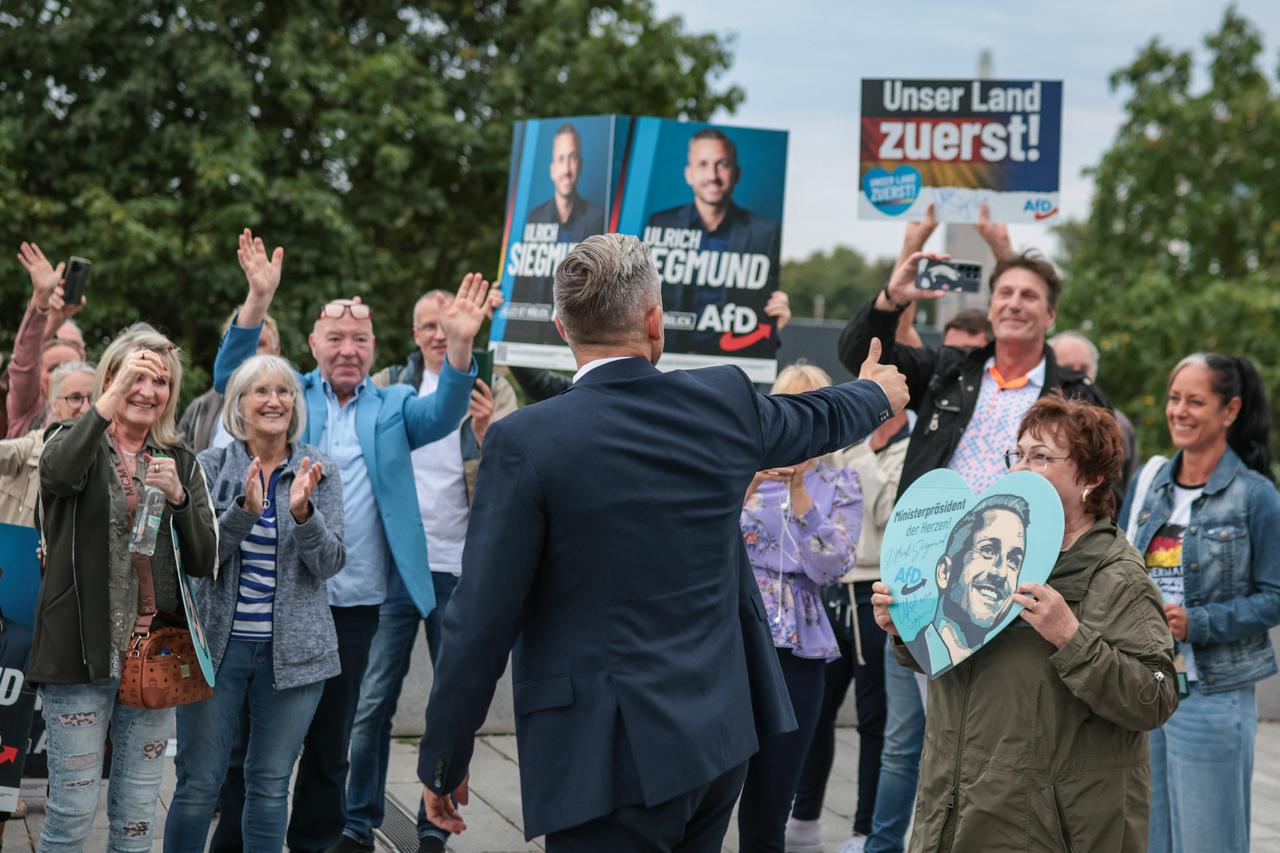
AfD top candidate Ulrich Siegmund, who wants to become state premier, has vowed to deport all foreigners without legal status “from minute one” in office.
Speaking to AFP on Saturday at a campaign event, Siegmund insisted that his party wants to deport “people who are here illegally, who are required to leave the country.”
He said “regular immigration based on strict criteria ... would not be a problem.”
Whatever happens after Sunday’s election, the heated campaign rhetoric has already deepened “societal divisions,” said Mamad Mohamad, a candidate for the left-leaning Greens party.
Mohamad, who was recently handing out flyers outside an Islamic cultural center in the city of Halle, said the campaign atmosphere had become tense.
“There are people who want to talk to us and have questions, but there are also people who walk by and hurl insults or shout at us,” he told AFP.
Mohamad, a Yazidi Kurd who arrived in Germany from Syria in 1996 as a 16-year-old, said he and his fellow campaigners “always have to keep an eye on where we are, who we are talking to, and ensure we are never alone.”
“We always go out in groups of three or four when campaigning in the city,” he said.

Economists warn that the AfD’s anti-migrant campaign, aside from its human toll, could also damage Saxony-Anhalt’s economy.
The small state has already lost nearly a quarter of its population since Germany’s reunification in 1990.
“Today, for every two people leaving the workforce, only one enters it — a gap that cannot be filled by the residents of Saxony-Anhalt and neighboring regions alone,” said Sven Schulze, a candidate for the conservative Christian Democratic Union (CDU).
The AfD has proposed countering the demographic crisis with “baby bonuses” for German parents and efforts to lure back Germans living abroad.
But employers say they are already struggling to find qualified staff.
“Saxony-Anhalt definitely has problems finding young talent,” said Matthias Herberg, Talash’s boss at the IT store.
“Many people leave the state. Many school leavers don't have ideal qualifications,” he said.
“Well-qualified people with a migration background could absolutely fill these gaps.”
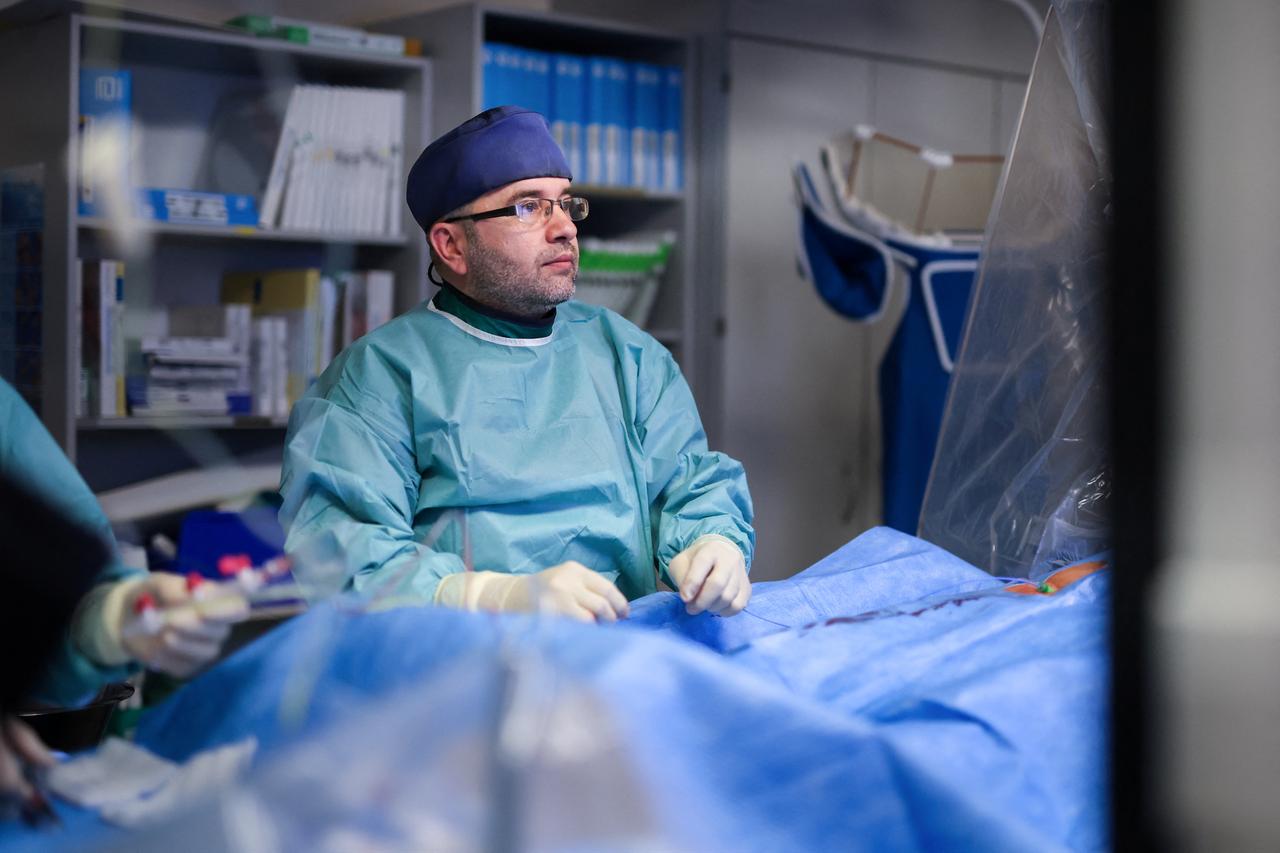
Pushing out migrants would especially affect Saxony-Anhalt’s health sector, where thousands of doctors and nurses are foreign-born.
“Without our highly qualified colleagues of foreign origin, we wouldn't be able to function,” said Quedlinburg clinic director Matthias Voth.
“I would have to close the hospital,” he said.
Alyoussef said he wanted to stay but was keeping his options open.
“I have a German passport, and my family too,” he said. “I can work anywhere, not just here in Saxony-Anhalt or in other states, but in other countries as well.”
“If I get the feeling that hatred is being spread here, then that's it, I'm done,” he added.


 Set as preferred source
 Set as preferred source


 1 min read
 1 min read



