Newsletters


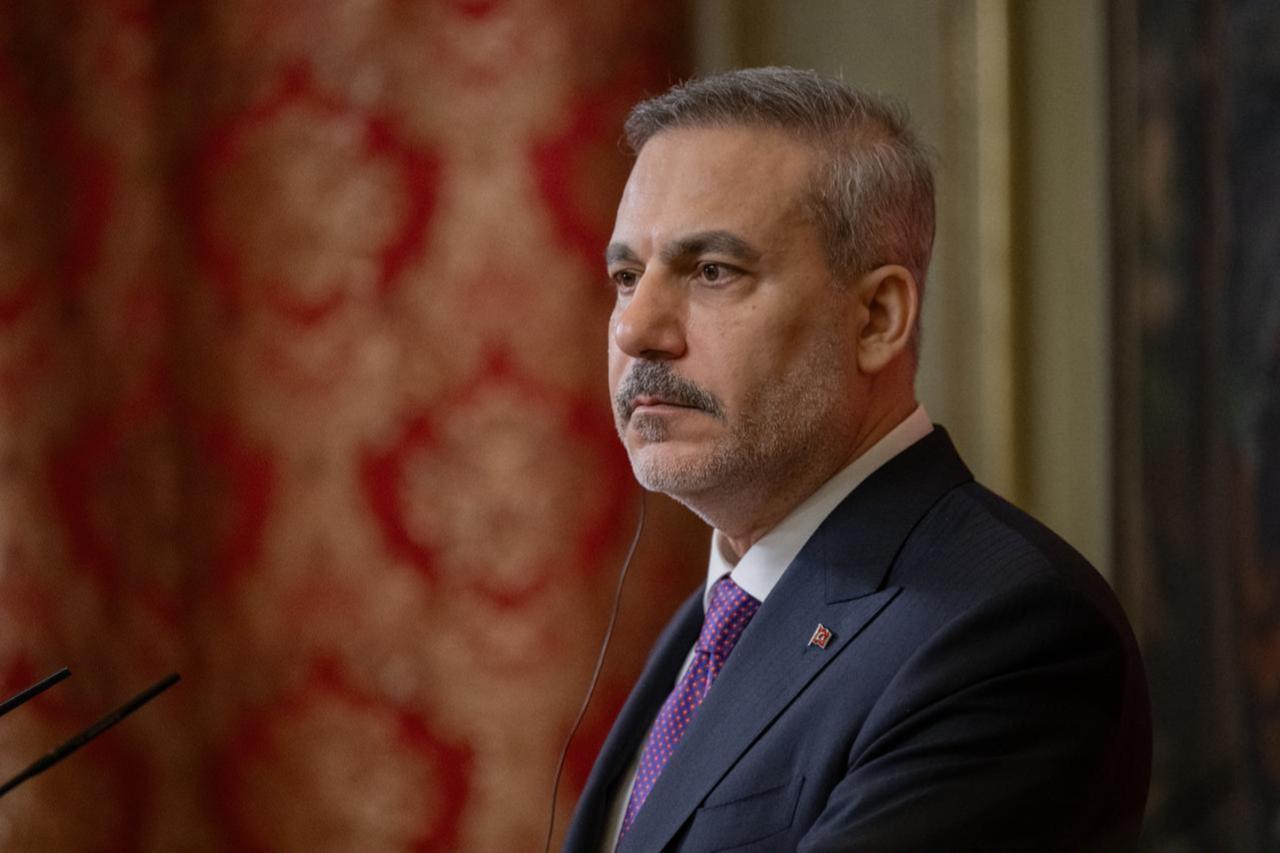


Foreign Minister Hakan Fidan will travel to Brussels on Monday for the Second Ministerial Meeting on Interregional Security and Connectivity. He is expected to call for Türkiye-EU relations to be reassessed on a realistic, results-oriented basis, according to diplomatic sources.
The meeting takes place within the framework of the European Union’s Foreign Affairs Council.
It is expected to bring together EU foreign policy chief Kaja Kallas, Enlargement Commissioner Marta Kos and the foreign ministers of EU member states.
Representatives of Azerbaijan, Armenia, Moldova, Ukraine, Kazakhstan, Kyrgyzstan, Uzbekistan, Tajikistan and Turkmenistan are also due to attend. Political issues tied to regional connectivity are on the agenda.
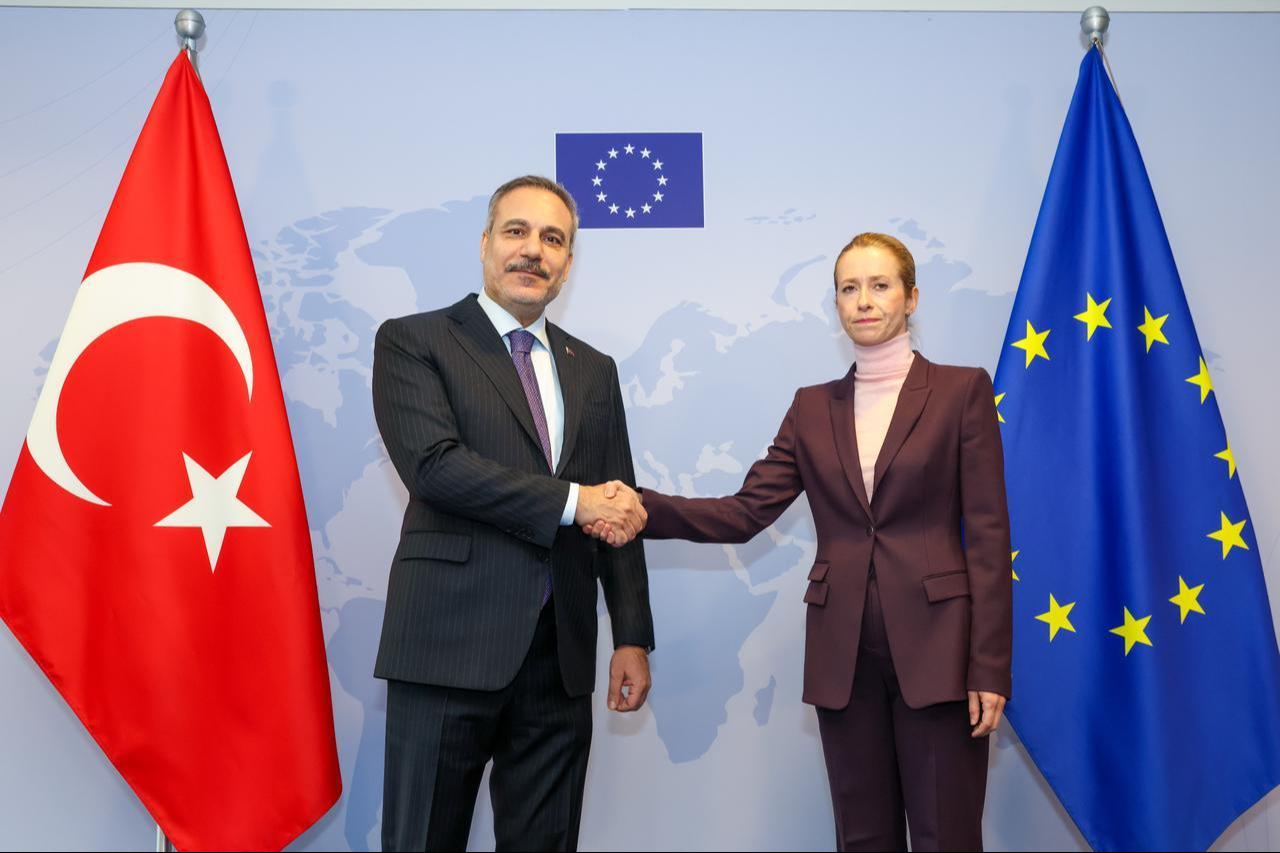

Fidan is expected to say Türkiye is ready to contribute to regional connectivity projects and to widen cooperation, drawing on the advantages of its geostrategic location. He is due to argue that increasingly interconnected global challenges make a pragmatic approach to Türkiye-EU ties necessary if they are to deliver tangible progress.
He will present connectivity as a potential area of constructive cooperation between Ankara and Brussels. He will also stress the importance of resuming high-level dialogue meetings on transport and energy.
The Turkish minister is expected to address the opportunities offered by major connectivity initiatives, including the Middle Corridor, the Development Road, the Three Seas Initiative and the EU’s Global Gateway. The Middle Corridor links Asia and Europe through Central Asia, the Caucasus and Türkiye.
The Development Road is a planned transport route intended to connect the Persian Gulf region with Türkiye and onward to Europe.
The Three Seas Initiative is a forum of Central and Eastern European states focused on infrastructure, and Global Gateway is the EU’s strategy for international infrastructure investment.
Fidan is likely to reaffirm Ankara’s position that the different routes should be seen as complementary rather than competing, and that together they can contribute to global prosperity by facilitating trade and economic integration.
The meeting’s second session, titled “Advancing Security Commitments for the Black Sea Region,” is expected to cover the strategic importance of the Black Sea and the region’s current security situation.
Participants are also expected to discuss grain trade, maritime transport, hybrid threats and the protection of critical infrastructure, along with measures to strengthen regional stability.
Fidan is due to share Türkiye’s assessment of the war in Ukraine and its implications for Black Sea security, emphasizing the importance of regional ownership in maintaining stability.
He is also expected to underline the role of the Montreux Convention in preserving security in the region. The 1936 treaty governs passage through the Turkish Straits, the Bosphorus and the Dardanelles, and gives Türkiye control over the movement of warships through them.
Fidan is set to urge that cooperation between Türkiye and the EU not be reduced to a conditionality-based approach. He will argue that ties should instead rest on mutual interests and equal partnership.
He is also expected to stress that new Black Sea initiatives will succeed only if Ankara is closely consulted and coordinated with throughout their development and implementation.
He is set to caution against creating overlapping structures, saying any new security arrangements should complement existing bilateral and multilateral mechanisms built on regional ownership.
Fidan is expected to hold bilateral meetings on the sidelines of the gathering.
The Brussels meeting follows the first ministerial meeting on Security, Stability, Resilience in the Black Sea and Interregional Connectivity, held in Luxembourg in October 2025.
That meeting also took place under the EU Foreign Affairs Council framework and included countries from the Caucasus and Central Asia.


 Set as preferred source
 Set as preferred source


 1 min read
 1 min read