Newsletters


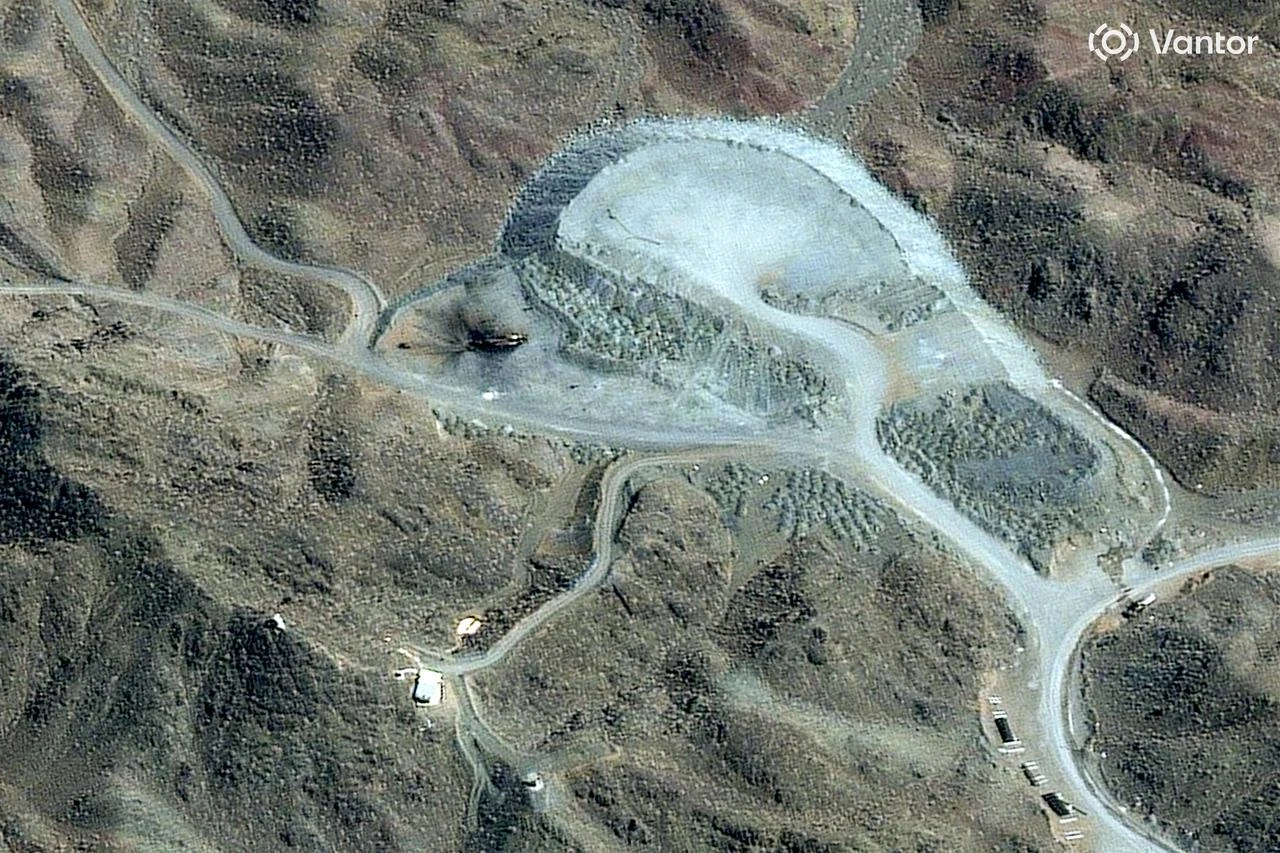


Israeli intelligence believes Iran moved thousands of uranium-enrichment centrifuges into fortified tunnels deep inside Pickaxe Mountain after the 12-day war in June 2025, Israeli and U.S. officials told The Wall Street Journal (WSJ).
The assessment, which Israel passed to Washington and the U.S. has reviewed, heightens concerns that Tehran could reconstitute its nuclear program, as U.S. President Donald Trump recently threatened to strike the deeply buried site near the Natanz nuclear complex.
Israel told the U.S. the centrifuges were moved to Pickaxe Mountain last fall, after American and Israeli strikes hit Iran's three main nuclear sites during the June 2025 war, according to the WSJ.
The report comes as Israel's war aims increasingly diverge from Washington's, with Prime Minister Benjamin Netanyahu pressing Trump to resume all-out attacks on Iran to further set back Tehran's weapons programs and rebuilding efforts.
The U.S. has stepped up attacks over the past 10 days in the round of fighting that began Feb. 28, the WSJ reported.
Iran denies seeking nuclear weapons but has produced about 1,000 pounds of 60% enriched uranium, near weapons-grade.
The placement of centrifuges at Pickaxe does not necessarily mean Iran is building an enrichment site there, according to the WSJ. Tehran may have moved surviving centrifuges into the tunnels after the June 2025 bombings to shield them from destruction.
It is unclear where the centrifuges came from.
An Israeli military official familiar with the targeting effort told the WSJ the recent war's airstrikes had not sufficiently targeted nuclear-weapons-related work, saying more remained to be done, including at Pickaxe Mountain.
"It is plausible that Iran moved centrifuges into the tunnels at Pickaxe," said David Albright, president of the Institute for Science and International Security (ISIS), a U.S.-based nonproliferation think tank, who spoke to WSJ.
Speaking to the WSJ, Nate Swanson, a National Security Council director for Iran in the Biden administration, said any undeclared activity at a hardened underground site is cause for concern given Tehran's history of covert nuclear work.
"A covert breakout is the worst-case scenario. We don't know what Iran's intentions are, but the fact that we can't verify this site underscores how problematic the status quo is," Swanson said, adding, "We have to have the IAEA in there to inspect these things."

Trump has explicitly named Pickaxe as a target for the first time, telling conservative broadcaster Hugh Hewitt on July 13 that the site is "a possible target for a nice big fat shot right near the front door."
"We're watching it closely. We see no activity there. They're not doing well with their nuclear situation. Every time we hear about it, we blow it up. So they don't like talking about it. But we'll probably give Pickaxe a shot relatively soon," Trump said.
"We're going to take out Pickaxe Mountain. Tell the Iranians to be ready. Let them know we're coming (and) there's not a damn thing they can do about it," he added.
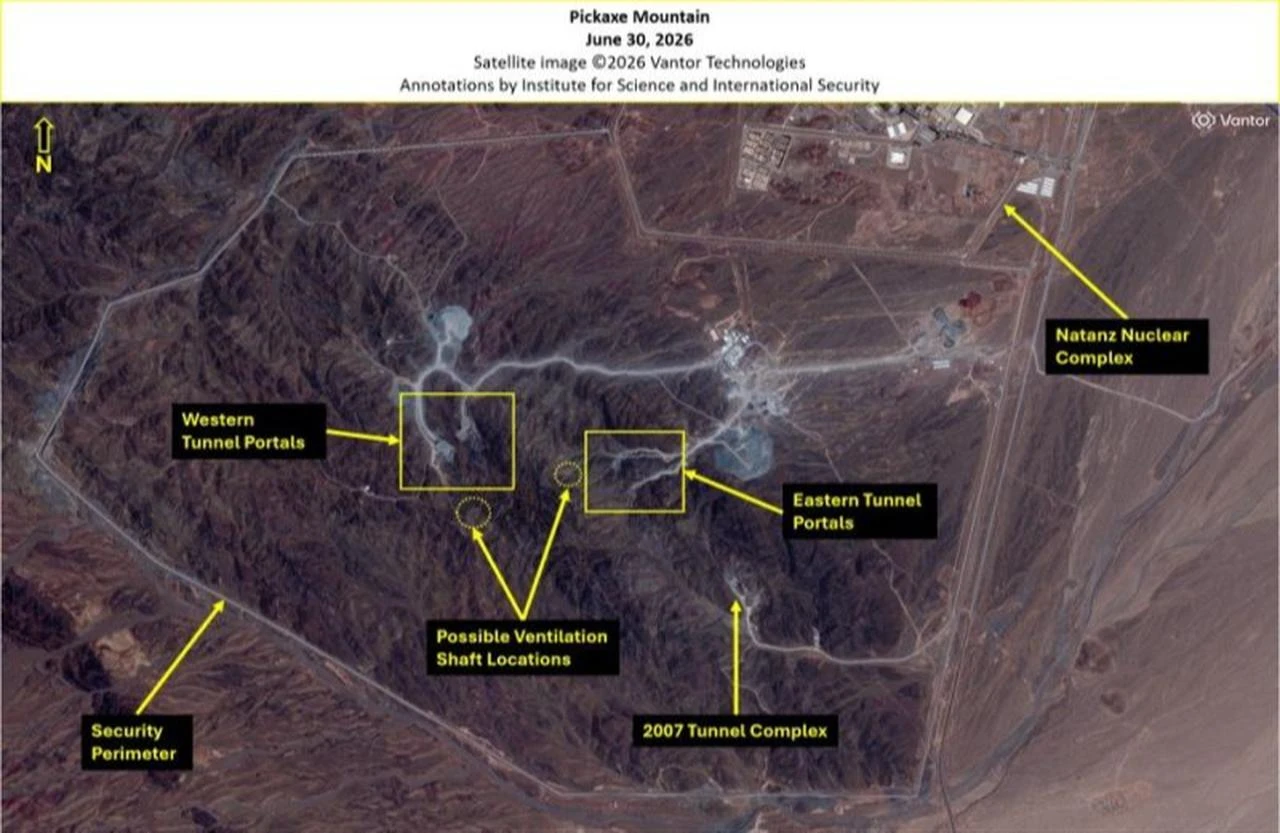
Known in Iran as Kuh-e Kolang Gaz La, Kolang translates as "pickaxe," the mountain sits about 220 kilometers (140 miles) south of Tehran and 2 kilometers from the Natanz nuclear complex, whose enrichment plants were bombed in both wars. The peak rises to 1,608 meters above sea level.
Construction began in fall 2020 after an explosion, possibly sabotage, destroyed Natanz's above-ground advanced centrifuge assembly facility, a plant designed to assemble about 6,000 advanced centrifuges per year, according to an ISIS report.
Iran's then-nuclear chief Ali Akbar Salehi said in September that Iran had begun building "a more modern, larger, and more comprehensive hall in all dimensions in the heart of the mountain near Natanz."
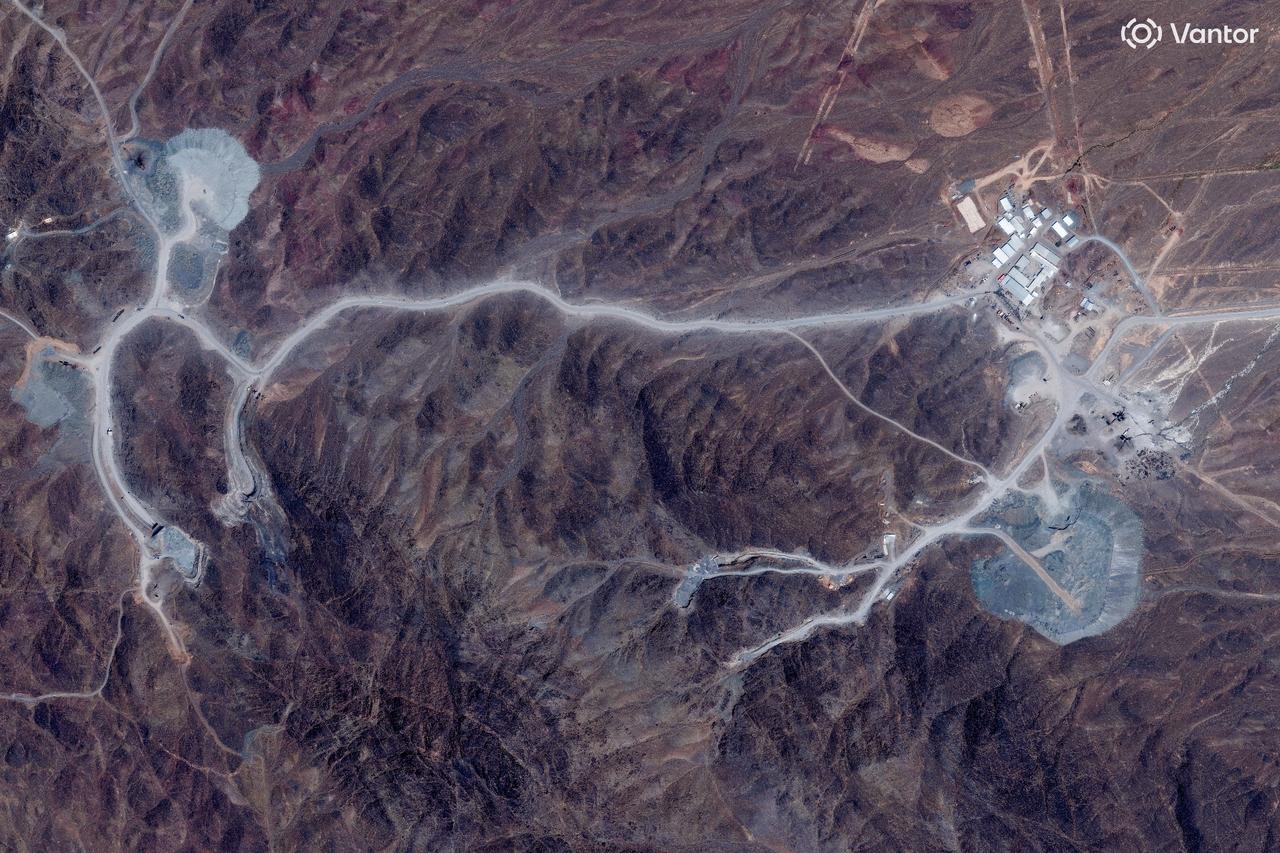
The facility features two pairs of hardened tunnel entrances assumed to lead to a complex at least 100 meters under the mountain, with experts estimating the site reaches 300 to 450 feet beneath solid rock, deep enough to accommodate several nuclear-related facilities. In 2025, Iran began building a double fence-and-wall security perimeter with a patrol route around the entire mountain, ISIS said.
Iran has given the IAEA no access to the site and no information about its work there. IAEA Director General Rafael Grossi said in March that Iran announced in 2021 its "intention to have nuclear activity" at the site.
"This was part of their quite systematic intention to put their most sensitive facilities underground," Grossi said during an interview on PBS Frontline.
ISIS assessed in a July 14 report that the facility "is not yet operational, but construction continues," with steady activity over the past 15 months including truck traffic, tunnel reinforcements and perimeter construction.
An older tunnel network dating from 2007 within the same secured area was expanded, hardened and sealed shortly after the June 2025 war.
While it is unclear whether Iran still plans a large-scale assembly facility given the destruction of its centrifuge program, ISIS warned the underground space could hold a smaller centrifuge assembly plant serving a nuclear weapons program, an enrichment plant capable of producing weapon-grade uranium, and possibly weaponization activities such as shaping weapon-grade uranium metal into weapon components.
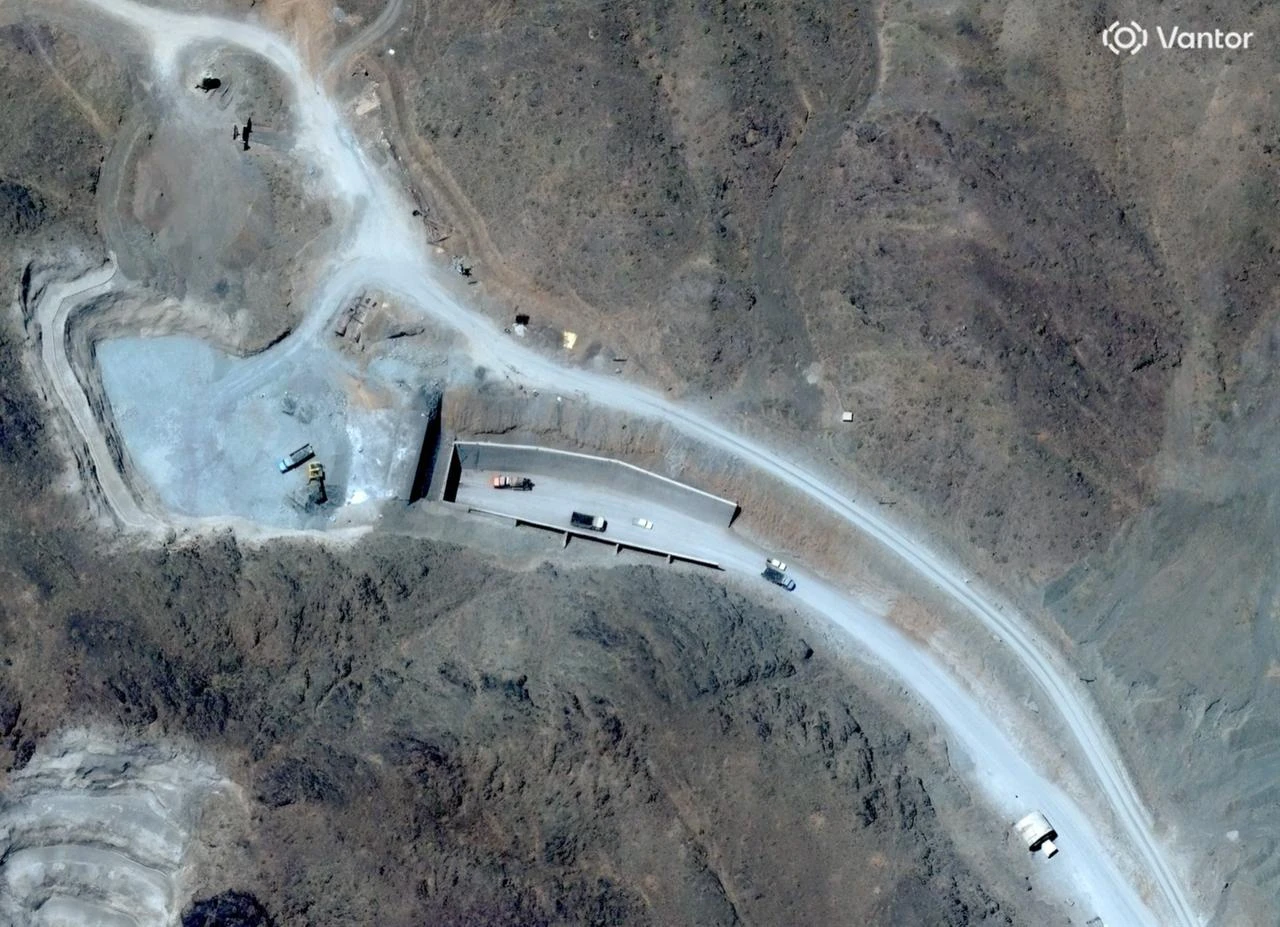
Experts assess that the complex lies beyond the reach of the most powerful bunker buster bombs in the U.S. arsenal. Iran has partially backfilled the eastern tunnel entrances since the wars to obstruct vehicle access, though satellite imagery from July 9 shows the western pair remains open, leaving them vulnerable to precision strikes or a ground operation, ISIS said.
Sam Lair, a fellow at the Foreign Policy Research Institute who reviewed recent satellite imagery, told Reuters that strengthening the tunnel entrances would complicate "targeting with penetrating munitions like bunker busters."
"We can infer that there are ongoing activities at Pickaxe Mountain the Iranians wish to continue but are still concerned enough about a potential attack that they are taking steps to bolster their defenses," Lair said.
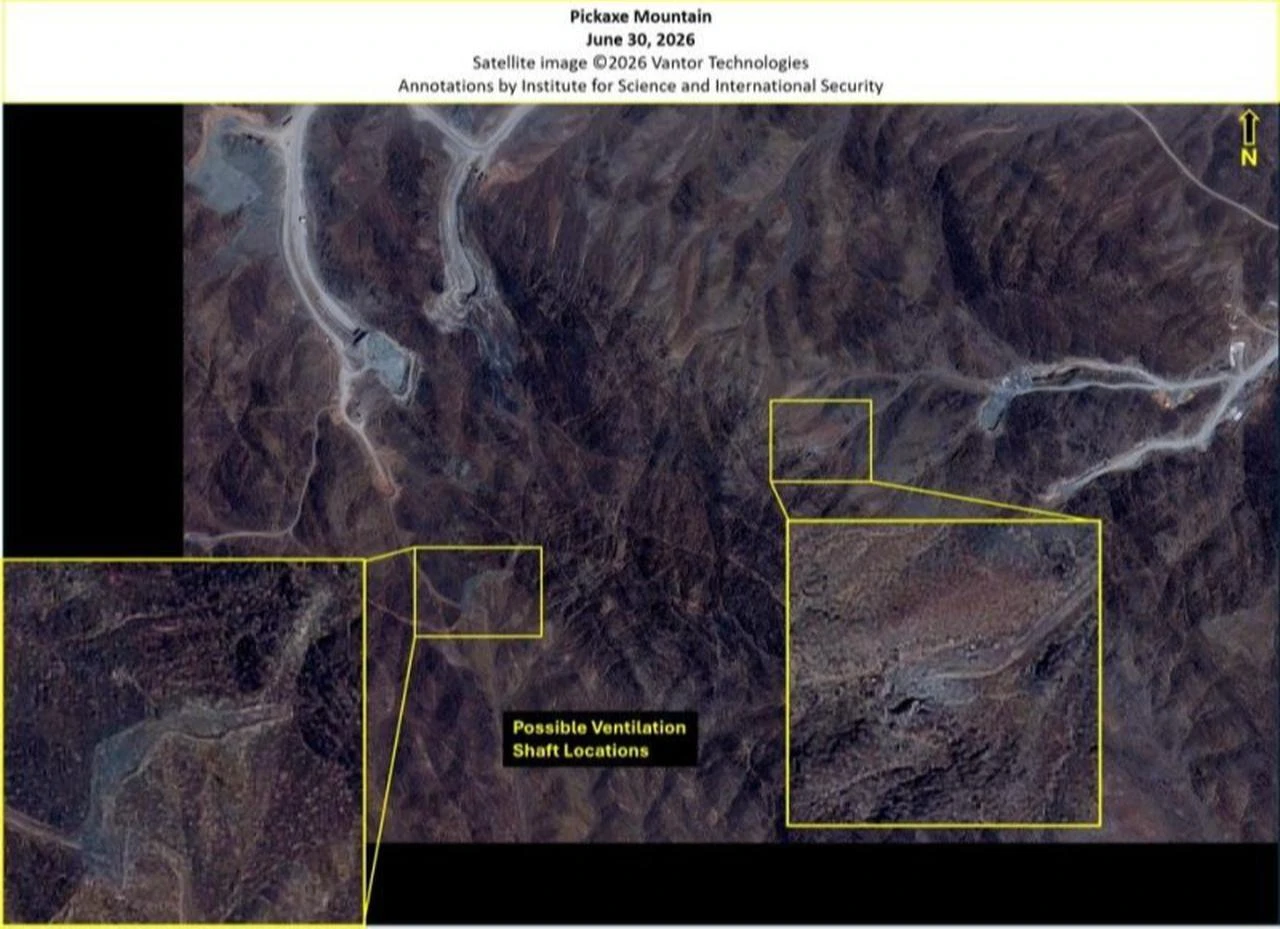
ISIS said the site "would be more suitable for ground forces to attack or sabotage," though aerial vulnerabilities may exist, noting that strikes on Iran's Fordow and Shahid Boroujerdi tunnel facilities, attacked in June 2025 and March 2026, respectively, directly targeted ventilation shafts as weak points.
An attack on Pickaxe could target power supply lines, ventilation shafts, and the open tunnel entrances, but strikes on the hardened portals alone "would likely only temporarily deny Iran access," the think tank said.


 Set as preferred source
 Set as preferred source


 2 min read
 1 min read