Newsletters


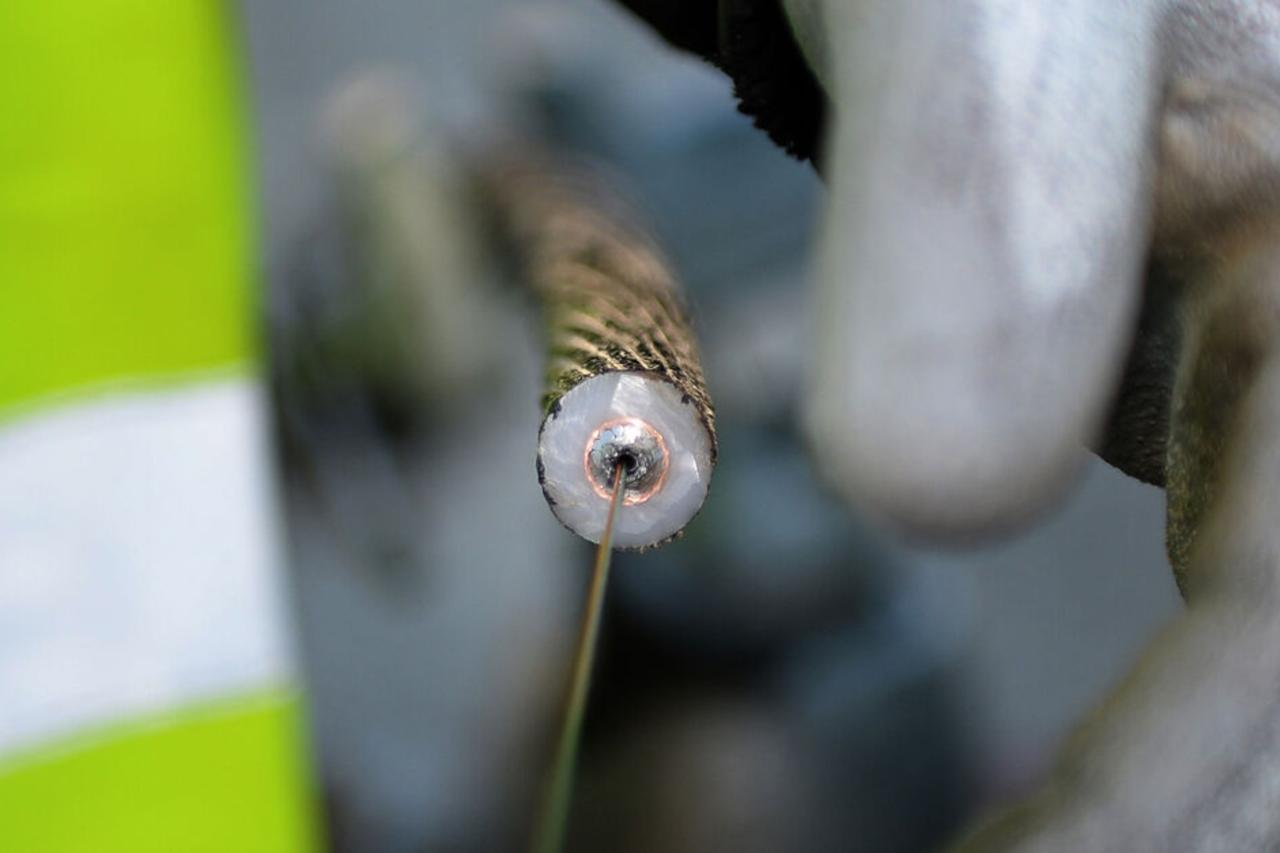


Iran has drawn up detailed plans to target undersea communications cables in the Gulf if the United States and Israel attack it again, two senior Iranian security officials told Reuters.
One official said Iran would aim to block repairs to prolong disruptions to communications, including internet connections, as Tehran warns that a renewed war would bring a wider response.
The officials, who spoke on condition of anonymity, gave few details and did not say how or where Iran would carry out such attacks.
"If Iran is attacked, there will be no more red lines, from undersea cables to military bases, including covert ones," one official said. The official warned Washington not to "play with fire" and said Iran had full access to the cables and could easily destroy them.
Yadollah Javani, deputy head of political affairs for Iran’s Islamic Revolutionary Guard Corps (IRGC), said Wednesday that Iran could target seven major internet cables beneath the Strait of Hormuz if Iranian infrastructure came under attack.
Gen. Mohsen Rezaei, secretary of Iran's Supreme National Security Council, made a similar warning in written answers to Drop Site News.
"We did not deploy all our capabilities in the previous stages. We brought more capabilities into operation in proportion to the intensity of the war, and we are also prepared for the next stage," Rezaei said.
"The United States has valuable assets in the region. In the event of war, cables, data centers, and artificial intelligence facilities could also come within range. If the conflict begins again, we will have a broader plan," he added.
Washington’s Gulf allies "should hold Washington, not Tehran, responsible for any damage to undersea cables," the second Iranian security official told Reuters.
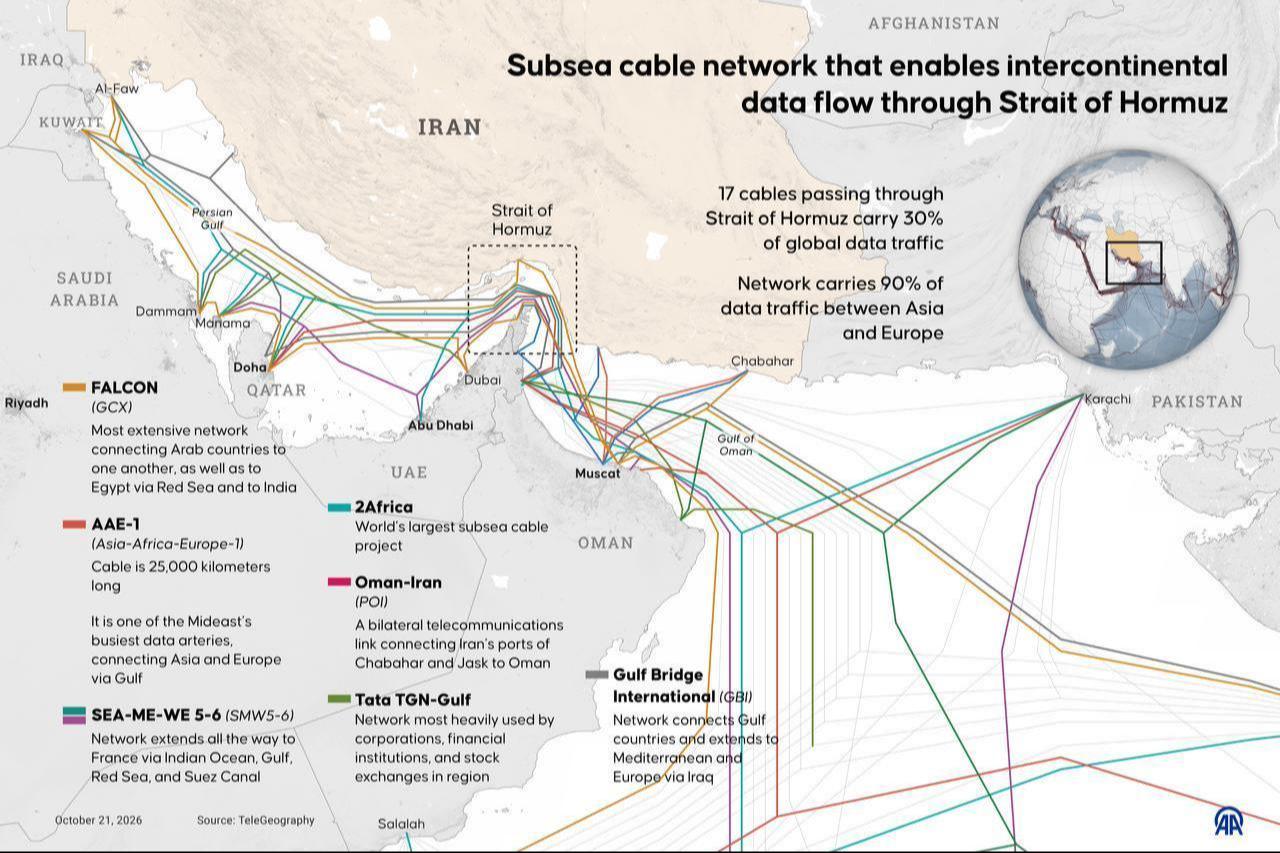

Undersea cables carry about 99% of global internet traffic, according to the International Telecommunication Union, a U.N. agency.
The global impact of attacks in Hormuz could be limited, since less than 1% of international bandwidth passes through the strait, said Alan Mauldin, research director at TeleGeography.
Multiple cable cuts could still slow internet services and disrupt financial transactions, e-commerce and cloud computing, analysts told Reuters. The impact would depend on how operators reroute traffic, Mauldin told Reuters.
Experts said wartime repairs could be difficult, with higher insurance costs and delays in permits to enter territorial waters.
The Red Sea could be a more significant target, particularly with support from Iran’s Houthi allies, though Tehran has made no public statement about cables there.
Capacity routed through the Red Sea accounts for about 3% of global international demand and around 10% of interregional traffic, Mauldin said.
Maj. Gen. Ali Abdollahi, Iran’s armed forces chief of staff and commander of Khatam al-Anbiya Central Headquarters, said Saturday that U.S. military vessels would not enter the Gulf "under any circumstances," according to state broadcaster IRIB.
"We will not allow U.S. military ships in the Persian Gulf under any circumstances and at any time," Abdollahi said, adding: "The U.S. president must dream of seeing the armed forces enter the Persian Gulf. He will take that dream to his grave."
He also challenged Trump’s claims that U.S. strikes destroyed Iran’s nuclear facilities. "If you have destroyed everything, then what is the meaning of repeating these delusional claims?" he asked.
"If you are certain that you have destroyed all of Iran’s military facilities and capabilities, then why do your rusty warships, vessels, and cowardly military forces not dare approach the Strait of Hormuz?" Abdollahi said.
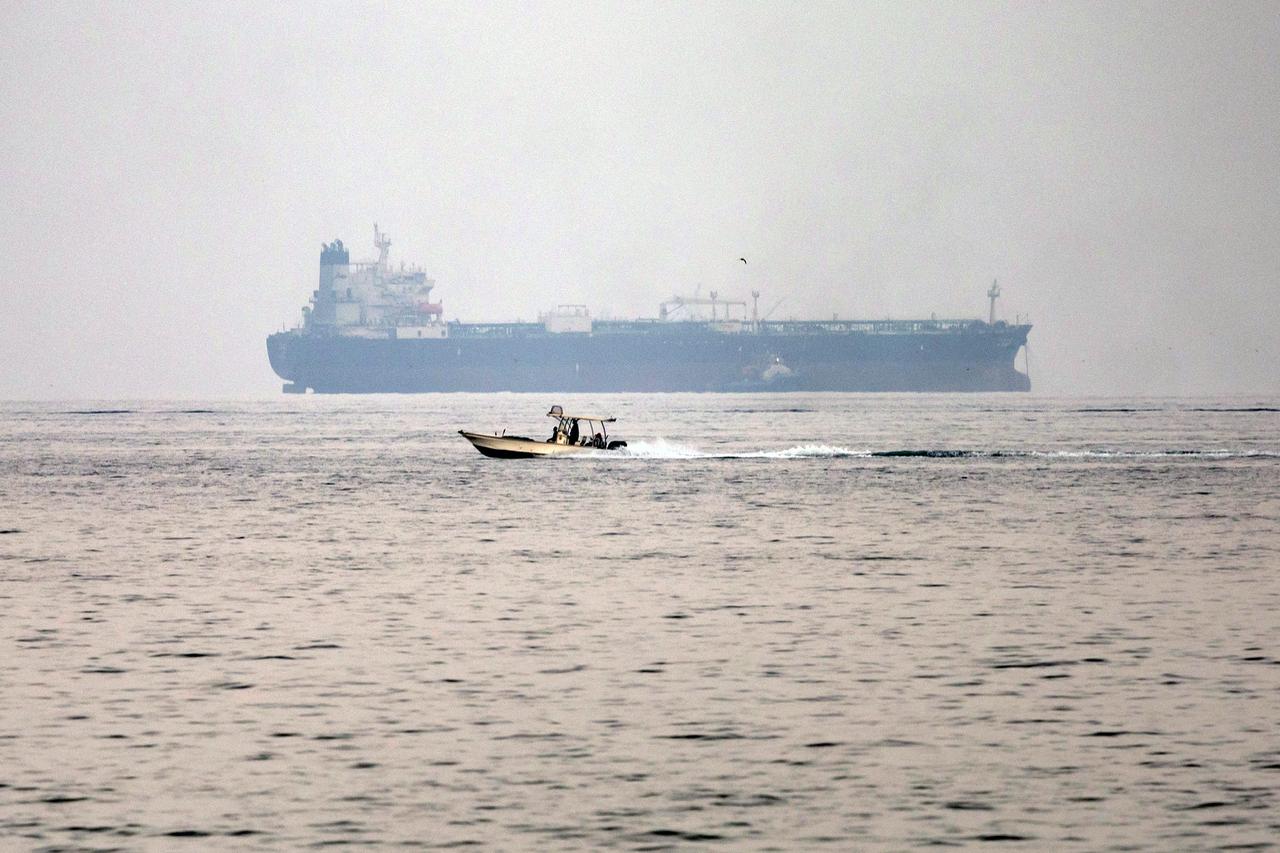
Meanwhile, October has been the worst month on record for attacks on shipping in and around the Strait of Hormuz, according to the Washington Institute for Near East Policy.
"October has seen the highest number of ship attacks on record,” said Noam Raydan, a senior fellow at the institute. She has recorded 28 attacks this month and 113 since the war began Feb. 28.
The International Maritime Organization lists more than 30 damaged supertankers, including 11 in October, a Reuters review showed.
"October 2026 has emerged as the most intense period of maritime attacks in and around the Strait of Hormuz since the escalation of hostilities in March," Greece-based consultancy Marisks said.
Iran is seeking to slow the recovery in shipments and keep pressure on energy markets ahead of the U.S. midterm elections, Raydan said.


 Set as preferred source
 Set as preferred source


 1 min read
 1 min read