Newsletters


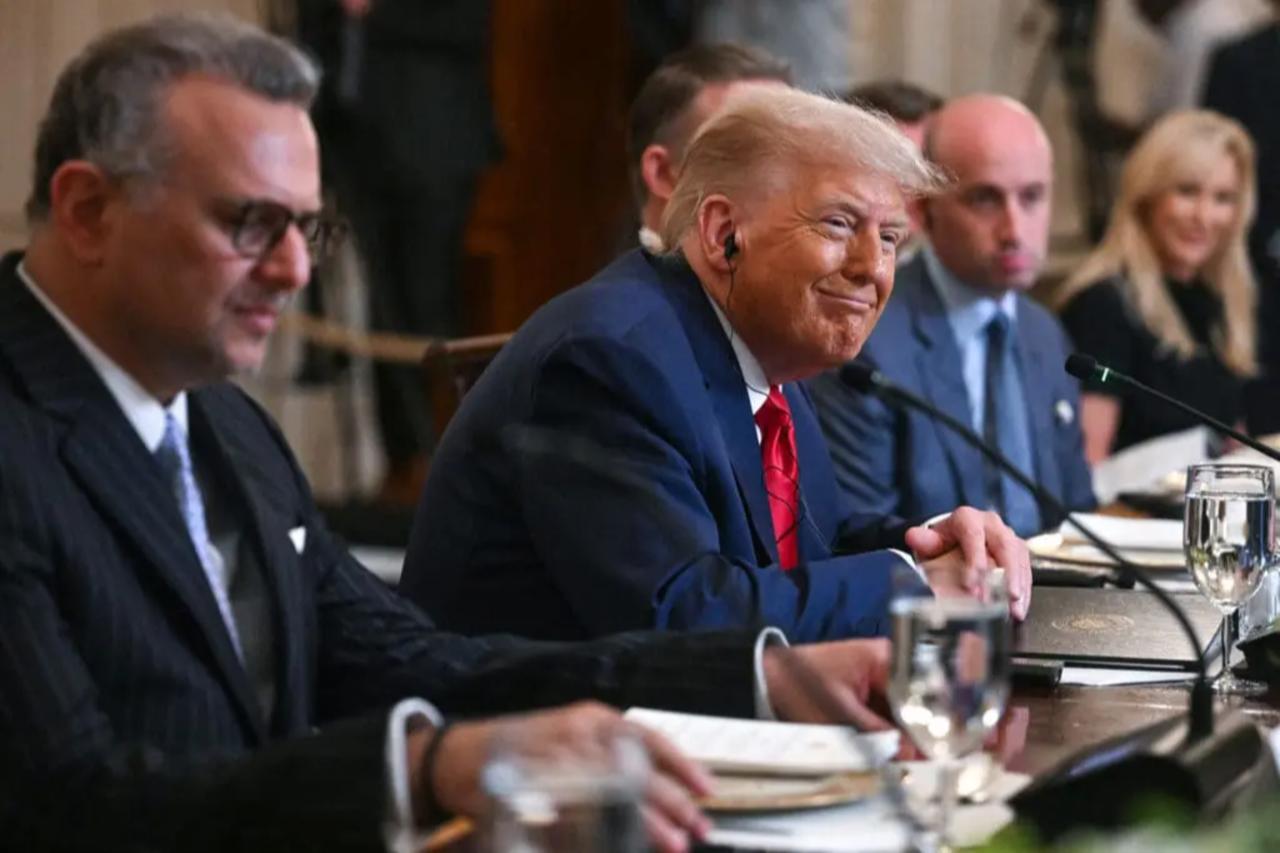


The Trump administration has launched its most ambitious Libya initiative in years, centered on the belief that economic engagement can unlock political progress.
Rather than prioritizing formal mediation frameworks, Washington is placing commercial partnerships with both sides of the North African country at the heart of its approach. Energy investments, high-level access, and sustained contact with rival factions now define U.S. policy.
For more than a decade, the United States remained largely absent from Libya’s political and security landscape. After the 2011 NATO intervention that led to the collapse of the Gadhafi regime, Washington steadily reduced its footprint, opting for limited diplomatic engagement and deferring largely to U.N.-led processes.
The vacuum did not remain empty. Competing regional actors stepped in, and Russian-linked Wagner mercenaries gradually entrenched themselves across eastern and southern Libya.
Meanwhile, Libya’s political process has repeatedly stalled despite U.N.-backed roadmaps, ceasefire agreements, and election plans. Against that backdrop, the administration appears to be testing whether economic leverage can succeed where traditional diplomacy fell short.
At the core of this approach is the assumption that Libya’s elites, deeply dependent on oil revenues, can be nudged toward compromise if their economic interests are aligned. The question is whether engagement alone can translate into influence over entrenched political and military structures.
The Trump administration’s recent Libya initiative is best understood as a deliberate return rather than a routine diplomatic push. After years of minimal involvement, Washington is re-entering the Libyan arena with sustained senior-level engagement, economic commitments, and direct outreach to rival power centers.
The long absence Libya’s instability also spilled beyond its borders, affecting migration routes, energy security, and regional military dynamics.
The roots of this disorder trace back to the Obama administration’s decision to intervene militarily without a viable postwar plan. The removal of Gaddafi dismantled the state’s coercive core, but no durable political or security framework replaced it. What followed was fragmentation, militia rule, and prolonged international disengagement.
Libya’s instability also spilled beyond its borders, affecting migration routes, energy security, and regional military dynamics.
The roots of this disorder trace back to the Obama administration’s decision to intervene militarily without a viable postwar plan. The removal of Gadhafi dismantled the state’s coercive core, but no durable political or security framework replaced it. What followed was fragmentation, militia rule, and prolonged international disengagement.
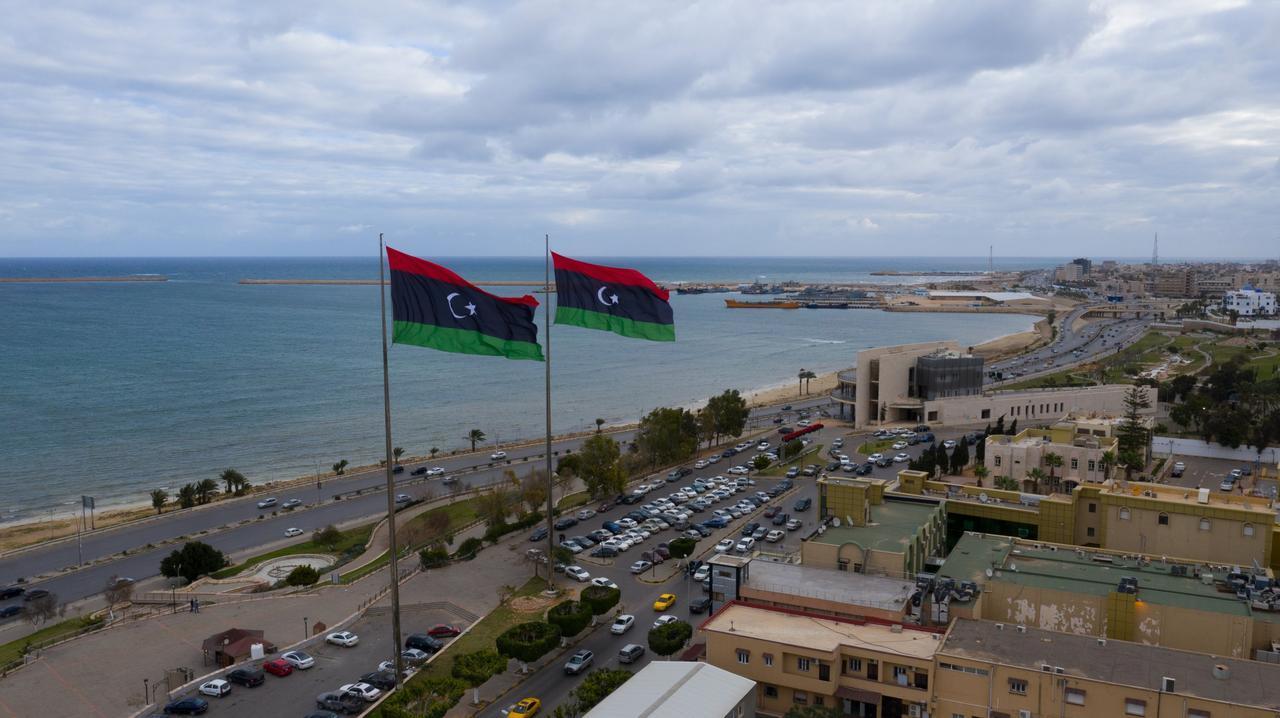

Energy agreements are both the strong point and the centerpiece of Washington’s renewed engagement. Recent deals involving major U.S. and European firms aim to significantly expand Libya’s oil production capacity over the coming years. These commitments also represent the largest wave of Western corporate investment in Libya’s energy sector in more than a decade.
Libya has already increased production to levels not seen since before the 2011 uprising, and officials on all sides view further expansion as essential to stabilizing state finances. For Washington, large-scale investment is intended to signal seriousness while creating shared incentives for cooperation between eastern and western power centers.
Yet, without clear safeguards, new income streams risk reinforcing existing divisions instead of bridging them. Oil revenues have often intensified competition rather than fostering compromise, fueling disputes over budget authority, institutional control, and revenue distribution.
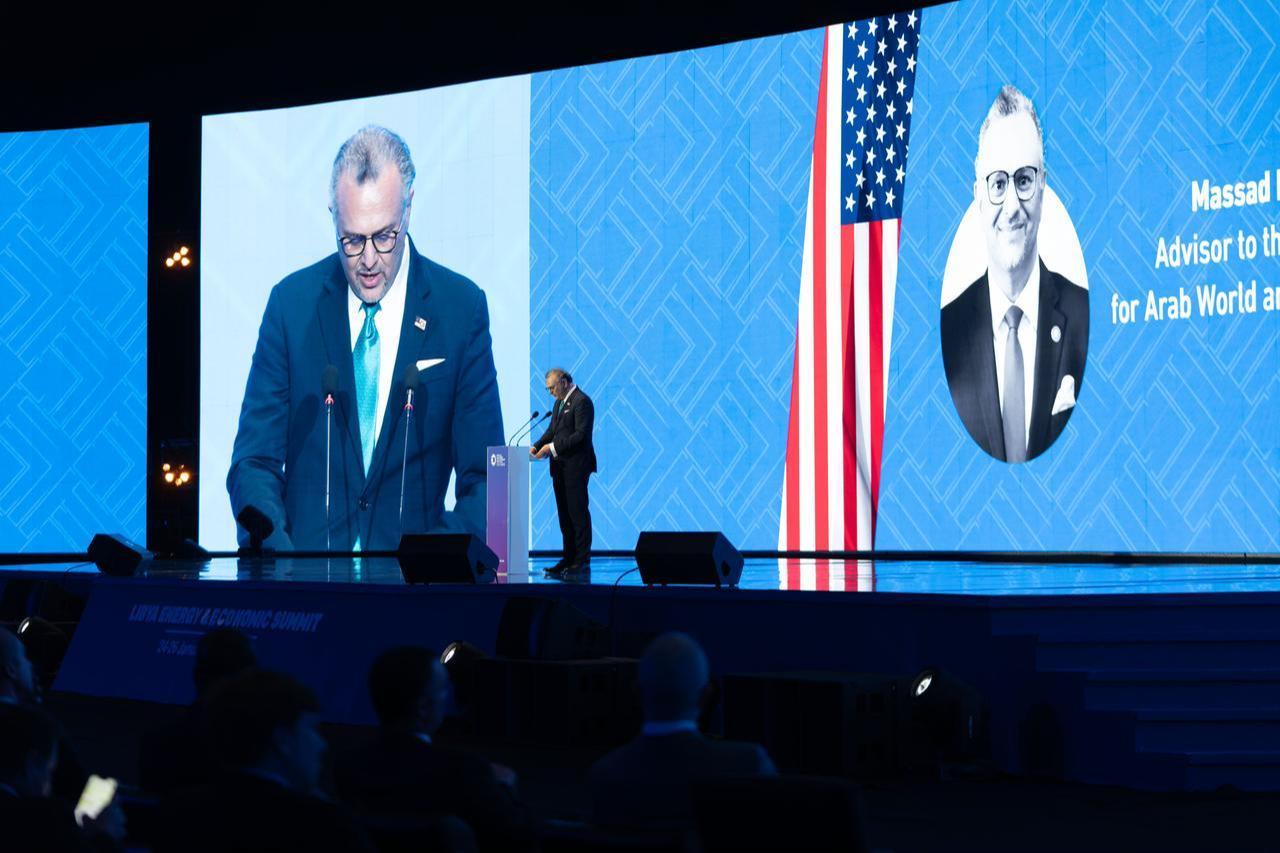
At the center of this renewed doctrine is Massad Boulos, the administration’s senior advisor on Arab and African affairs. His repeated visits to Libya at the last couple of days of January and the following engagement with leaders on both sides of the divide, and his role in convening international meetings show an increase in the belief that economic access can unlock political space.
By maintaining open channels with rival factions and anchoring U.S. engagement in tangible economic projects, the administration is attempting to rebuild trust and relevance simultaneously. Ambassador Boulos’s strategy, in that aspect, prioritizes energy deals, not treated as rewards for political progress but as instruments to generate it.
Instead of past U.S. efforts that relied on external pressure, Trump’s approach assumes that sustained interaction, combined with shared commercial interests, can gradually lower barriers to dialogue, though whether this logic holds in Libya’s fractured environment is yet to be seen.
Last week’s talks facilitated by Boulous in Paris brought representatives from Libya’s rival camps together for the first time in months, demonstrating Washington’s renewed convening power and that American engagement still carries weight.
Meetings have taken place with leaders and power brokers from both western Libya, centered in Tripoli, and eastern Libya, based in Benghazi. Discussions have ranged from energy cooperation to military coordination and the functioning of national financial institutions.
Practically, however, the meetings stopped short of concrete commitments. Over the last few years, Libya’s leaders have proven adept at engaging externally while preserving the status quo at home. That also shows that the access gained by Washington has to be coupled with working with allies like Türkiye to be turned into leverage.
As can be seen from the effects of the Trump doctrine in Syria, however, burden-sharing and working with allies are essential components of the renewed American foreign policy. In this regard, working with Ankara, which has communication and influence with both sides, may be the first option in the near future.
Absent such conditions, U.S. policy risks projecting activity without impact. The current approach has opened doors and created opportunities, and it is clear that new investments will also provide hope for the Libyan people and contribute to stability in the region.
Until then, Libya’s long-standing institutional fractures remain intact. Whether Washington can turn economic presence into political leverage will determine if this strategy will yield solutions and the extent of American interests.


 Set as preferred source
 Set as preferred source


 1 min read
 1 min read