Newsletters


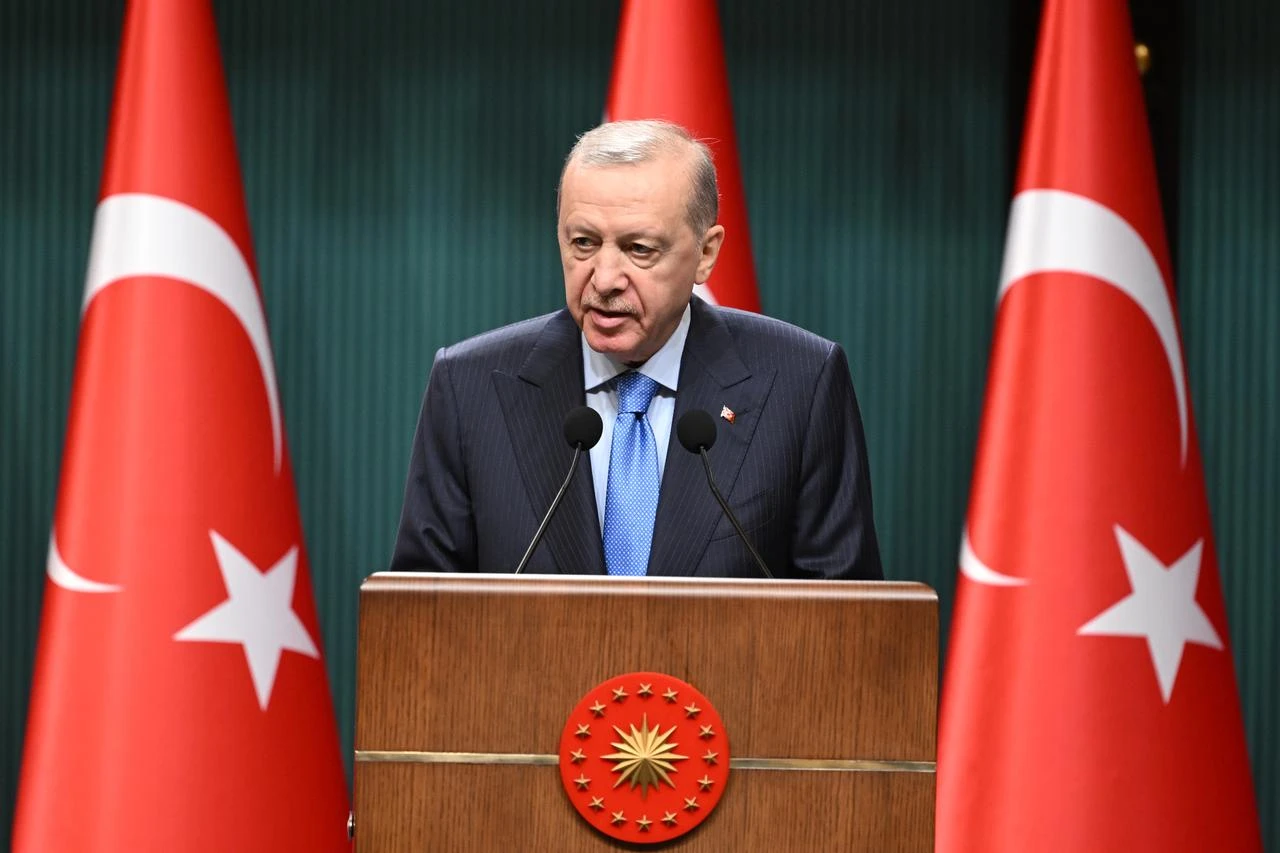


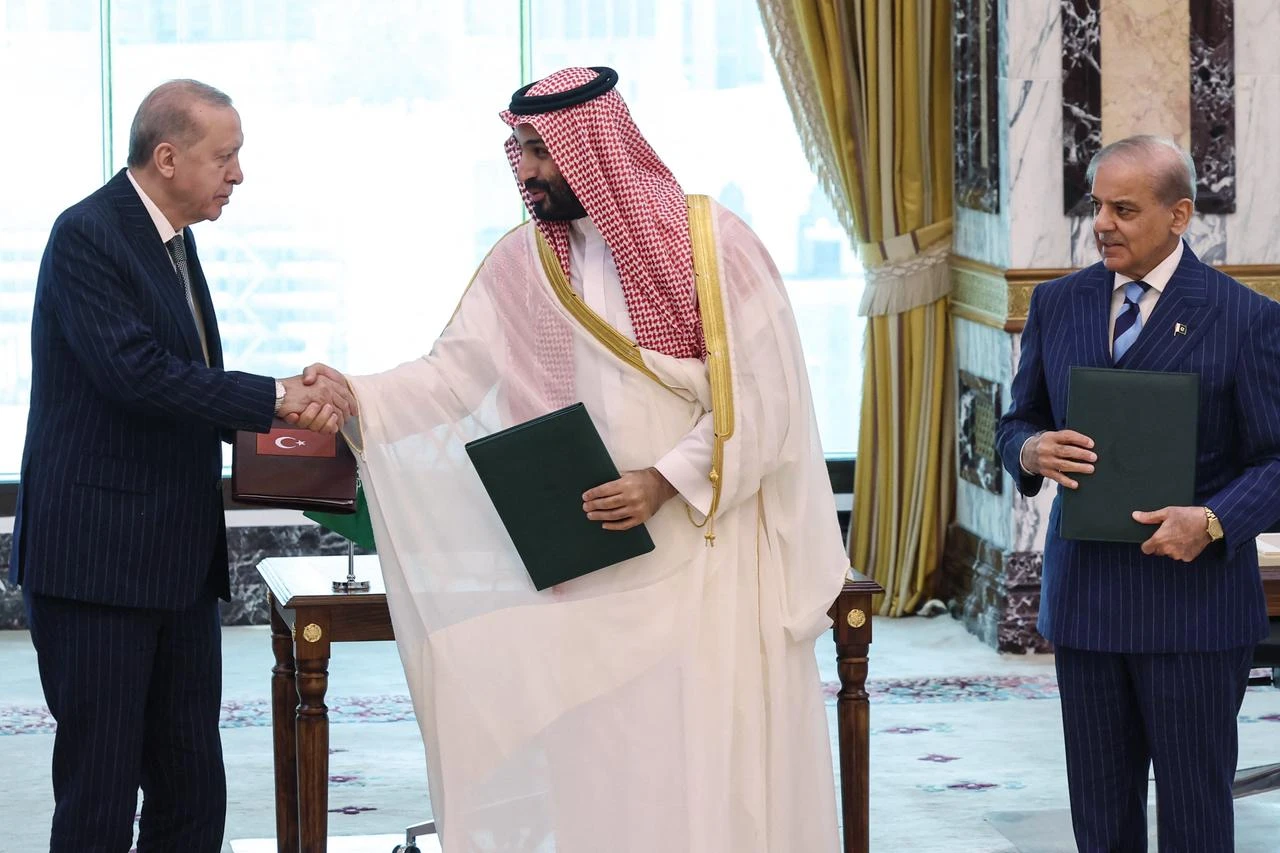
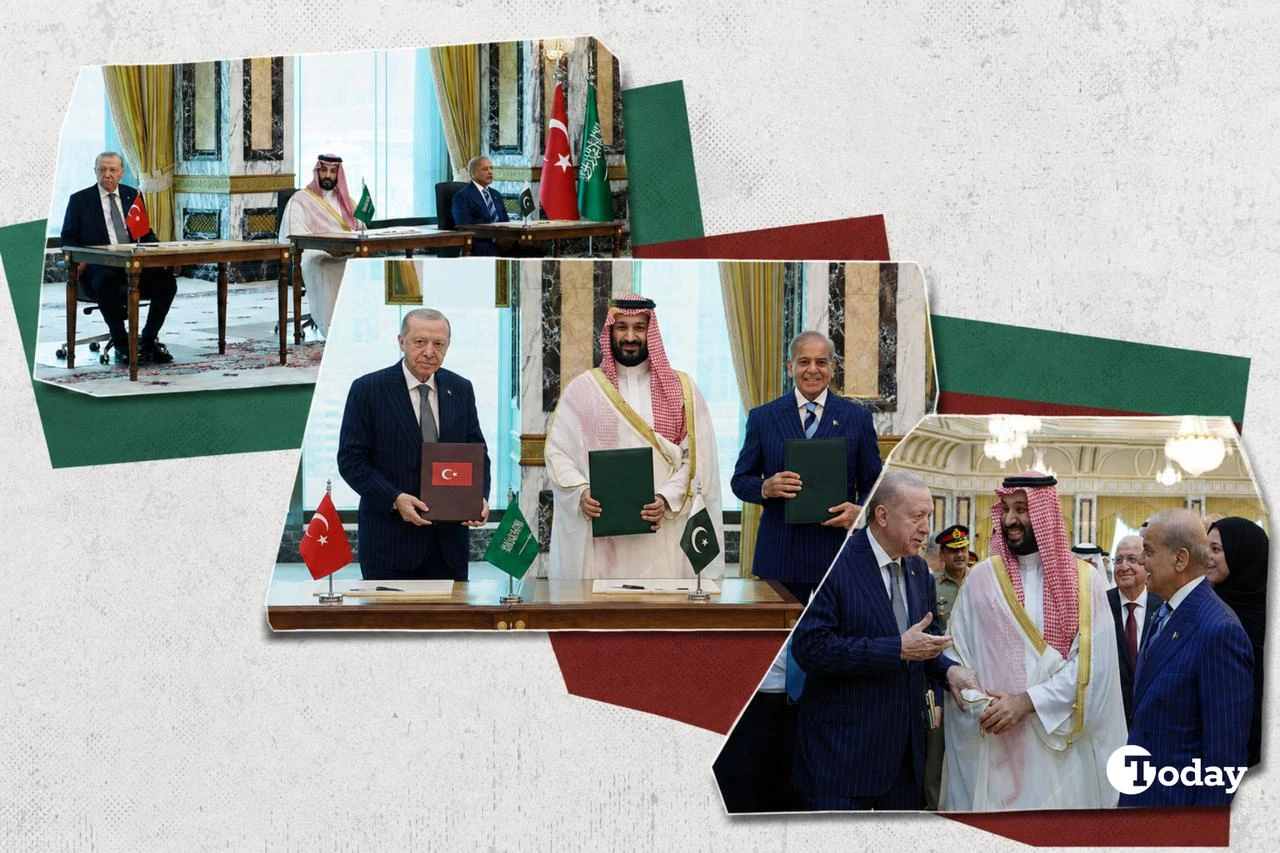
President Recep Tayyip Erdogan said Ankara's long-term vision is to eventually bring all countries in the region under the framework of the Mecca Joint Defense Agreement between Türkiye, Saudi Arabia and Pakistan.
Erdogan added that the pact is not directed against any country and is intended to strengthen collective deterrence, regional security and cooperation.
He made the remarks in an interview with London-based Asharq Al-Awsat. Türkiye's head of the Presidency's Directorate of Communications Burhanettin Duran also highlighted the interview in a social media post.
Erdogan said the agreement emerged from changing regional conditions and a shared sense of responsibility among regional countries.
"We have always supported regional issues being owned and resolved by the countries of the region," Erdogan said. "The issues of the region should be resolved by the region's own actors."
He said recent developments had demonstrated the importance of solidarity among friendly and brotherly countries, adding that Türkiye had consistently supported stronger dialogue and consultation rather than deepening disputes.
Erdogan said lasting peace requires not only an end to conflicts but also mutual trust, political will and a shared vision for the future.
He described the agreement between Türkiye, Saudi Arabia and Pakistan as a historic responsibility extending beyond cooperation among the three countries.
Erdogan stressed that the framework remains open to other countries seeking peace and stability in the region and said the three signatories were willing to increase the number of participating states.
"Our vision is not to remain limited to three countries, but to grow further and, if possible, one day bring all countries in the region under this umbrella," he said.
Asked whether the agreement was connected to tensions between the U.S. and Iran, Erdogan said those tensions were important for regional developments but that viewing the Mecca agreement only as a response to the current situation would misrepresent its purpose.
He said the agreement also reaffirms the right to self-defense defined under Article 51 of the U.N. Charter.
Erdogan said it does not target any country and is open to regional states committed to peace, prosperity and stability.
He added that discussions on such a mechanism had taken place for a long time with the countries that eventually signed the agreement as well as other regional states.
The president described the mechanism established in Mecca as a strategic response to changing regional conditions rather than a short-term reaction to daily developments.
Türkiye, he said, favors diplomacy over escalation, dialogue over conflict and regional cooperation over division.
Erdogan said the Mecca Joint Defense Agreement is based on a common defense approach and collective deterrence.
The agreement is intended to deepen security and defense cooperation, support joint defense industry projects and strengthen cooperation against terrorism, he said.
Erdogan said the provision treating a threat against one member as a common security issue for the other parties should not be viewed only as a military clause.
Its broader purpose, he said, is to strengthen deterrence, reinforce the security of the parties through mutual solidarity and protect regional stability.
He said the signatories were also sending a message that they would not pose threats to one another but would instead commit to guaranteeing each other's security and maintaining solidarity.
"The message of the Mecca Joint Defense Agreement is very clear: The security of one of us is the security of all of us," Erdogan said.
He said implementing that principle through an inclusive regional approach could contribute to lasting peace, stability and prosperity.
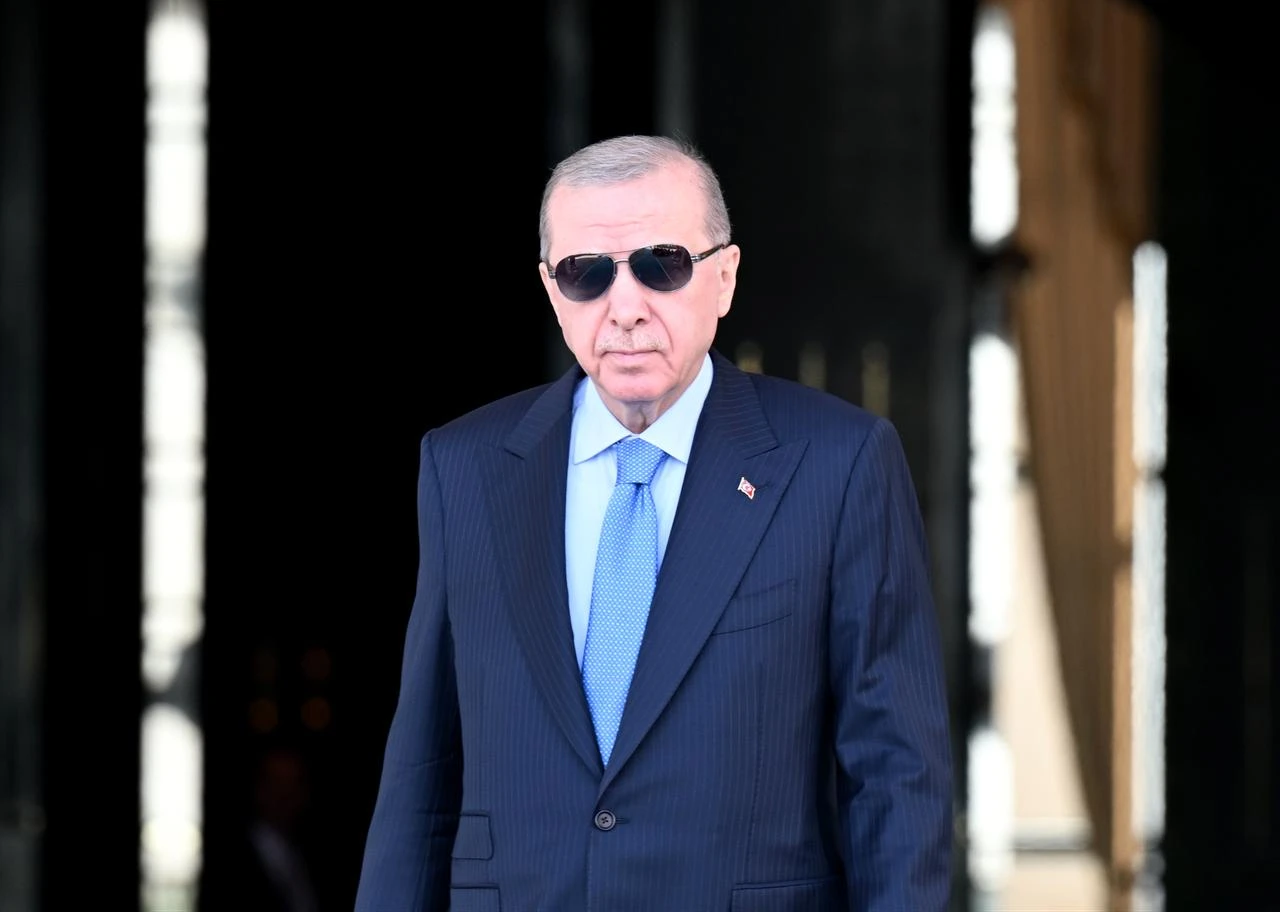

Erdogan said countries in the region increasingly need to take greater responsibility for their own security, stability and future.
He said regional countries and peoples understand their own challenges best and argued that stronger regional ownership, solidarity and common political will would also contribute to global stability.
Türkiye supports establishing stronger mechanisms among regional countries and making existing cooperation more permanent, he said.
Erdogan said the goal was not to create exclusionary blocs but to develop a regional cooperation system based on respect for sovereignty and territorial integrity, mutual trust and common interests.
He said the Mecca agreement could strengthen security in the Gulf and contribute to a new regional security and solidarity framework.
Erdogan said Gulf security was important not only for regional countries but also for the global economy and international trade.
Energy supply security, the safety of maritime routes, continuity of trade and global economic stability are directly connected to stability in the region, he said.
Erdogan said the Mecca Joint Defense Agreement could make a major contribution to common regional security and solidarity and could change the regional paradigm.
He also linked security with economic development, arguing that sustainable trade, investment and prosperity cannot exist without stability.
Referring to Europe's development following major wars, Erdogan said the region could pursue stability, security, economic integration and prosperity without experiencing similar suffering.
He said Gulf stability was also strategically important for economic links connecting Asia, Europe and Africa.
Erdogan said Türkiye would continue to assume responsibility and pursue constructive diplomacy to strengthen regional and global peace.


 Set as preferred source
 Set as preferred source


 1 min read
 1 min read