Newsletters




In traditional Anatolian towns, it is not uncommon to see pious elders moved to tears by a simple, heartfelt wish: to have been able to visit Mecca in the strength of their youth, and now, in their final days, to journey there once more and pass away in the holy city. It is a quiet reflection of Mecca's unparalleled significance in the Islamic world, a place that represents the ultimate spiritual sanctuary and unity for billions of Muslims.
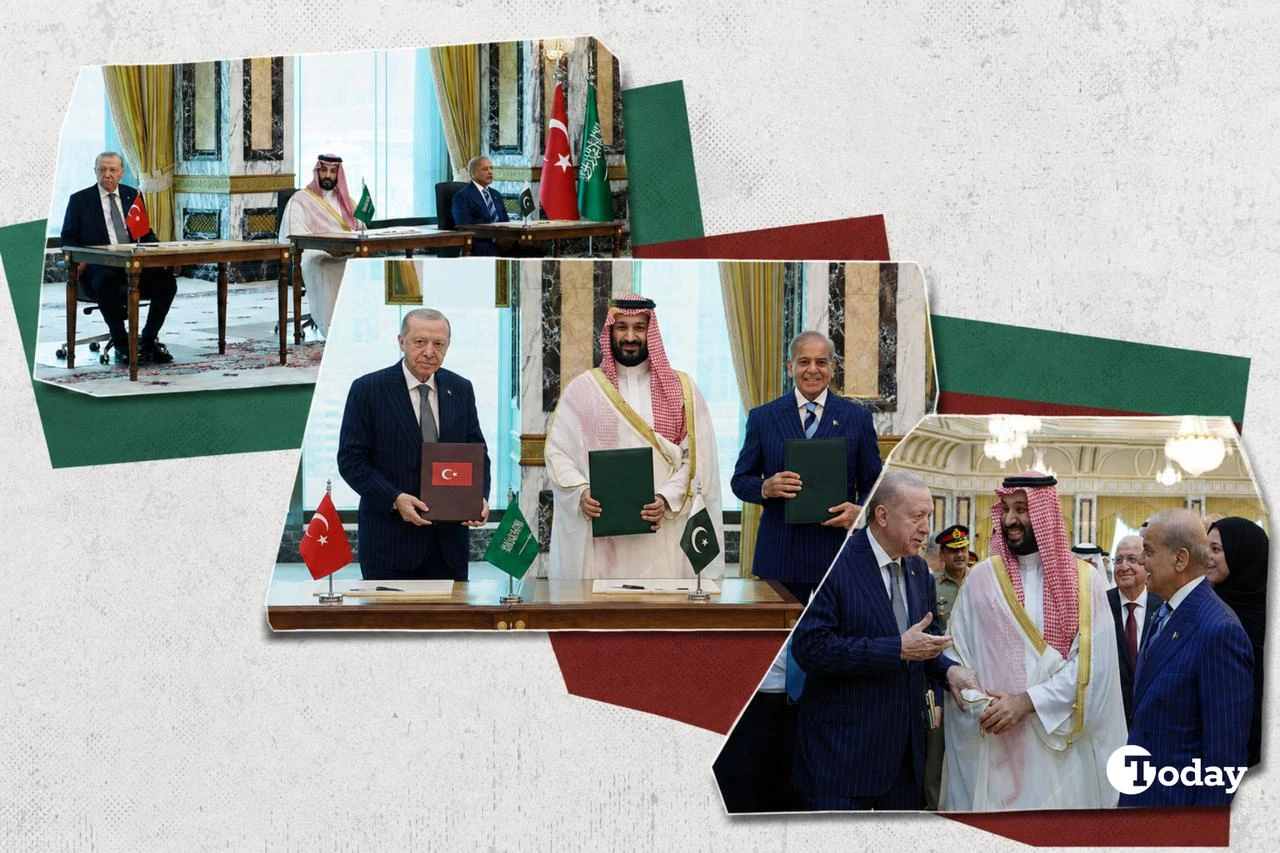
This week on Friday, a sacred day in Islam, that historic center of spiritual security for Muslims became the birthplace of a strategic, earthly defense shield. An ambiguous deal whose full details have been withheld from the public save for a NATO-like mutual defense clause. Erdogan said the agreement is defensive in nature, is not directed against any specific actor, and remains open to other regional countries wishing to join. Maybe, the trilateral deal is an alternative to regional powers which do not want to be forced into the Abraham Accords. It sounds far-fetched, but time will tell the real story.
If there is one thing we have learned from the deepening fractures in the Middle East over the past year, it is that traditional security umbrellas are no longer sufficient to weather the coming storms.
The turmoil triggered by the U.S.-Israeli war against Iran has shattered whatever illusions of a peaceful status quo remained, leaving nations scrambling for reliable shields in a highly volatile neighborhood. God only knows what Israeli officials are telling Mark Levin and Company right now—somewhere there's a phone ringing off the hook and a very awkward silence before someone picks up.
Jokes aside, what we are witnessing is a tectonic shift in the region’s geopolitical landscape.
The official statement includes a powerful clause: an armed attack against any one of the three states shall be regarded as an attack against them all.
This is the holy grail of military alliances. It is a localized, Islamic equivalent of NATO's Article 5, designed to strengthen collective deterrence against any act of aggression. For three major Sunni Muslim powers, spanning the Middle East and South Asia, to legally bind their national security to one another is unprecedented. It marks a decisive shift from mere diplomatic cooperation to a full-fledged military alliance.
But let us be clear about what happened behind the scenes: getting Riyadh to sign on the dotted line was not an easy task. Historically, Saudi Arabia has preferred to rely on bilateral security guarantees, primarily from the United States, while maintaining a degree of strategic ambiguity with regional powers. The Saudi establishment has always been deeply cautious about entering binding multilateral pacts outside of the American umbrella. Convincing Riyadh to embrace this trilateral framework required extensive diplomatic maneuvering.
However, the rapidly deteriorating security environment forced a recalibration in Riyadh. With Iranian-backed Houthi rebels reigniting a decade-long conflict, launching drones at Saudi energy infrastructure, and attacking oil tankers in the Red Sea, the kingdom found itself in a precarious position.
The Saudis realized that American attention is divided, its political climate is unpredictable, and its guarantees are conditional. Bringing the crown prince to the table required demonstrating tangible, immediate military value.
Pakistan had already set the stage in April by deploying a squadron of fighter jets and a Chinese-made HQ-9 air-defense system to a Saudi air base. Türkiye, meanwhile, brings its battle-tested military doctrine, sophisticated drone technology, and NATO-standard capabilities to the table.
Pakistan is a nuclear-armed power. The question that is currently keeping defense analysts and rival capitals awake is whether this agreement includes a nuclear clause. Does Pakistan's nuclear umbrella now extend to shield Riyadh and Ankara from existential threats? Possibly no. The official readouts from the summit do not mention specific military commitments beyond collective deterrence, leaving the nuclear question shrouded in deliberate ambiguity.
But in the realm of geopolitics, ambiguity is a weapon. The mere possibility that an attack on Saudi Arabia or Türkiye could trigger a response from a nuclear-armed ally alters the strategic calculus of every adversary in the region. Whether or not a formal nuclear sharing protocol exists on paper, the psychological deterrence it creates is very real. It is a brilliant stroke of strategic messaging that erects a formidable barrier against large-scale aggression.


 Set as preferred source
 Set as preferred source



 4 min read