Newsletters


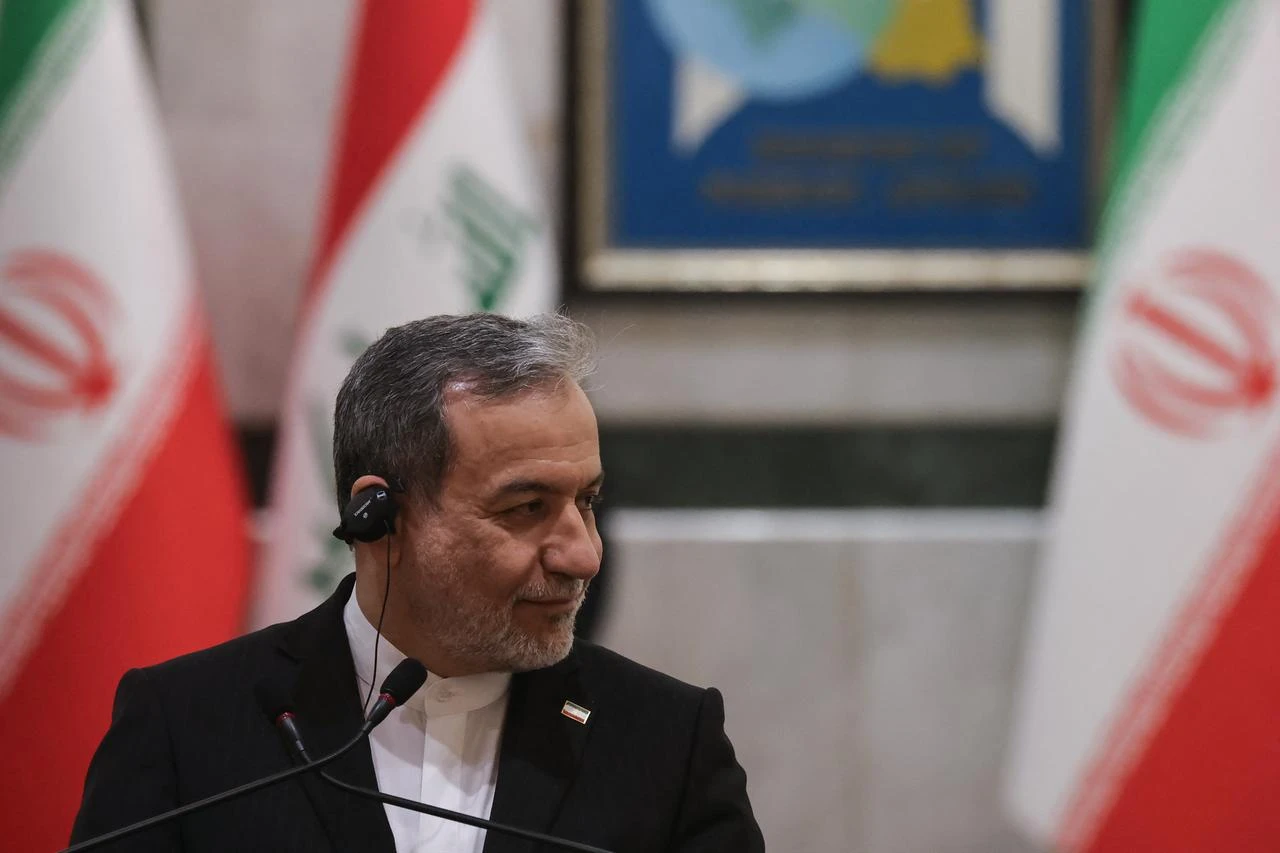


Iranian Foreign Minister Abbas Araghchi said Saturday there is no military solution to the escalating conflict between Saudi Arabia and Yemen's Houthi movement, calling instead for dialogue, in a wide-ranging interview that also detailed his account of the collapse of the June ceasefire with the United States.
"We believe that there is no military solution to the issue of Yemen, Bab al-Mandeb, and other regional issues," Araghchi said in an interview published by the state-run Iran Daily newspaper.
He said the situation in Yemen "cannot be attributed to Iran," describing the tensions around the Bab el-Mandeb Strait as "rooted in old disputes and issues between Yemen, Saudi Arabia and the countries of the region."
Araghchi elaborated that Yemen is under what he called a siege, and that the Houthis' actions are aimed, in their own framing, at breaking a blockade they attribute to Saudi Arabia.
He said Yemen's crisis is a longstanding one that military intervention in recent years only worsened rather than resolved, and said Iran has offered to play a constructive role if talks develop between Yemen and Saudi Arabia, saying Saudi officials are aware of that offer.
"We believe the knot of Yemen can be untied by hand, that is, through diplomacy and dialogue, and there's no need for tension and military confrontation," he said, citing a Persian proverb about not using teeth to undo a knot that can be undone by hand.
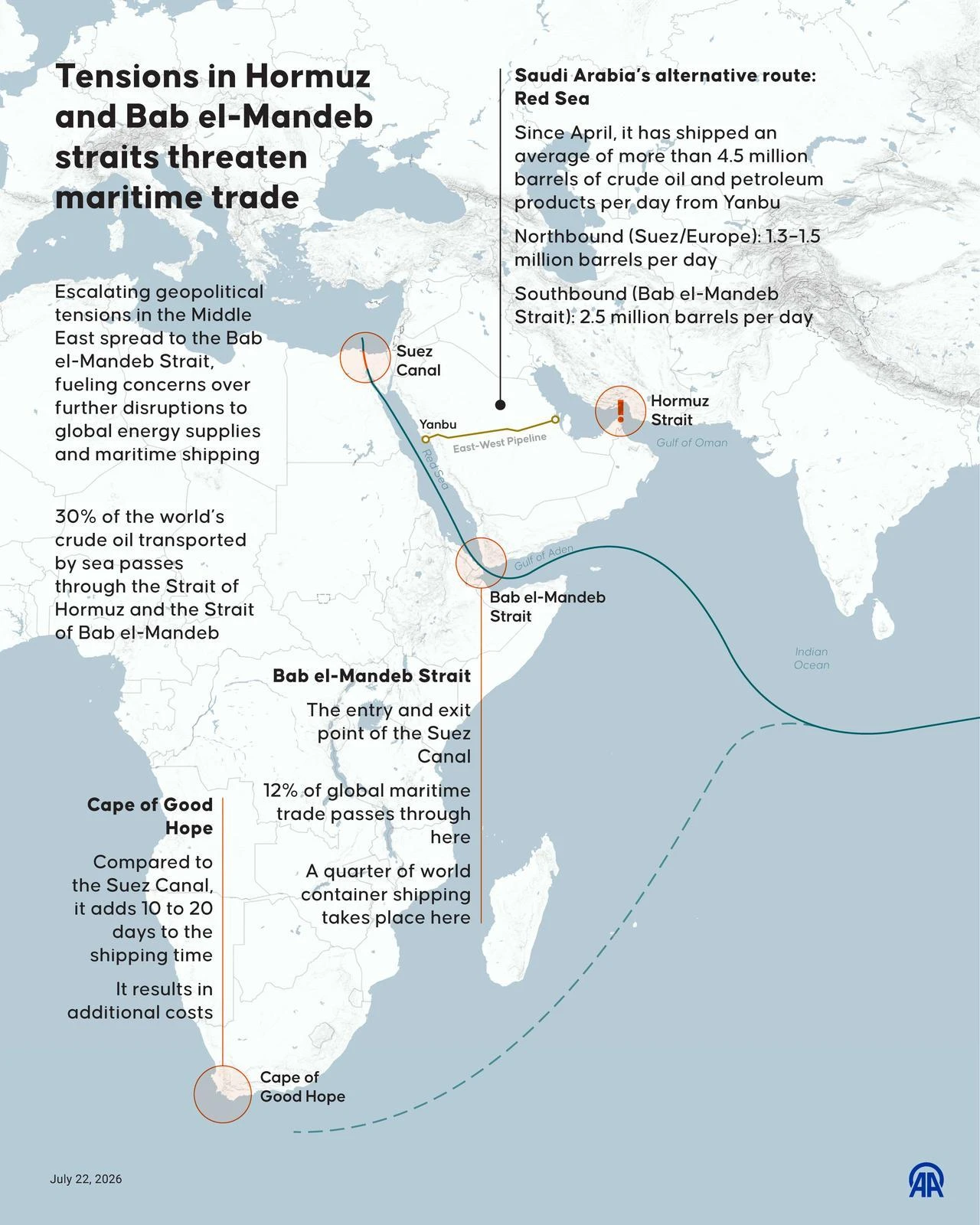
Renewed conflict between the Houthis and Saudi Arabia, largely frozen since a U.N.-negotiated truce in 2022, flared this month after the Houthis declared a blockade of Saudi ports and claimed attacks on tankers.
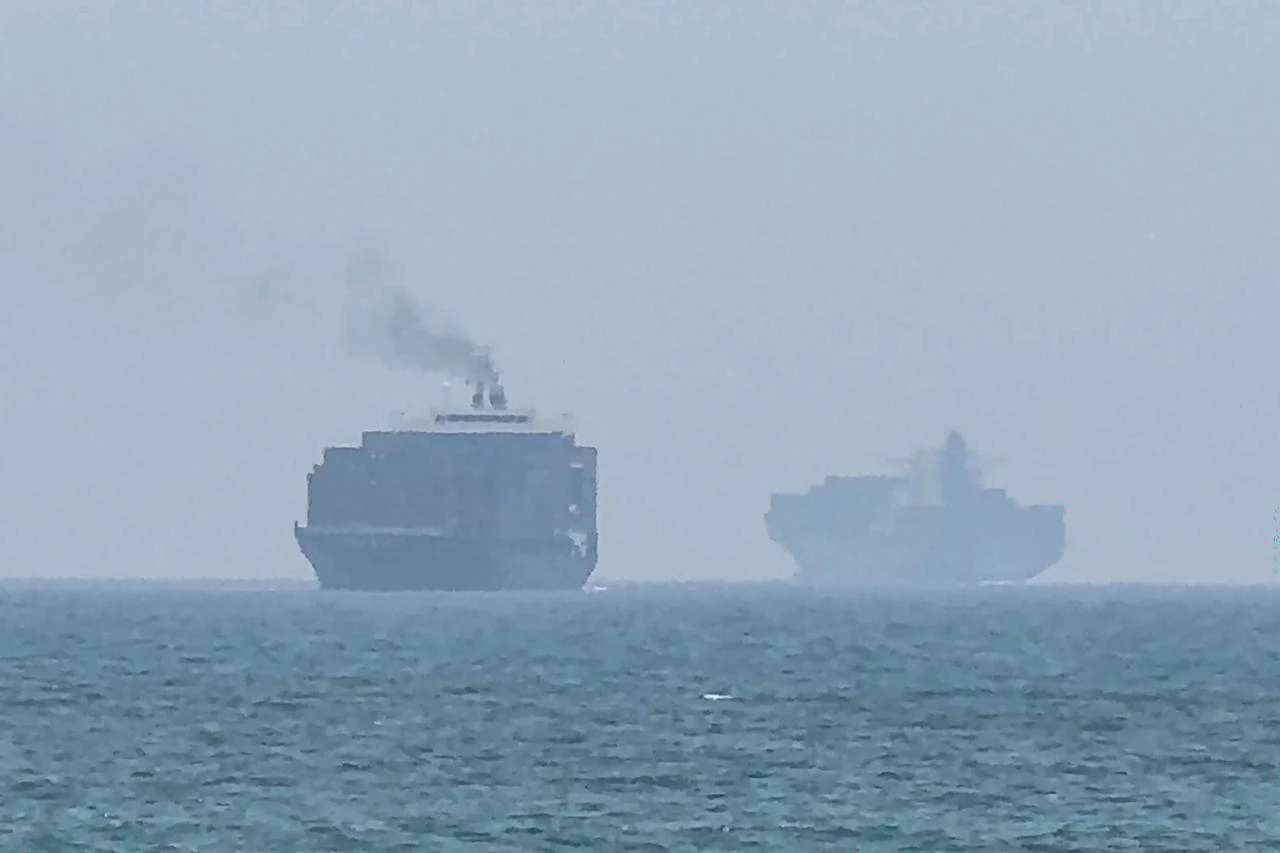
The blockade has threatened Saudi Arabia's ability to export supplies globally, compounding Iran's parallel blockade of the Strait of Hormuz, the kingdom's only other maritime route.
A Houthi spokesman said Friday the group was not blocking traffic through the Bab el-Mandeb Strait generally, saying the blockade "only affects the Saudi side."

The top Iranian diplomat rejected criticism that Clause 5 of the U.S.-Iran memorandum, governing the Strait of Hormuz, is ambiguously worded.
He said the clause clearly assigned Iran responsibility for arranging a return to pre-war transit levels within one month, including demining operations. Sixty days of free passage services will follow, after which Iran and Oman would discuss longer-term management of the strait.
"In our view, this clause has no ambiguity at all; everything in it is stated clearly," he said.
Araghchi said the U.S. opened an alternative southern shipping route roughly 10 days into the one-month window Iran had been given to restore normal transit, which he characterized as an act made in bad faith, since it preempted the agreed evaluation period.
He said Iran raised objections through a direct communication channel established after related incidents at a meeting in Switzerland, and that he personally raised the issue repeatedly with U.S. counterparts directly and through Qatari and Pakistani intermediaries, urging patience until the full month had elapsed.
"We saw no sign of good faith in America's conduct," Araghchi said, alleging that U.S. vessels contacted ships attempting to use Iran's designated corridor and encouraged them to use the alternate southern route instead, despite it being slower and, in his account, more hazardous.
He said Iran ultimately concluded the U.S. was either seeking to escalate tensions deliberately or seeking to dilute Iranian authority over the strait.
Asked about Iran's relations with the UAE, Qatar and Saudi Arabia following the 40-day war, Araghchi acknowledged current tensions as "natural" given recent hostilities, saying Iran had targeted U.S. bases and military assets across the region, including forces relocated from their original bases, describing this as an exercise of Iran's right to self-defense.
He said Iran continues to explain to regional states that it holds no hostility toward them, while expressing what he called grievances that some countries' territory or airspace had been used, with or without their knowledge, to facilitate action against Iran.
Araghchi added that he believed a shared regional understanding exists that Iran's actions were not driven by hostility toward neighboring states, and expressed hope that a period of confidence-building would follow once tensions ease, describing Iran and its neighbors as bound to coexist long-term.
Iran's top diplomat argued that regional security should be pursued collectively rather than through individual states relying on outside powers, tying this to a longstanding Iranian call for a "strong region" concept that requires less dependence on foreign, particularly U.S., military presence.
He argued that countries without U.S. bases had, in his account, experienced less damage and greater stability during the war.


 Set as preferred source
 Set as preferred source


 3 min read