Newsletters


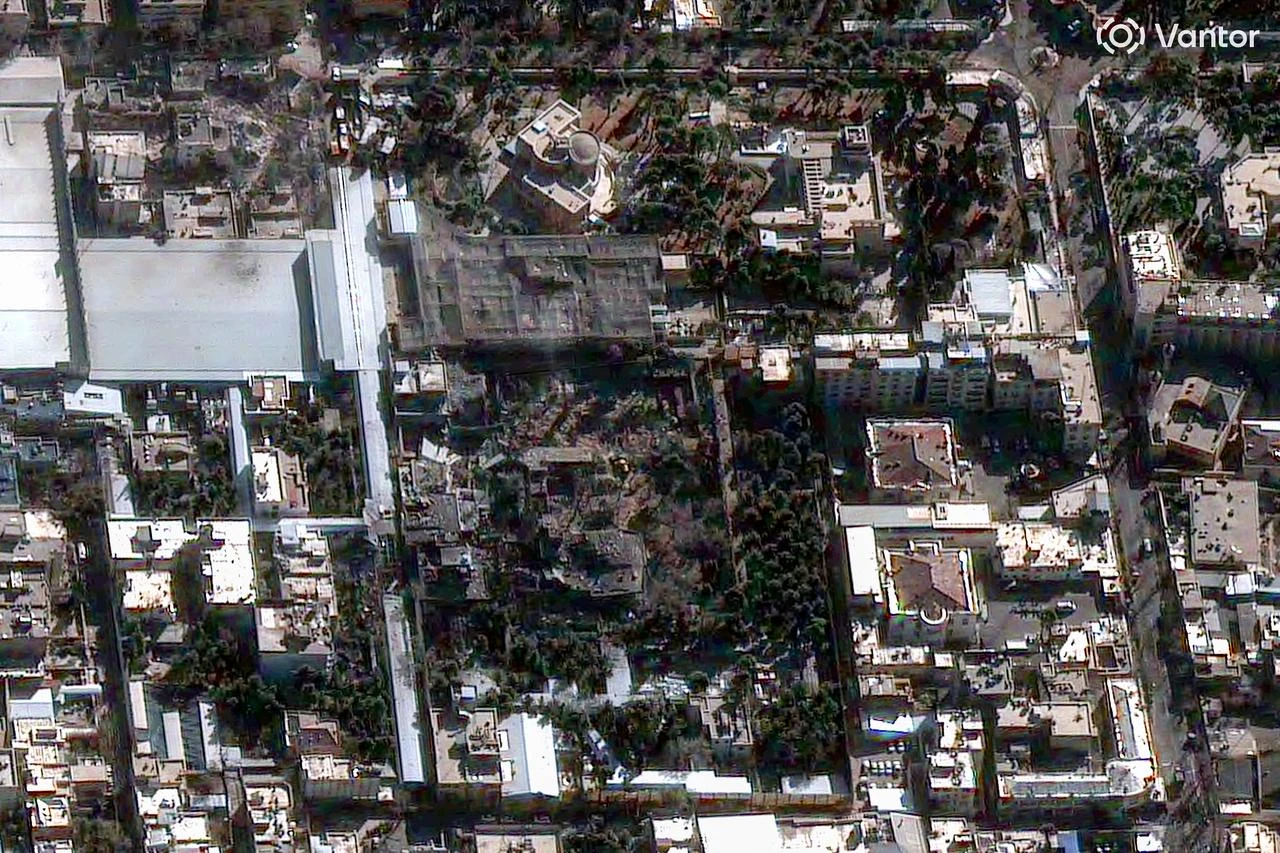


Iranian Foreign Minister Abbas Araghchi said the Feb. 28 strike that killed former Supreme Leader Ali Khamenei exploited a security vulnerability that "may still exist" today, in a wide-ranging television interview with journalist Javad Mogouei covering the diplomatic and military history of Iran's conflict with the U.S. and Israel.
"They knew that the Leader (Ali Khamenei) was in the office every morning. As I understand it, the command center meeting was also being held two or three buildings away, and they chose exactly that moment. The Intelligence Ministry's meeting was also taking place at that time," Araghchi said.
"Therefore, the attack on the Leader's office happened because of a security vulnerability, and that vulnerability probably still exists," he noted.
Araghchi said Iran's decision to re-enter negotiations after the 12-day war was driven primarily by a desire to remove any future argument that war could have been avoided through diplomacy, not because Iranian officials believed a deal was likely.
"I was certain (war would happen again)... our military forces were certain; we ourselves were certain," he said.
"Because we were certain, we said one or two rounds of negotiation should take place. Perhaps the other side would back down from the zero-enrichment demand, though that was unlikely, but if they didn't, we would have our justification. No one, not the international community, not people at home, could then say it was our fault, that we should have negotiated. That was the philosophy behind our entry into negotiations," he added.
Araghchi rejected the suggestion, raised by his interviewer, that negotiations themselves led to renewed war or that entering talks damaged negotiators' credibility.
"I don't accept that," he said.
"We are not here to do something for our own personal credibility or to preserve our own reputation... I am the foreign minister of the Islamic Republic of Iran. My responsibility is to preserve the interests of the Islamic Republic, not my personal reputation," the top Iranian diplomat noted.

Araghchi described a meeting with what he called "one of the region's leaders" before the 12-day war, without naming the individual.
He said the leader told him, in what Araghchi described as an arrogant and visibly pleased manner, "You can be sure they will attack you. They will destroy your nuclear facilities, they will destroy your oil facilities too, and you won't respond, because they will strike you directly and target your leadership as well."
Araghchi said he responded to the leader by outlining Iran's retaliatory doctrine: that any strike on Iranian nuclear facilities would be met with strikes on the other side's nuclear facilities, any strike on Iranian military capabilities would be answered in kind, and that U.S. participation would result in strikes on American bases in the region, since Iranian missiles could not reach U.S. territory but could reach regional bases.
He said he also warned that if Iran's oil facilities were struck and Iran could not export oil, no country in the region would be able to export oil either.
Araghchi said the regional leader responded angrily, saying no one could threaten "them" and that all of Europe, the U.S. and even China would act against Iran if its oil supply were threatened, given the scale of trade relationships involved.
The top Iranian diplomat said he responded with a laugh, clarifying that Iran had no intention of striking the leader's own country directly, only U.S. bases, a remark he said helped mobilize regional diplomatic efforts to prevent a wider war.
Araghchi described the diplomatic sequence preceding the 40-day war, saying talks in Geneva on the 7th of Esfand (late February) had not reached a conclusion, but that both sides had agreed to have technical committees meet in Vienna the following Monday.
He said that despite this, the atmosphere shifted abruptly toward war starting the following Friday, and that regional foreign ministers he spoke with that night expressed similar surprise at the sudden shift, given that Thursday's talks had shown no signs pointing toward war.
"It was clear that the US had concluded it could not get what it wanted through negotiation and needed to finish the matter through war," he said.
Araghchi said he believed Israel had assessed that Iran was at its weakest point in decades, following the killing of Hezbollah leader Hassan Nasrallah, the fall of the Assad government in Syria, and Iran's own reduced capacity after the 12-day war, and viewed this as a unique historical opportunity to, in his words, "finish the job" and eliminate the Islamic Republic.
He said this Israeli assessment was passed to Trump, who he said was later reported to have been angry that he had been told the war would be over in two to three days.
Araghchi said that on what he recalled as the second day of the war, Trump posted a brief message on social media: "unconditional surrender."
Iran's top diplomat noted that Tehran had refused U.S. demands during a pre-40-day-war negotiating round for a years-long suspension of uranium enrichment, which he said the American side had proposed as an alternative to continued conflict.
Asked by Mogouei whether accepting that suspension could have prevented the 40-day war, Araghchi said it was impossible to say with certainty, but that accepting it would have caused greater damage than the war itself, since it would have meant selling the country's dignity in addition to absorbing the costs of the earlier 12-day war.
Araghchi invoked a principle he attributed to the "martyred leader" (a reference to the elder Khamenei): that the Islamic Republic does not go to war because war carries costs, risks, and consequences but will go to war when the cost of not fighting exceeds the cost of fighting.
He said this calculation applied in both the 12-day and 40-day wars.
Araghchi described the internal decision-making structure behind Iran's approach to negotiations, saying a "Nuclear Committee," later renamed the "negotiating committee" and commonly referred to as the "six-person committee," operated under the Supreme National Security Council secretariat, initially led by former secretary Ali Shamkhani and later by Ali Larijani.
He said the committee's decisions carried the same authority as Supreme National Security Council resolutions and that minutes of its meetings exist and may eventually be published, containing what he described as "interesting" characterizations of the negotiators and negotiating process, without elaborating further when asked whether these concerned him directly.
Araghchi said Iran entered negotiations while simultaneously preparing for war, saying he had repeatedly told colleagues "no one should be deceived" by the negotiating track, prompting a senior military commander at one meeting to respond, according to Araghchi, that the armed forces were fully prepared regardless of the negotiations' outcome.
Araghchi and Mogouei discussed Iran's assessment that the 12-day war had strengthened Iran's military readiness ahead of the 40-day war.
Mogouei cited an account from IRGC commander Mohammad Pakpour suggesting Iran's military capability had tripled since the 12-day war and that the resilience of certain bases under sustained pressure had improved from roughly 10-15 hours to 35-40 hours of continued operation.
Araghchi said a U.S. think tank had estimated early in the 40-day war that Iran was losing 10-25% of its missile launchers daily and would exhaust its firing capacity by the end of the Iranian month of Esfand, based on lessons from the 12-day war, an assessment he said failed to account for changes Iran had made to its launcher systems in the intervening eight months that allowed replacement of destroyed launchers.


 Set as preferred source
 Set as preferred source


 2 min read
 1 min read