Newsletters




There is a certain cold logic to pawnshops. You bring in something of value, a family heirloom perhaps, and receive cash in return, on the understanding that the object will still be there when you come back for it. The transaction relies less on sentiment than on trust: that the item has not been quietly sold to cover someone else’s emergency.
In recent weeks, American security policy has begun to resemble a particularly busy pawn counter.
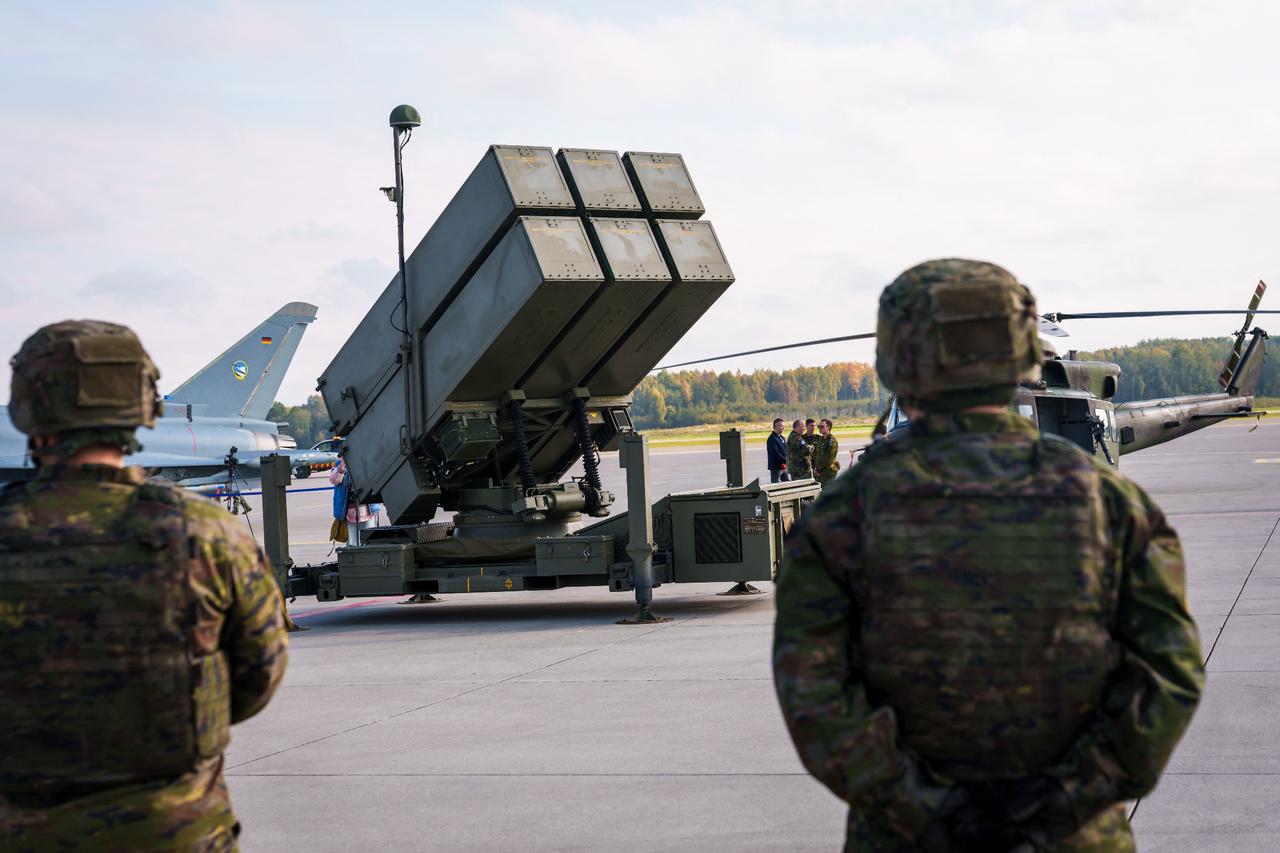
In a matter of a single month, the U.S. moved Patriot systems from South Korea to the Middle East, asked Poland to do the same, only to be rebuffed, and updated delays affecting deliveries to several European allies.
A storage system of carefully labeled commitments now begins to resemble a shelf of interchangeable items over a war of choice. Interceptors ordered and paid for by European states risk being treated less as reserved assets than as available inventory, ready to be redeployed, reassigned, or quietly repurposed.
While Israel’s domestic politics now appear to be more important than those of Europe’s whole security architecture, the customer may still hold the receipt, but the watch, it seems, is already back on the counter.
The United States’ expanding military engagement against Iran has opened another front in an already crowded strategic landscape. It has also reordered the hierarchy of commitments in ways that are increasingly visible to allies, particularly those who assumed their deposits were secure.
In the Gulf, the message has been immediate and unsettling. Iranian strikes, including attacks on regional infrastructure and U.S. positions, have exposed the limits of American protection at precisely the moment when Washington has chosen to escalate.
For Arab states, the contradiction is difficult to ignore: years of investment in defense partnerships have not insulated them from the consequences of decisions taken elsewhere, least of all in Israel’s domestic political arena, which now appears to carry disproportionate weight in regional escalation dynamics.
Further north, in Europe, the implications are less explosive, though arguably more structural.
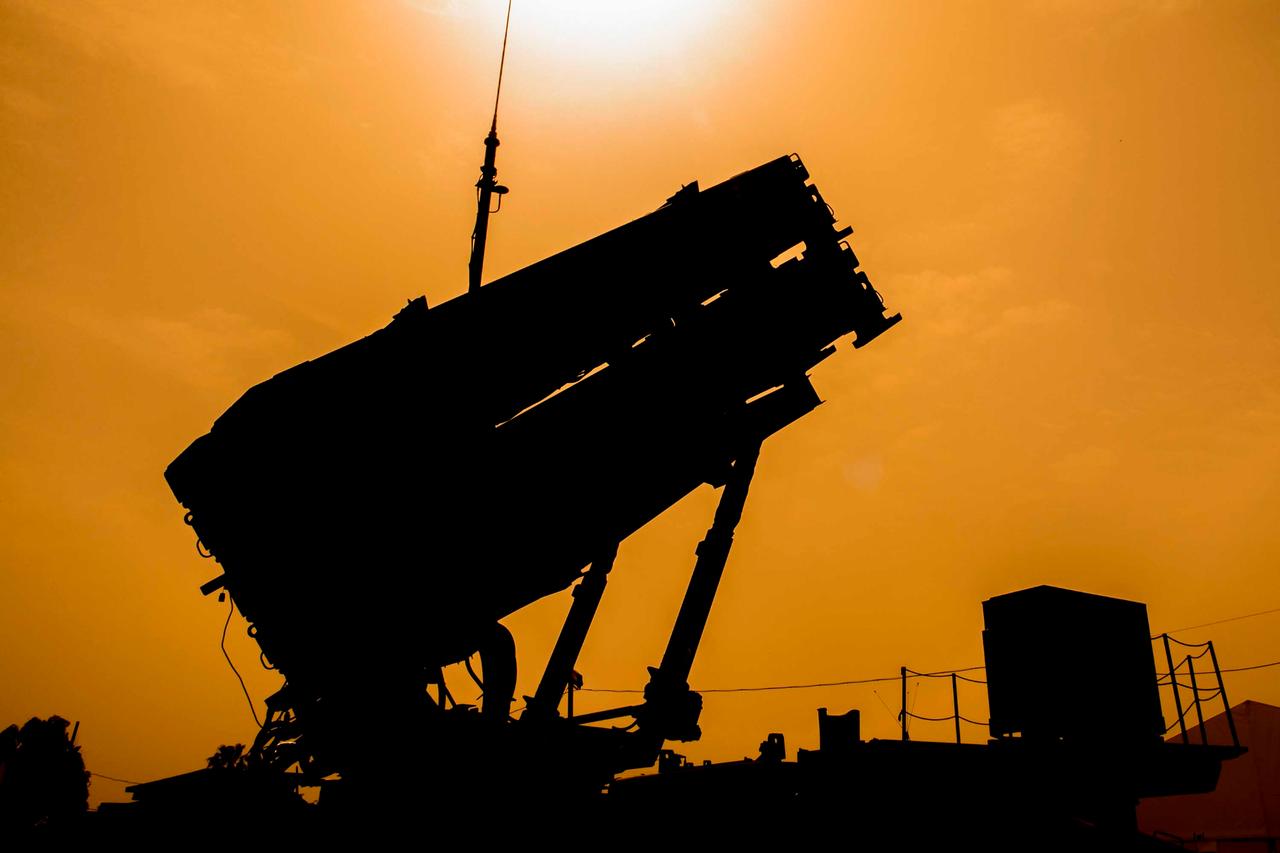
At the center of the emerging tension is a relatively technical mechanism with increasingly geopolitical consequences: the NATO-backed initiative through which European states finance the purchase of U.S.-made weapons for Ukraine. Since its inception, the program has become a backbone of Kyiv’s air defense, underwriting a substantial share of interceptor missiles for Patriot systems.
The arithmetic, however, has recently shifted a ton.
The war against Iran has consumed air defense interceptors at a pace that borders on industrial satire. Estimates suggest that thousands have been expended within weeks, far exceeding both Ukraine’s multi-year usage and the United States’ annual production capacity. The result is more than mere depletion; it has forced decision-makers into a desperate triage of backordered security and aggressive resource reallocation.
Faced with shrinking stockpiles and expanding operational demands, the Pentagon has begun considering a solution that is as pragmatic as it is politically combustible: redirecting resources financed by European allies to replenish American inventories.
Officially, nothing definitive has occurred. Unofficially, the language has shifted. Senior officials like Secretary of State Marco Rubio have signaled that U.S. military requirements will take precedence where necessary, a statement that acquires sharper edges when applied to funds already committed by partners for specific purposes.
The possibility that European funds might refill American arsenals without a corresponding flow of weapons to Ukraine has introduced a destabilizing variable into transatlantic relations. The doubt is no longer about capability, but about custodianship.

If this were an isolated consideration, it might be dismissed as contingency planning or a matter of ideological disagreements. It is not.
Another case involving Switzerland has provided a preview of how such reallocations might unfold in practice.
After delays in the delivery of Patriot systems, initially justified by prioritization for Ukraine, Bern suspended further payments. In response, funds previously allocated for other U.S. defense purchases were redirected toward the very systems now delayed.
Legally defensible, perhaps. Commercially inventive, certainly. Politically, less elegant.
What makes the Swiss episode particularly instructive is its sequencing. The country had already transferred more than $800 million toward its Patriot order, with deliveries originally scheduled between 2026 and 2028.
When Washington informed Bern of a delay stretching up to five years, Swiss authorities paused payments and began exploring alternative air defense options. The response from the United States was not to accelerate delivery or renegotiate terms, but basically to use the money earmarked for one system to stabilize shortages in another, while neither system was delivered on time.
The lesson has not gone unnoticed in European capitals, where defense procurement has long rested on the assumption that contracts, once signed and paid for, retain a degree of predictability. That assumption now appears negotiable.
 1 min read

European states, particularly those that have historically favored U.S. systems, are beginning to confront the simple question of whether dependence on a single supplier remains compatible with strategic autonomy.
The answer is unlikely to be delivered in speeches. It will emerge instead through procurement decisions, industrial policy, and the slow redirection of budgets toward domestic or alternative suppliers. What was once framed as an abstract debate about “European defense sovereignty” is acquiring the sharper contours of risk management.
Meanwhile, the Gulf states face a different but related calculation. Their concern is less about delayed deliveries than about exposure—specifically, the realization that U.S. security guarantees may not extend to shielding them from the consequences of conflicts in which they have limited agency.
In both cases, the underlying issue is the same: the fungibility of commitment.

Wars have always imposed trade-offs. What distinguishes the current moment is the visibility of those trade-offs across multiple theaters simultaneously. Supporting Israel’s confrontation with Iran, sustaining Ukraine’s defense against Russia, and maintaining credible deterrence elsewhere are not mutually exclusive in theory. In practice, they compete for finite resources, which are industrial, financial, and political.
The numbers tell part of the story. The pace of interceptor usage, the limits of production capacity, and the scale of existing commitments point toward a prolonged period of scarcity. The policy response, prioritizing immediate operational needs over contractual obligations, addresses the short term while quietly reshaping the long term.
Trust, once converted into inventory, is not easily replenished.
Pawnshops function because customers believe their possessions will still be there when they return. Break that expectation often enough, and the business model changes. Clients stop bringing their valuables. They look elsewhere, or they keep them at home.
The United States is unlikely to lose its position as the world’s preeminent security provider overnight as it sells whole systems rather than ammunition. But it may find that some of its clients in Europe, or otherwise, begin to hedge, diversify, and, where possible, reclaim custody of their own assets.
In a marketplace built on guarantees, even the suggestion that items might be quietly repurposed can be enough to alter behavior. The pawnshop remains open. The question is what, if anything, will be left on the shelves.


 Set as preferred source
 Set as preferred source


 1 min read