Newsletters


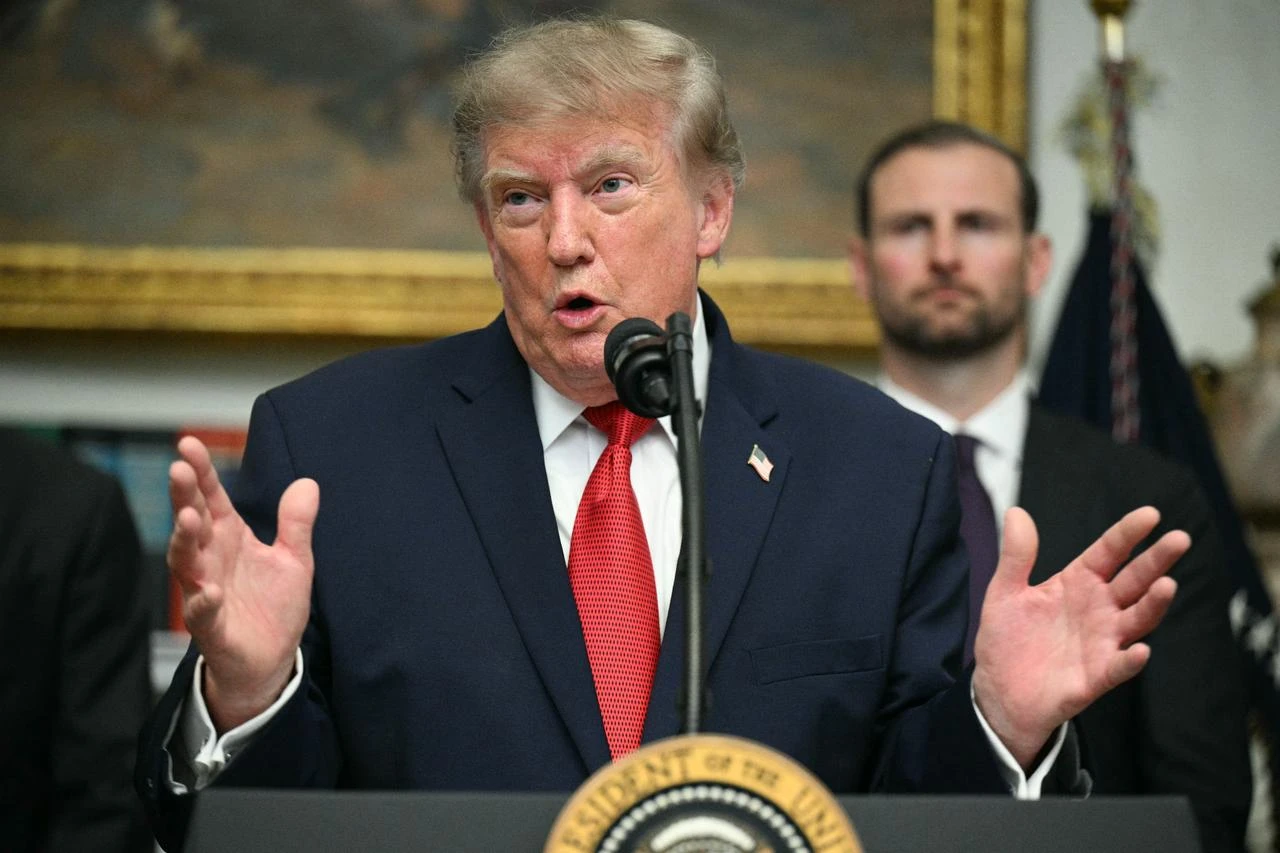


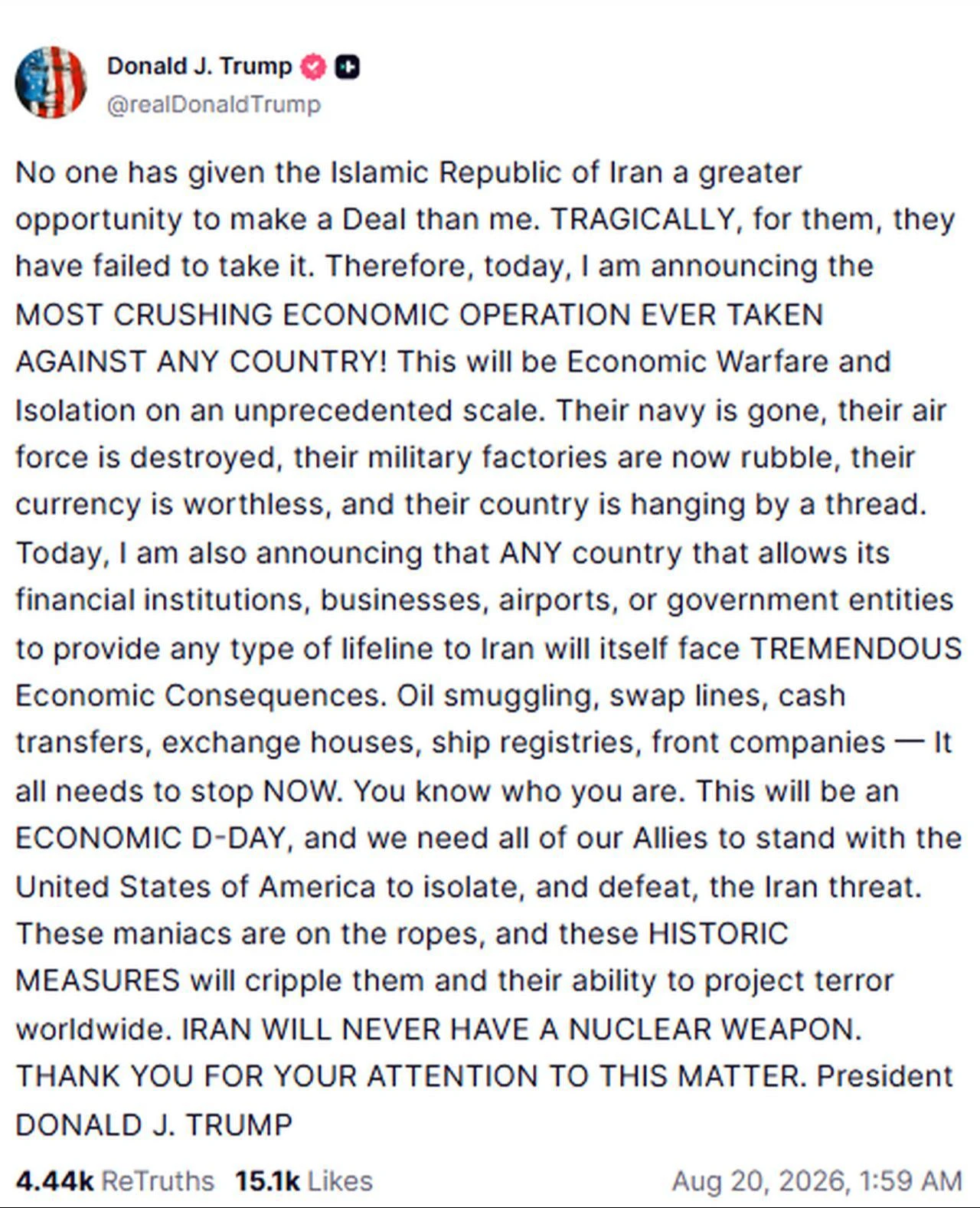
U.S. President Donald Trump announced a sweeping economic campaign against Iran on Wednesday, vowing to impose sanctions on any country whose financial institutions, businesses, or government entities continue to provide support to Tehran.
In a post on his Truth Social platform, Trump characterized the initiative as "Economic Warfare and Isolation on an unprecedented scale" and described it as "an ECONOMIC D-DAY." He framed the measures as the most severe economic operation ever undertaken against a single nation and urged U.S. allies to join the effort.
"We need all of our Allies to stand with the United States of America to isolate, and defeat, the Iran threat," Trump said.
The measures target a broad spectrum of financial conduits, Trump said, including petroleum smuggling operations, swap lines, cash transfers, exchange houses, ship registries, and front companies.
He asserted that all such activity must cease immediately and that assisting nations would incur "tremendous economic consequences."
The president contended that Iran's military infrastructure has been substantially degraded. He claimed the country's naval forces are depleted, its air force destroyed, and its military production facilities reduced to rubble.
He further characterized the Iranian rial as worthless and described the nation's overall condition as precarious.
Trump reiterated the administration's firm position on Tehran's nuclear program, stating that Iran will never acquire a nuclear weapon. "They have to get rid of (it) completely," he said of the program, adding that the U.S. would not allow the country to possess such arms.

Speaking to reporters earlier Wednesday, Trump indicated that negotiations with Iran could resume "maybe at some point." He maintained that the United States holds "complete control" over the Strait of Hormuz, dismissing periodic Iranian drone activity in the area as a minor nuisance.
The president asserted that the naval blockade has proven highly effective and that the strait remains open to commercial traffic, though he acknowledged the possibility of future slowdowns. He noted that the U.S. had intentionally opened the waterway pursuant to an agreement that, he claimed, Iran subsequently failed to honor.
A memorandum of understanding signed between Washington and Tehran in June, which had aimed to halt hostilities and establish a framework for broader negotiations, later collapsed amid reciprocal allegations of violations and a resurgence in fighting.
Diplomatic efforts to reopen the strait or resume comprehensive talks have since stalled.
Addressing concerns about rising gasoline prices, Trump pointed to increased domestic crude production and record pipeline construction as mitigating factors. He specifically cited Texas, Alaska, and Louisiana as states that have expanded output.
"The other thing that's happened is people have found other alternatives which they never thought about," Trump said, suggesting that these developments could reduce the strategic significance of the Strait of Hormuz over time. "I think the Hormuz Strait is not going to be quite as important as it was in the past."
Trump also indicated he could impose "very draconian sanctions" on Iran if necessary, though he did not elaborate on potential measures.


 Set as preferred source
 Set as preferred source


 1 min read
 1 min read