Newsletters


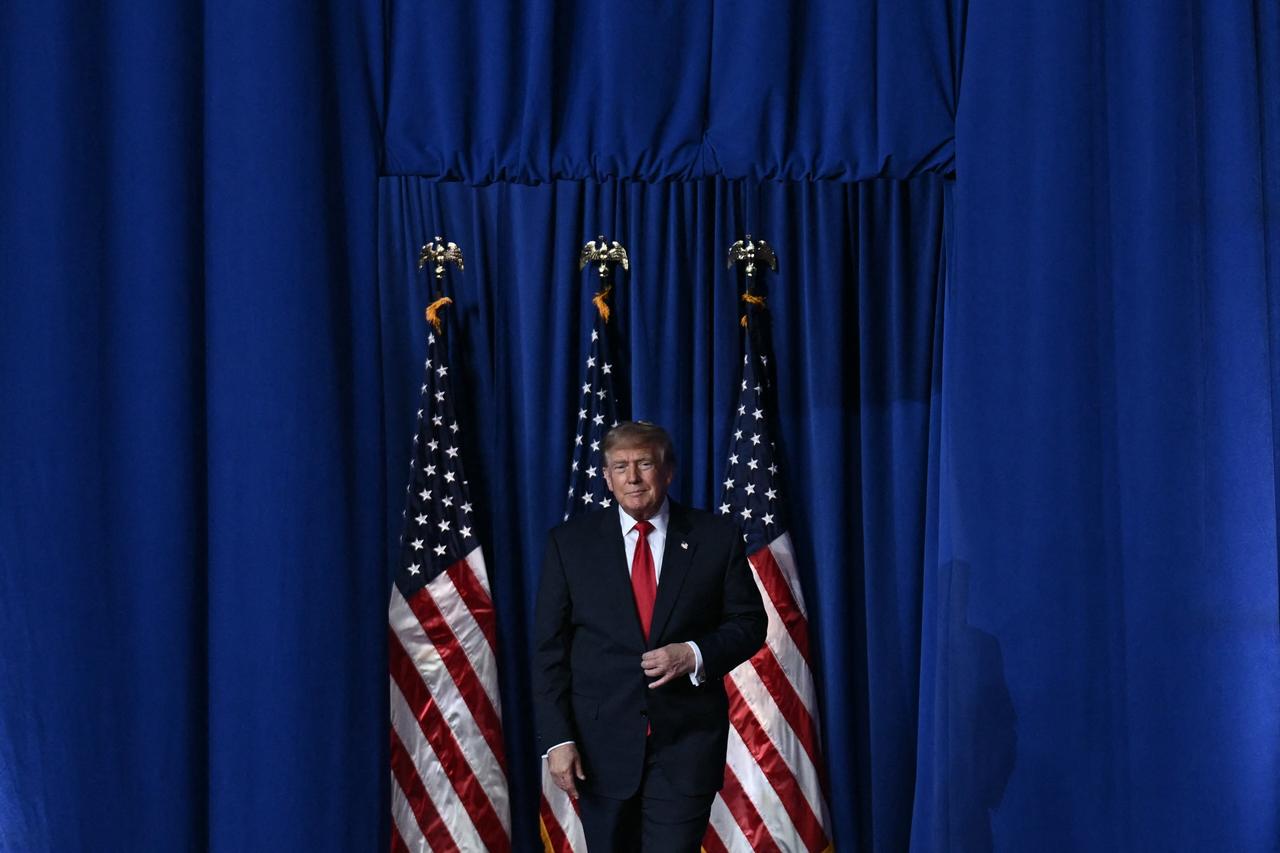


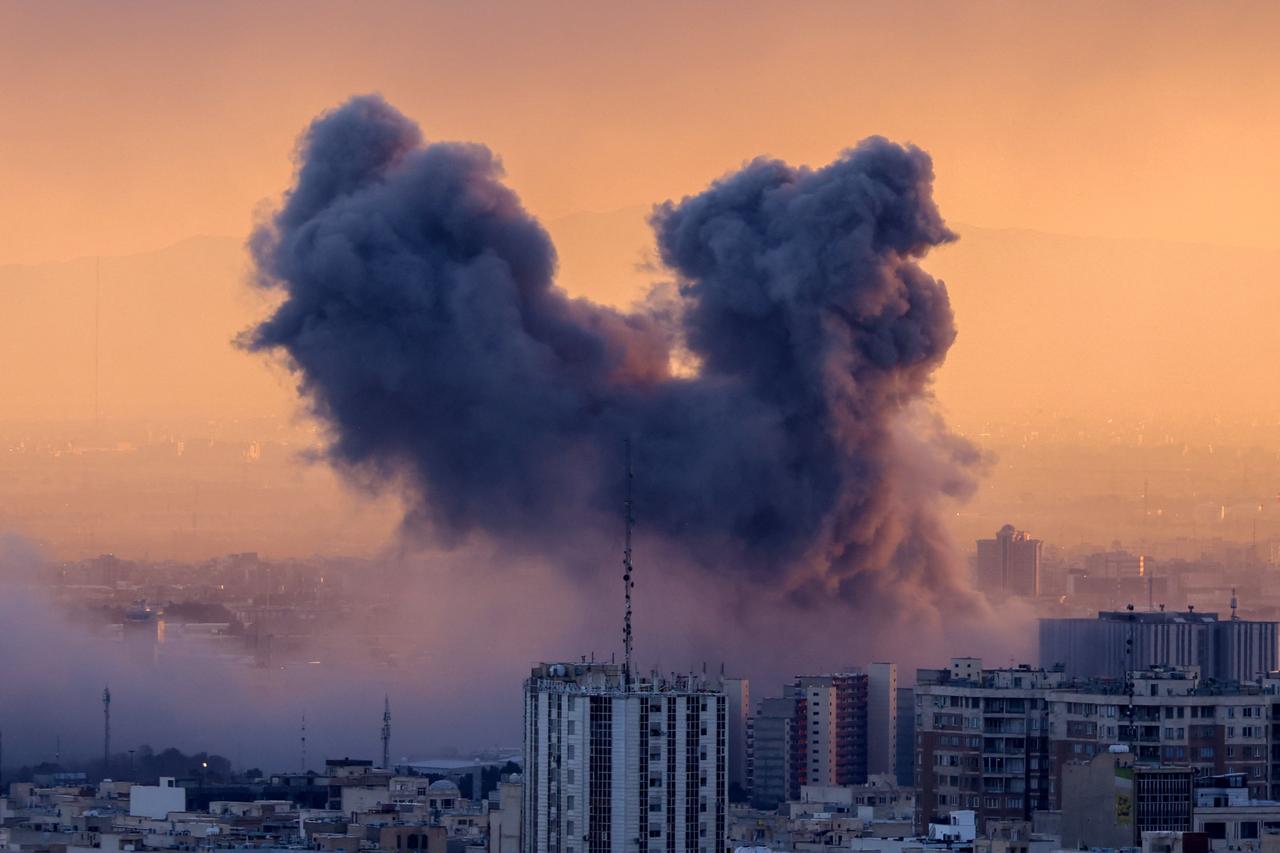
U.S. President Donald Trump said Saturday that Washington is considering an Iran strike that could come "maybe tomorrow," while saying Tehran could still avoid military action by reaching a "big, beautiful" deal.
Trump declined to say whether he had decided, as Iran warned any attack would draw a response "several times greater," and Iranian President Masoud Pezeshkian said many Iranians are struggling to afford food.
"We’re thinking about doing it, and maybe tomorrow," Trump told reporters when asked how far along he was in considering an attack.
"Do you really think I’m going to tell you if I’m going to do it?" he added.
Trump said Iran could avoid further military action by reaching an agreement. "They want to make a deal, but the problem is, will they hold the deal?" he said.
He said his goal was to keep Iran from developing a nuclear weapon and that an earlier operation involving B-2 bombers would not have guaranteed a lasting outcome.
"I’ve got to make it permanent," Trump said, adding, "That’s the only reason I’m doing it."
"I may have to finish it off, or maybe they’ll make a deal," he said. "But I’m not sure. Either way, we win."
Trump also said oil shipments through the Strait of Hormuz had increased compared with before the war, without providing figures.
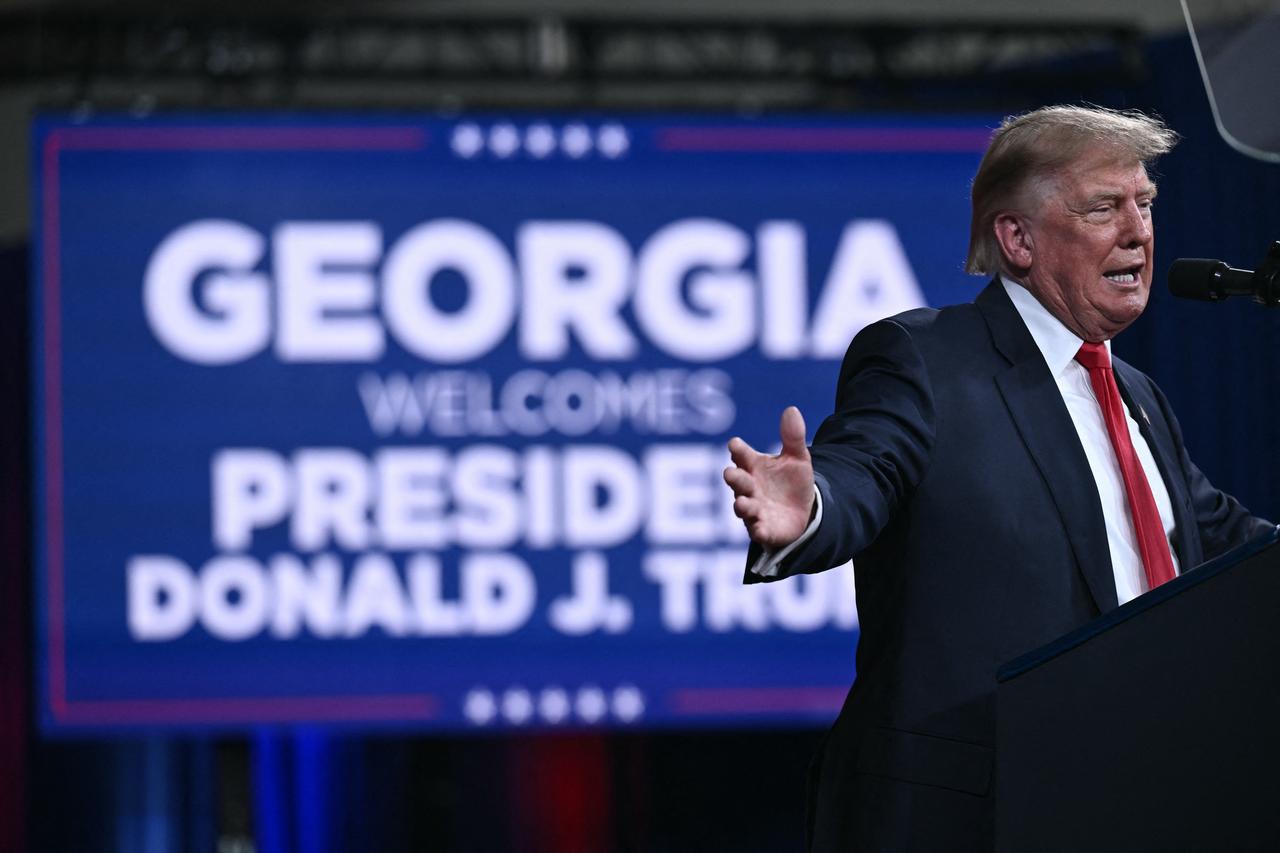
At a campaign rally in Georgia on Saturday, Trump said he needed to stop killing Iranian leaders to know who the U.S. is negotiating with.
"I gotta stop" killing Iranian leaders, Trump said, "because I gotta figure out who the hell we’re negotiating with."
"They don’t have any airplanes, no ships, no anything, no leaders. Level one leader is gone, level two leader is gone," he said.
Trump defended his 2018 withdrawal from the 2015 nuclear deal.
"I terminated one of the worst deals ever made, Barack Hussein Obama’s Joint Comprehensive Plan of Action (JCPOA), or as some people call it, the Iran nuclear deal, which was a road to a nuclear weapon for Iran. I terminated it, luckily, just in time," he said.
"We obliterated Iran’s nuclear enrichment capacity with Operation Midnight Hammer and Operation Epic Fury," Trump said, adding, "We defeated them militarily, financially, and otherwise. We have to make sure that they never, ever have a nuclear weapon."
He said oil prices "will be falling dramatically in a short period of time, as soon as that war is over, because there’s so much oil, all in the Hormuz Strait, there’s ships waiting to go."
On Thursday, Trump told reporters: "We’ve knocked the hell out of them, and we may do it a little bit further."

A spokesperson for Iran's Islamic Revolutionary Guard Corps (IRGC) told the Fars news agency Saturday that the armed forces were ready to respond to any new attack. "Even if the enemy takes limited action, Iran’s response will be several times greater," he said.
Ebrahim Azizi, head of the Iranian parliament’s National Security and Foreign Policy Committee, posted a map on X marking Israeli infrastructure, including desalination plants, power stations, refineries and the Dimona nuclear research center.
"A single miscalculation is all it takes: the occupied lands rendered uninhabitable in under an hour," Azizi wrote.
Iran is bracing for a U.S. bombing campaign around the midterms and preparing to retaliate across the Middle East, including against Israel and the United Arab Emirates, a person familiar with Tehran’s thinking told Bloomberg.
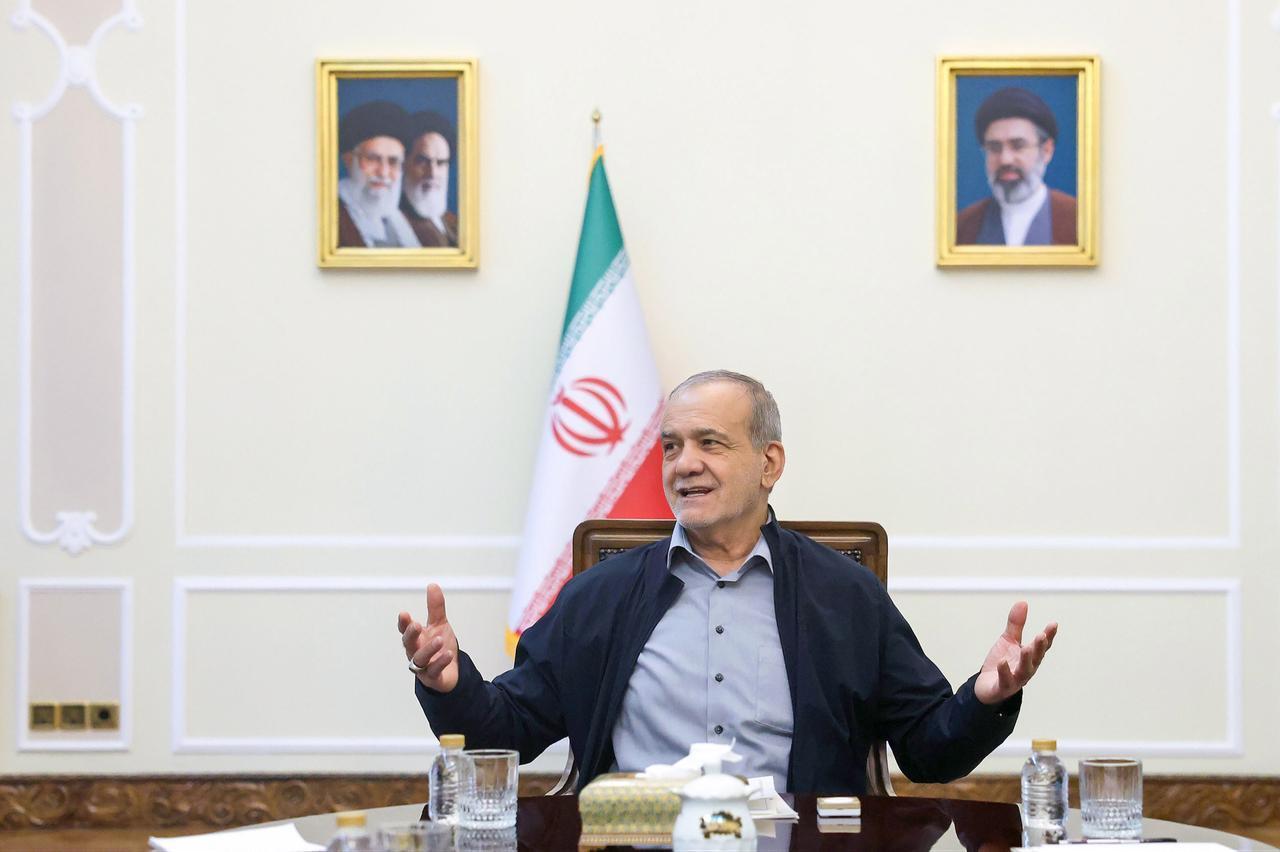
"There are many people in this society who are struggling to put food on the table because of the war we have found ourselves in, because of the wartime conditions we are living under," Pezeshkian said in a speech posted on his website.
He called for an end to what he described as a "state of neither war nor peace," saying Tehran "must also get out of this situation," without specifying how.
Foreign Minister Abbas Araghchi wrote in the Financial Times that "Iran is prepared to give diplomacy another chance if we see strong evidence of a sincere desire on the part of the U.S. to achieve a just and honorable solution to permanently end this conflict."
He added that "there is little reason to expect progress now."
Trump has repeatedly hinted U.S. forces would resume strikes after the Nov. 3 midterm elections and has sent a third aircraft carrier strike group and 10,000 additional sailors and Marines toward the Gulf.
On Friday, U.S. Ambassador to Türkiye Tom Barrack told podcast host Mario Nawfal: "Could there be a strike this weekend? Absolutely." Barrack, who also serves as envoy on Syria.
"All indications point to a resumption of war and a major bombing campaign, although the timing remains uncertain," said Asli Aydintasbas of the Brookings Institution, who spoke to Bloomberg.
"Both Trump and Netanyahu may see war with Iran as a political escape hatch," said Ali Vaez of the International Crisis Group. "But both risk discovering that a war intended to rescue their political fortunes could end up burying them."
"The Middle East feels eerily similar to its pre-Iran war state in February," Bloomberg Economics analysts wrote Thursday. "There are some differences, including approaching elections in the U.S. and Israel, significant disruptions in the Strait of Hormuz, and a more intransigent Iran. Yet these point to a higher, not a lower, likelihood of renewed fighting."
Some Gulf officials expect violence to resume and fear it could be worse than before, a person familiar with the UAE government’s thinking told Bloomberg.
The war began Feb. 28 when the U.S. and Israel attacked Iran, killing Supreme Leader Ali Khamenei and senior commanders. Iran retaliated against U.S. assets and Israel and restricted passage through Hormuz, and Washington imposed a blockade on Iranian ports.
A ceasefire mediated mainly by Pakistan in mid-June collapsed soon afterward, with each side accusing the other of violations.


 Set as preferred source
 Set as preferred source


 1 min read
 1 min read