Newsletters


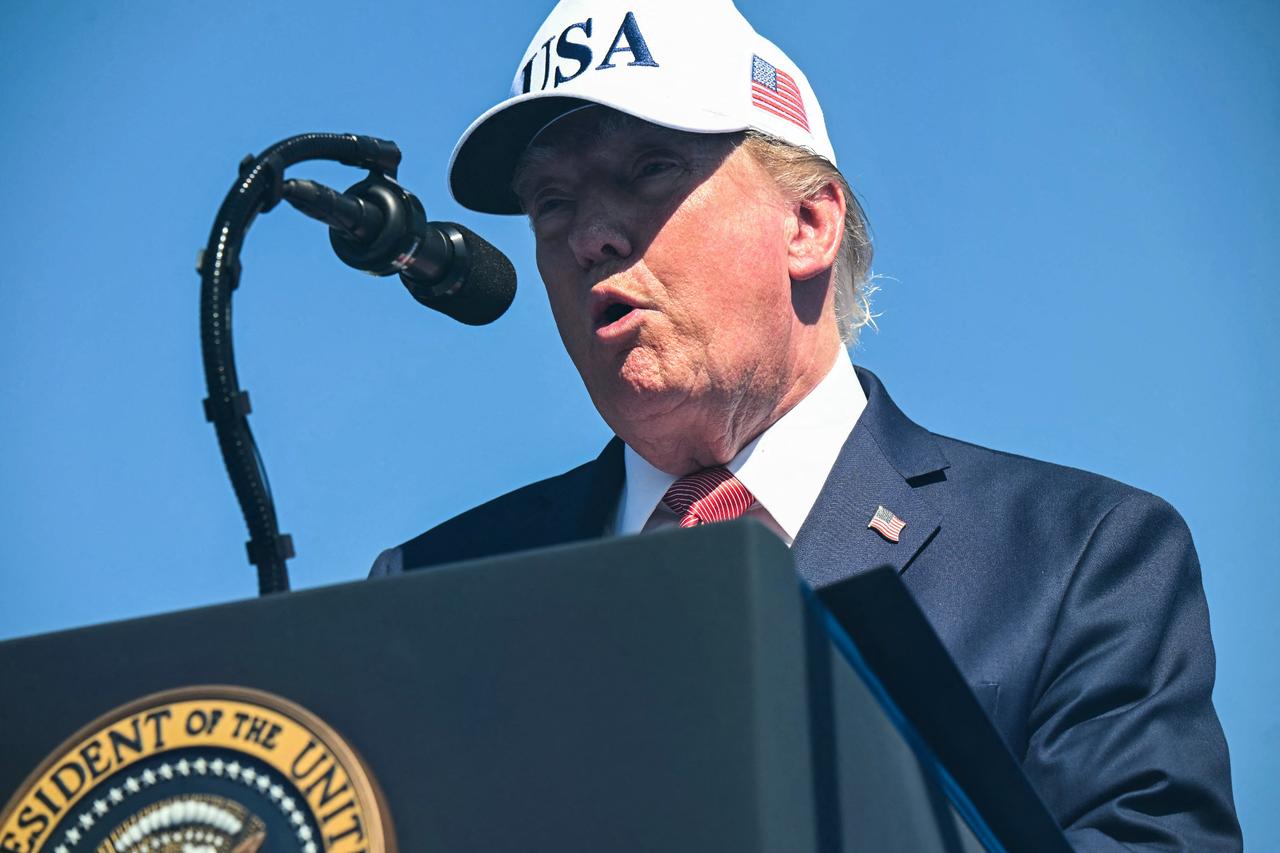


United States President Donald Trump praised Germany’s right-wing Alternative for Germany (AfD) party after it secured a record result in a state election, attributing its rise to opposition to the country’s immigration policies.
“Wow! The Populist Party in Germany just had a really big night,” Trump said Tuesday in a post on his Truth Social platform.
“They finally got tired of the absolutely horrible Immigration rules and regulations, which have hurt Germany so badly. THEY ARE ON THE RISE and not going to take it anymore! MGGA!!!” he added, using an abbreviation for “Make Germany Great Again.”
Trump’s post did not name the AfD directly but came two days after the party emerged as the largest force in elections in the eastern state of Saxony-Anhalt.
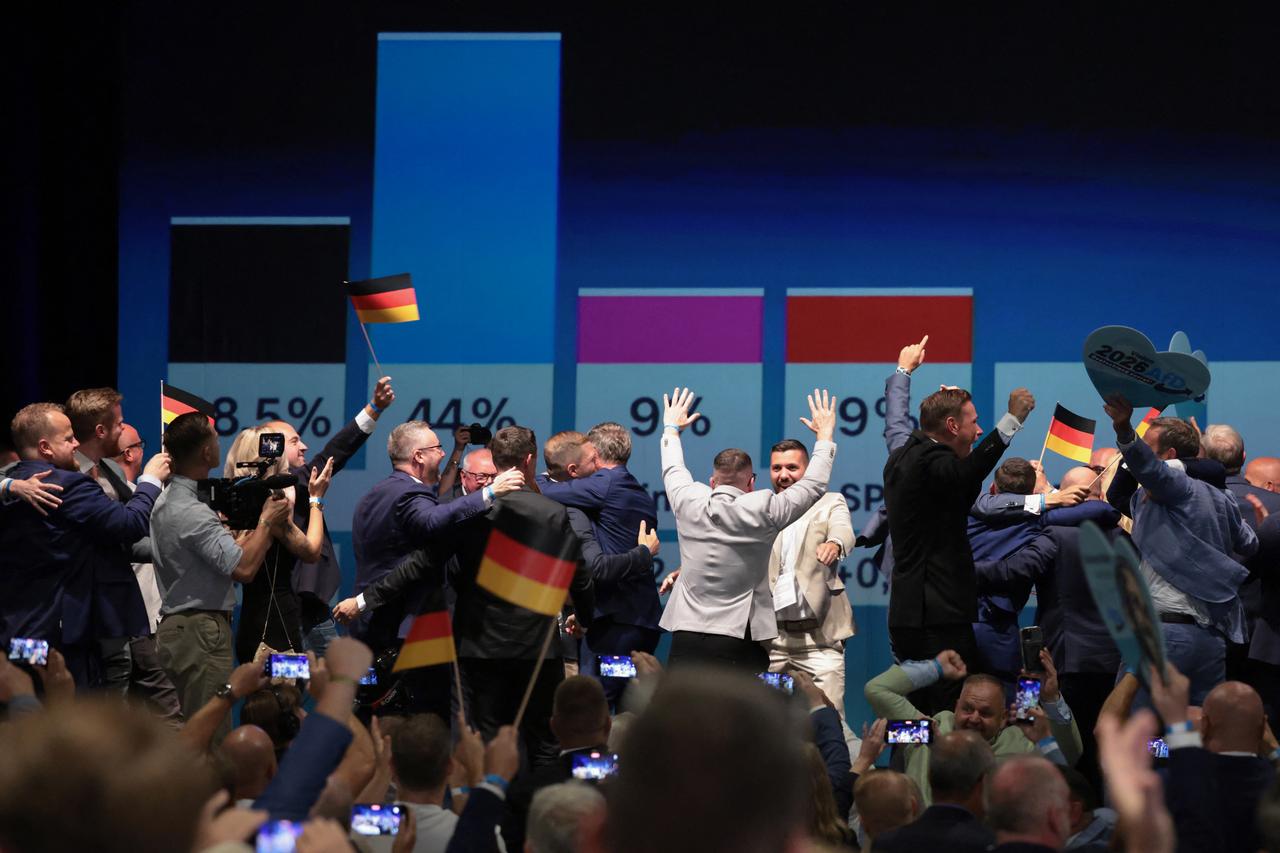
The AfD won 43.8% of the vote in Sunday’s election, its strongest showing in any German state election, while Chancellor Friedrich Merz’s Christian Democratic Union (CDU) fell to 17.2%.
Germany’s domestic intelligence agency has classified the AfD’s Saxony-Anhalt branch as a proven right-wing extremist organization, saying parts of the party promote a racist, ethnic understanding of national identity that is incompatible with the country’s democratic constitutional order.
Mainstream parties have cited that assessment in maintaining a refusal to govern with the AfD.


German Chancellor Friedrich Merz said Monday he was “deeply shocked” by his party’s state election defeat but vowed to continue with reforms while seeking to explain them better.
“This is the heaviest electoral defeat the CDU has suffered in years, in decades,” Merz said after Sunday’s vote in the ex-communist eastern state.
“Naturally, this will have to have consequences,” he added.
Merz conceded that his own low poll ratings had played a role in the CDU’s defeat.
“I know that I personally was a constant topic in this election campaign,” he said.
“We must try, I myself included, to reach people more effectively, including in the full range of their emotions,” he added.
But Merz said his “determination to continue on the path of reform is unbroken,” arguing that reforms were needed for the sake of “our children and grandchildren.”
On Germany’s support for Ukraine, Merz said he would “not budge a single millimeter” from his belief that Germany must defend its freedom against Russia.

AfD national co-leader Alice Weidel said after the vote that “no chancellor before has been as unpopular as Friedrich Merz,” calling him “a major burden” for Germany.
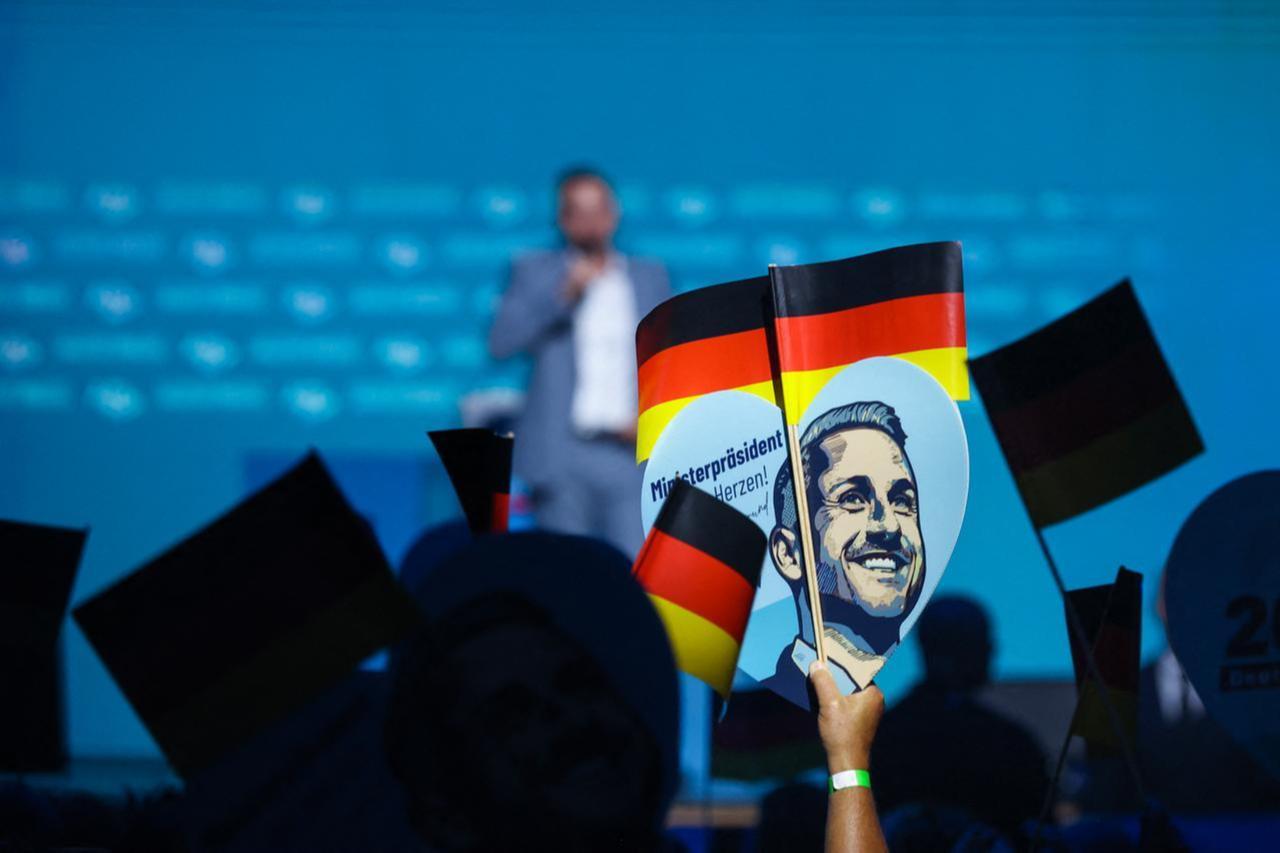
Ulrich Siegmund, the AfD’s winning lead candidate in Saxony-Anhalt, said voters had sent “a signal to Berlin” and mockingly thanked Merz for being “a very good campaigner” for the AfD.
Siegmund said that after narrowly missing an absolute majority, the party was reaching out to other parties and individual lawmakers to build a stable governing coalition.
“It is a very clear government mandate,” Siegmund said. “It could hardly be clearer.”
Sven Schulze, the defeated CDU state premier who remains caretaker leader, acknowledged that “we are the opposition—the mandate to govern now lies with the AfD.”
The anti-immigration, Russia-friendly, and pro-Trump AfD has vowed a “remigration and deportation offensive” targeting irregular migrants.
Supporters of Trump also cheered the AfD’s result.
Former U.S. ambassador to Germany Richard Grenell celebrated the outcome as “a huge win and a new day in Germany,” while tech billionaire Elon Musk was among the first to congratulate the party, writing: “Well done!”
Several other European far-right figures also hailed the result.
Leaders of France’s far-right National Rally, which has broken ties with the AfD despite similar anti-immigration positions, were more cautious, saying only that they “took note” of the vote.
While the result sparked jubilation among AfD supporters, the prospect of the first far-right government taking charge of a German state since World War II has deeply unsettled other parties, migrants and minority groups.
The AfD in Saxony-Anhalt is labeled a “right-wing extremist” group by Germany’s domestic intelligence agency, and some of Siegmund’s staff are former members of a since-banned neo-Nazi organization.
Thousands of protesters gathered Monday night in front of Berlin’s Brandenburg Gate to denounce the AfD, with several participants saying they feared what the party’s rise would mean for democracy and freedom in Germany.
“I see that democracy in our country is currently under serious threat,” protester Marie-Therese Hattendorf told AFP.
A 28-year-old man from Afghanistan who arrived in Germany in 2015 said he was afraid after seeing news of the AfD’s victory.
“I have two children here,” he told AFP in Magdeburg, the state capital of Saxony-Anhalt. “What will happen if I have to leave?”
AfD national co-leader Tino Chrupalla sought to dismiss such fears, saying “no one needs to be afraid of us.”
He told Deutschlandfunk radio that his party was not against people with a migrant background, “provided they are integrated, speak German ... and contribute to the economy here.”
Merz stressed that German law, including immigration law, and the country’s constitution “apply in Saxony-Anhalt as well — even after the election of an AfD state premier.”
 2 min read

Pressure has grown on Merz not only from the far right but also from within his coalition, which has struggled to revive a stagnant economy and remains divided over social policy, especially pensions.
The AfD was founded in 2013 as a eurosceptic protest party before shifting its focus to opposition against the refugee and migrant policies of former CDU Chancellor Angela Merkel.
Merz has vowed to return the CDU to its conservative roots and has launched a crackdown on irregular migration while trying to turn the economy around, but his poll ratings have remained low.
Sunday’s election outcome “delivered a huge blow” to Merz and his government and “can throw the CDU into significant turmoil,” Holger Schmieding, chief economist at Berenberg Bank, wrote.
Still, Schmieding said it was more likely than not that Merz and his coalition would “soldier on” until the end of their term in 2029, given the lack of a clear alternative.
“Replacing Merz as head of the coalition would be a high-risk adventure from which his party will probably shy away,” he wrote.


 Set as preferred source
 Set as preferred source


 1 min read