Newsletters


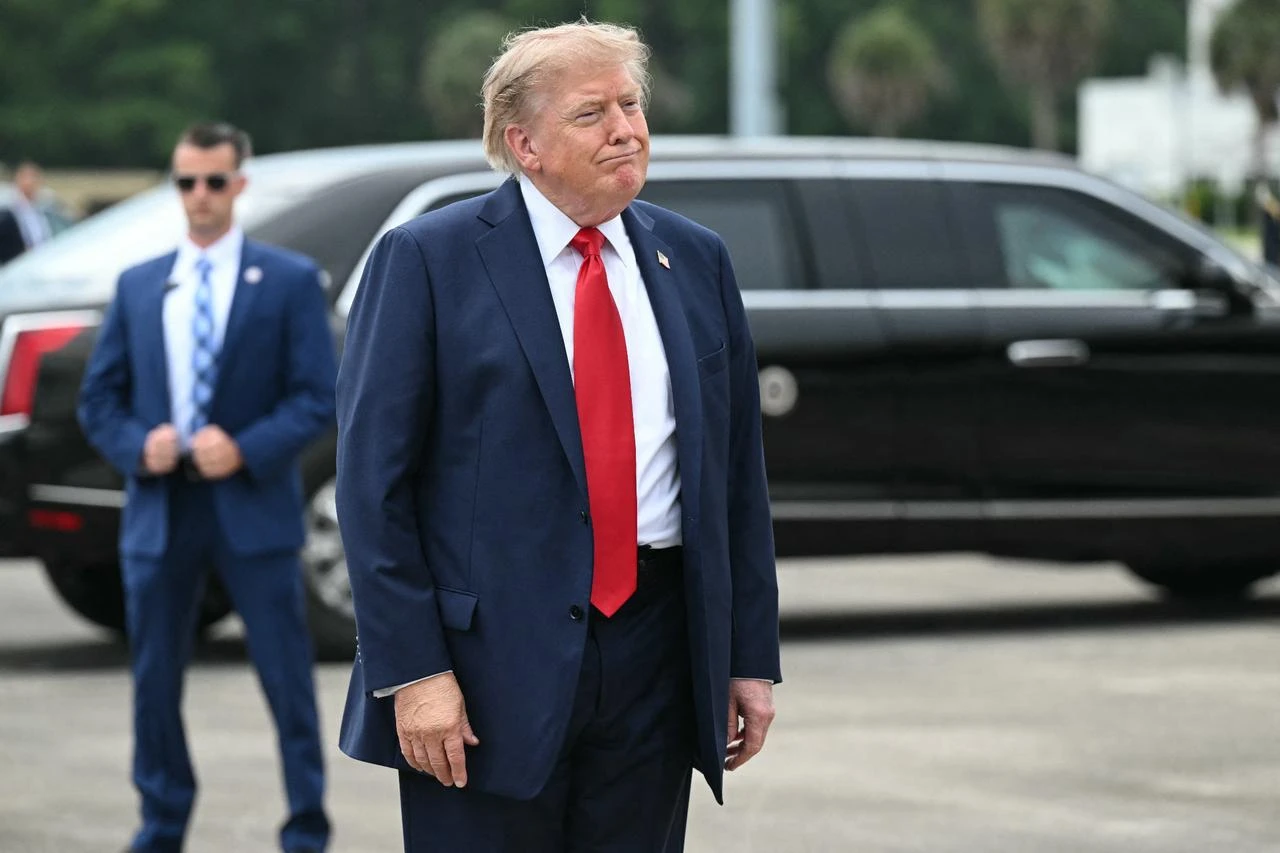


U.S. President Donald Trump said Friday that Iran is not ready to make the "right deal" as Washington keeps its military options open and watches the impact of its tightening economic pressure on Tehran.
"They would love to make a deal, but they're not ready to make the right deal, in my opinion," Trump told reporters before boarding Air Force One for a trip to South Carolina.
On Wednesday, Trump announced what he called an "economic D-Day" against Iran, threatening sweeping sanctions and severe economic consequences for countries and entities supporting Tehran.
The U.S. president rejected the suggestion that the measures were limiting U.S. military options, saying Washington wanted to see how the pressure affected Iran’s already-strained economy after nearly six months of war.
"It just means that we're seeing what happens," Trump said when asked whether U.S. military options with Iran were limited.
Trump also pointed to severe economic and military problems inside Iran, arguing that the country is facing major financial and military pressures as the conflict continues.
"They have no money, they have no navy, they have no air force, they are not paying their soldiers, they're not paying their police. They have 350% inflation," Trump claimed.
He further alleged that the United States maintained "complete control" of the region surrounding the Strait of Hormuz, including the strategic waterway and nearby land areas in southern Iran, while emphasizing Washington’s control over the broader area.
"We have total control of that entire region having to do with the Strait of Hormuz, and that means well into it, the land areas," he said.
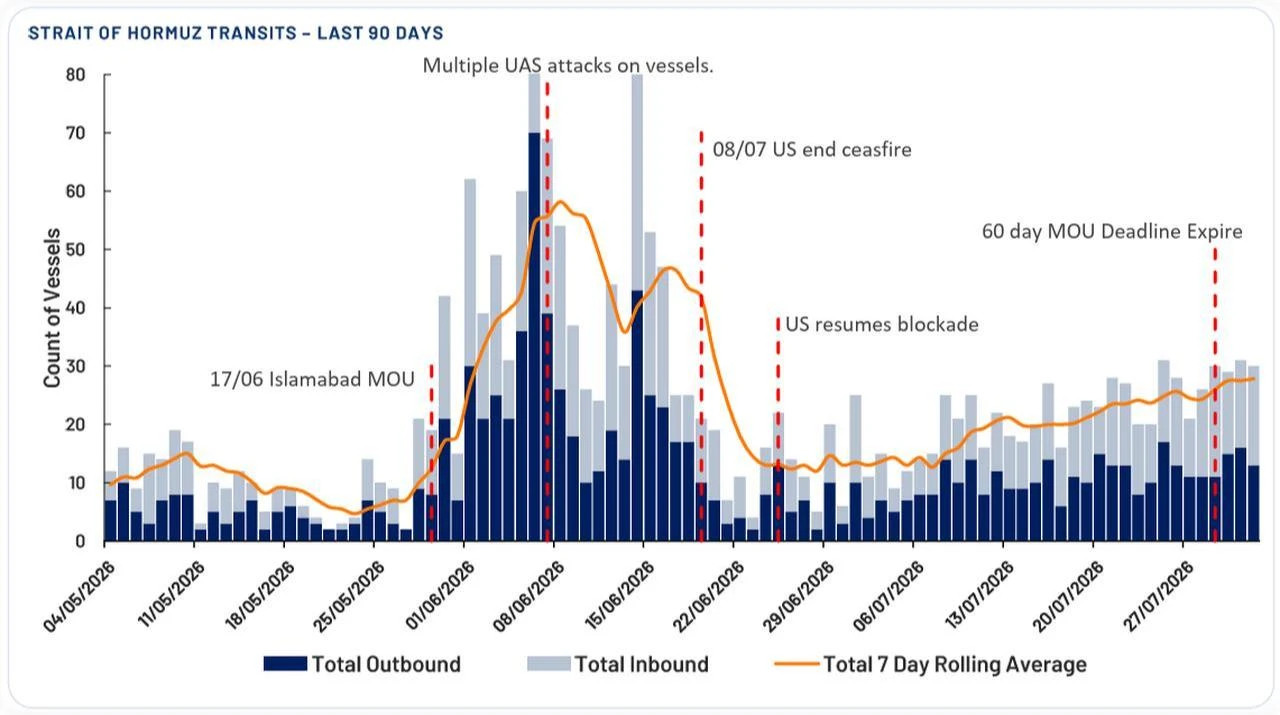
Despite Trump’s remarks, traffic through the Strait of Hormuz remained well below prewar levels, with continued security risks and frequent attacks on commercial vessels keeping shipping activity sharply reduced across the strategic waterway.
The UK Maritime Trade Operations reported Friday that traffic through the strait stood about 90% below prewar levels, underscoring the extent to which the conflict continues to disrupt navigation through one of the world’s key shipping routes.

Hours before Trump's remarks, Iranian Foreign Minister Abbas Araghchi rejected the campaign as doomed to fail, pointing to previous U.S. efforts to pressure Tehran.
"14 years ago: ‘Most crippling sanctions in history.’ Failed. 8 years ago: ‘Maximum pressure.’ Failed," Araghchi wrote Friday on X, adding that a U.S. call five months ago for Iran’s "unconditional surrender" had also failed.
He called Trump’s newly announced "most crushing economic operation ever" "bound to fail" and shared an image featuring a 2012 statement from then-Vice President Joe Biden describing U.S. measures against Iran as "the most crippling sanctions in the history of sanctions."
The comments came as Pezeshkian, speaking earlier that day, said the war with the United States should end while Iran remained in a position of "power and dignity."
He described the outcome of negotiations with Washington as a "major achievement" approved by Iran’s Supreme National Security Council and rejected claims that Tehran had made concessions.
"They cannot find even a single clause in this agreement that indicates surrender; all the commitments are related to the other side," Pezeshkian added.
He also warned that the agreement did not mean Iran would submit to another attack. "We will under no circumstances bow to bullying. We will stand against them until our last breath and give them a crushing response."
Iran and the United States signed a 14-point memorandum of understanding in Islamabad on June 18 under Pakistani and Qatari mediation, providing for an end to the war and 60 days of negotiations before the deal collapsed over disputes including the status of the Strait of Hormuz.


 Set as preferred source
 Set as preferred source


 1 min read
 1 min read