Newsletters


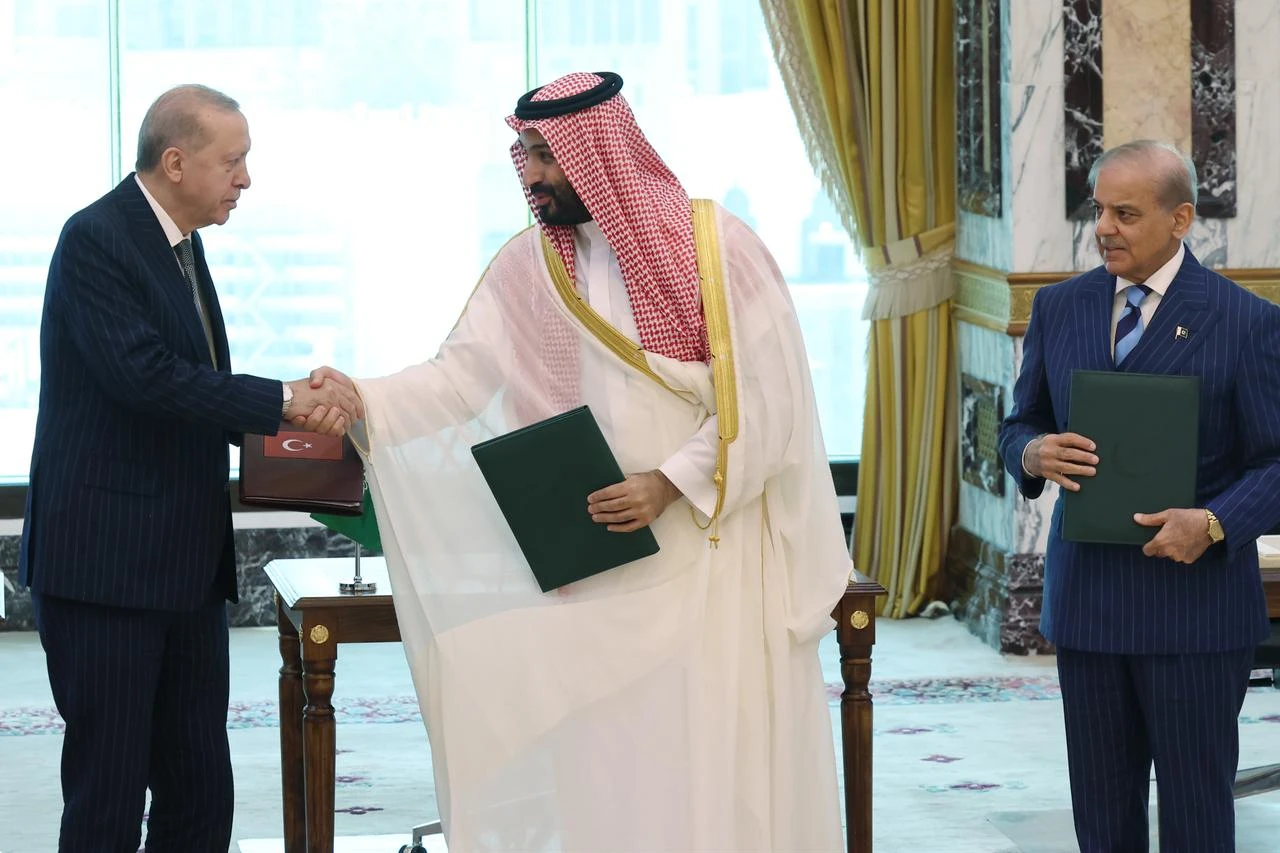


Turkish Vice President Cevdet Yilmaz said the Mecca Joint Defense Agreement is a historic step that will contribute to the region's security architecture, adding that the pact could also accelerate economic cooperation.
"We expect the spirit of strategic cooperation formed in the field of security through this agreement to also accelerate economic cooperation, particularly in connectivity, trade, finance and investment," Yilmaz said Friday in a statement on X.
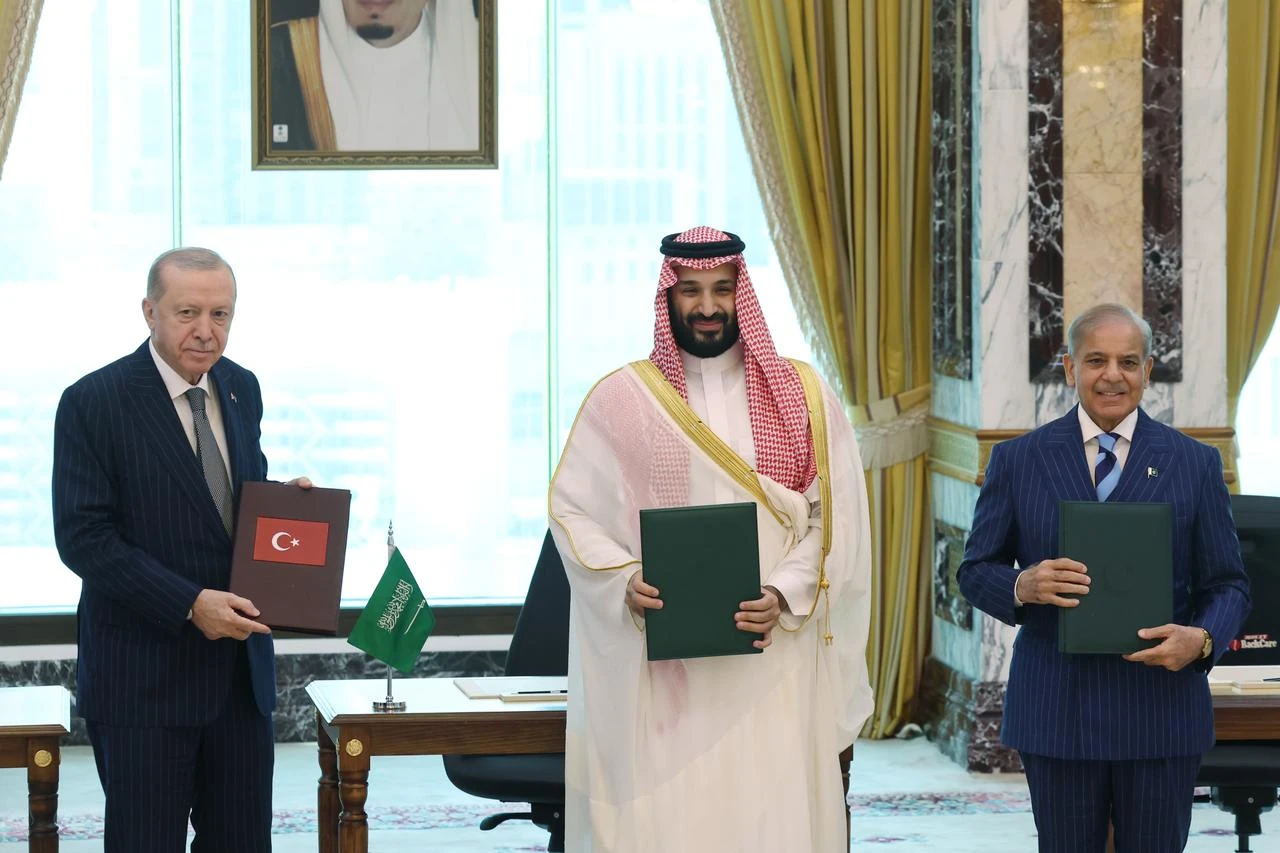
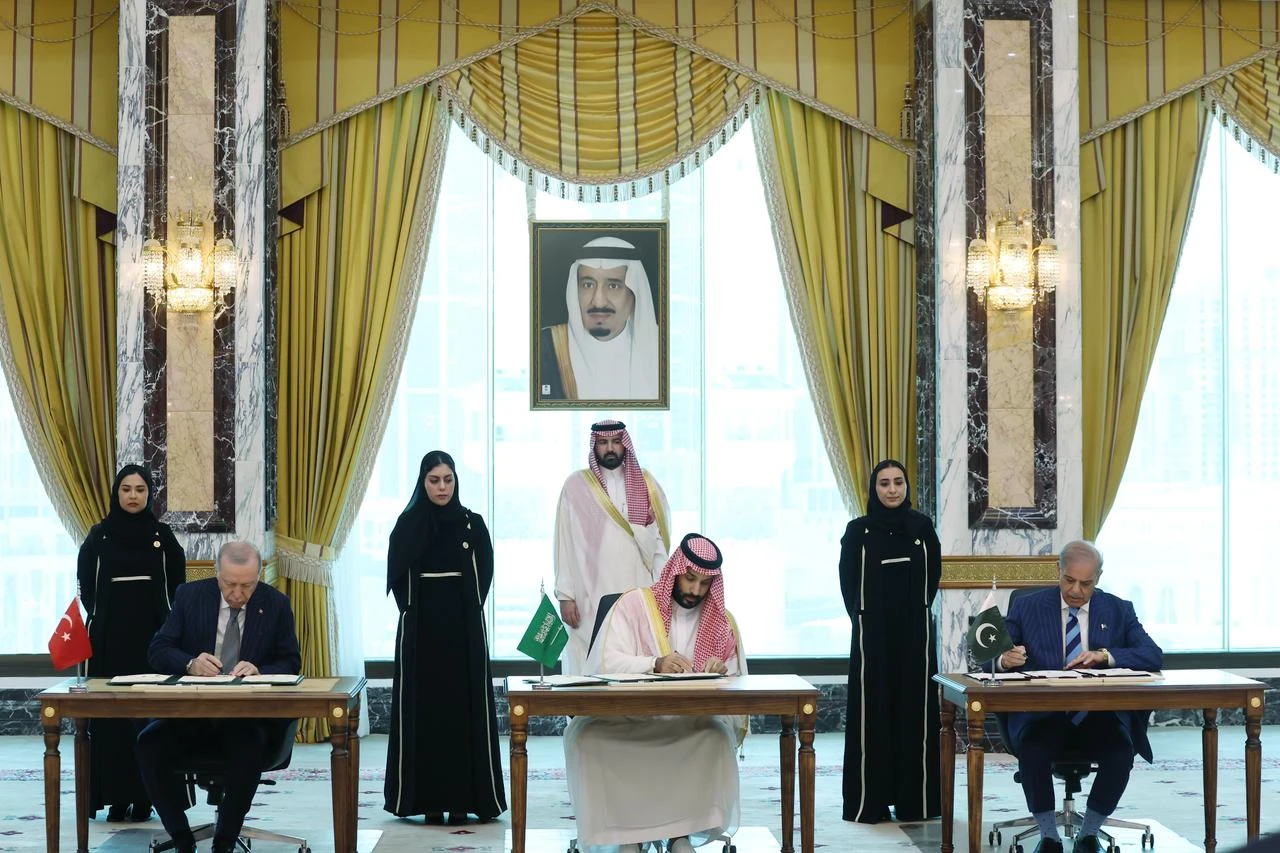
The Mecca Joint Defense Agreement has been signed by President Recep Tayyip Erdogan, Saudi Crown Prince Mohammed bin Salman and Pakistani Prime Minister Shehbaz Sharif.
"The Mecca Joint Defense Agreement signed between friendly and brotherly countries Saudi Arabia and Pakistan is a historic step that will contribute to the security architecture of our region," Yilmaz said.
Yilmaz noted that the pact also advances Türkiye's peace-oriented foreign policy vision and multidimensional strategic cooperation.
"In today's environment, where global institutions and rules are weakening, regional cooperation has begun to come to the fore," he said.
"Such cooperation can also lay the groundwork for a more just global order that may emerge in the future," he added.
Yilmaz wished that the step, taken based on shared history, brotherhood and solidarity, would be beneficial for the region, the Islamic world and global peace.
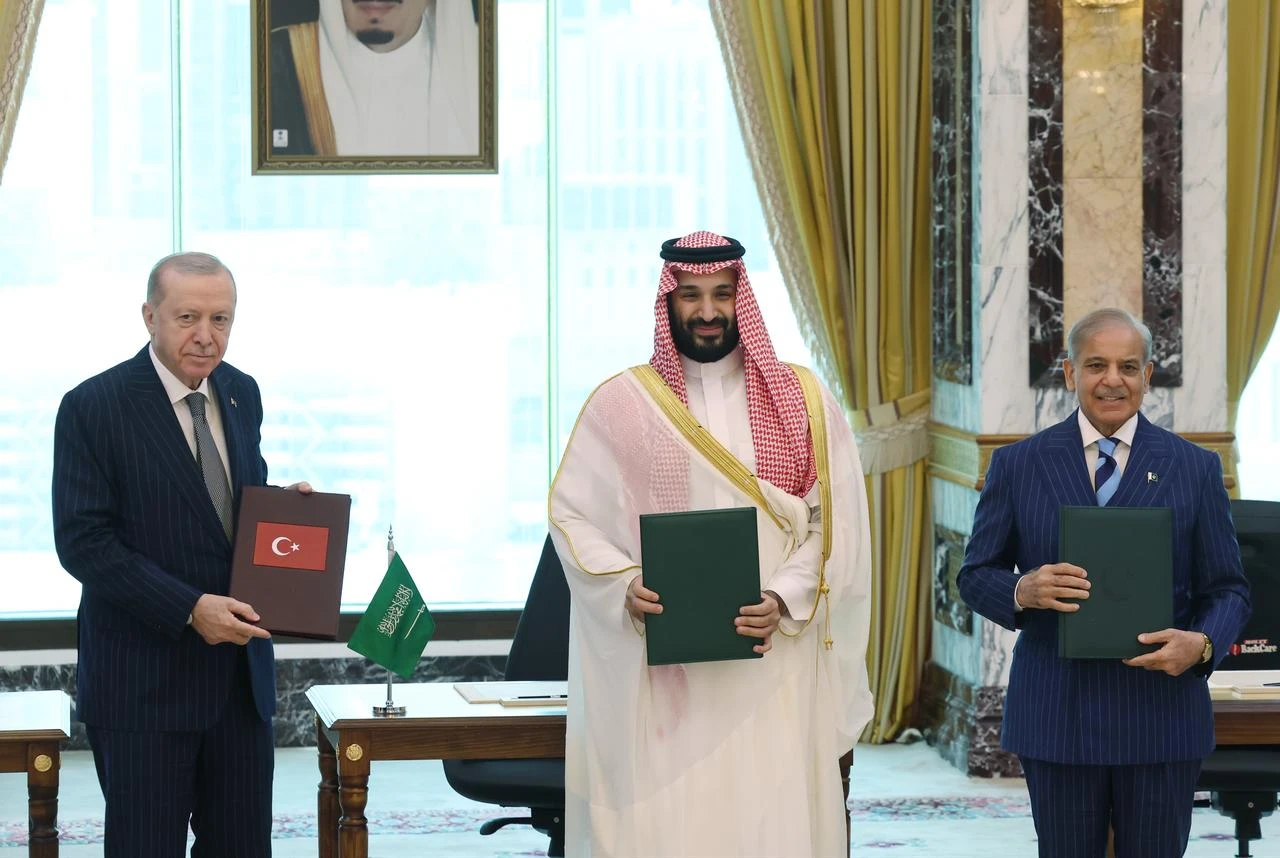

Türkiye, Saudi Arabia and Pakistan signed the joint defense agreement at a trilateral summit in Mecca on Friday, pledging to strengthen collective security, deepen defense cooperation and promote peace and stability in the region and beyond.
The agreement was signed by Erdogan, bin Salman and Sharif during the summit at the Al-Safa Palace.
According to Türkiye's communications directorate, the agreement reflects the three countries' shared commitment to reinforcing collective security, building on longstanding historical ties, Islamic solidarity, common strategic interests and close defense cooperation.
Turkish officials said the agreement is a defense-oriented cooperation arrangement that targets no country and is designed to strengthen commitments to regional and global peace, stability and prosperity through burden-sharing and a common security approach.
The agreement aims to strengthen collective deterrence against any act of aggression and stipulates that an armed attack against any one of the three countries shall be regarded as an attack against them all, officials said.
They described the agreement as the result of long-term diplomatic efforts carried out under the principle of regional ownership to establish a common framework for addressing growing regional and international security threats.
The pact also provides for expanded defense cooperation, including defense industry collaboration and military interoperability, among the three countries.
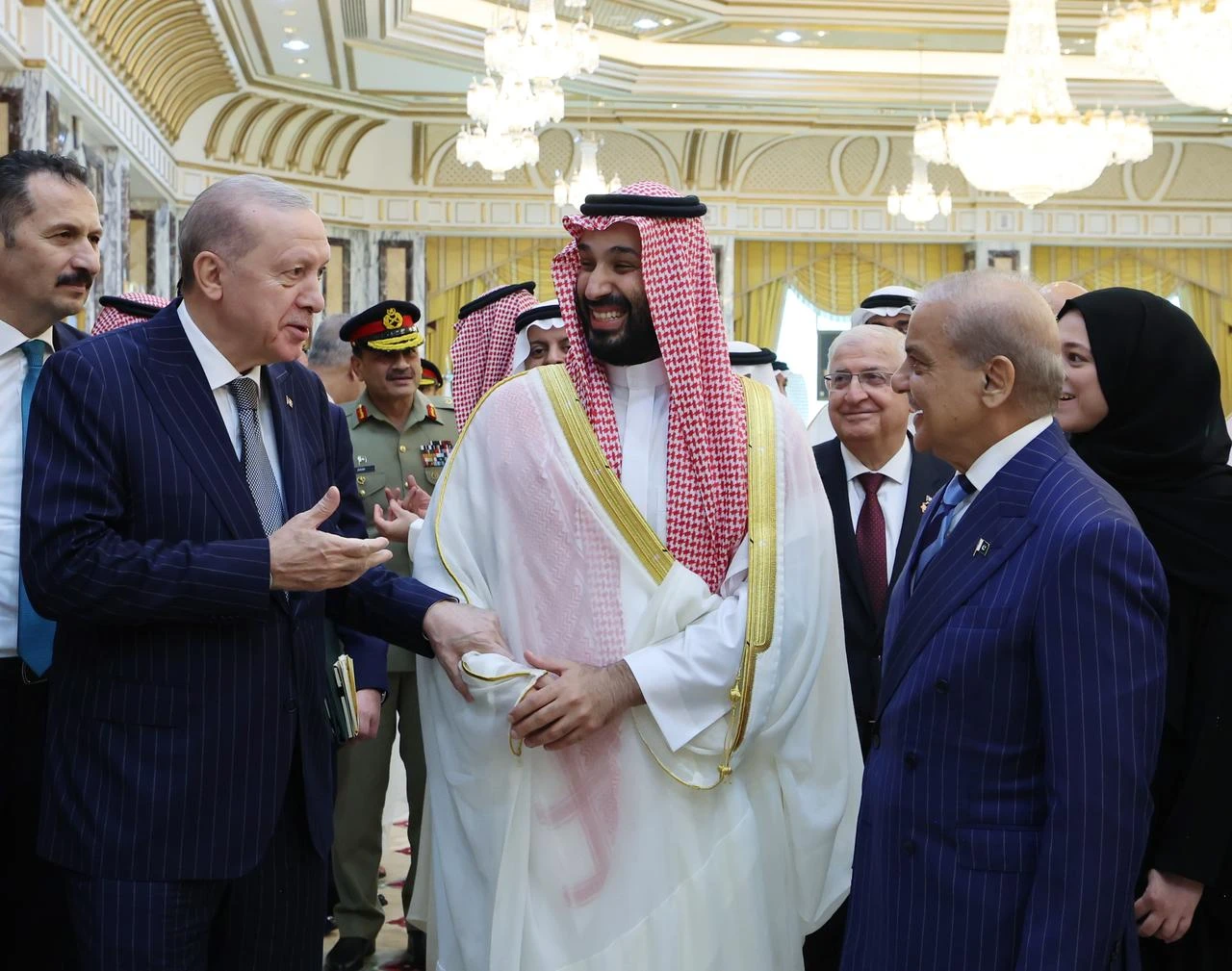
Turkish officials said the agreement complements existing alliances rather than replacing them, strengthens regional security and remains open to participation by other regional countries.
They described it as "a pillar of peace, stability and security in the region.
Officials said Türkiye's NATO membership and its regional partnerships are "complementary rather than alternative" frameworks that strengthen security burden-sharing.
The Mecca agreement is "not an aggressive military bloc, containment initiative or offensive plan," they said, but a defensive arrangement that contributes to regional stability and the goal of a "terror-free region."
 1 min read
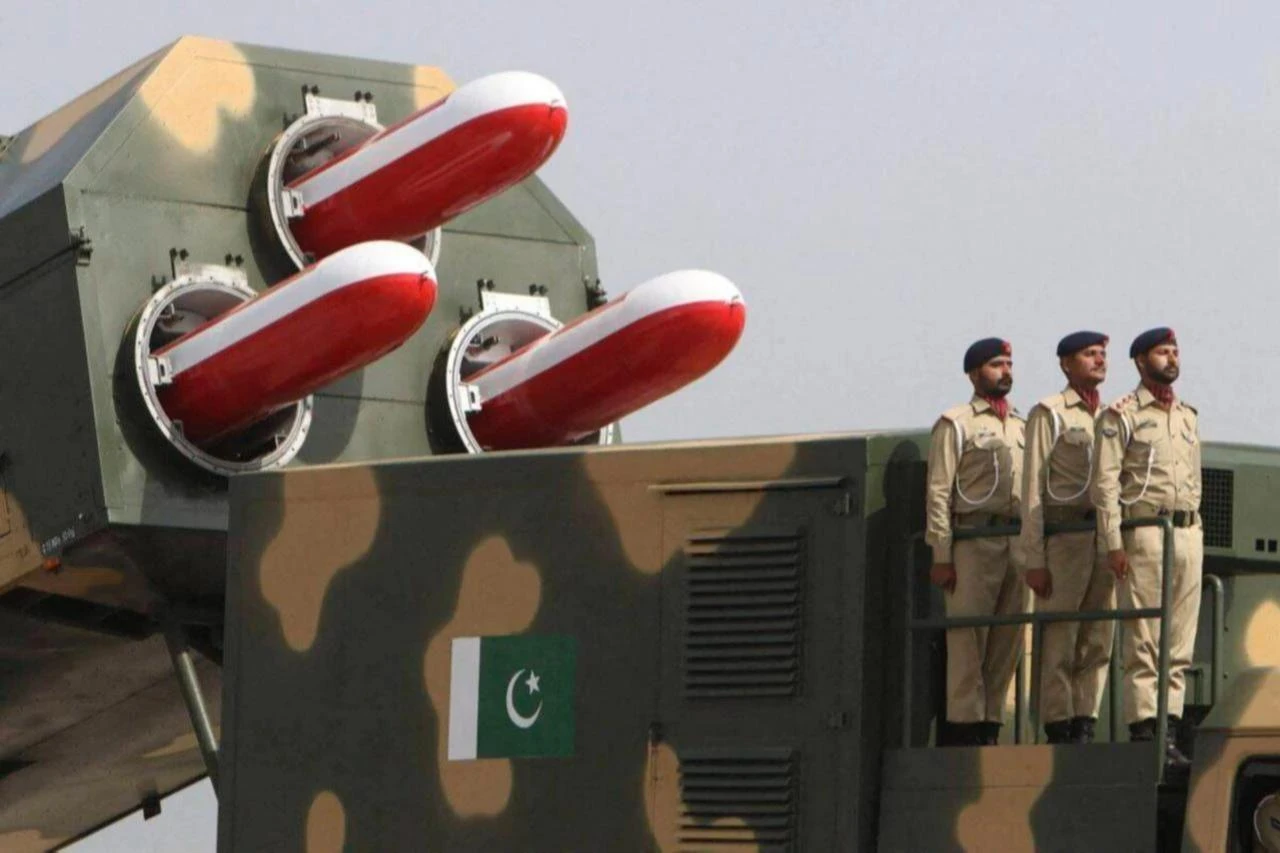
Officials stressed that the agreement "targets no country," keeps dialogue channels open and reaffirms the parties' commitment to collective defense and mutual security under Article 51 of the United Nations (U.N.) Charter.
They also described the pact as "entirely defensive," saying it would strengthen defense industry cooperation and military interoperability.
Calling the agreement "historic" for the region and the Islamic world, officials said: "The regional security architecture has been redesigned with the Mecca Agreement."
They said the agreement does not affect Türkiye's existing international obligations and called cooperation among Türkiye, Saudi Arabia and Pakistan "the modern strategic expression of a historic responsibility" rooted in shared history, faith and brotherhood.
King Salman bin Abdulaziz Al Saud hosted Erdogan and Sharif in Saudi Arabia for the summit.


 Set as preferred source
 Set as preferred source


 1 min read