Newsletters


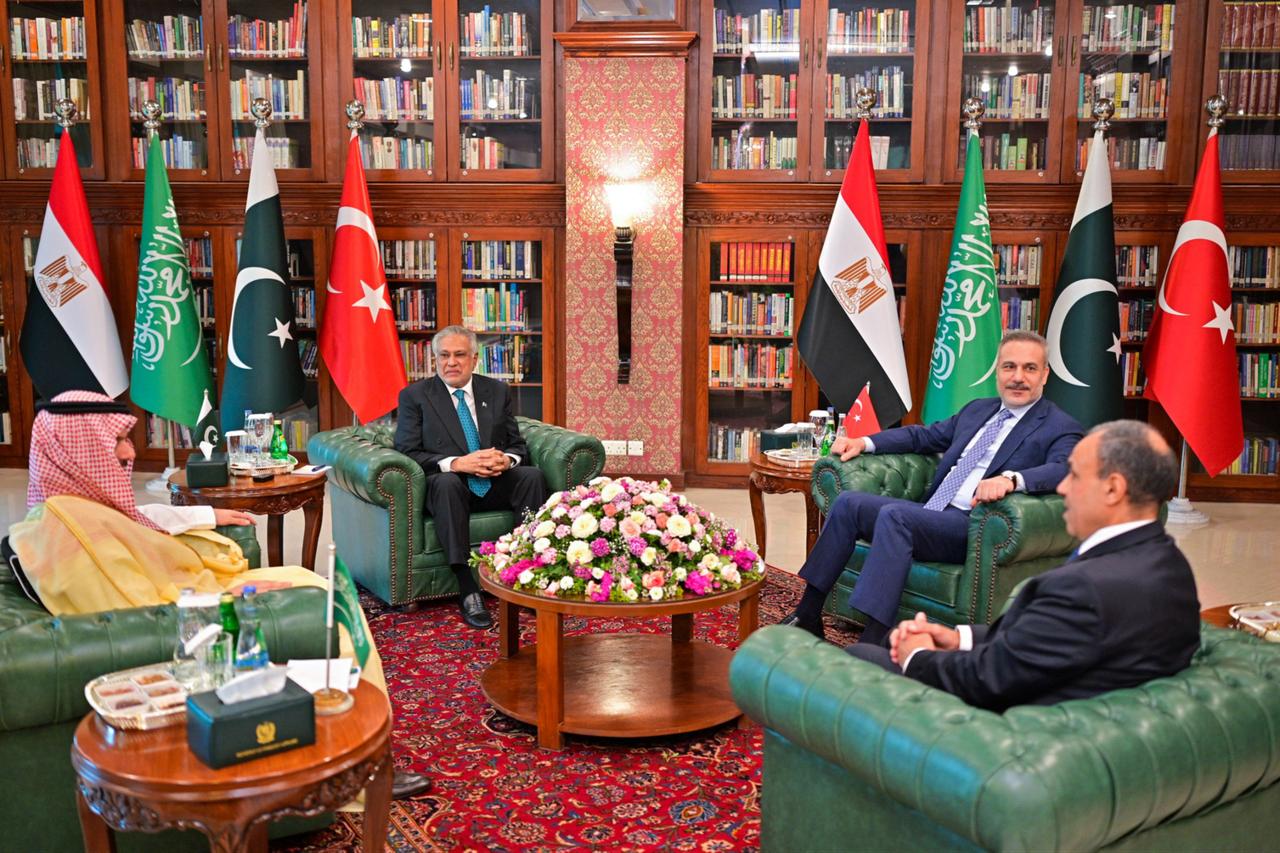


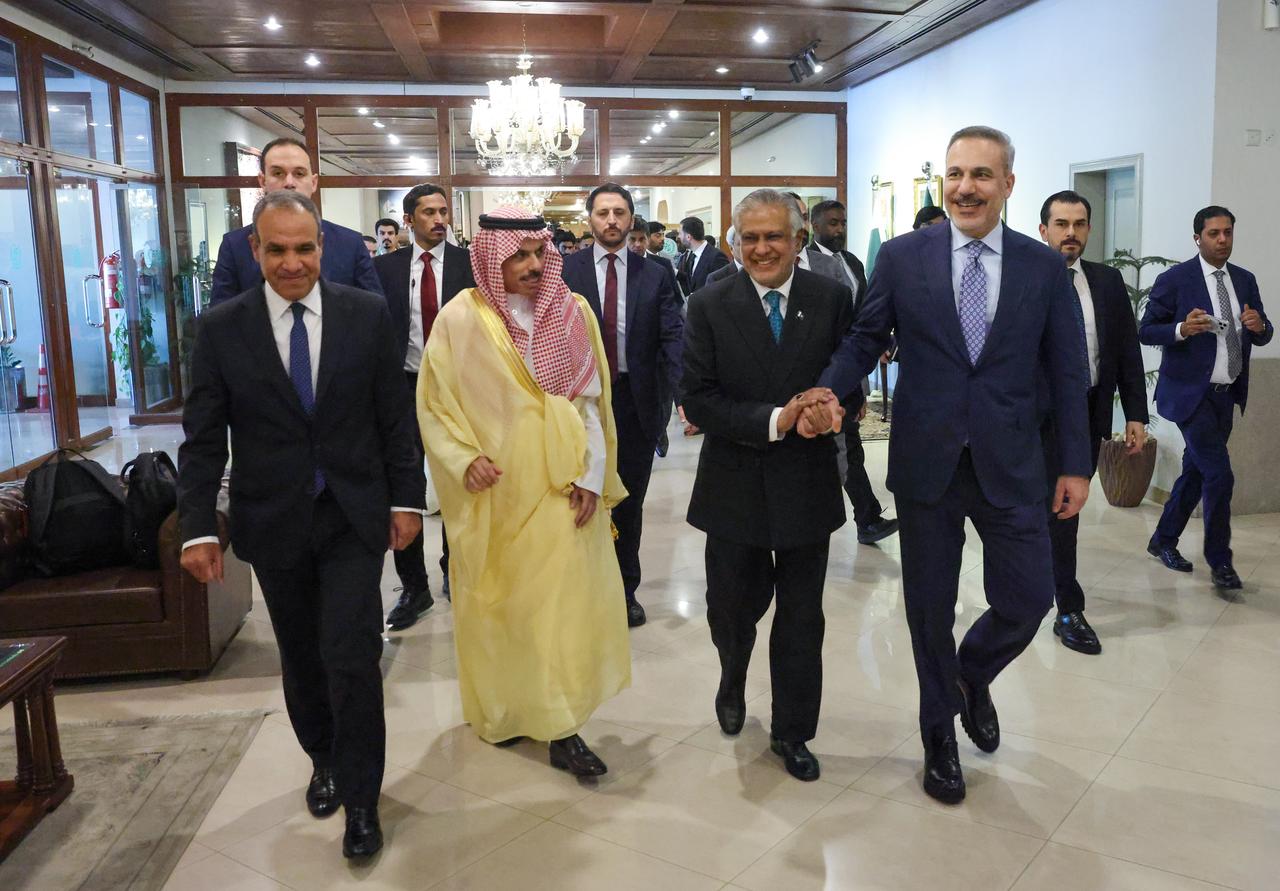
Foreign ministers of Türkiye, Egypt, Pakistan, and Saudi Arabia convened in Islamabad on Sunday for two days of discussions on ending the war in the Middle East.
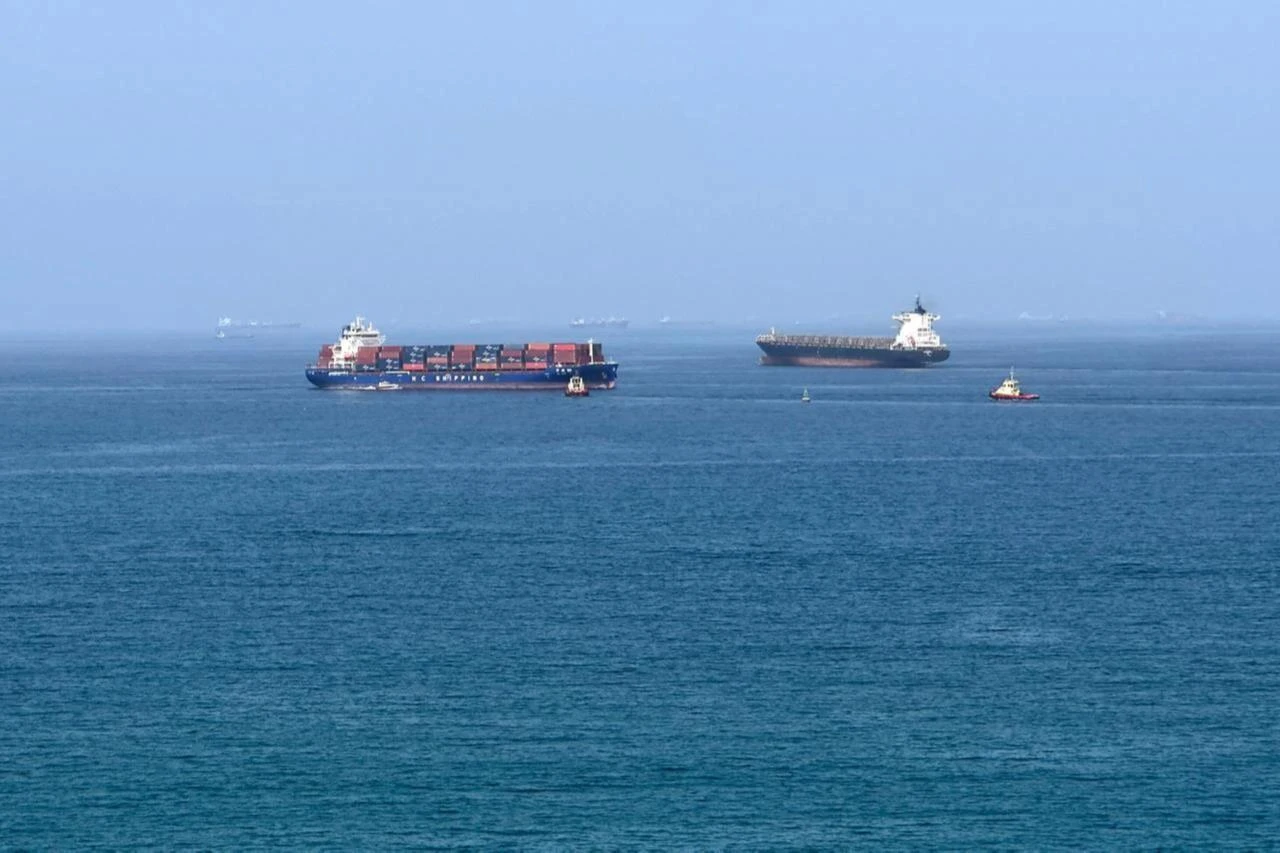
Talks focused on proposals to reopen the Strait of Hormuz, including a possible management consortium and Suez Canal-style fee structures, as Pakistan announced Iran had agreed to allow 20 more Pakistani-flagged vessels through the strait as a confidence-building measure.
Talks between Egypt, Saudi Arabia, Türkiye and Pakistan have concluded for the day.
A joint statement is expected to be released soon.
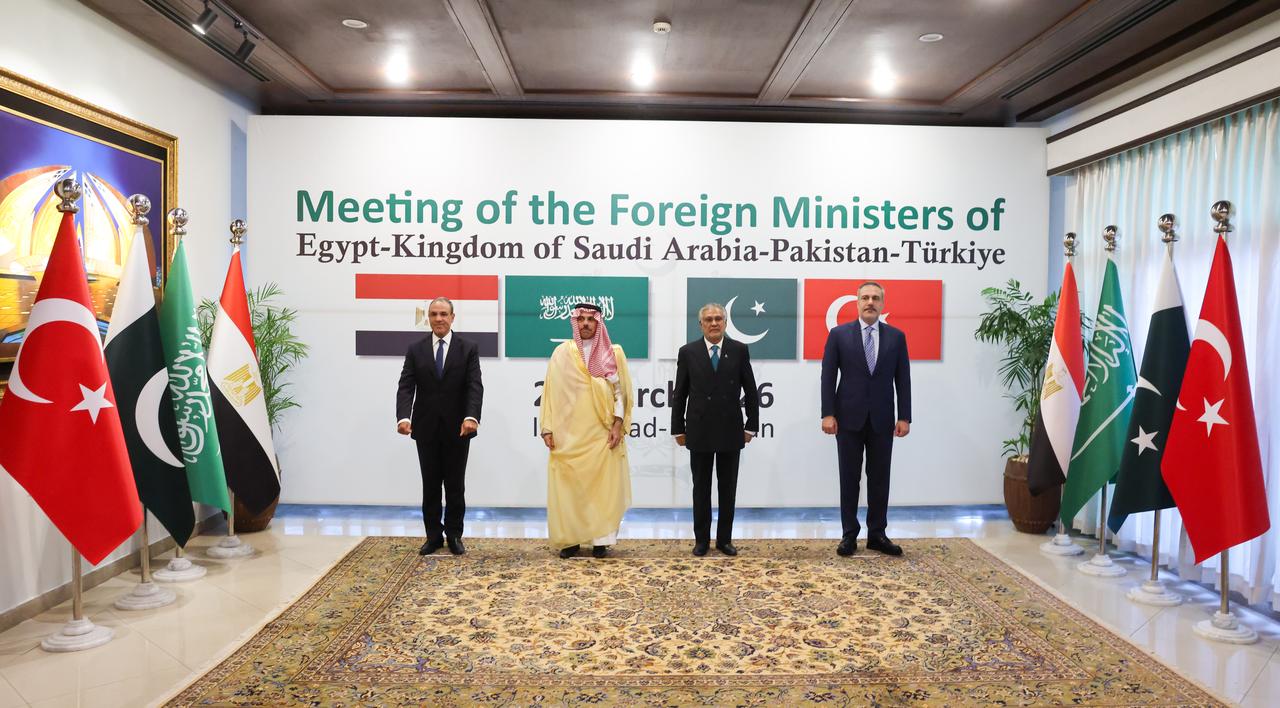

Foreign Minister Hakan Fidan joined Pakistan's Muhammad Ishaq Dar, Saudi Arabia's Faisal bin Farhan and Egypt's Badr Abdelatty at Pakistan's Foreign Ministry in Islamabad, the Turkish Foreign Ministry confirmed in a social media post on X.
Egypt's Abdelatty and Fidan arrived Saturday night; Faisal bin Farhan landed Sunday afternoon.
Security was tight, and the foreign ministry driveway was decorated with the flags of all four countries.
"Iran, the U.S. and Israel were not represented," a Pakistani foreign ministry source who spoke to Reuters said.
Before the joint session, Dar held separate bilateral meetings with each of his counterparts.
Fidan and Abdelatty also met jointly with Pakistan's army chief, Field Marshal Asim Munir. The meeting will continue on Monday, March 30.
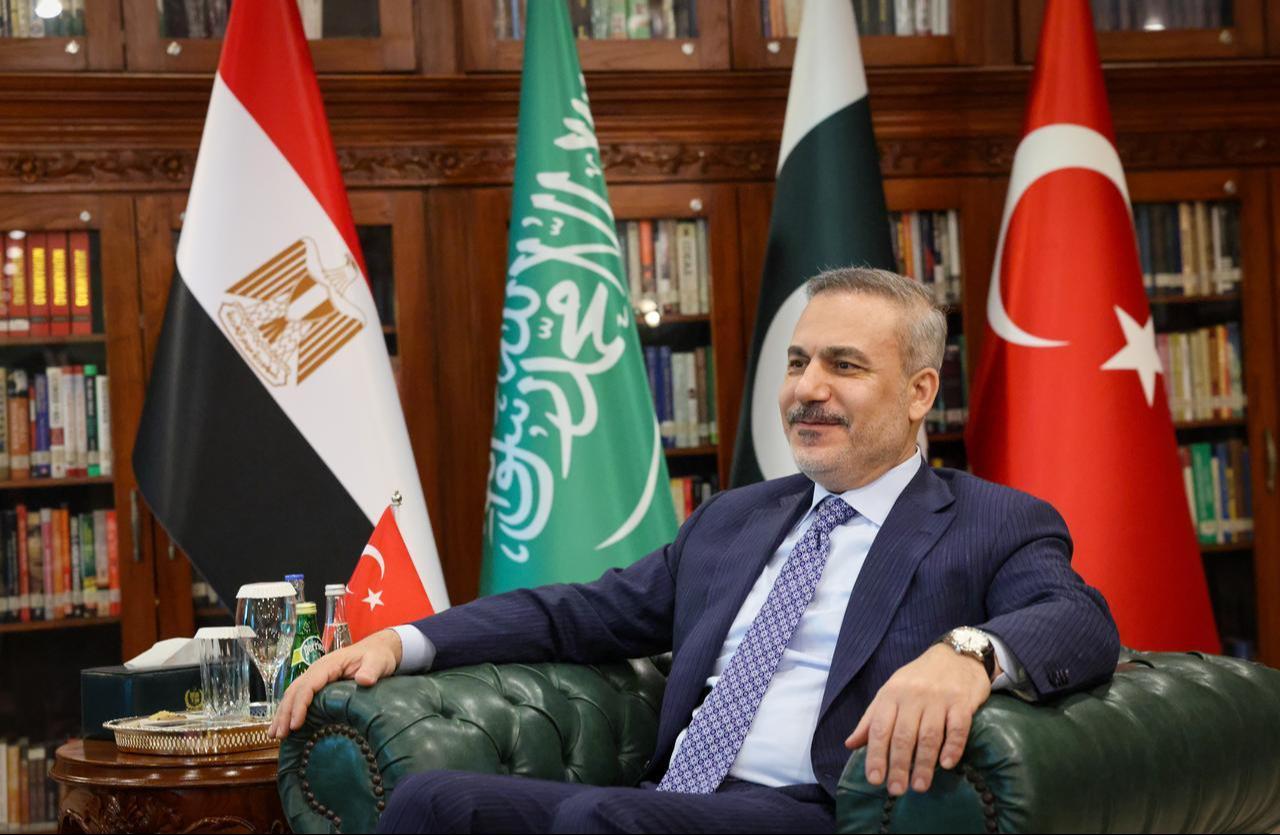
Reuters reported, citing five sources familiar with the matter, that the countries meeting in Pakistan have floated proposals to Washington tied to maritime traffic and reopening the Strait of Hormuz.
A Pakistani source said proposals, including those from Egypt, had been forwarded to the White House before Sunday's meeting, and included Suez Canal-style fee structures.
Two other Pakistani sources said Türkiye, Egypt and Saudi Arabia could form a consortium to manage oil flows through the waterway and had asked Pakistan to participate.
"The management consortium proposal has been discussed with both the U.S. and Iran," the sources said.
"Munir has been in regular contact with U.S. Vice President JD Vance," the first Pakistani source added.
A Turkish diplomatic source also noted that Ankara's priority is securing a ceasefire.
"Ensuring the safe passage of ships could serve as an important confidence-building measure in this regard," the source said.
Dar announced late Saturday that Iran had agreed to allow 20 more Pakistani-flagged vessels, approximately two ships per day, to pass through the Strait of Hormuz.
"Dialogue, diplomacy, and such confidence-building measures are the only way forward," Dar wrote on X, tagging U.S. Vice President JD Vance, Secretary of State Marco Rubio, envoy Steve Witkoff and Iranian Foreign Minister Abbas Araghchi.
The Strait of Hormuz was previously a conduit for approximately a fifth of global oil and LNG supplies, but Iran has effectively halted shipping through it since the U.S.-Israeli offensive began a month ago.
Pakistan has emerged as a critical facilitator between Iran and the United States, having already delivered Trump's 15-point peace plan to Tehran.
An anonymous source cited by Iran's Tasnim News Agency said Iran has passed a response to the plan via Islamabad.
Prime Minister Shehbaz Sharif spoke with Iranian President Masoud Pezeshkian by phone for over an hour on Saturday, detailing Pakistan's "ongoing diplomatic outreach."
Pezeshkian thanked Islamabad "for its mediation efforts to stop the aggression."
Islamabad has longstanding ties with Tehran and close contacts in the Gulf, while Sharif and Munir have also struck up a personal rapport with Trump.


 Set as preferred source
 Set as preferred source


 1 min read

 1 min read