Newsletters




Pakistan's Defense Minister Khawaja Asif stated Tuesday that the United States and Iran are "close to some sort of arrangement" over the Strait of Hormuz, even as both appeared to harden their positions in the long-deadlocked negotiations. Separately, Qatar announced that parallel talks between Iran and Oman regarding the reopening of the strategic waterway have reached "an advanced stage."
"Things are shaping up again in favor of a peace arrangement or a deal," the Pakistani defense minister told reporters in Islamabad, according to Bloomberg.
"The signals in the last two, three days are that we are close to some sort of an arrangement," he added.
He did not give details of any breakthrough.
Talks between Iran and Oman about reopening Hormuz to some maritime shipping have reached an advanced stage, Qatari Foreign Ministry spokesman Majed al-Ansari said at a press conference.
Ansari said the negotiations were at "a critical juncture" and stressed that Doha supports all efforts aimed at de-escalating tensions in the region.
"As mediators, we want the Strait of Hormuz reopened as soon as possible," Ansari said.
He said Qatar was closely following the negotiations and remained supportive of diplomatic efforts to reach an agreement.
Iran and Oman have been negotiating legal and technical arrangements for navigation through the strait after maritime traffic was disrupted by the conflict between Iran and the U.S.
Tehran has said implementation of any reopening is linked to resolving disputes over what it describes as U.S. violations of the June memorandum of understanding (MoU).

The upbeat assessments from Pakistan and Qatar came after Trump toughened his stance Monday, saying Iran should pay reparations for people killed in attacks linked to the Islamic Republic as well as in domestic protests, according to Bloomberg.
His comments came in response to a series of demands Iran laid out over the weekend, including compensation for what it called U.S. violations of the now-lapsed interim peace deal agreed by the two sides in June.
Iran will almost certainly reject Trump's latest demands, which the U.S. president said would be included "firmly into any, and all, future negotiations."
The back-and-forth appeared to reduce the chance the warring parties will agree to any immediate pact on the waterway, through which around a fifth of the world's oil and liquefied natural gas flowed before the conflict began Feb. 28.
Tehran's demands for a full reopening of Hormuz include the U.S. lifting its naval blockade on Iranian ports, releasing frozen assets and compensating Iran for war damages.
Iran has also called for a permanent end to attacks on militant groups it backs in Lebanon, Iraq, Yemen and Gaza.
Trump separately said Monday that Iran should be held responsible for damages stemming from conflicts in those countries.
Anwar Gargash, senior diplomatic adviser to the president of the United Arab Emirates (UAE), wrote on X that the region cannot remain indefinitely in an unresolved state.
"The region cannot remain indefinitely in a state of neither war nor peace; its stability and the future of its peoples require clarity in vision and direction," Gargash wrote.
"At the same time, the upcoming phase cannot be built on shaky foundations or arrangements detached from international law, the principles of peaceful coexistence, respect for sovereignty, and the logic of peace. The goal is to transition to sustainable stability governed by clear and shared rules," he added.
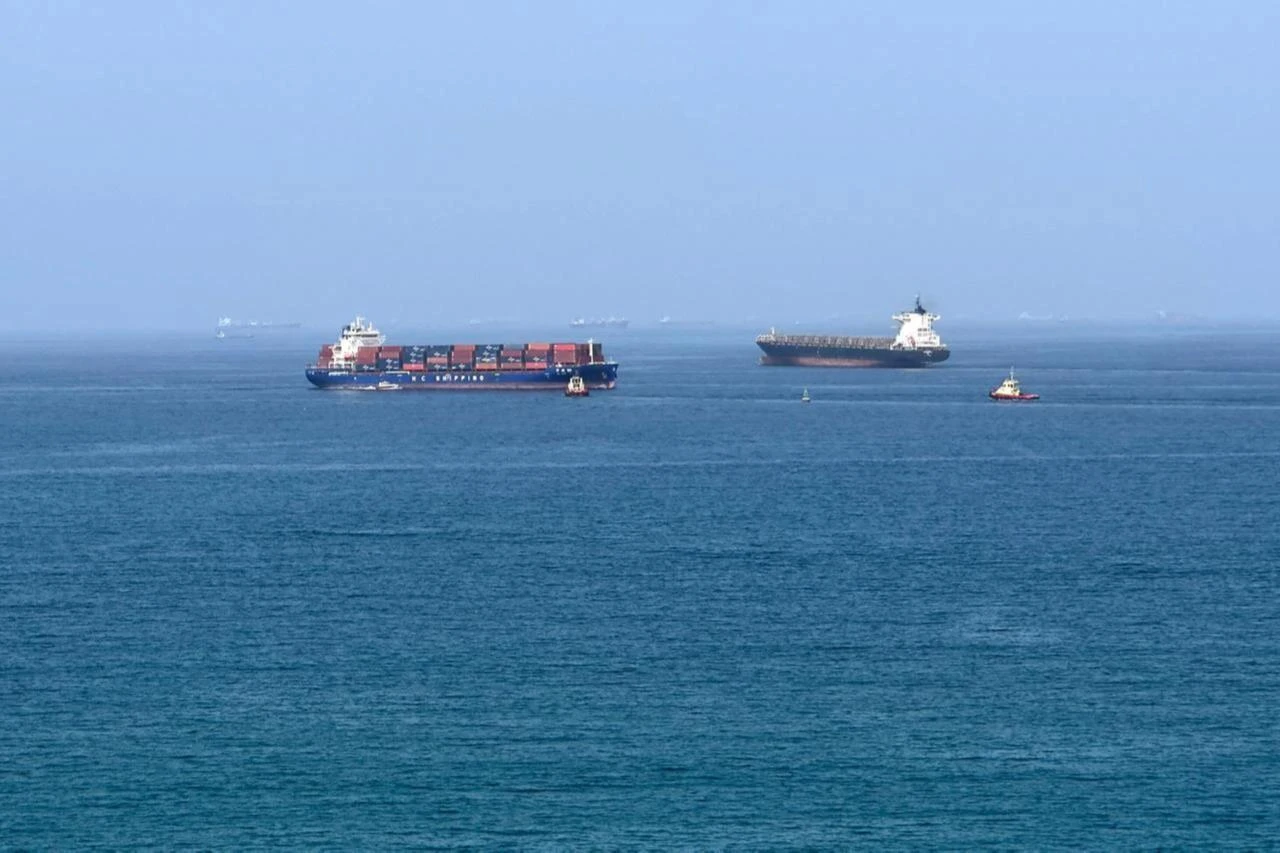
In a sign of ongoing tensions, the U.K. Maritime Trade Operations (UKMTO) agency said Tuesday it received a report of an incident involving a container ship and military forces in the Gulf of Oman near Gwadar, Pakistan, without providing further details.
UKMTO was also informed of an incident off Yemen's Red Sea coast, in which a cargo vessel reported being hit by an unknown projectile, resulting in casualties.
British maritime risk management group Vanguard said separately that a Panama-flagged container ship was hit by a missile and that the strike left the vessel without command.
Pakistani Interior Minister Mohsin Raza Naqvi arrived in Tehran on Tuesday for talks with Iranian officials amid the mediation efforts.
Iran's official news agency IRNA, citing a diplomatic source, said Naqvi departed Islamabad for the Iranian capital early Tuesday for talks on bilateral ties and issues of mutual interest.
There was no immediate confirmation from Pakistani or Iranian authorities.
The visit comes a month after Iranian Interior Minister Eskandar Momeni traveled to Islamabad for talks with his Pakistani counterpart.
Pakistan, alongside Qatar, played a key mediating role in facilitating the MoU between Iran and the U.S. in June that sought to end the earlier phase of the conflict.


 Set as preferred source
 Set as preferred source


 1 min read