Newsletters


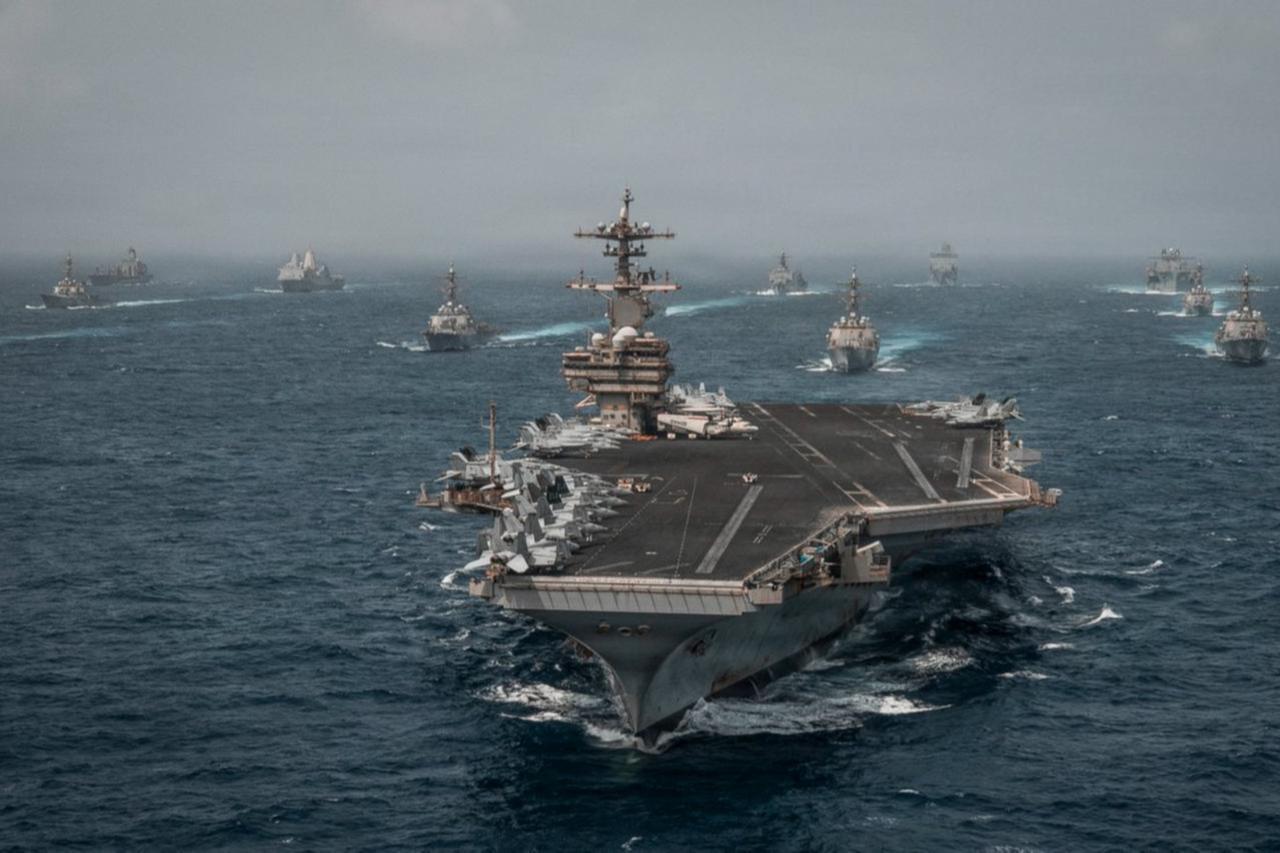


U.S. forces launched a new wave of strikes against Iran on Thursday, marking the sixth straight night of attacks aimed at degrading Iranian military capabilities, even as the White House insisted that diplomatic channels between the two governments remain open and that Tehran continues to seek a negotiated settlement.
U.S. Central Command announced the strikes began at 2 p.m. ET. The military offensive comes amid a broader confrontation over the Strait of Hormuz, the narrow Persian Gulf waterway through which a significant share of the world's oil supply passes, and follows what Washington describes as Iranian violations of a Pakistan-mediated memorandum of understanding intended to halt hostilities and pave the way for a lasting peace agreement.
White House Press Secretary Karoline Leavitt said Thursday that President Donald Trump had told her, as recently as an hour before her briefing, that Iran has not broken off contact with the United States.
"Iran very much continues to talk to the United States of America and express that they want to make a deal with us because they are suffering devastating blows on behalf of our United States military," Leavitt said.
The comments came after Iran's foreign ministry said Wednesday that Tehran had no plans for negotiations with Washington, a statement the White House appeared to directly contradict.
Leavitt attributed the renewed U.S. military campaign to what she characterized as Iranian violations of the memorandum of understanding. She said the specific trigger was Iranian attacks on commercial shipping in the Strait of Hormuz, conduct she said the agreement explicitly prohibited.
"They were not to fire on commercial vessels moving through the Strait of Hormuz, and unfortunately, they have made the tragic decision for them to do that," she said.
The U.S. announced Tuesday that it had reimposed a naval blockade on vessels transiting to or from Iranian ports and coastal areas, a measure Leavitt described as a direct response to Iran's failure to honor its commitments.
"This blockade was reimposed due to Iran's inability to honor their agreement with the United States," she said, adding that the Strait itself remains open to non-Iranian commercial shipping. "The U.S. Navy is there to ensure that can take place," she said.
Leavitt declined to address a Sky News investigation concluding that the U.S. was responsible for a bombing that struck a school in the Iranian city of Minab, killing more than 175 people, including children.
The investigation cited seven experts who said all available evidence pointed to a U.S. strike. Leavitt said she had not read the report and referred further questions to the Department of War.
Trump, asked about the school strike last month, said he had seen nothing to persuade him that the missile responsible had been American. "There were missiles flying all over the place, and somebody said it was our missile.
Well, maybe it wasn't our missile," Trump said, calling what happened "horrible" while leaving the question of responsibility open. "I have to wait for it to be complete," he said of the investigation.


 Set as preferred source
 Set as preferred source


 1 min read

 1 min read