Newsletters




UNGA 2026 means something different to everybody in the building. For journalists, it's more than enough sourcing colliding in one week to make your head spin. For world leaders, it's the perfect stage in global politics to put themselves on display. For diplomats, it's the annual grind, the one week a year built for getting things done. For New York's tourism industry, it's a cash cow. And for New Yorkers stuck living through it, it's a bit of a headache.
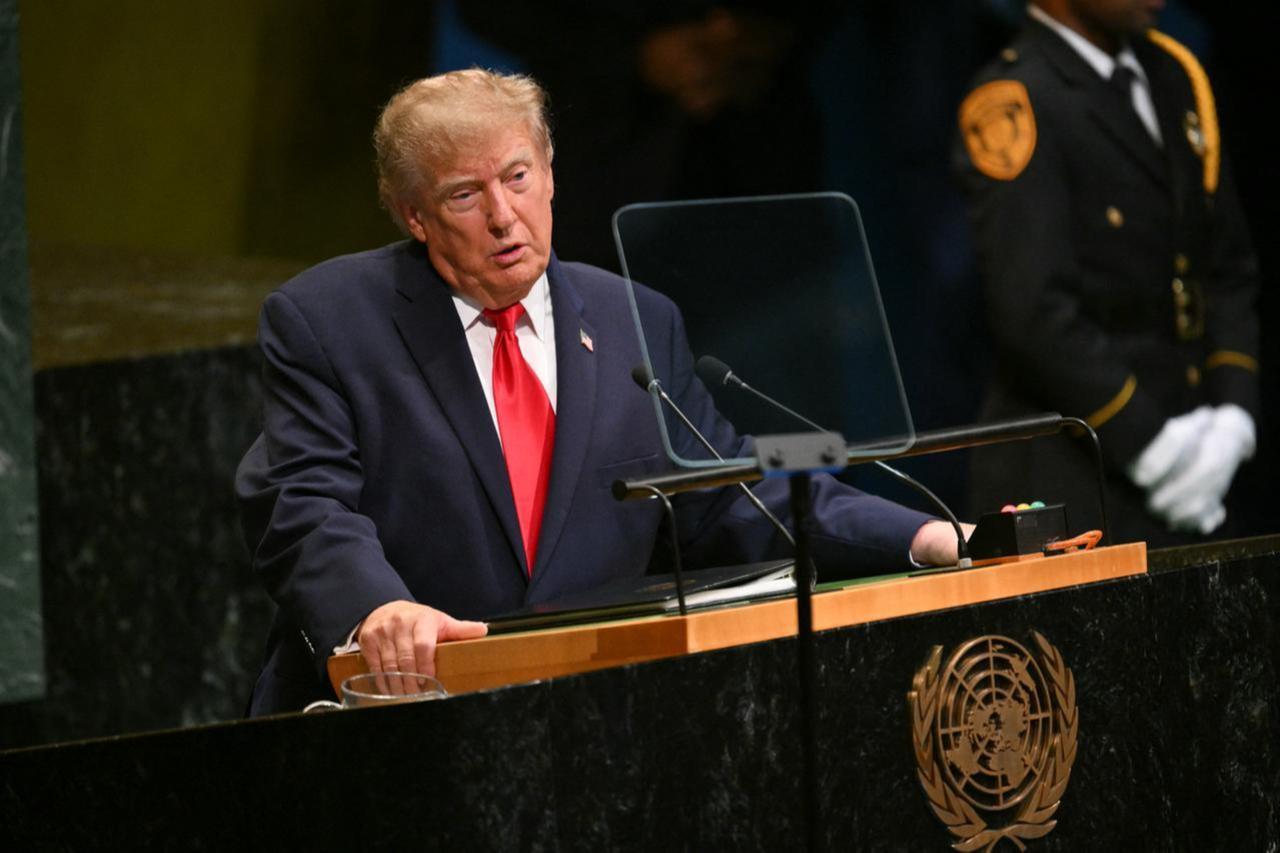
But for anyone who checks the news once a day, or scrolls past a political clip between everything else on their feed, UNGA's biggest headlines always boil down to what the leaders actually said. On Tuesday, President Trump stepped up to the podium and said the two sides would probably strike a deal once the midterms were behind them, but that the other option on the table was to "annihilate" Iran.
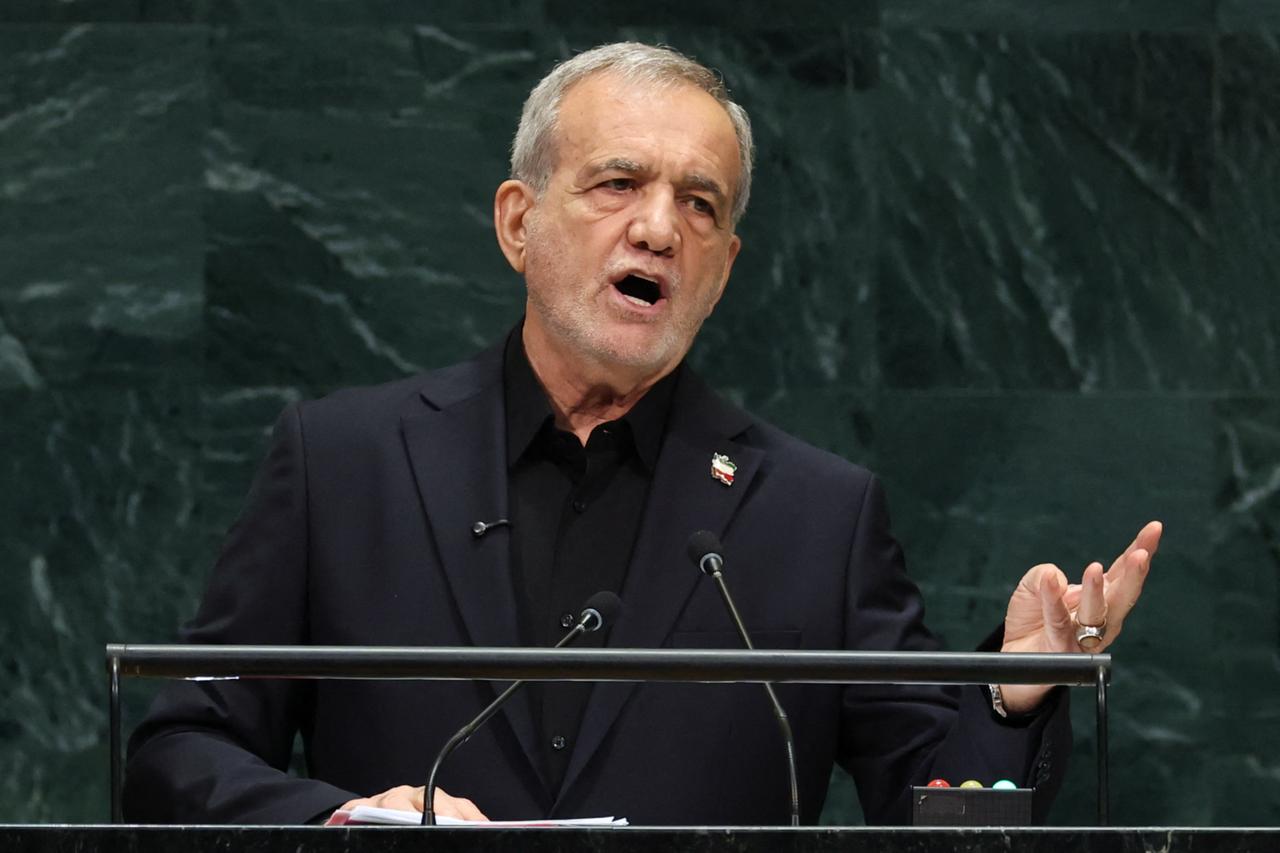
Masoud Pezeshkian, for his part, addressing the same room a day later as the head of a state technically at war with the country hosting him, does not do much better. He holds up a portrait of Ali Khamenei, killed in the opening strikes of the February conflict, and insists Iran wants "energy for progress," not a bomb, while refusing any limitation on the civilian nuclear program that has made that distinction so hard for outsiders to verify.
He tells Trump, by name, that Iran is "ready for dialogue" but will not "bow our head or bend at the knee." That line made headlines too.
But what nobody said out loud, what never made it into a single speech, is that both sides let a real shot at ending the war slip by. It was sitting right there, and it would have been an easy, reasonable call for either side to make.
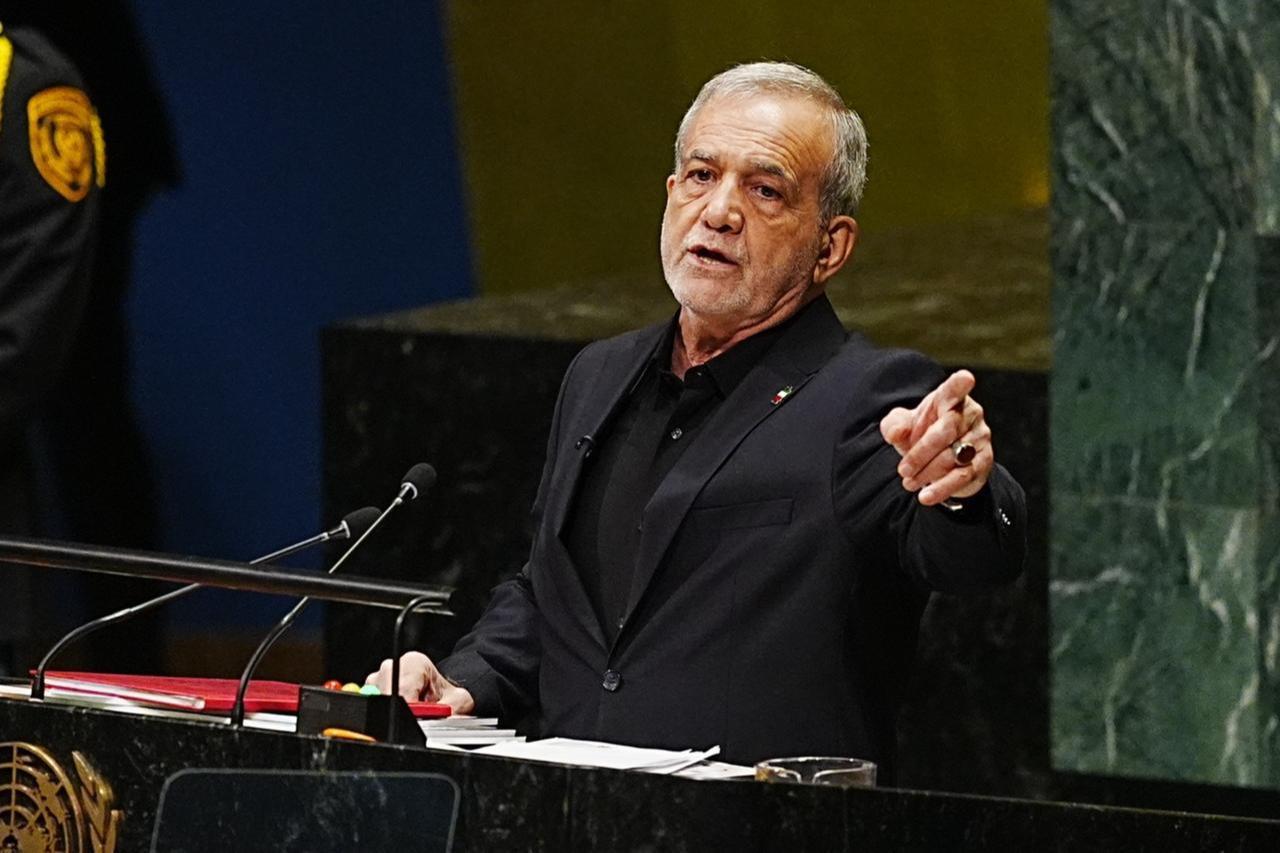

Two leaders, two stages, one shared failure: neither man used the platform to hand the other a way out.
That is the missed exit ramp, and it was sitting in plain view. An international peace monitoring force patrolling the Gulf's contested waterways, explicitly authorized by the UN Security Council, would have given both governments something they currently lack: a face-saving off ramp. For Tehran, it would offer a structured mechanism to stop the harassment of commercial shipping without looking like it capitulated to American pressure.
For Washington, it would provide legal cover to ease the naval blockade on Iranian ports without appearing to reward the regime it has spent the year threatening to annihilate. Iran's own foreign ministry spokesperson, Esmail Baghaei, has said Tehran's conditions include an end to that blockade and the release of frozen Iranian funds, the raw material for exactly this kind of bargain already exists. Nobody at the podium picked it up.
Ask Joey R. Hood, who spent a career representing Washington in the region and served as U.S. ambassador to Tunisia, and he'll tell you the two sides didn't get any closer this week than they were at the start of it. "They have just engaged in a series of missed opportunities," Hood said in an interview as the Assembly wound down.
Trump, in his view, came to the biggest stage in the world and "essentially read out his tweets." Pezeshkian came and repeated what Iranian officials have been saying for months.
What frustrates Hood is not the theater. It's the alternative that never got proposed. Tehran, he argues, had a real chance to put Trump on the back foot.
President Trump spent the week oscillating between annihilation and optimism, telling the chamber a deal was likely once the midterms had passed. That whiplash, Hood argues, is not indecision. It's arithmetic.
Iranian governments, he points out, have a long memory for how much an American election can be worth. In 1979, Tehran held 52 American hostages for 444 days, releasing them within minutes of Ronald Reagan's inauguration so the humiliation of Jimmy Carter would be complete.
Hood, a veteran diplomat, says Washington has never fully shaken the lesson: Iran will try to shape U.S. elections whether or not it gets a response, through backchannels, through cyberattacks, through timing. "He needs to manage it. He needs to absorb it," Hood said of Trump. What there will not be, in his assessment, is a breakthrough before voters go to the polls. Managing a crisis, it turns out, polls better than solving one.
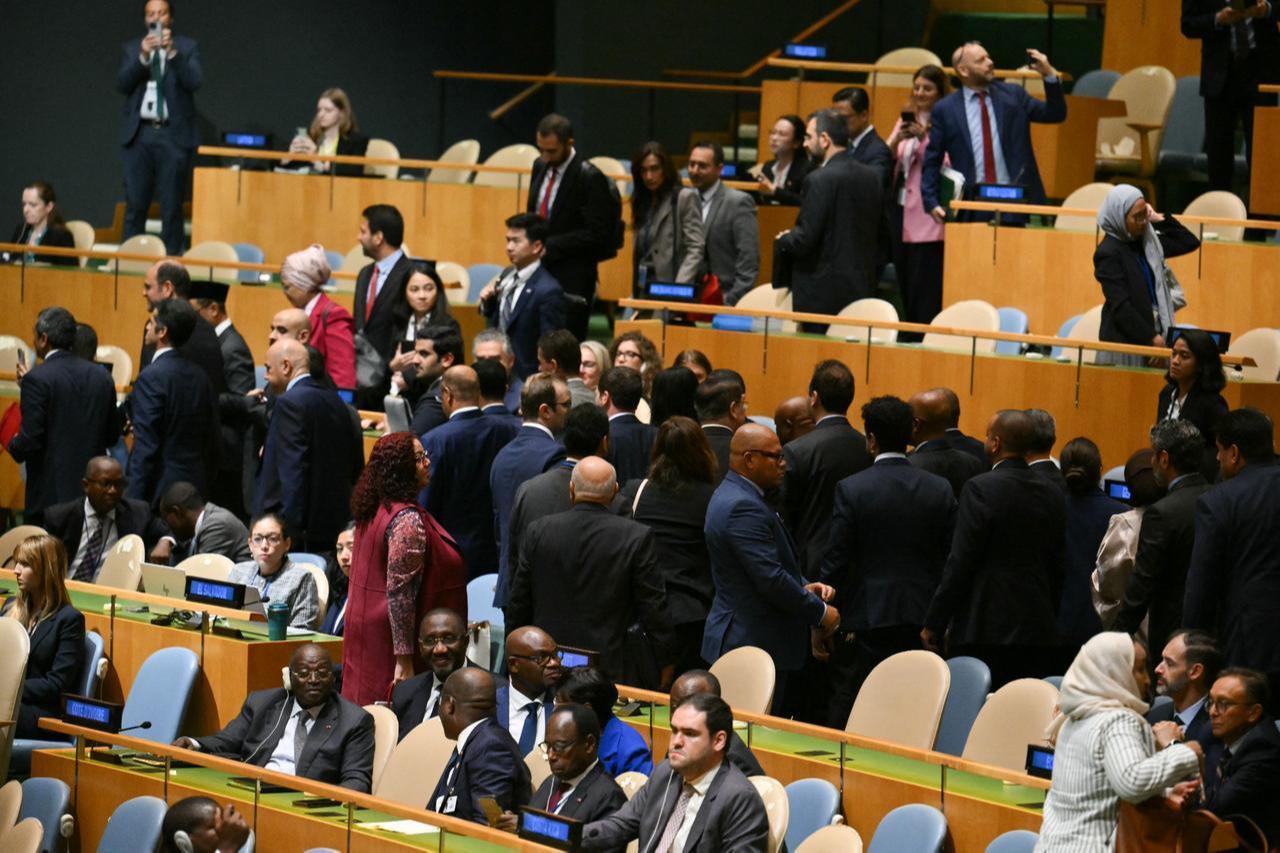
The reasons for that silence are not mysterious once you look past the podium. Benjamin Netanyahu's presence at the Assembly this year was never really aimed at Tehran, Washington, or Brussels. It was aimed at his voter base, at a domestic audience watching a prime minister fighting for his political survival while a corruption trial that could still end in prison runs in parallel to the war. Peacemaking abroad competes poorly with self-preservation at home.
That is the quiet tragedy of this year's Assembly: the appetite for performance simply outmatched the appetite for risk. Diplomacy rewards leaders willing to look weak for five minutes in service of an actual settlement. Neither man in New York this week was willing to spend that currency.
What is left is a familiar mechanism dressed up as resolve, an eye for an eye, run through two governments that have spent decades perfecting the art of retaliatory symmetry. It has a way of leaving everyone blind. History will not remember UNGA 2026 for what was said from the rostrum. It will remember it, if it remembers it at all, for the deal that was sitting in the room and that nobody in New York was willing to name out loud.


 Set as preferred source
 Set as preferred source


 1 min read
 1 min read