Newsletters


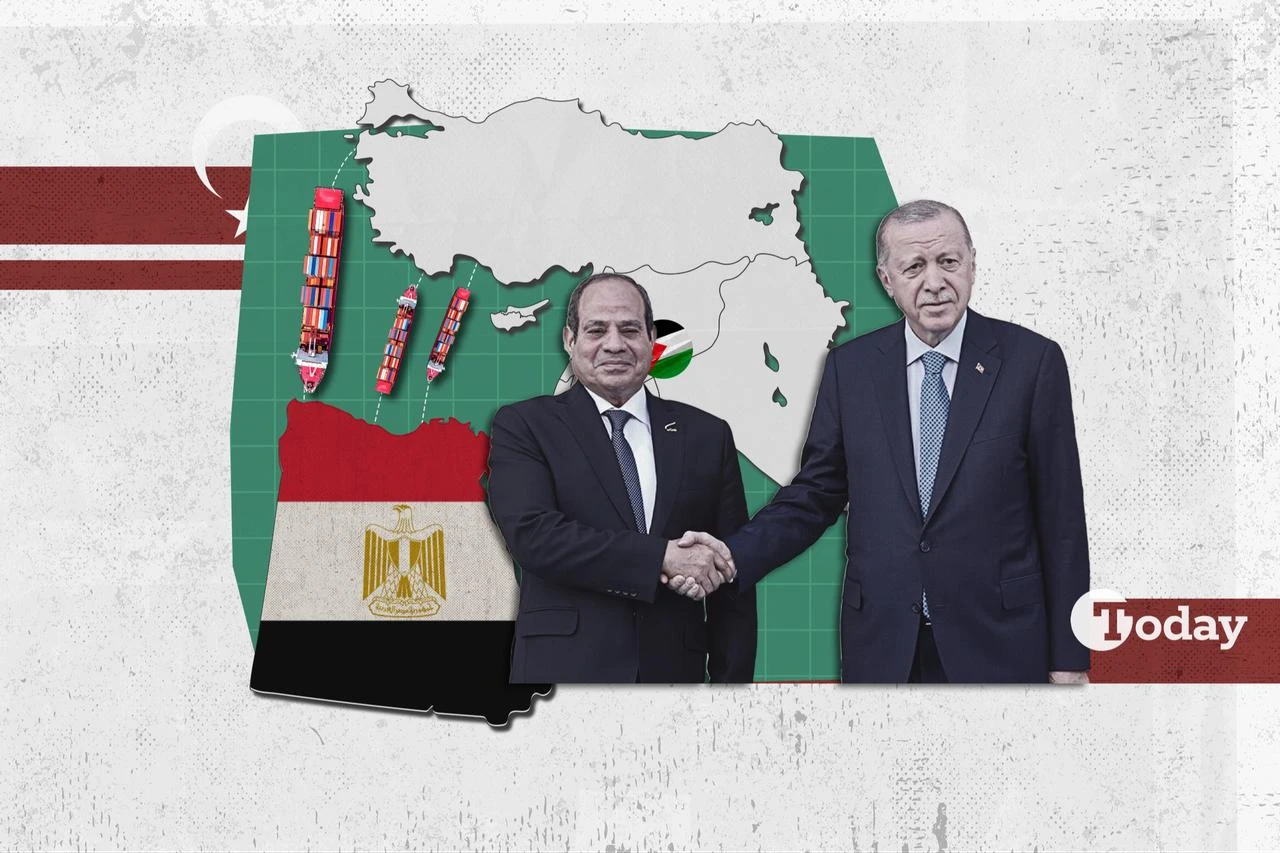


On July 13, the Turkish and Egyptian defense ministers signed a letter of intent on defense cooperation in Ankara. A second letter covered cooperation between their defense industries. Neither created an alliance.
They followed the revival of the Friendship Sea naval exercise, held in 2025 after a thirteen-year break, as well as a joint air exercise and the Golden Eagle special-forces drill in 2026. A relationship that nearly produced a proxy confrontation in Libya now includes regular military contact.
Istanbul and Cairo have often competed over the same strategic space. In the 1830s, Muhammad Ali’s Egyptian army defeated Ottoman forces, occupied Syria and advanced into Anatolia. It nevertheless left a familiar geography of rivalry, with Egypt projecting power into the Levant and Istanbul treating the region as central to its security.
The rivalry returned in a sharper form during the 1950s. Türkiye’s ambassador in Cairo, Hulusi Fuat Tugay, was married into Egypt’s deposed royal family. In January 1954, he quarrelled publicly with Gamal Abdel Nasser at the Cairo Opera House and was expelled within days. Ankara had joined NATO and wanted a Western-backed security system in the Middle East. Nasser opposed continued British influence and sought leadership through Arab nationalism.
The Baghdad Pact became a direct source of Turkish-Egyptian friction. Türkiye promoted it as protection against Soviet expansion; Egypt saw another channel for Western control. The Suez Crisis then strengthened Nasser’s regional standing at the expense of the order Ankara supported.
Tension peaked during the Syrian crisis of 1957. Türkiye massed forces near Syria while Ankara and Washington considered ways to dislodge its pro-Soviet government. Egypt sent troops to Latakia in support of Damascus. The armies did not fight, but their governments had taken opposing positions in the same military crisis.
The pattern returned after 2013. Ankara condemned Mohamed Morsi’s removal and gave space to Muslim Brotherhood-linked opposition figures and broadcasters. Cairo viewed this as interference in its internal security.
In Libya, Türkiye backed the Tripoli government while Egypt supported Khalifa Haftar. By June 2020, Abdel-Fattah el-Sisi had declared the Sirte-Jufra front a red line as Turkish-backed forces advanced eastward.
Egypt also joined Greece, Cyprus and Israel in establishing the East Mediterranean Gas Forum, while its partial maritime agreement with Greece challenged Türkiye’s own arrangement with Libya. Ankara saw these moves as an attempt to narrow its room for manoeuvre in the eastern Mediterranean.
Trade followed a different course. A Carnegie analysis based on U.N. data found that Egypt’s share of exports going to Türkiye rose from an average of 3.54% in 2005–2012 to 6.2% in 2013–2020. Türkiye was Egypt’s third-largest export market and fifth-largest source of imports in 2020. Bilateral trade had almost tripled since 2007, reaching $11.14 billion.
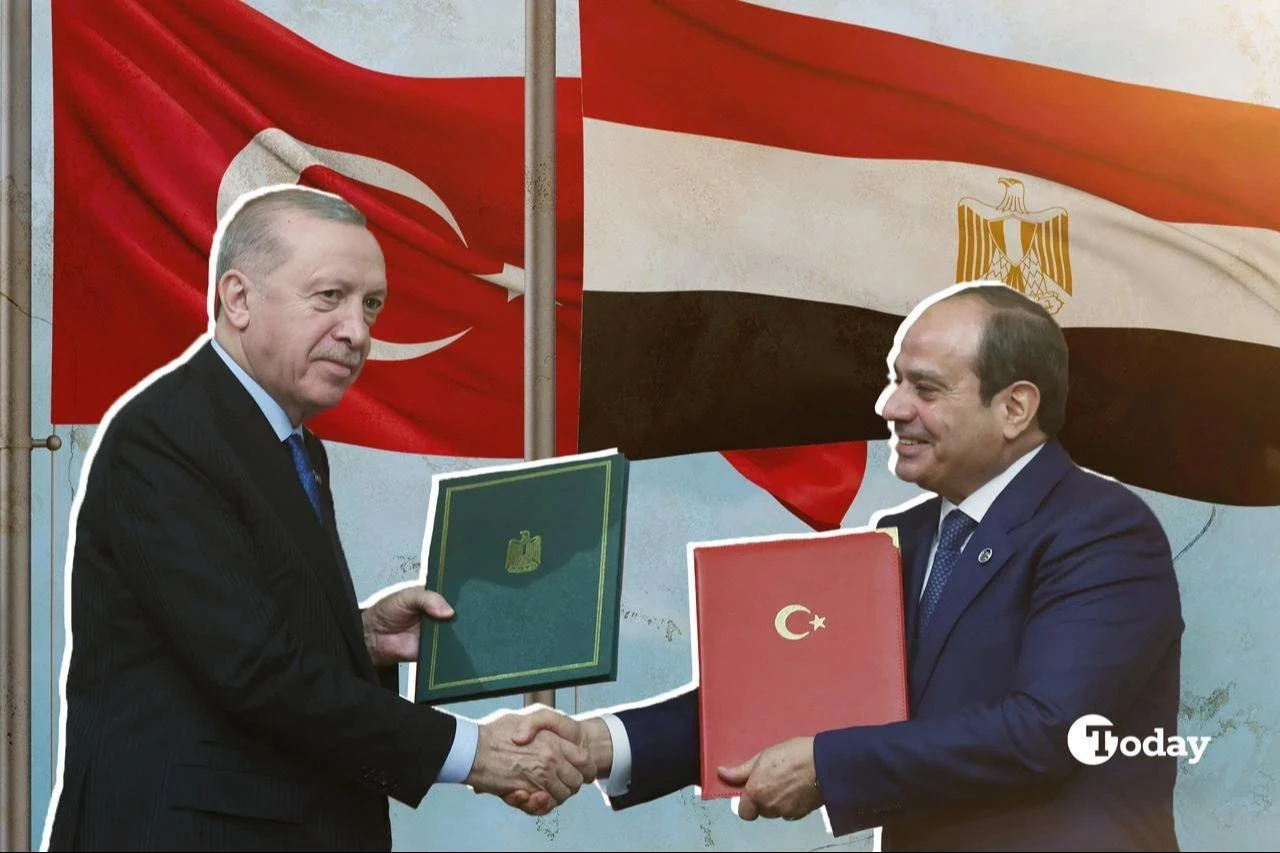

Senior officials began formal consultations in 2021. Erdogan and Sisi then shook hands at the World Cup in Doha in November 2022. Egypt’s foreign minister visited Türkiye after the February 2023 earthquakes, and the two governments restored relations at ambassadorial level in July. By Oct. 7, they had already spent more than two years repairing the relationship.
Türkiye had prevented Haftar from taking Tripoli, but Egyptian influence in eastern Libya remained. Egypt had helped stop further advances towards Sirte, but Türkiye’s military presence endured. Ankara was also repairing relations with Arab capitals after years of costly disputes. Cairo could preserve a major trade relationship while gaining investment and access to Turkish defence technology.
Ankara also asked Egyptian opposition broadcasters in Istanbul to moderate their criticism of Sisi’s government. The Muslim Brotherhood dispute became less disruptive without disappearing. Libya moved from proxy warfare towards cautious coordination.
In their February 2026 joint declaration, the two governments put bilateral trade at nearly $9 billion, set a target of $15 billion by 2028 and welcomed new agreements covering defence, trade and investment.
Gaza gave the relationship a more immediate security purpose. Egypt rejected the displacement of Palestinians into Sinai from the first days of the war. Israel’s operation around Rafah, its seizure of the Philadelphi Corridor and the death of an Egyptian soldier near the border deepened mistrust. Cairo still values its peace treaty and ties with Washington. Closer ties with Ankara give it another channel through which to protect its interests.
The 2026 Iran war widened their agenda. Iranian ballistic missiles and drones struck several regional states, including Türkiye, while threats to Hormuz placed energy markets and maritime trade at risk.
Türkiye and Egypt joined the same March ministerial statement condemning the attacks. In June, they met Saudi Arabia and Pakistan in Cairo and welcomed the U.S.-Iran memorandum as a route toward ending the conflict.
Israeli commentary has registered the shift. Ofir Winter of the Institute for National Security Studies wrote that Israel had become a kind of “binding glue” between Türkiye and Egypt, citing their shared concerns over Gaza and Israel’s regional conduct.
Hebrew-language Globes placed their military cooperation in the context of the wider Middle Eastern war and growing concern in Jerusalem over Egypt’s military capabilities. Ynet, drawing on comments from INSS researcher Gallia Lindenstrauss, similarly described the rapprochement as a convergence of interests shaped partly by Israeli policy.
Egyptian analysts use firmer language. The Cairo-based Al-Ahram Center described the renewed naval exercise and defence-industrial cooperation as a form of defence solidarity in the Eastern Mediterranean. Its analysis stopped short of calling the relationship an alliance, but argued that joint production and training could strengthen deterrence. There is no public evidence of joint planning against Israel. The exercises, defence contacts, and closer coordination over Gaza and Iran already show how far the relationship has moved.
For years, Ankara and Cairo spent considerable energy blocking each other. With Gaza on Egypt’s border and Iranian missiles crossing the region, that habit now carries a higher cost. Their defense ties remain limited, but each new crisis gives both governments another reason to keep building them.


 Set as preferred source
 Set as preferred source


 3 min read