Newsletters


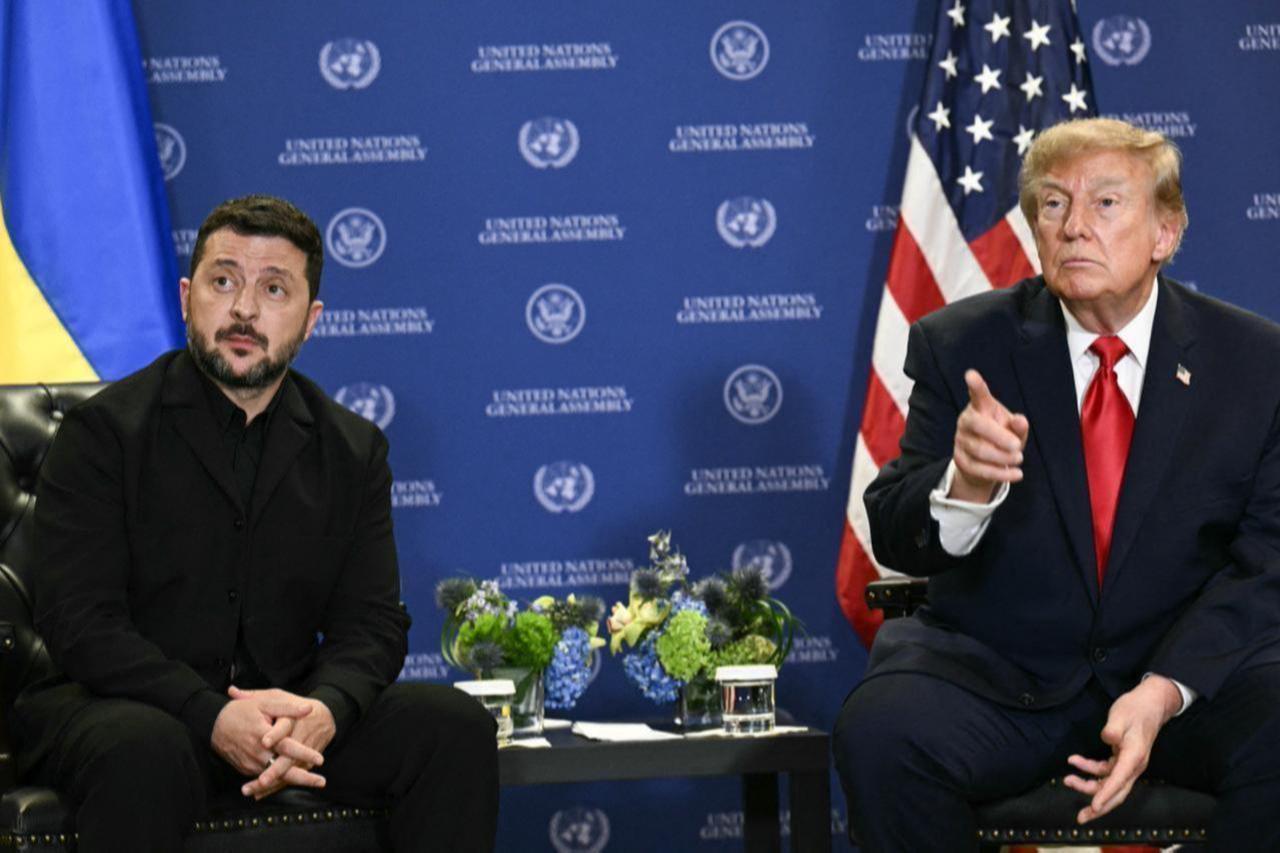
Ukrainian President Volodymyr Zelenskyy responded with a smile and declined to elaborate when asked whether U.S. President Donald Trump was shifting blame onto Kyiv for problems facing his administration ahead of next month's midterm elections.
"This is my answer," Zelenskyy told reporters Friday in Brussels, where he had met European Union leaders. His response drew laughter from the room.
The exchange came amid worsening tensions between Washington and Kyiv, with Trump saying he found Russian President Vladimir Putin easier to deal with than Zelenskyy and calling for the Ukrainian leader to be replaced after he criticized a U.S. deal allowing more Russian diesel into global markets.
Zelenskyy pointed to Russia's attacks in response to Trump's comparison. "Yesterday was a thousand drones in Ukraine, a thousand, but the American side said that it is difficult to speak with Zelenskyy; it's less difficult to manage with Putin," he said.
Zelenskyy said negotiating with Trump was easier than dealing with Putin, whom he accused of having no genuine interest in ending the war. He also rejected the idea that the conflict was simply about control of the Donbas region.
"The issue is not withdrawing from Donbas. It's the issue of our country's existence," he said, urging European countries to continue supporting Kyiv.
He also warned that easing sanctions through the U.S-Russia diesel deal could lead to broader agreements covering energy, chemicals and banking. Zelenskyy said Kyiv had not been informed of the deal in advance and had not received U.S anti-ballistic missiles requested under a Ukrainian proposal for an energy ceasefire.
Ukraine receives intelligence from Washington on Russian ballistic missile launches, while dozens of other countries also share information with Kyiv. The U.S. supplies PAC-2 and PAC-3 air defense missiles through the Prioritized Ukraine Requirements List (PURL) initiative, with European countries covering the cost.
"So it's no gift. It's not for free," Zelenskyy said, adding that Ukraine was not currently a priority for deliveries as many missiles were being sent to the Middle East.

Zelenskyy said speed restrictions on SpaceX's Starlink satellite system had affected Ukraine's ability to carry out some military and humanitarian operations, although the service had not been completely shut down.
Ukraine's Defense Ministry remained in contact with international partners, and Zelenskyy had received indications from the White House that the service would be fully restored.
He explained that Ukrainian forces rely on Starlink-connected interceptor drones to counter Russian jet-powered Shahed drones, rejecting claims that Kyiv uses the system to carry out deep strikes against targets inside Russia.
The restrictions had also affected medium-range strikes against military targets. Ukrainian troops use Starlink-enabled drones to deliver food and water to positions exposed to enemy drone attacks.
A U.S. official told Reuters that Trump had never requested a reduction in Starshield services for Ukraine. The statement followed comments from SpaceX owner Elon Musk, who said that any limits on the speed or use of Starshield were decided by the U.S. military and ultimately Trump.
Ukraine uses Starshield, Starlink's military-grade satellite service, for battlefield communications, strikes on Russian-occupied territory and interceptor drones. It also relies on SpaceX's civilian Starlink network.
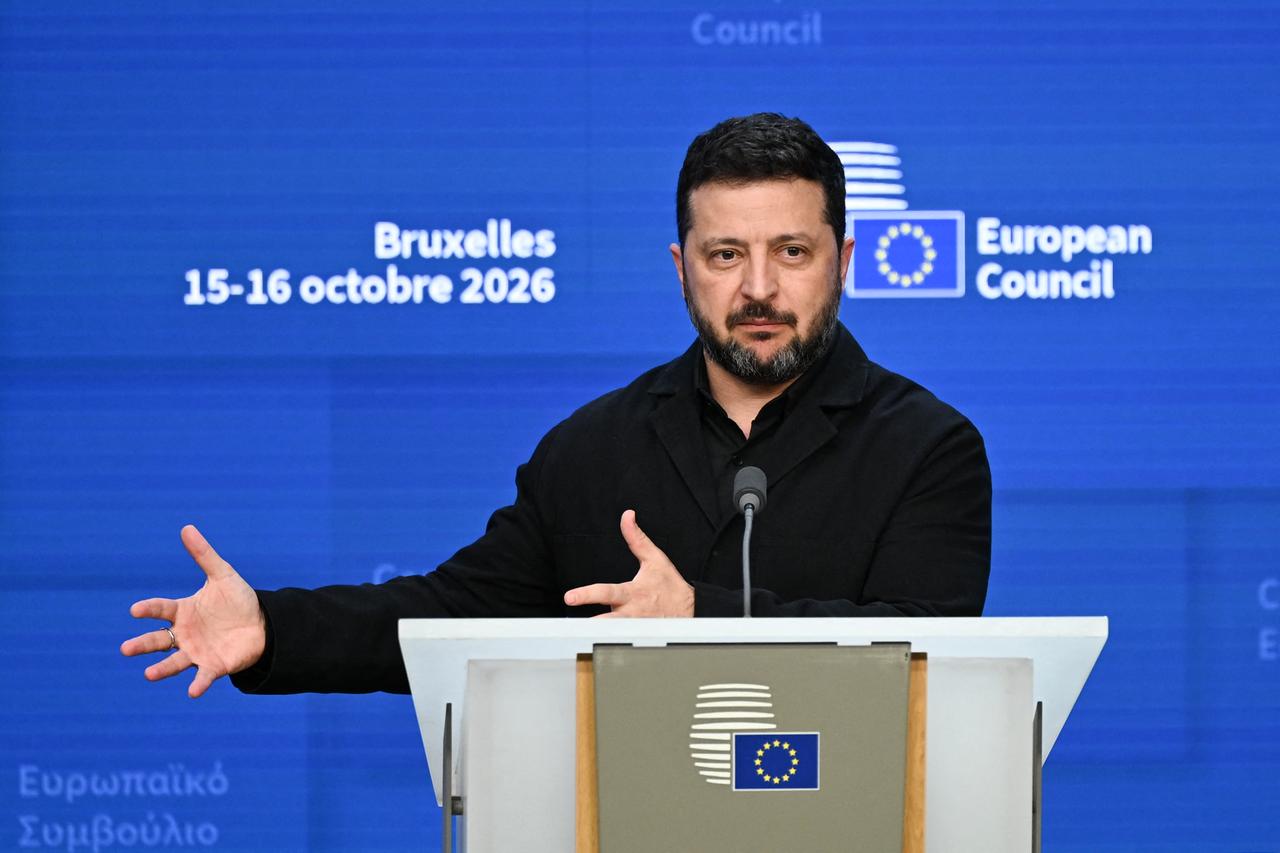
Zelenskyy urged European Union leaders to provide an additional €70 billion ($79 billion) next year, warning during the summit that Ukraine's war effort would cost €155 billion in 2027.
"The war will cost 155 billion euros next year. And we need at least €70 billion more from you — for defence, for weapons, and for our resilience," he told leaders, describing the request as realistic and urging them to help Kyiv hold back Russian forces.
The EU is already disbursing installments of a €90 billion loan intended to cover Ukraine's financing needs through the end of 2027. However, Kyiv has warned of a major budget shortfall next year as Russian strikes continue to batter its economy.
German Chancellor Friedrich Merz also called for more funding on Thursday, urging the bloc to help Ukraine through the winter and into next year. The European Commission is working with Kyiv to determine its precise needs, with EU foreign ministers expected to discuss the issue in December, diplomats said.
The funding debate has revived calls to use around €200 billion in frozen Russian central bank assets to support Ukraine, but the proposal has stalled amid opposition from Belgium, where most of the funds are held. The EU is also pressing other backers, including Britain, Canada and Japan, to provide additional assistance.


 Set as preferred source
 Set as preferred source


 1 min read
 1 min read