Sign in
 Newsletters


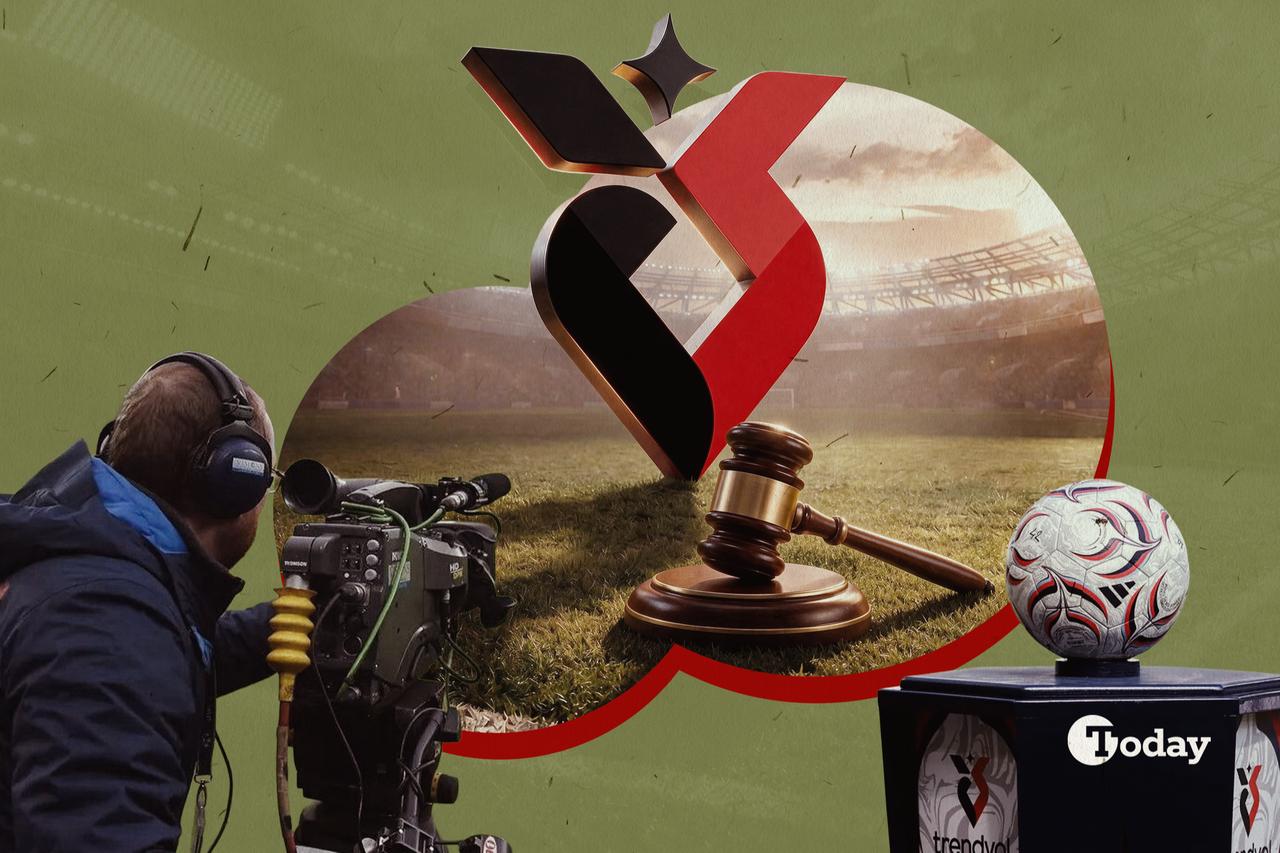


Tune in to a Super Lig game, and you might forgive yourself for thinking you had stumbled upon a European superclub's starting lineup.
Galatasaray has Victor Osimhen leading the line, with Rafael Leao and Aleksey Batrakov adding even more star power to its ranks.
Across Istanbul, Fenerbahce has assembled an impressive cast of its own, bringing in ball-playing goalkeeper Ederson, tireless midfield engine N'Golo Kante, versatile attacking forward Mason Greenwood and powerful striker Romelu Lukaku.
Besiktas has hardly been left behind, adding high-profile names such as Leandro Trossard and Dusan Vlahovic alongside Turkish international Orkun Kokcu.
The star power also extends beyond Istanbul, with Trabzonspor making one of last summer's most eye-catching moves by signing Mohamed Salah and bringing one of world football's most recognizable faces to the Black Sea coast.
Many of these players were lighting up Europe's biggest stages not so long ago. Now they are turning out in Türkiye, giving the Super Lig a glitzy new look.
But assembling such a star-studded cast comes at a steep price. Turkish clubs have splashed out in their bid for success, piling up losses and debt while earning far less from TV rights than Europe's top leagues. Now, they want broadcasters to pay up.
The Turkish Football Federation (TFF) is preparing to auction the Super Lig's broadcasting rights on Nov. 30, with clubs targeting an ambitious $500 million in annual revenue.
That would represent a dramatic increase over the current agreement with beIN Media Group, which pays $182 million annually excluding VAT, or $218.4 million including VAT. The contract covers the Super Lig and 1. Lig through the end of the 2026-27 season.
Turkish football has commanded that kind of money before. In the 2016 tender, beIN secured the rights for five seasons beginning in 2017-18 with an annual offer worth around $500 million.
Subsequent deals, however, lost much of their dollar value as the lira depreciated and economic turbulence weighed on domestic football revenues.
Reclaiming that level would require broadcasters to pay almost three times the current annual fee before tax. Clubs are banking on the league's growing international profile and roster of established stars to justify the higher price.
Türkiye's four biggest clubs spent ₺58.5 billion ($1.15 billion) combined on football operations in the 2025-26 financial year, including ₺27.5 billion in player wages. Transfer fees, player loans, agent commissions and other squad-related expenses added to the burden.
By comparison, they generated just ₺2.63 billion in broadcasting revenue over the same period.
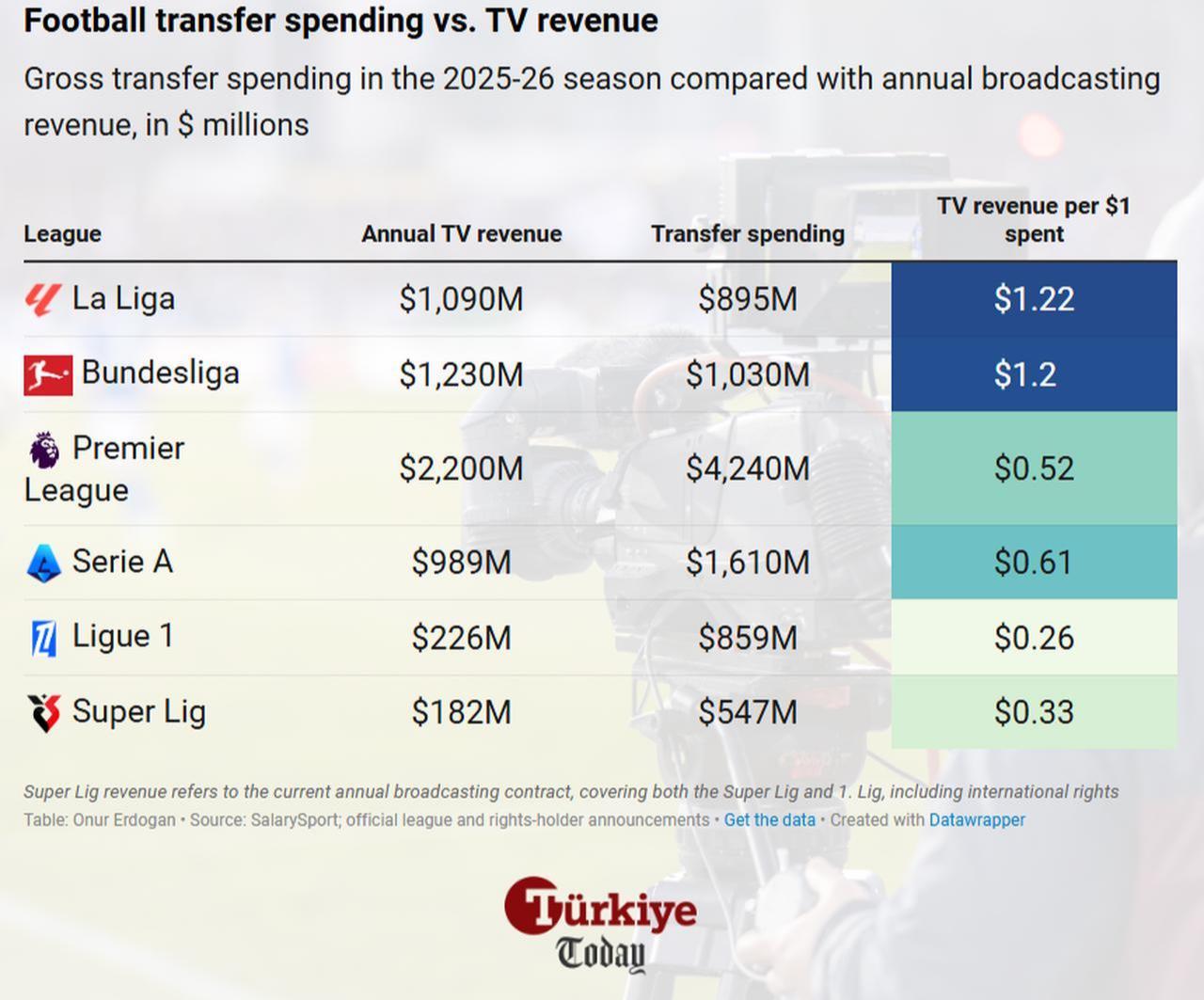
The scale of the investment was also apparent in the transfer market, where Turkish clubs spent an estimated $547 million during the 2025-26 season, according to SalarySport data.
That level of spending stands in stark contrast to the league's broadcasting income. The Premier League, La Liga, the Bundesliga and Serie A all command substantially larger domestic television revenues.
France's Ligue 1 also generates more from its domestic rights than the Super Lig's current deal, although comparisons vary depending on the seasons and rights packages included.
For Turkish clubs, securing a more lucrative broadcasting contract is becoming increasingly important to financing their squads and keeping pace with Europe's better-funded competitions.

The upcoming tender is expected to attract a more diverse field than the previous one, bringing together sports broadcasters, streaming platforms, telecom operators and a public broadcaster.
Six companies have purchased the tender specifications for ₺750,000 each: incumbent beIN Media Group, Saran Group and Amazon, which are partnering on a bid, Turkcell, Turk Telekom and state broadcaster TRT.
Acun Medya is also considering entering the race, according to its owner, Acun Ilicali. The company recently secured Turkish rights to the UEFA Champions League, Europa League, Conference League and Super Cup for four seasons from 2027-28.
beIN enters the tender with an established operation. Through Digiturk, TOD and beIN Sports, it already has the infrastructure, distribution network and subscriber base to deliver the league, offering packages that range from full Super Lig coverage to matches involving individual clubs.
The Saran Group-Amazon partnership combines Saran's experience distributing major competitions through S Sport and S Sport Plus, including La Liga, Serie A, the Bundesliga, EuroLeague and NBA, with Amazon's global streaming infrastructure and sports broadcasting experience.
Turkcell could bundle Super Lig coverage through TV+ with its mobile data, fiber internet and television subscriptions. Turk Telekom could pursue a similar approach through Tivibu and Tivibu GO. The company already broadcasts international competitions, holds the rights to Türkiye's second- and third-division leagues, and provides technological infrastructure to the TFF as the Super Lig's technology sponsor.
TRT could combine free-to-air coverage on its nationwide channels with digital distribution through tabii, where it already carries UEFA competitions alongside TRT 1 and TRT Spor.
Acun Medya could build on its experience with Exxen and TV8 to expand into football broadcasting, while Exxen is separately considering a partnership to distribute its UEFA coverage.
Purchasing the tender specifications does not guarantee a final bid. The bidders' preferred packages and financial offers will become clear once the process gets underway.
A $500 million annual deal would place the Super Lig among Europe's highest-earning leagues in broadcasting revenue, exceeding the combined $226 million generated by France's top two divisions.
Other major European leagues remain well ahead, with the Premier League generating around $2.2 billion in domestic broadcasting revenue, followed by the Bundesliga at $1.23 billion, La Liga at $1.09 billion and Serie A at $989 million.


 Set as preferred source
 Set as preferred source


 2 min read

 1 min read