Newsletters


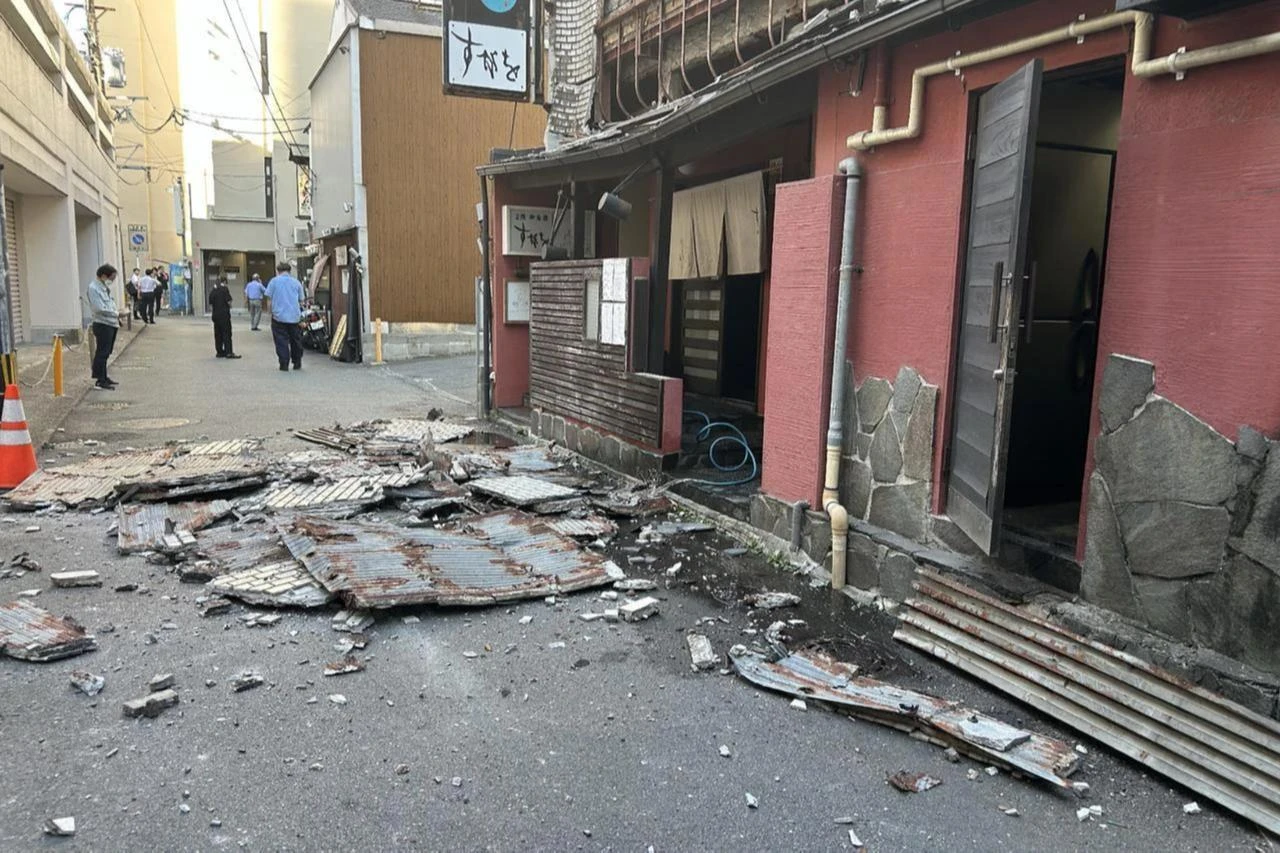


The quake originated in the southern Ibaraki prefecture, northeast of Tokyo, at a depth of 68 kilometers (42 miles), Tokyo-based Kyodo News reported, citing the Japan Meteorological Agency. No tsunami alert was issued following the tremor.
The quake registered a lower 5 on Japan's seismic intensity scale of 7 in parts of Ibaraki prefecture and in central Tokyo, the country's capital.
More than 20 people were injured across the region, including a young man and a woman in her 70s in Saitama prefecture, north of Tokyo, as well as nine people in Kanagawa prefecture, south of Tokyo, and four in Chiba prefecture, east of the capital.
Several train services were delayed following the quake, with some trains operating at reduced speeds. Some express services run by Tobu Railway remained suspended.
An intensity lower than 5 was also recorded in parts of Saitama and Chiba prefectures and in central Tokyo.
No abnormalities were detected at the Tokai No. 2 nuclear power plant in Ibaraki prefecture, nor at the Fukushima Daiichi and Fukushima Daini nuclear plants in northeastern Japan.


Prime Minister Sanae Takaichi instructed officials to assess the extent of the damage and provide timely information to the public.
Japan's weather agency urged residents to stay alert for further earthquakes registering below 5 on the seismic intensity scale over the coming week, particularly over the next two to three days.
The quake was felt across a wide area of the country, including northeastern and central Japan.


 Set as preferred source
 Set as preferred source



 4 min read