Newsletters


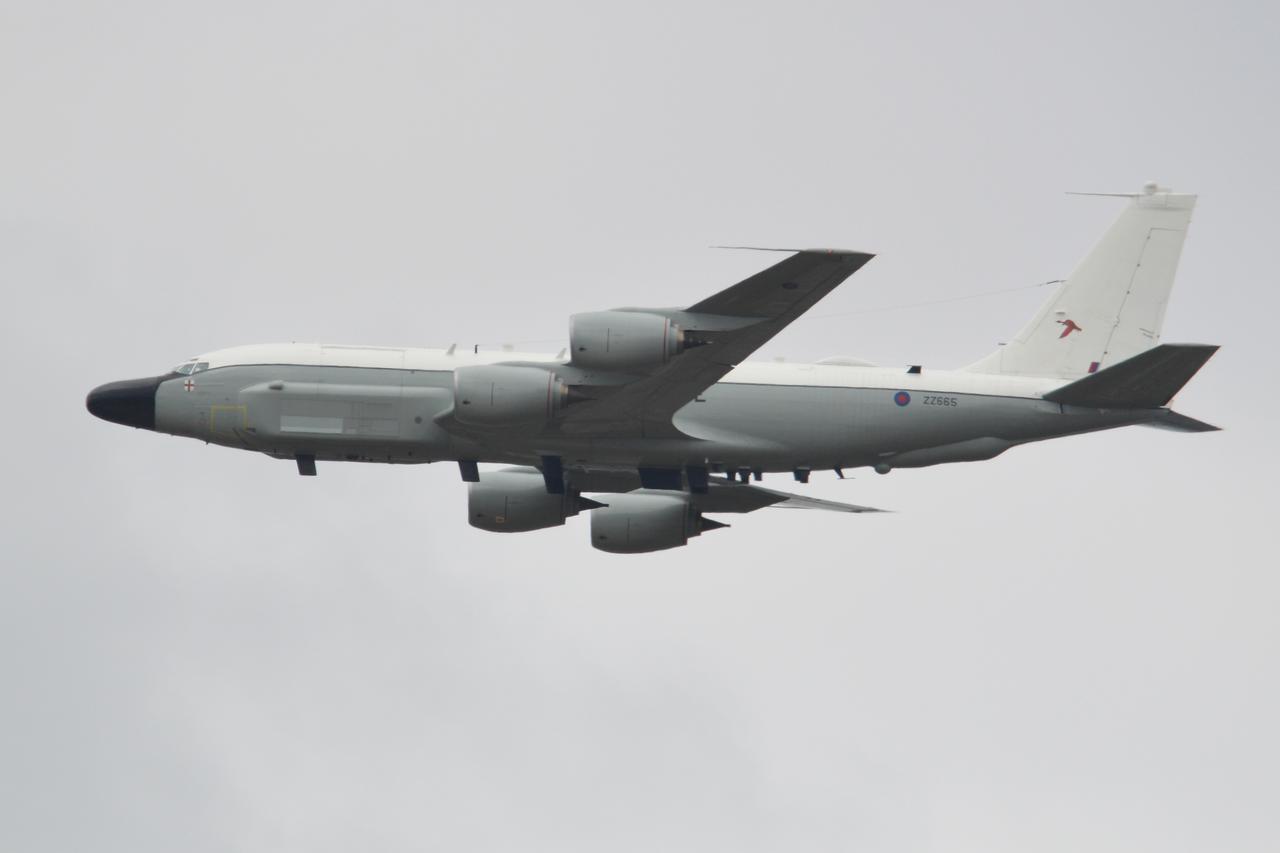


Britain’s two operational Rivet Joint surveillance aircraft flew 17 missions in October to monitor Russian military activity, with the Russian exclave of Kaliningrad as their main focus. Flight data analysed by the Daily Mail shows the pattern. A senior defence source called the level of activity “extraordinary.”
The RAF flew four times as many sorties in October as it did in May, when four flights took place. The Ministry of Defence has not commented on the operation, and the purpose of the flights remains unclear.
The jets operated from RAF Waddington in Lincolnshire, the air force’s intelligence and surveillance headquarters. They repeatedly circled Kaliningrad, the heavily militarised Russian territory between Poland, Lithuania and the Baltic Sea. They also flew back-to-back patrols along Nato’s Baltic borders with Russia and Belarus.
“The use of such an exquisite asset would suggest there was a very special request for information that was felt only Rivet Joint could have answered,” the senior defence source said. Another source familiar with how the aircraft operate called such a concentrated effort “very unusual” and said “something’s happened to drive that change.” That source added that Kaliningrad has already been mapped in great detail, so a surge there would not normally be expected.
An RAF source gave a different account. The source described the operation as “routine” and part of a “broader contribution to Nato” as the alliance strengthens its eastern flank. Defence analysts say Rivet Joints regularly monitor Kaliningrad, but they said the intensity of last month’s flights appeared unusual.
The flights followed a series of warnings from Moscow. On September 30, Russia told Nato in a note that it would be ready to use its entire arsenal, “including nuclear weapons,” to defend its territory if alliance members tried to isolate Kaliningrad from the rest of the country.
Nato Secretary General Mark Rutte dismissed the threat. “Putin knows that he can never win [against] Nato, so I don’t take this that seriously,” he said. Russian President Vladimir Putin later said last month that he was willing to use “all the weapons” in Russia’s arsenal. He said his forces were “ready” for war but added that “if things go too far, there will be no winners at all.”
Kaliningrad lies roughly 250 miles from the Russian mainland. It is home to the Russian navy’s Baltic fleet and hosts nuclear-capable Iskander-M missiles and S-400 air-defence systems. It is sometimes described as the Kremlin’s “unsinkable aircraft carrier.” Poland and some Nato allies fear Moscow could use the territory to launch long-range strikes deep into Europe in a full-scale war.
Russia is also finishing a large new radar in Gvardeysk, about 20 miles from the Polish border. The structure has three antenna arrays, each extending 1,640 feet. It is believed the platform will let Moscow detect missiles and aircraft from thousands of miles away and use “over-the-horizon” technology to spot warships at sea.
Each 135-foot Rivet Joint carries equipment that collects radio and electronic signals for intelligence analysts. Philip Ingram, a former colonel in British military intelligence, described the jets as “electronic vacuum cleaners that hoover up anything and everything.”
He said the data can reveal how to jam air defence systems and target radars, and can allow eavesdropping on conversations between Russian commanders.
“The Russians will know that just about everything they say is being recorded,” Ingram said. “Every time they light a radar up, they are being recorded and that will help Nato targeting and jamming should they ever need to go kinetic.”
He said a surge in activity also “sends a very clear message to the Russians letting them know they are being watched.” Experts have suggested the jets may have been gathering information on new Russian assets, signalling to the Kremlin, or both.
 2 min read

The Rivet Joint fleet has been in service since 2014. In March 2024, the aircraft were scrambled to the Baltic after Russian electronic warfare specialists jammed the signals on the RAF jet carrying then defence secretary Sir Grant Shapps.
In August, one of the jets deployed to Orland in Norway for Exercise Arctic Stone, where it worked alongside the Royal Norwegian Air Force’s F-35A stealth jets.
The RAF said at the time that the deployment underlined the growing strategic importance of the High North.
Poland has strengthened its 143-mile border with Kaliningrad since Russia invaded Ukraine. Last month officials ordered counter-terrorism police to patrol it amid fears of Russian sabotage.
Western intelligence officials believe Putin is running a covert campaign of hybrid attacks across Europe, aimed at defence firms supporting Ukraine and at critical infrastructure such as undersea cables. They consider it unlikely that he will use nuclear weapons, but they have not ruled out the possibility of him accidentally triggering a war with Nato.
Defence Secretary Wes Streeting warned last month that the UK had 1,000 days to prepare for war. The government also urged families nationwide to stockpile food and water in case of a national emergency.


 Set as preferred source
 Set as preferred source




 1 min read