Newsletters


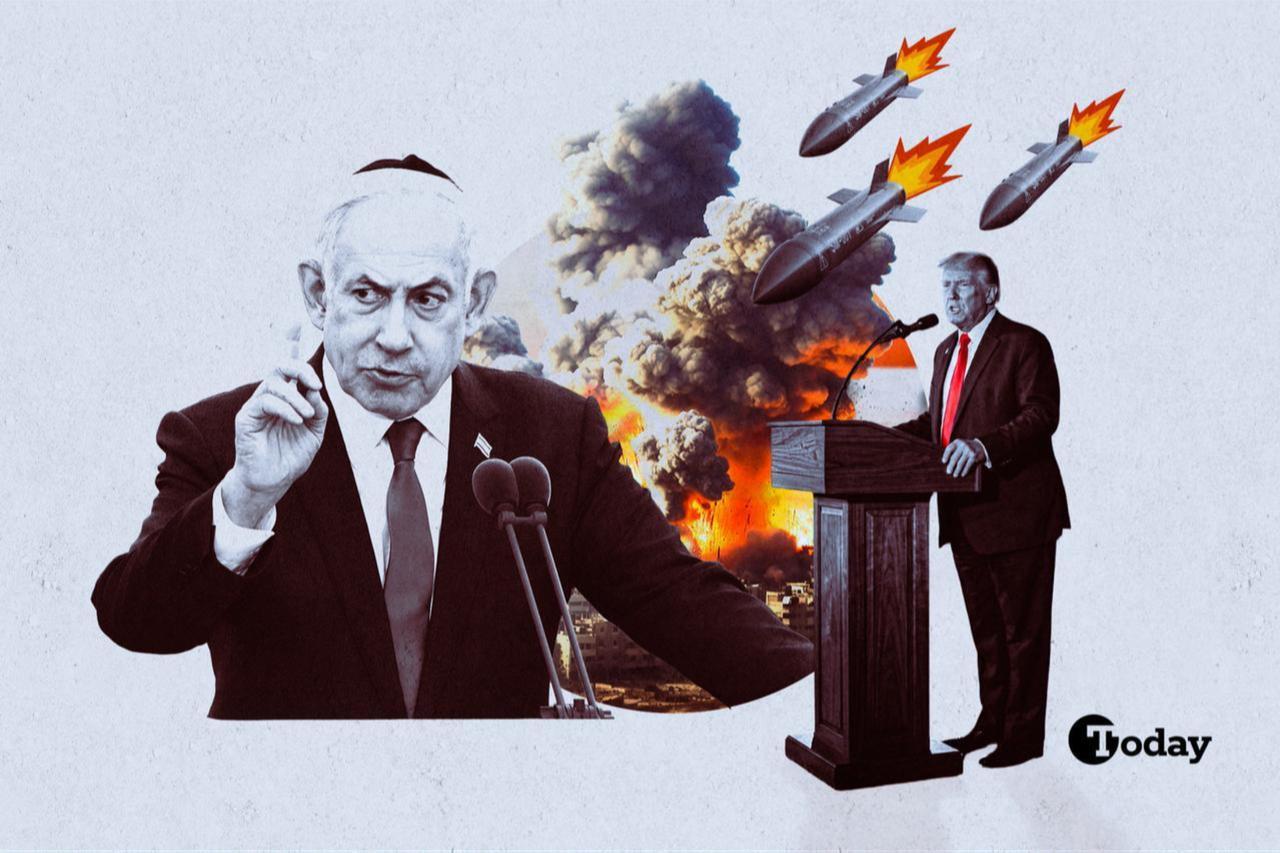


"Human animals," "barbaric animals," "they're animals."
Three speakers, three press conferences, three different flags behind the podium. In one, Israeli Defense Minister Yoav Gallant announces the siege of Gaza. In another, the U.S. Secretary of State hails the assault on Gaza City. More recently, Donald Trump doubles down on threats to dismantle Iran’s infrastructure.
The same noun. The same negation. The same grammatical architecture of erasure, applied, with only minor variation in accent, across two governments, two militaries, two decades of compounding strategic entanglement.
The obvious question is whether this is borrowed vocabulary. The less obvious question—the one that lingers after the press conference ends and the podium lights go dark—is whether vocabulary is still the right unit of analysis.
Because what is visible now, in the accumulated record of doctrines quietly adopted and rhetorical frameworks quietly imported, suggests something larger than a shared turn of phrase. It suggests a shared operating system.
The imported alternative changes the American language used to describe the enemy, the logic used to justify the force, and the silence maintained where a political endgame should be.


In Israeli strategic culture, there is a phrase that rarely appears in official communiques but circulates freely among defense analysts: mowing the grass. It describes a "counterterrorism" philosophy of deliberate, recurring military action—not to achieve a resolution, but to periodically reduce an adversary's capacity for harm.
The lawn, in this metaphor, grows back. That is understood. The mower returns. That, too, is understood. What is explicitly not part of the framework is any expectation of a final state—a cleared field, a peace agreement, a transformed political landscape.
The goal is not to end the conflict. The goal is to manage it at a tolerable altitude.
For decades, this doctrine was treated by American strategists as a product of Israel's specific predicament—a small state, surrounded, operating without strategic depth, confronting threats for which the conventional toolkit of diplomacy and deterrence offered incomplete answers. The managed-irresolution model was understood as contextually rational, if structurally melancholic.
What has changed is the context, or rather, the abandonment of the assumption that context should constrain the model.
The American military engagements of the post-Cold War era were, whatever their failures, framed around transformation: the creation of functional states, the installation of democratic institutions, the construction of a durable political order that would, in theory, render further military intervention unnecessary.
The end state was always named, however improbably. In Afghanistan: a self-sustaining government. In Iraq: a stable democracy. The projects collapsed. But the architecture, the insistence that military force serve a political objective beyond its own repetition, remained, at least nominally, intact.
That architecture is no longer visible in the current American strategic posture. What has replaced it bears a striking structural resemblance to what Israel has been practising for decades: military action decoupled from political horizon, force applied not to produce an outcome but to prevent one—specifically, the adversary's achievement of a capability or position that would alter the existing asymmetry of power.
This is not a failure of strategy. It is a different strategy. The question is whether it has been chosen or it simply arrived.
Secretary of Defense Pete Hegseth has been, in this context, a figure of some analytical utility, not because his views are sophisticated, but because they are unusually transparent. The argument he has advanced, with a consistency that suggests genuine conviction, is that previous American military failures were not the product of strategic miscalculation. They were the product of constraint.
Engagement rules designed to minimize civilian casualties. Legal frameworks derived from international humanitarian law. A cultural orientation within the military—labelled, with characteristic imprecision, "woke"—that prioritized sensitivity over lethality. These, in Hegseth's reading, were the prangalar. The shackles. Remove them, and the institution performs as designed.
The Israeli parallel is direct, and it did not go unremarked in the period following the Gaza campaign of 2023. Israeli operations were conducted with fewer legal restraints than any previous campaign in recent memory. Senior officials spoke openly of the suspension of proportionality calculations. The phrase "complete siege"—no electricity, no water, no food—was not offered apologetically. It was offered as policy.
What Hegseth's framework imports from this experience is the underlying premise: that the constraint was the problem, not the objective. That an unconstrained military, properly directed, achieves what a constrained one cannot.
The American iteration of this argument translates the Israeli "absolute destruction" register into a domestic political narrative, the liberation of an institution from the cultural and legal frameworks that, in this telling, had neutered it.
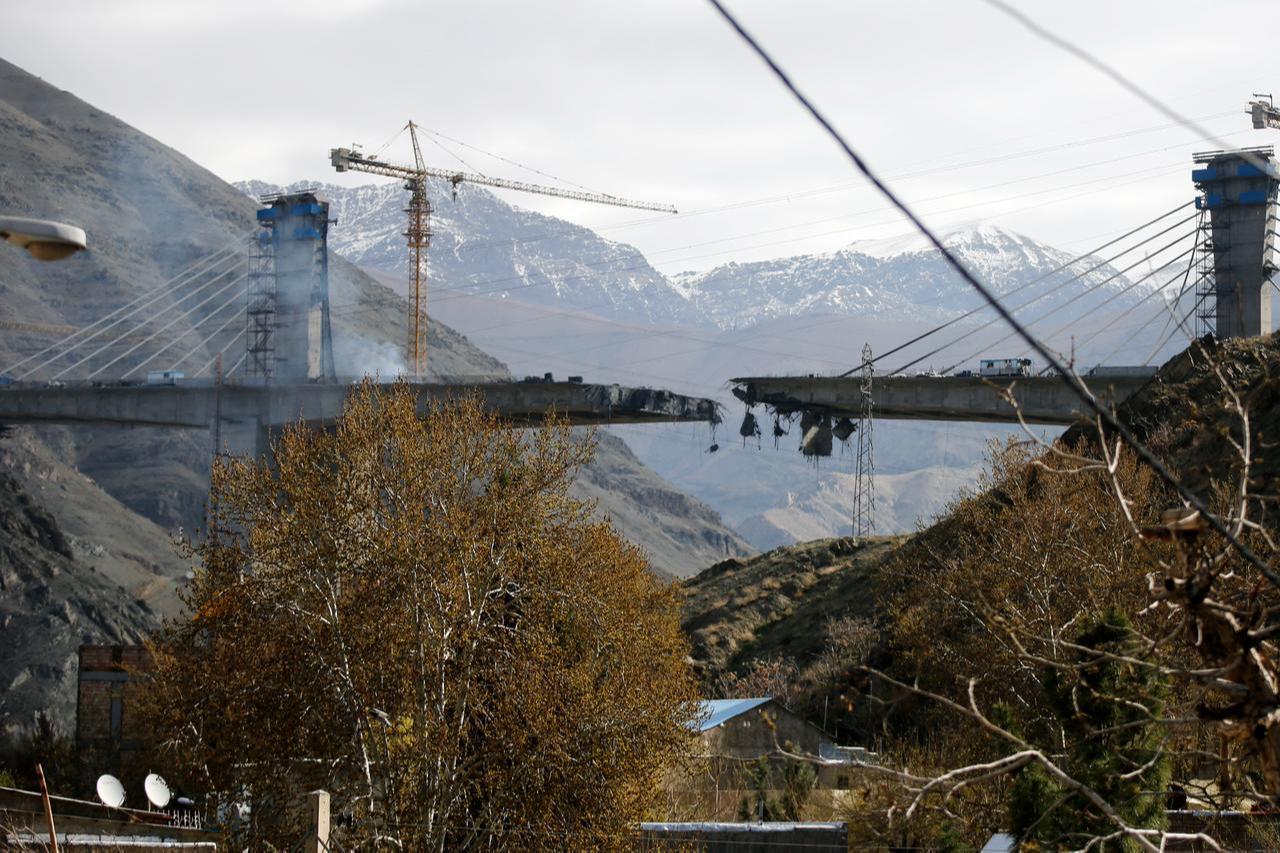
There is a specific construction that appears in Trump administration statements on Iran that rewards close reading. The declaration, issued with the confidence of an accomplished fact, that the United States is "ending 47 years of war." The war in question, between the United States and Iran, has not, in any formal or legal sense, begun. It has consisted, over those decades, of proxy conflicts, sanctions regimes, covert operations, and periodic direct exchanges. It has not been declared. It has not, therefore, been ended.
The declaration of termination before the commencement of hostilities is not merely a rhetorical curiosity. It reflects the same structural logic that governs the mowing-the-grass paradigm: the redefinition of tactical action as strategic resolution. A nuclear facility struck is a war ended. A missile battery destroyed is a deterrence achieved. The event and its meaning collapsed into one another, with no intervening space for the question of what follows.
In Clausewitzian terms, war is the continuation of politics by other means, which implies, as its necessary corollary, that war must serve a political end. A war that serves no political end beyond the periodic reduction of an adversary's capacity is, in classical strategic theory, not a war. It is a maintenance programme.
Israel has operated this maintenance programme for decades, and the regional landscape—the persistence of Hamas, the entrenchment of Hezbollah, the durability of Iranian regional influence despite repeated strikes on its proxies—constitutes the observable results. The grass grows back. The mower returns.
What the doctrine cannot absorb, because its logic does not require it to, is the question of scale.
The mowing-the-grass model was constructed for a specific asymmetry: a technologically superior state managing threats from non-state actors or structurally weaker adversaries, operating in a confined geographic theatre, with a regional audience that has, over decades, calibrated its expectations accordingly.
Within those parameters, the model has coherence. The periodic degradation of capacity works, to the extent it works, because the adversary lacks the means to escalate beyond a threshold that the superior power cannot absorb.
Iran, on the other hand, is a country of ninety million people. It possesses a sophisticated state apparatus, a missile programme of regional reach, a nuclear development trajectory that has survived decades of sanctions and several rounds of direct sabotage, and an ideological infrastructure that predates the Islamic Republic and will, in all likelihood, outlast whatever tactical exchange the current administration is contemplating.
It also operates a network of regional influence—in Lebanon, Iraq, Syria, Yemen—that is woven into the political fabric of those states in ways that cannot be extracted by airstrikes.
The asymmetry, in this context, does not look like the one the model was designed for. And yet the model is being applied, for the recent Israelization of American policy, from rhetoric to strategy.


 Set as preferred source
 Set as preferred source


 4 min read