Newsletters


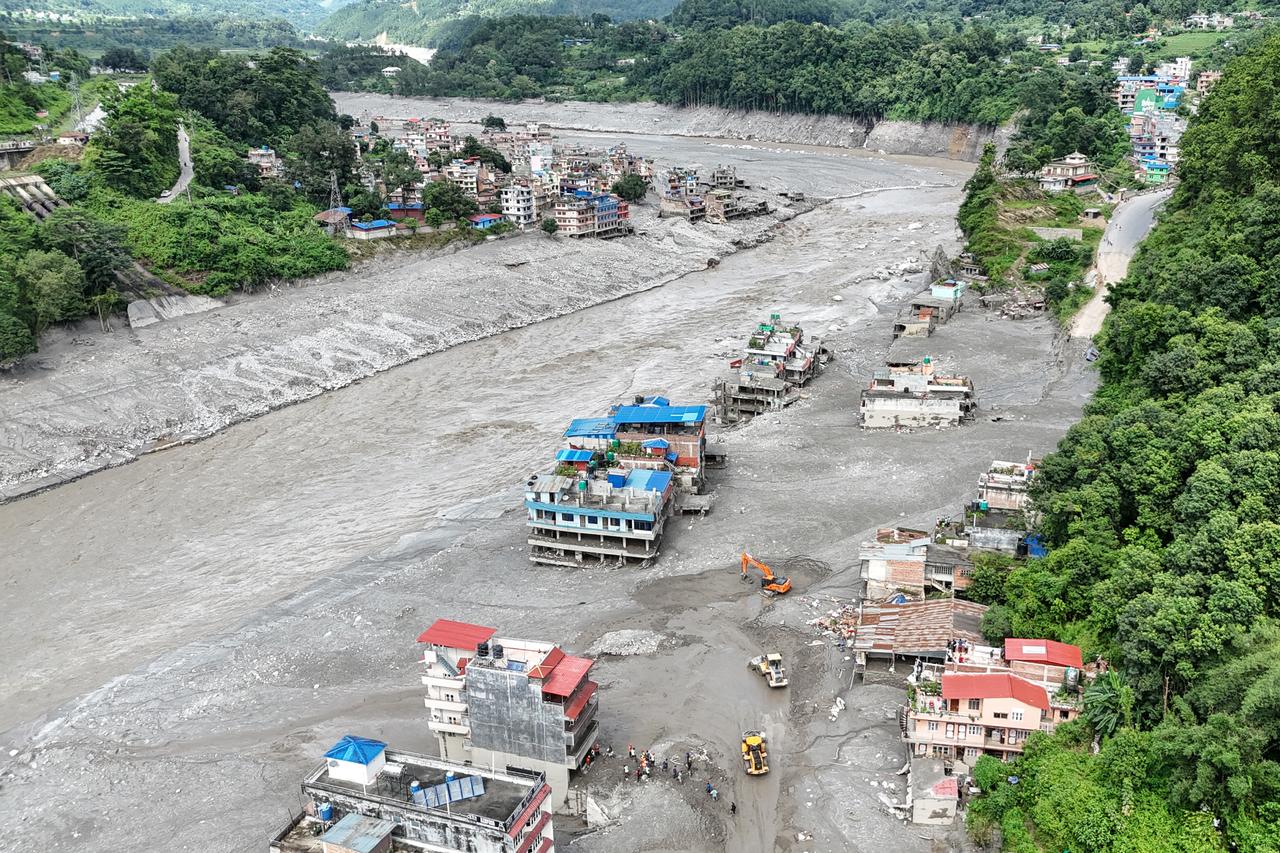


The death toll from devastating floods and landslides in Nepal and neighboring Tibet has risen to 472 on Friday as rescue teams continue searching for hundreds of missing people, while China has halted operations because of the risk of renewed flooding.
Nepal recorded 469 deaths, according to figures reported Friday by The Kathmandu Post, while China confirmed three fatalities in the southwestern Xizang Autonomous Region, also known as Tibet.
In Nepal, 667 people, including foreign nationals, were missing late Thursday, according to the Nepal Tourism Board. Beijing said more than 550 people, including 260 foreign nationals, were unaccounted for in Tibet.
Floods and landslides struck northern and central Nepal early Wednesday, sweeping through communities along the Bhotekoshi and Trishuli rivers and carrying people and debris downstream.
The disaster destroyed homes, bridges, roads and other infrastructure, cutting off communities and travelers from the rest of the country. Damage to transport links also complicated efforts to reach affected areas.
The U.S. Geological Survey said the disaster was caused by a glacial collapse that triggered a vast flow of icy debris. Climate change is causing glaciers to melt worldwide, increasing the risks of glacial lake floods and glacial collapses.
The destruction severed vital links across the mountainous region, where roads and bridges are often the only routes. Several hydropower projects, both operating and under construction, were also badly damaged.
Search and rescue operations are continuing, with the Nepali Army, Nepal Police and Armed Police Force deployed to find survivors, evacuate residents and reach isolated locations. Helicopters have been used to evacuate survivors, while ground teams continue searching along riverbanks and downstream settlements.
Nepali Army teams are still working to evacuate more than 100 people trapped in a flooded tunnel at the Trishuli 3A hydropower project after rescuing 350 workers and locals.
The Nepal Tourism Board is continuing to verify the whereabouts of tourists and travelers who were in or passing through Rasuwa, Nuwakot and Dhading when the floods struck. Authorities are also reconciling casualty and missing-person reports from different areas.
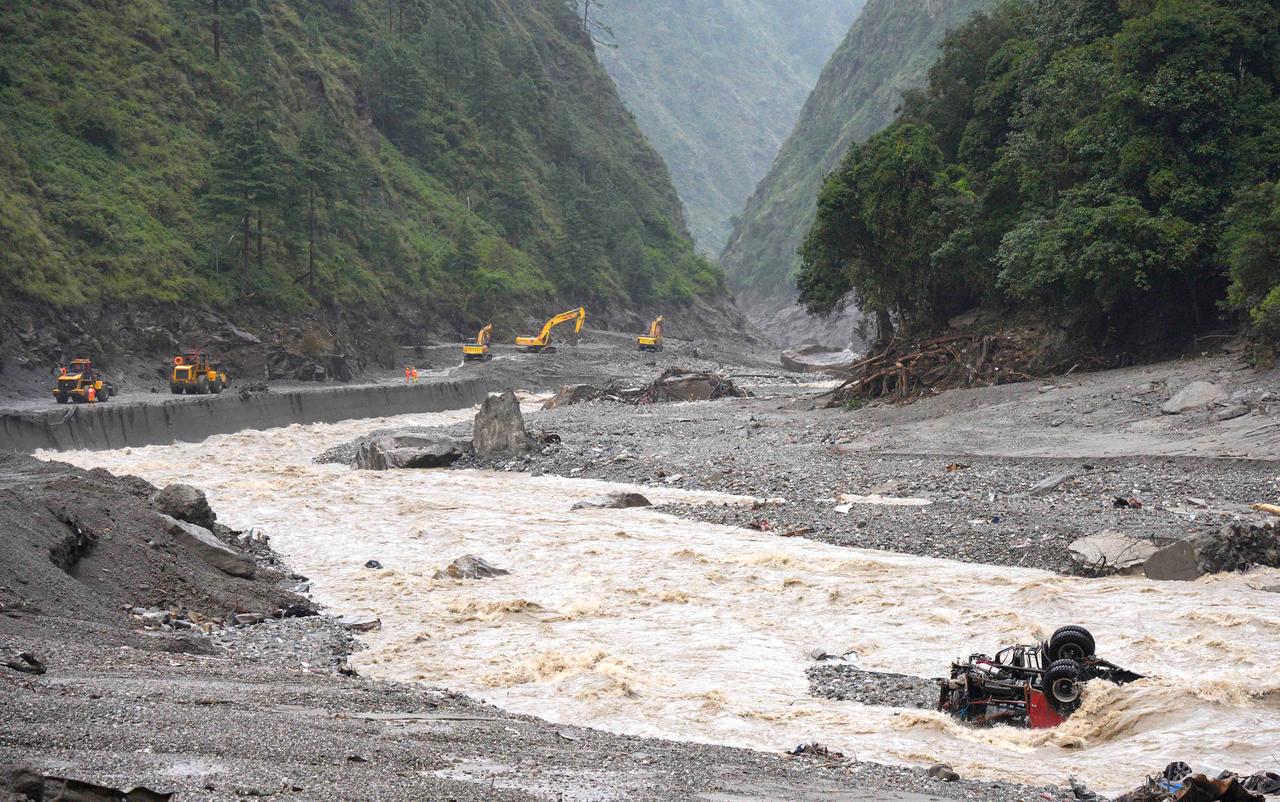

Meanwhile, Chinese state broadcaster CCTV reported that a rescue operation in Tibet was halted Friday after a lake formed by huge piles of debris from a deadly mudslide on the China-Nepal border began overflowing toward the area where rescue teams were heading, with hundreds still missing two days after the disaster.
“All rescue teams have been ordered to stand by in place and wait for further instructions,” CCTV reported. Emergency teams that had already reached the area were ordered to withdraw one kilometre (0.6 miles).
The lake formed after a wall of mud and debris hit the border hub of Gyirong in Tibet on Wednesday, with hundreds reported missing.
CCTV said water levels were expected to rise over the next three days because of continued rainfall, peaking around Sept. 1. Xinhua reported that the rising levels increased the risk of a breach that could send floodwaters downstream and cause further damage, including at Gyirong Port and elsewhere.
As of Friday, 499 Chinese nationals and 555 foreigners had been transported out of the disaster zone, CCTV added.


 Set as preferred source
 Set as preferred source


 1 min read
 1 min read