Newsletters


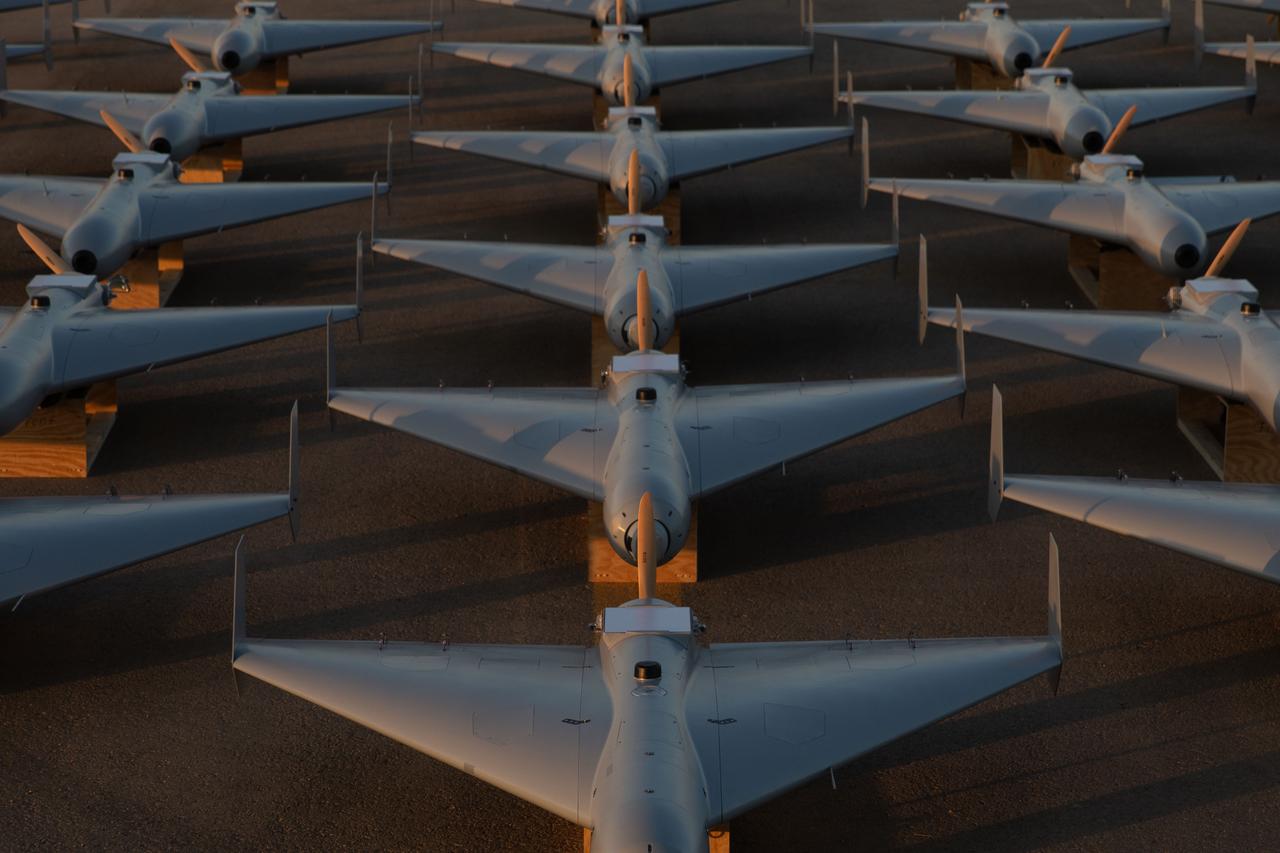


The United States military's first dedicated kamikaze drone squadron is operationally ready and could see action if President Donald Trump orders strikes against Iran, according to US officials and defense analysts cited by Bloomberg.
Known as Task Force Scorpion, the unit has evolved from an experimental program into a fully operational squadron embedded within the largest American military buildup in the Middle East since the 2003 invasion of Iraq, a deployment Trump ordered to pressure Tehran into negotiations over its nuclear program.
The unit operates the Low-Cost Unmanned Combat Attack System, or LUCAS, a one-way attack drone produced by Arizona-based SpektreWorks that US Central Command estimates costs roughly $35,000 per unit. The lightweight drones can be deployed for strike missions, reconnaissance and maritime operations, and are "designed to operate autonomously" with "an extensive range," according to a CENTCOM statement.
"We established the squadron last year to rapidly equip our warfighters with new combat drone capabilities that continue to evolve," CENTCOM spokesman Capt. Tim Hawkins said.
One of the unit's drones was successfully test launched in mid-December from the flight deck of the USS Santa Barbara, a littoral combat ship operating in the Arabian Gulf as part of the broader US naval presence in the region.
The deployment represents what Forecast International defense analyst Anna Miskelley described as "a pivot away from US military reliance on multi-million dollar platforms like the MQ-9 Reaper, which are increasingly difficult to justify in high-attrition, swarm-based conflicts."
In a notable irony, the LUCAS drones were reverse-engineered from Iran's Shahed-136, the same kamikaze drone that Tehran has supplied to Russia for use in its war against Ukraine. The lineage underscores the degree to which the United States has been working to close a capability gap after years of watching adversaries employ cheap, expendable attack drones to devastating effect on modern battlefields.
The Shahed-136, a delta-wing loitering munition, became one of the most recognizable weapons of the Ukraine conflict after Russia began using Iranian-supplied variants in large-scale strikes against Ukrainian infrastructure beginning in late 2022. The American effort to develop a comparable low-cost system reflects a broader Pentagon reckoning with the growing dominance of inexpensive unmanned platforms in contemporary warfare.
With a 40-pound payload, the LUCAS drones would be unsuitable for strikes on hardened Iranian military installations. However, analysts argue the system could prove effective against a wide range of other objectives.
Bryan Clark, a Hudson Institute analyst and former US Navy strategic planner, said the force "would be an effective way to attack softer, distributed targets in Iran like missile production facilities, road networks and missile launch sites." He added that "destroying these kinds of targets require a lot of dispersed attacks that inexpensive drones are well suited to deliver," noting that Iran's degraded air defense capabilities mean "they may not be able to shoot down many."
Any combat deployment of Task Force Scorpion would mark a first for the nascent unit and could serve as a validation of Defense Secretary Pete Hegseth's push to accelerate the military's adoption of unmanned aerial systems.
The military preparations come as US-Iran negotiations continued Thursday in Geneva. Iranian Foreign Minister Abbas Araghchi said the two sides had made good progress and indicated a new round of talks could take place "very soon," possibly within about a week.


 Set as preferred source
 Set as preferred source


 2 min read



 1 min read