Newsletters




There is a particular cruelty to a homecoming with no date attached to it.
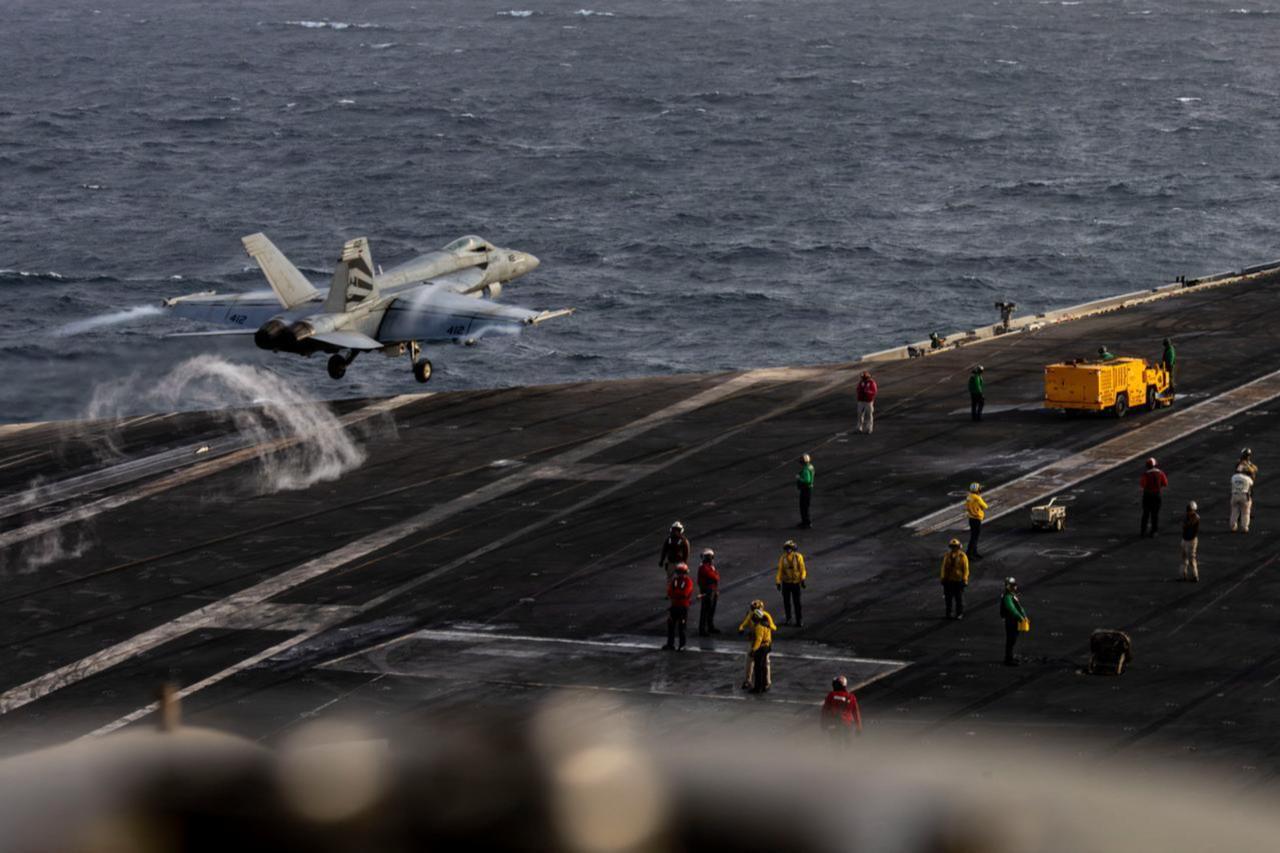
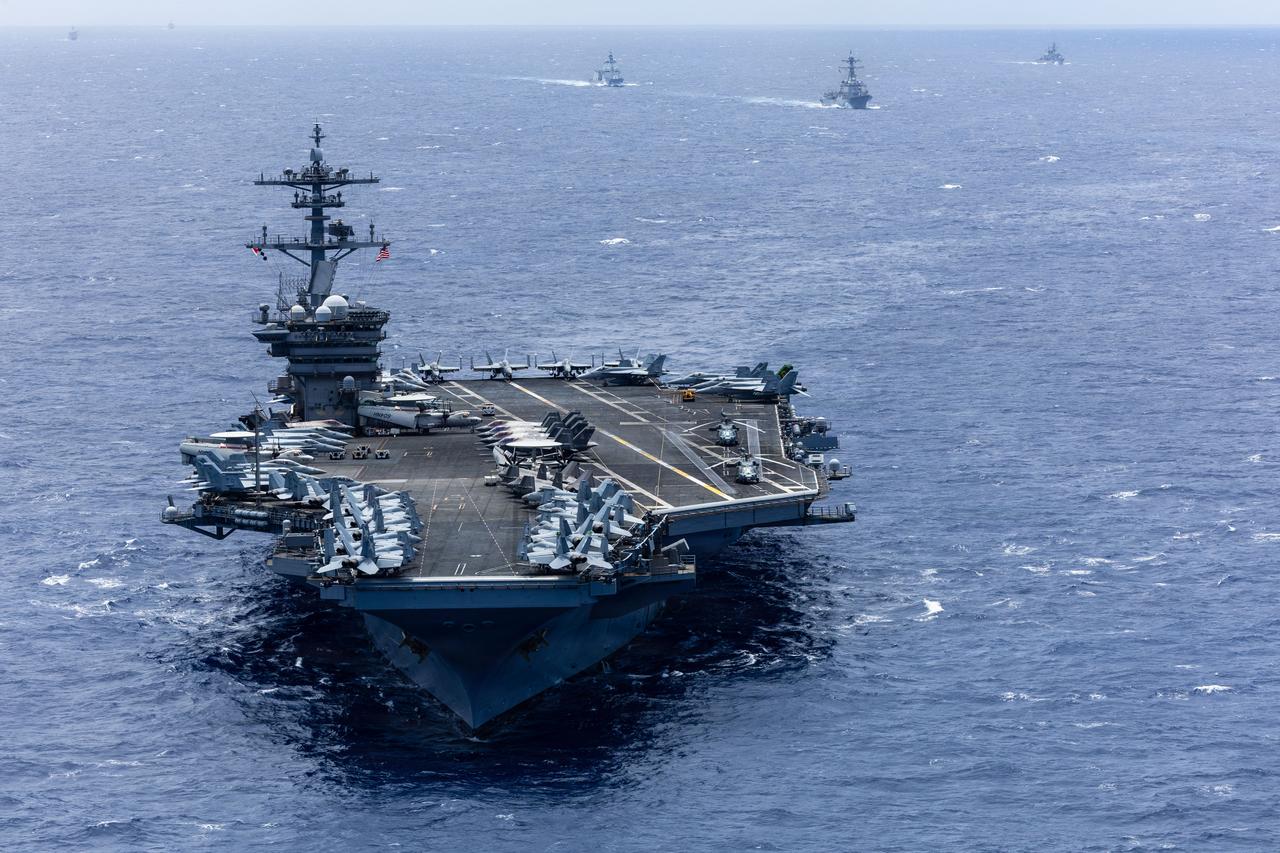
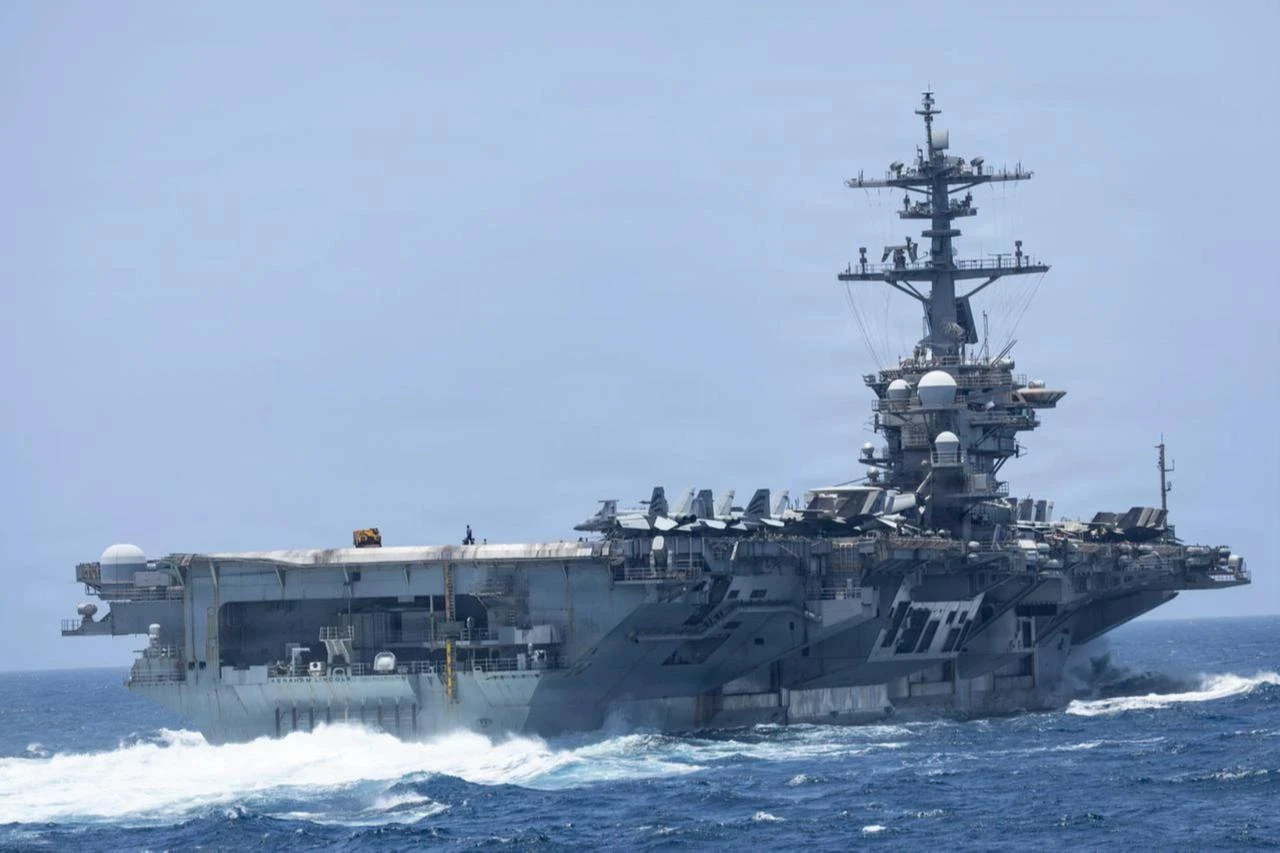
The USS Abraham Lincoln is finally making port in Thailand this week, 260 days after it last touched land, which the Navy will tell you is a triumph of American endurance and the sailors aboard will tell you, if you catch them off the record, is closer to a hostage situation with better food.
Nine thousand miles away in San Diego, the USS Theodore Roosevelt is being loaded and painted for a deployment with the same open horizon, as if the fleet has discovered a new unit of time: not days or months, but "chunks."
One carrier finally gets to stop moving. Another is about to start. That is the entire shape of the Trump administration's naval posture in the Gulf right now, and it says more about the limits of American power than the trillion-dollar budget line the White House keeps pointing to.
Defense spending crossed $1 trillion this year, up from $883 billion in 2025 in a 14% jump the administration has treated as self-evidently good news. President Trump called the Lincoln "beautifully maintained." Hardware photographs well, and a bigger fleet is an easier thing to brag about than a rested one.
But naval deterrence is not directly linked to the steel tonnage. Even in the 21st century, it's still about whether the people running that steel can still think clearly on hour 200 of a deployment with no announced end date.
The Lincoln stayed on the tracking map the entire time, fully "capable" by every metric the Pentagon likes to cite. But the American press repeatedly reported that the sailors went short on fresh food, or that some tried to go overboard by simply jumping off.
Chief of Naval Operations Adm. Daryl Caudle described how these deployments actually get extended, and the word he chose says everything: in "little chunks."
No fixed date, no horizon a family can plan around, just another chunk tacked on when the mission still needs a carrier on station.
Caudle has said he's trying to give commanders more certainty on timelines. He hasn't gotten there yet, and the Roosevelt is sailing under the same open-ended terms the Lincoln did.
A single long, clearly bounded deployment is hard enough on a family. An unbounded one, extended piece by piece with no announced end, is worse and it never lets anyone exhale.
More than 20 U.S. warships are currently enforcing the blockade, which has redirected 75 commercial vessels, disabled three and boarded two. The tactics are working. The mission itself has no finish line, which means the relay doesn't either.
What needs to be understood is that this is not a controversy manufactured by the American press or by Democratic opponents. The premise that should now be treated as standard is that the human factor's weight in any conflict is only going to grow.
The hardware advantage is only as good as the exhausted person operating it. An officer who can't reliably read a threat at 4 a.m. on day 240 neutralizes his own side's capabilities. The hardware advantage is only as good as the exhausted person operating it. An officer who can't reliably read a threat at 4 a.m. on day 240 neutralizes his own side's capabilities.


Faced with all of this, the response from the top of the chain has been denial. Defense Secretary Pete Hegseth called the reports "fake news." Acting Navy Secretary Hung Cao said the sailors were "not victims."
Then came the stranger episode: an online post, since deleted, claimed the Lincoln's family ombudsman was relieved of duty shortly after speaking with a member of Congress about conditions on board. The Navy denies it happened.
Congress isn't accepting the official version either. Rep. Sarah Jacobs has been pressing Central Command and the Pentagon for months without what she calls a sufficient response, and is now pushing for a House Armed Services field hearing in San Diego to meet with families directly.
All 13 Democrats on the Senate Armed Services Committee have demanded a formal Pentagon Inspector General investigation, with Sen. Richard Blumenthal questioning whether the Navy can keep generating strike groups at this pace without breaking the people inside them.
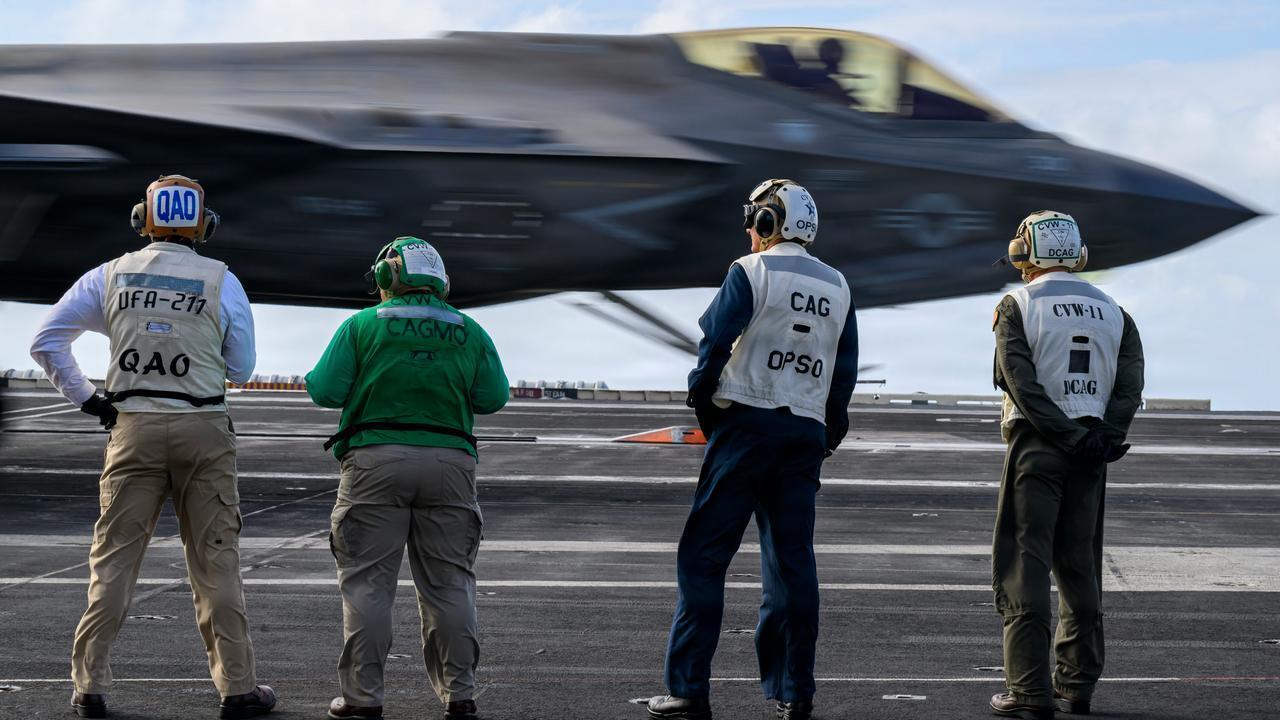
Readiness has traditionally meant two things: trained people, available equipment. What the Lincoln's 260 days expose is a third variable nobody budgets for: how much a human crew can absorb before the first two stop mattering. A ship can be "beautifully maintained" and still be crewed by people who can no longer make a reliable call in the middle of the night.
None of the fixes here are exotic. Enforcing real deployment-to-dwell ratios would guarantee crews actual rest between deployments instead of chunk-by-chunk extensions with no end date attached.
Expanding forward-deployed naval forces would spread the rotational burden across more hulls instead of running the same handful of strike groups through an open-ended war. Accelerating unmanned surface vehicles into routine blockade patrol would take the grinding, repetitive part of the job off human crews entirely.
The Lincoln will get its few days in Thailand. The Roosevelt hasn't left San Diego yet. Whoever is writing its orders already knows, from the ship two positions ahead of it in the relay, exactly how this ends if the chunks don't stop.


 Set as preferred source
 Set as preferred source


 2 min read
 1 min read