Newsletters


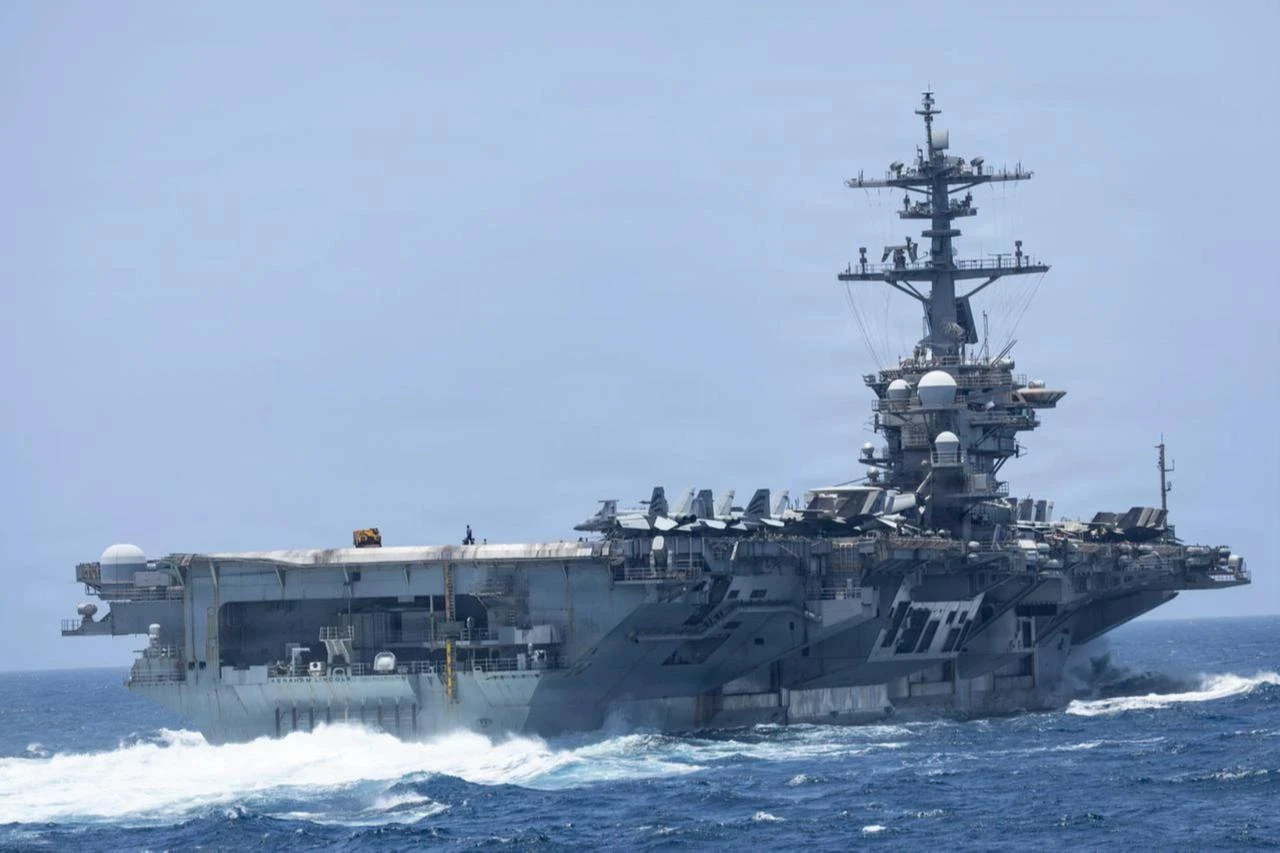
The aircraft carrier USS Theodore Roosevelt and its crew of 5,000 will depart in the coming weeks on what is expected to be at least a seven-month deployment to the Middle East, top U.S. Navy officials said, as the service faces mounting strain from the ongoing conflict with Iran and broader global commitments.
"They know they're going to be there longer than seven months. Their (commanding officer) is giving them eight months to plan on," John Perryman, master chief petty officer of the Navy, told reporters, according to U.S. Naval Institute (USNI) News.
When USS Theodore Roosevelt (CVN-71), its escorts and embarked Carrier Air Wing 11 depart San Diego, the strike group is expected to move to U.S. Central Command (CENTCOM) to relieve the Japan-based USS George Washington (CVN-73), which entered the U.S. 5th Fleet last week.
Since Operation Epic Fury began Feb. 28, the U.S. has maintained a carrier presence in the Arabian Sea, launching strike missions over Iran and enforcing a naval blockade of Tehran.
The deployment comes as the Navy manages fallout from the USS Abraham Lincoln's recent deployment to the region, during which the carrier spent more than 250 days at sea without a port call.
That extended deployment raised concerns about sailors' mental health, including reports of at least one sailor going overboard, along with reports of low supplies on the 100,000-ton warship.
The Lincoln was relieved by the George Washington last week and is expected to make a port call in Thailand in the coming days, according to multiple reports.
The carrier USS George H.W. Bush is also currently operating in the Middle East region.
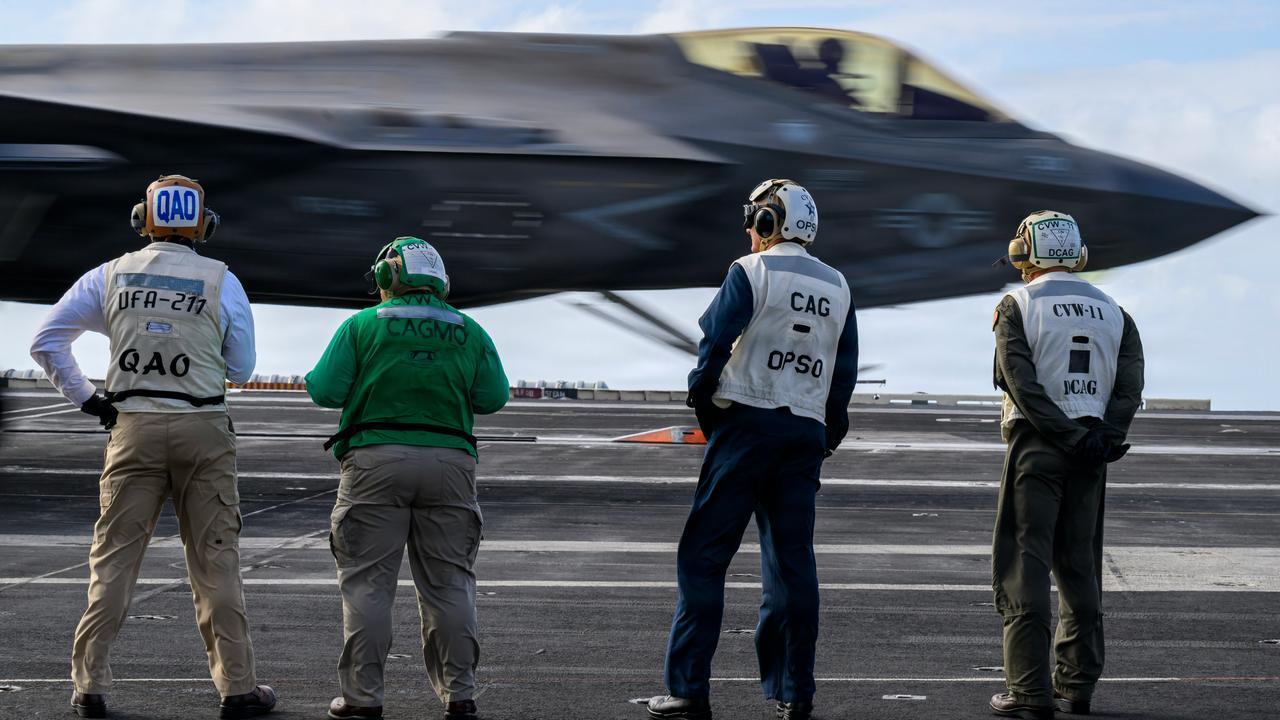

Chief of Naval Operations Adm. Daryl Caudle, speaking alongside Perryman at Naval Support Activity Hampton Roads in Virginia, acknowledged the strain the Iran war has placed on the fleet and said the Navy would try to bring more certainty to deployment timelines, though combat demands make that difficult.
"I would prefer, you know, seven-month deployments. I typically am not a big fan of extensions, and I push back hard on that. But the enemy gets a vote," Caudle said.
"We've been in conflict pretty much the whole time I've been in the seat, and that's certainly stressed the force," Caudle said, adding, "I'm trying to work with my chain of command to put the extension process in a way that gives more certainty for planning ... We do these extensions in little chunks, and the families don't see any endpoint so they can plan their own lives. That creates a lot of stress for sailors."
Perryman said Roosevelt families are already preparing for their loved ones to be away from home for more than seven months.
"(Sailors) will go do really hard things for me without really batting an eye because they like that part of it. But we do have to be able, when possible, to stick to schedules and be very honest, like we are with Roosevelt," Perryman said.
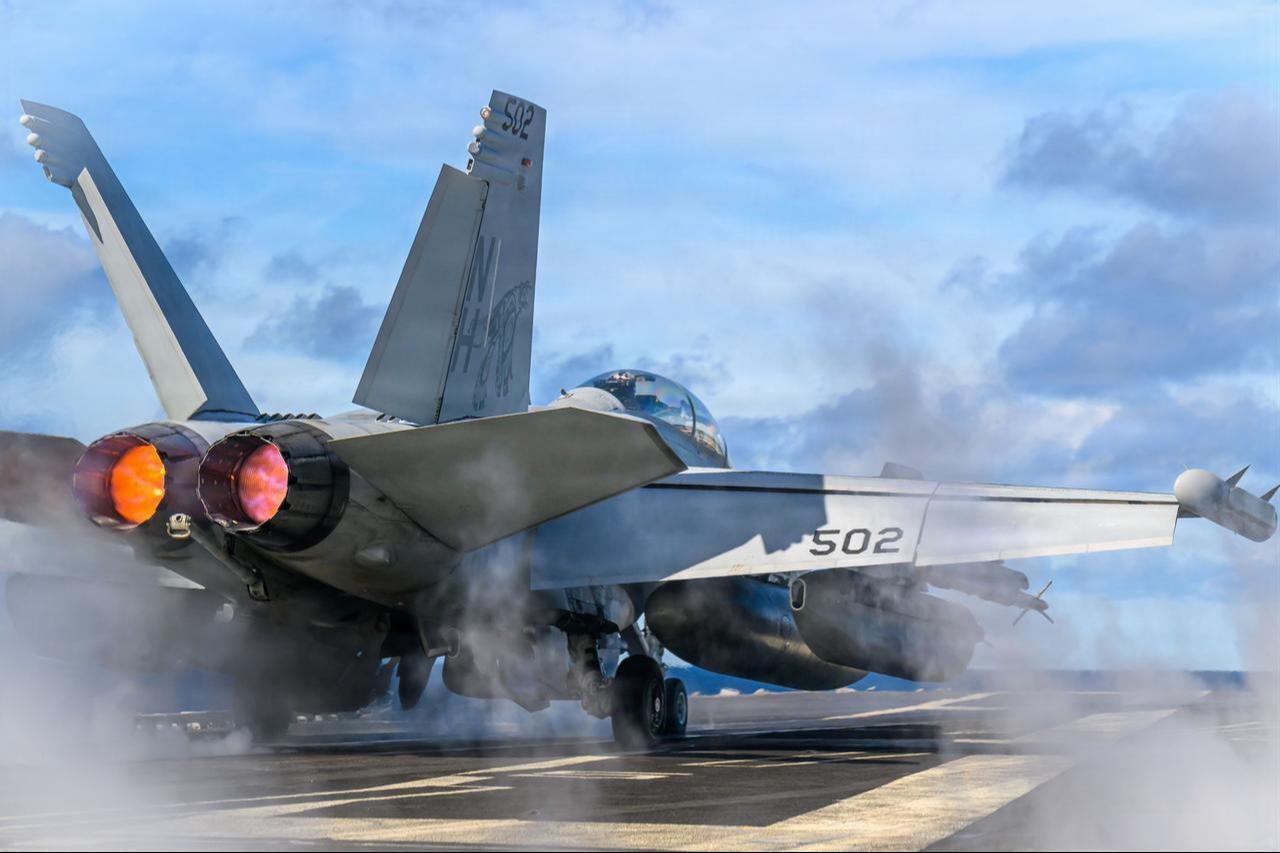
The Navy recorded its longest deployment since the Cold War when USS Gerald R. Ford (CVN-78) returned in May from a 326-day deployment.
USS Abraham Lincoln is on track to come in just behind Ford with a deployment exceeding 300 days. Carrier deployments have averaged 8.5 months since Oct. 7, 2023.
Caudle said Ford's deployment, while nearly a year long, was broken up by port visits in the Caribbean and Mediterranean, an option unavailable to the Lincoln's crew, which spent eight-and-a-half months without a port call.
"That fundamentally has made that a better experience for (Ford) sailors than the Abe's experience," Caudle said.
"It's not the operations, they're nearly identical in the combat sortie process that they were conducting. It's really the port calls and the ability to reset and take a knee," he added.
Caudle said the Navy has since established a logistics chain to sustain two carrier strike groups on station in the Arabian Sea, addressing resupply challenges encountered early in the Lincoln's deployment.
"There was a period of time in the early stages where we had to actually get the combat logistics force train coming out of Diego Garcia and parts moving from Singapore, parts moving from Japan and the Philippines and from the U.S., getting that process in place so that we were really replenishing at sea in an effective and systematic way. I think we have got that cracked now," Caudle said.
Caudle is working with U.S. 5th Fleet Commander Vice Adm. Curt Renshaw to identify locations for port calls for carriers deployed to the Arabian Sea, with the service considering stops in Africa, India and as far away as Singapore.
The Navy is also awaiting a supplemental funding bill from Congress to offset costs pulled from the operations and maintenance account to support the Iran war.
"The Fiscal Year 26 budget did not have Epic Fury baked into it. So, there's a supplemental out there and that number keeps growing, but for me that's probably between $6-8 billion in the total Department of War supplemental that I need to be whole and solvent for FY 26," Caudle said.
The ongoing Middle East conflict comes as the Navy also seeks to expand operations in the Western Pacific to counter growing Chinese military influence.
"The Pacific by its very nature of its size just mathematically requires more force," Caudle said, noting, "If it doesn't come from the forward-deployed naval forces, it just requires me to have more."


 Set as preferred source
 Set as preferred source


 1 min read
 1 min read