Newsletters


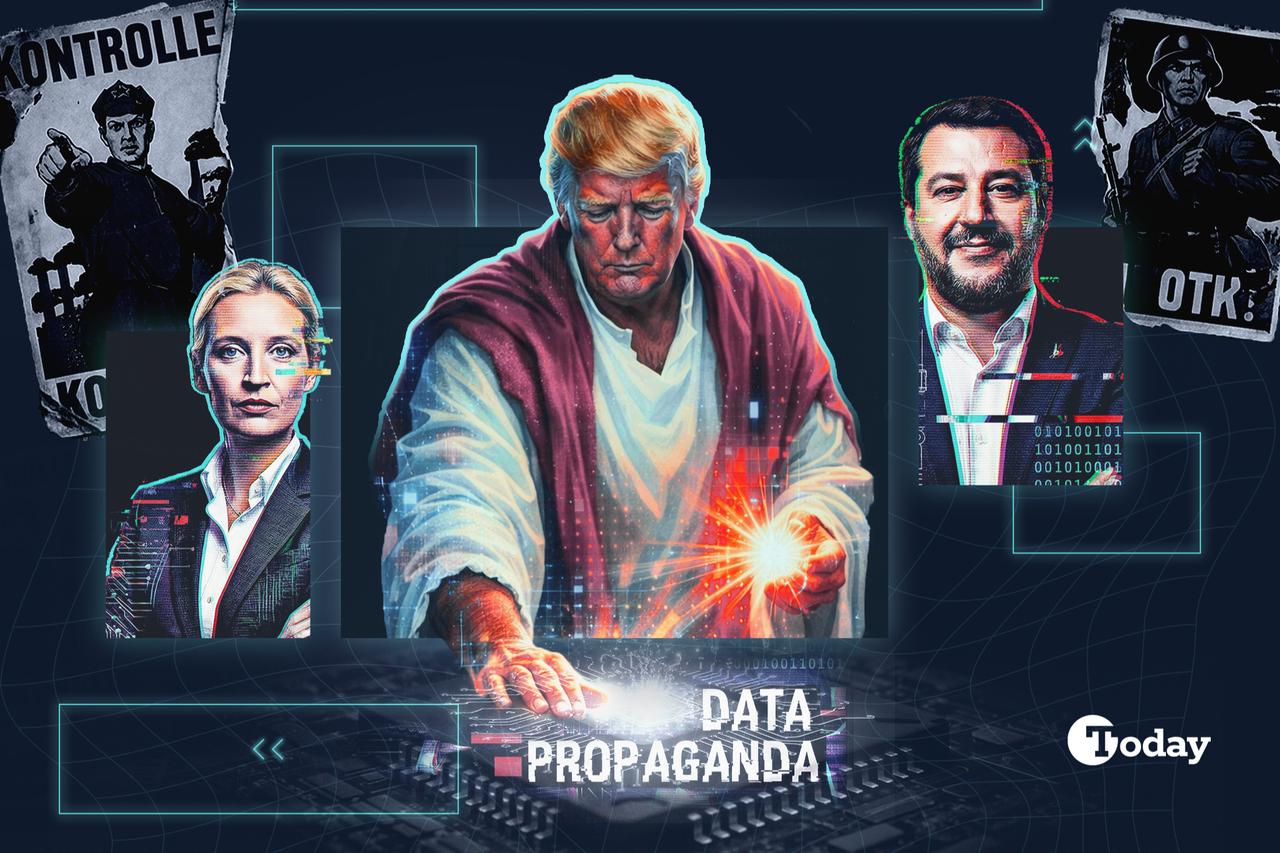


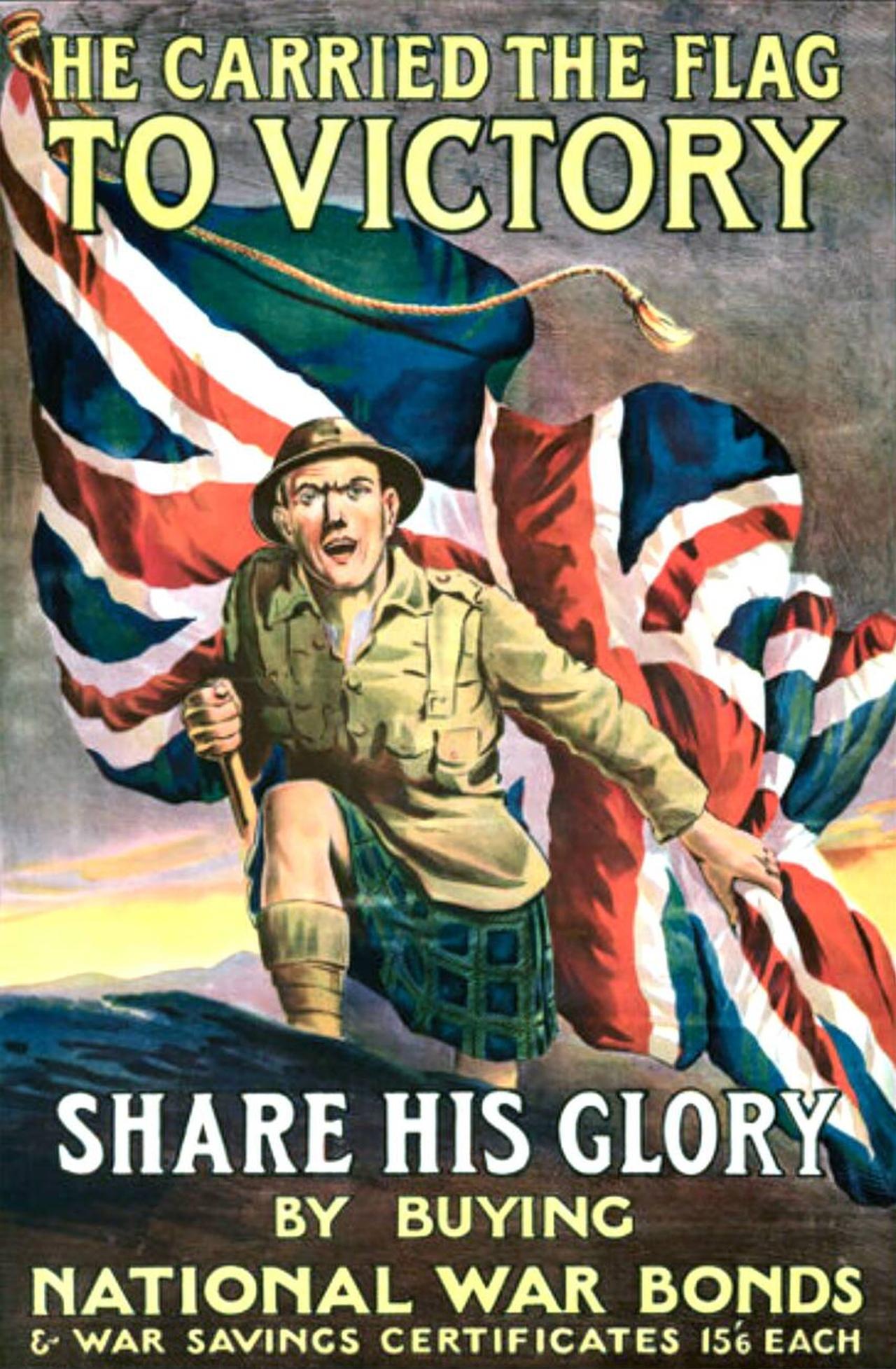
There is a peculiar exhibit in the Imperial War Museum in London, a collection of World War I recruitment posters that one can study for hours without ever encountering a single battlefield photograph.
The mud of the Somme is absent. So is the gas, the barbed wire, and the particular grey of a dawn attack. In their place: heroic silhouettes, resolute jawlines, enemy soldiers rendered as snarling gorillas clutching babies in their claws.
The illustrators of 1914 understood something that photojournalists could not yet offer—that war, to be sold, must first be beautified. Reality was an obstacle to be designed around.
A century later, the obstacle has been abolished entirely.
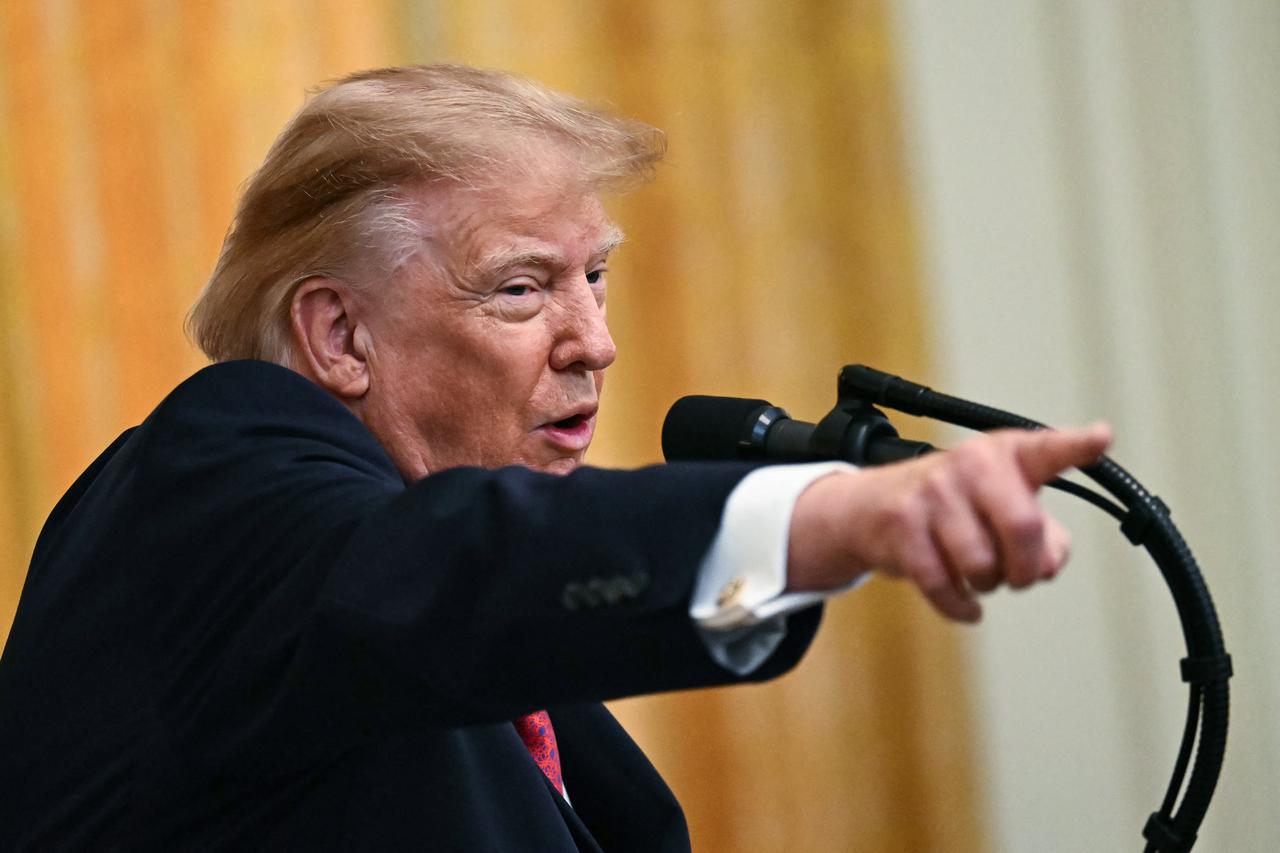
When President Donald Trump posted an AI-generated image of himself styled as a Jesus-like figure in April 2025, the reaction from some of his own supporters was, unusually, one of discomfort. The president subsequently removed the post, explaining that he simply "looked like a doctor." What had seemed, for a moment, to be a line crossed turned out to be merely a miscalibration of aesthetic register. The line itself, apparently, had been moved some time ago.
The incident was not an aberration. It was the visible tip of a genre. Across the global conservative ecosystem, AI-generated imagery has become the primary aesthetic vocabulary of political communication, and the far right its most prolific dialect group.
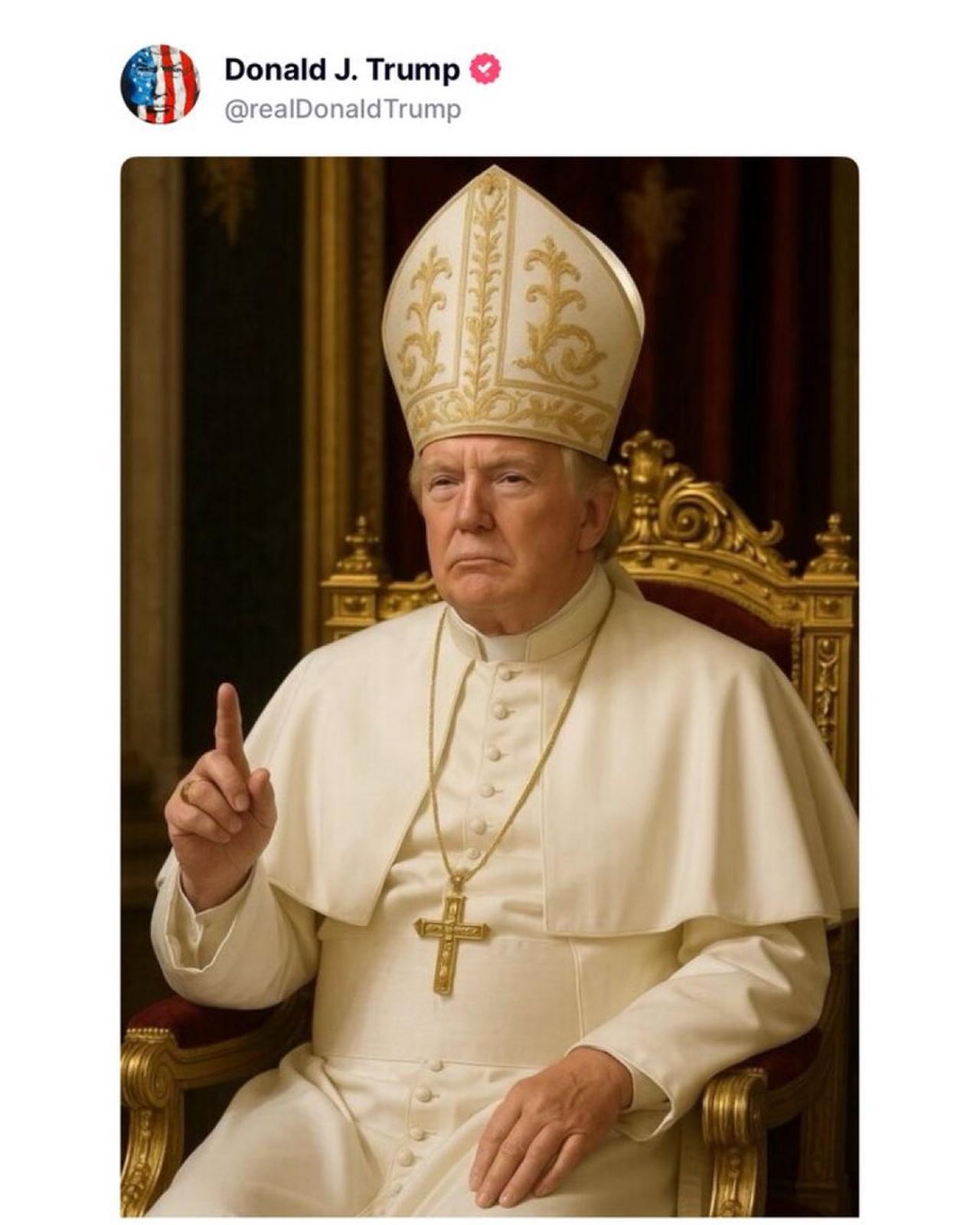
Trump has appeared in AI-generated forms before—as the Pope, as George Washington, as Superman and as Rocky Balboa.
In Germany, the Alternative fur Deutschland (AfD) party has been identified by the Institute for Strategic Dialogue as a "key source" of AI-generated content distributed systematically across party-operated accounts and individual politicians' accounts at both the federal and state levels.
According to the Alliance4europe report, Italy's Matteo Salvini deploys the technology to depict the European Union as the orchestrator of demographic replacement, a collaborator in food regulation designed to destroy Italian farmers, and—in a feat of ideological economy—simultaneously responsible for both causing the war in Ukraine and blaming Emmanuel Macron for it.
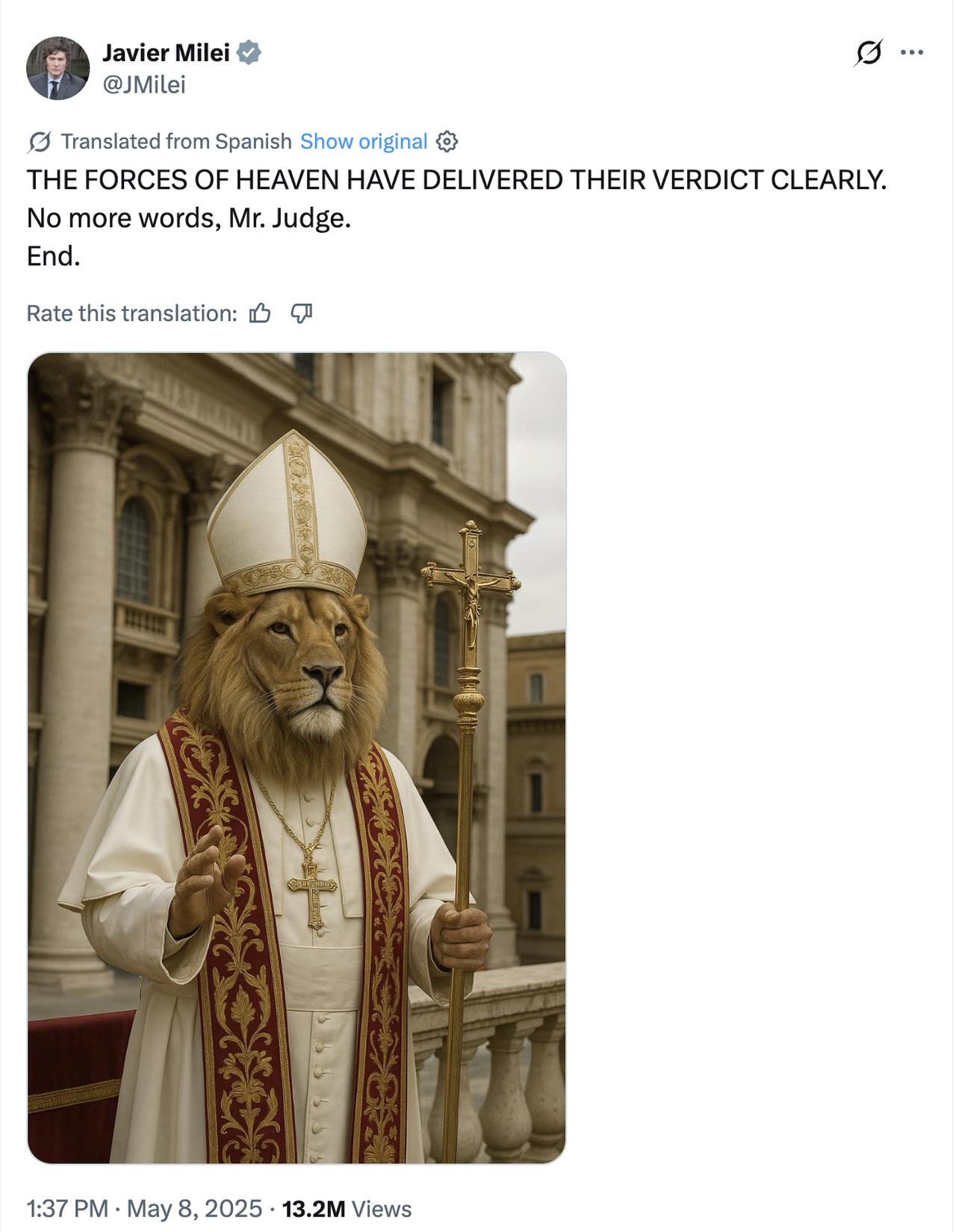
Argentina's libertarian president, Javier Milei, who has fashioned himself as "El Leon"—the lion—circulates AI imagery in which the metaphor is rendered with disarming literalism: himself striding alongside the animal, his mane of hair completing a visual pun that would embarrass a tabloid designer. His official Instagram account is full of AI slop posts.
From El Salvador's Nayib Bukele to Nigel Farage in Britain, the pattern is consistent enough to constitute a movement aesthetic.
The lithographers of the early 20th century worked in an era when photographic equipment could not follow soldiers into trenches. The gap between documented truth and ideological necessity was filled by illustration, which could show bayonet charges in clean uniforms, heroism without mud, enemies without humanity. The technique produced images that were not exactly lies and not exactly truth, but something more durable: idealized reality, a version of the world arranged to confirm what one already wished to believe.
Generative AI performs the same service, without the draughtsman. Where World War I posters depicted German soldiers as "The Mad Brute," a helmeted ape dragging a woman by the hair, modern AI achieves dehumanization through slightly less baroque means. It renders political opponents in sinister palettes, faces distorted into the grotesque, crowds of migrants arranged with the compositional menace of an invading army.
What has changed is not the intent but the infrastructure. The brush stroke is now the prompt. The print run is now the algorithm. The poster is now the Instagram reel.
The aesthetics of production, characterized by that smooth, oversaturated, and cinematically lit quality, mark AI imagery as distinctly contemporary. This style packages political content as entertainment, just as the parlor-poster aesthetic of 1914 made the war legible to the drawing room.
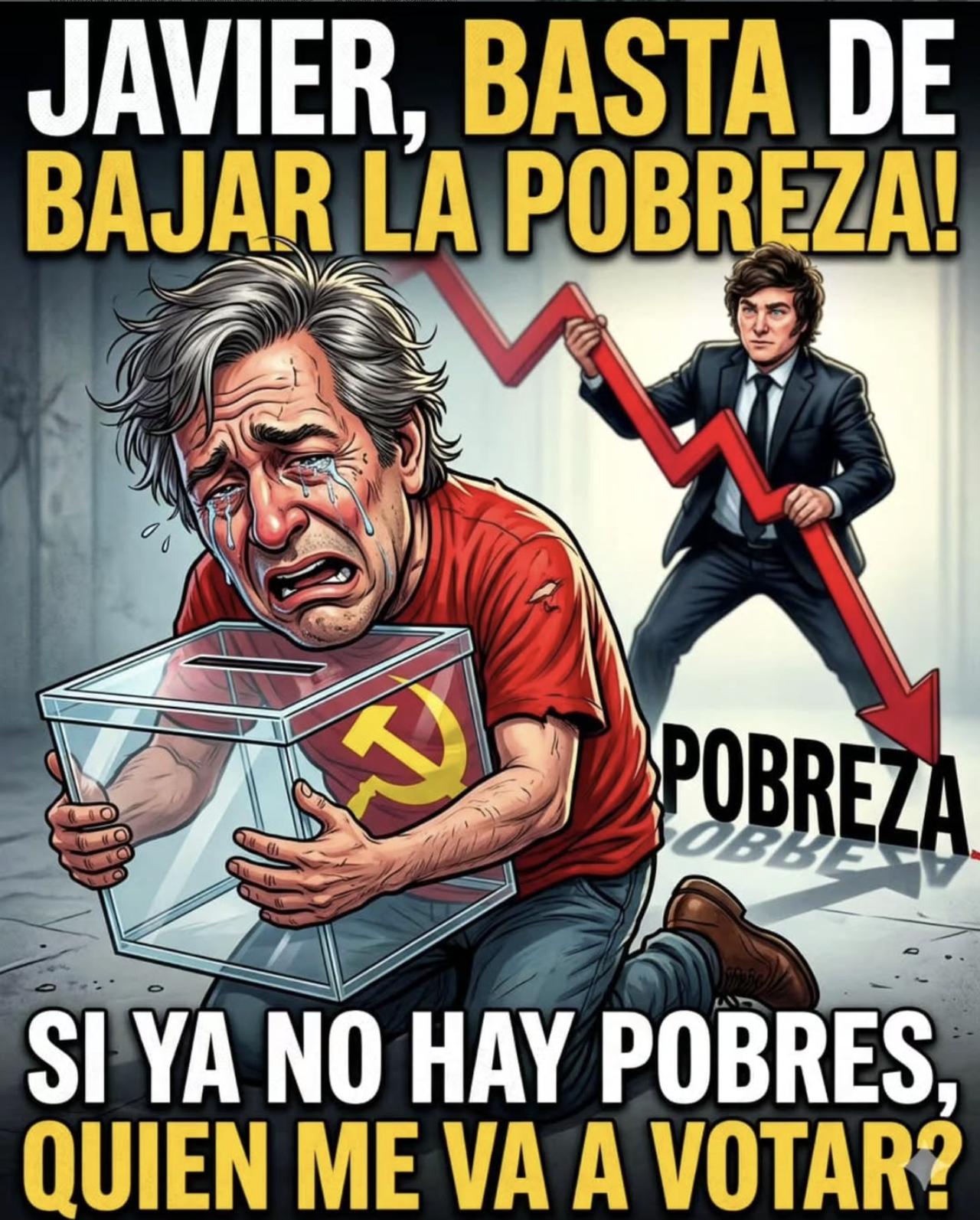
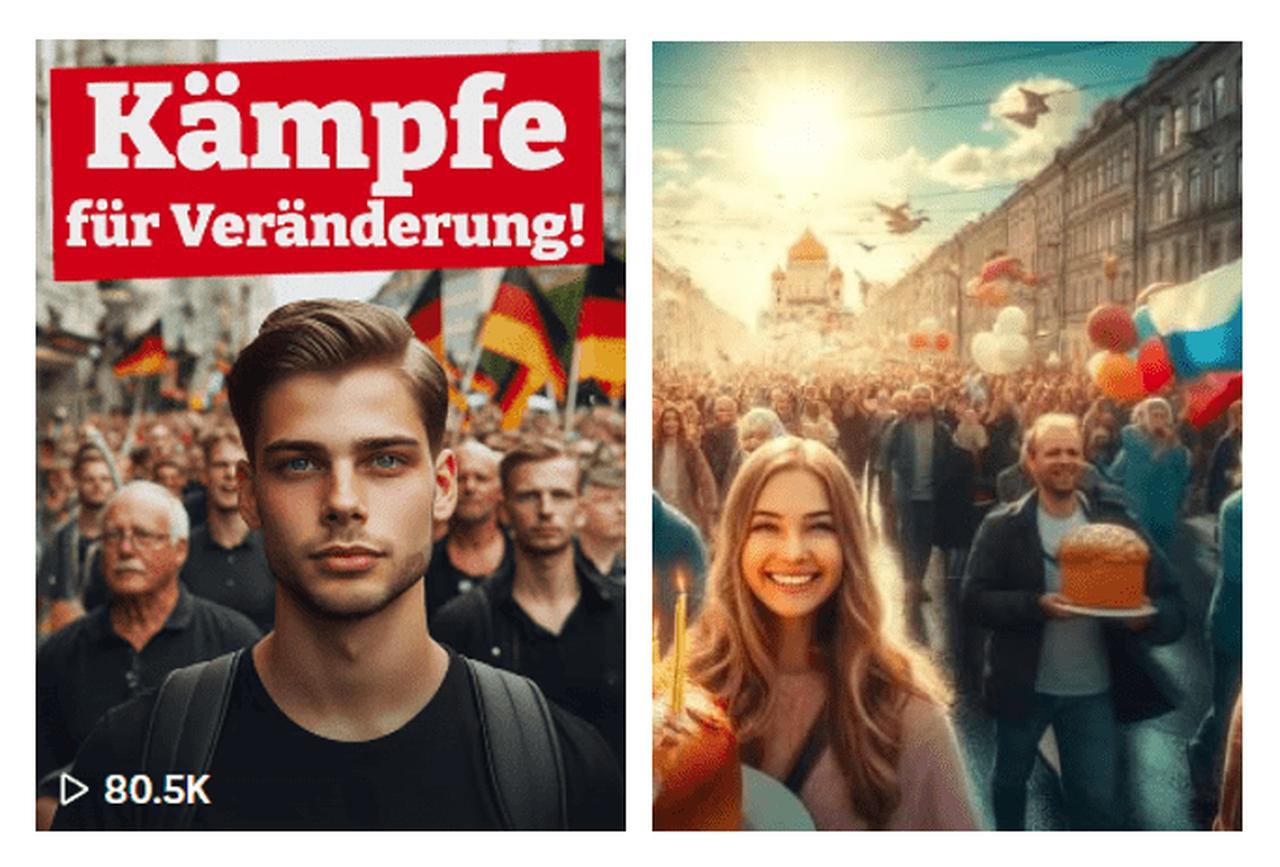

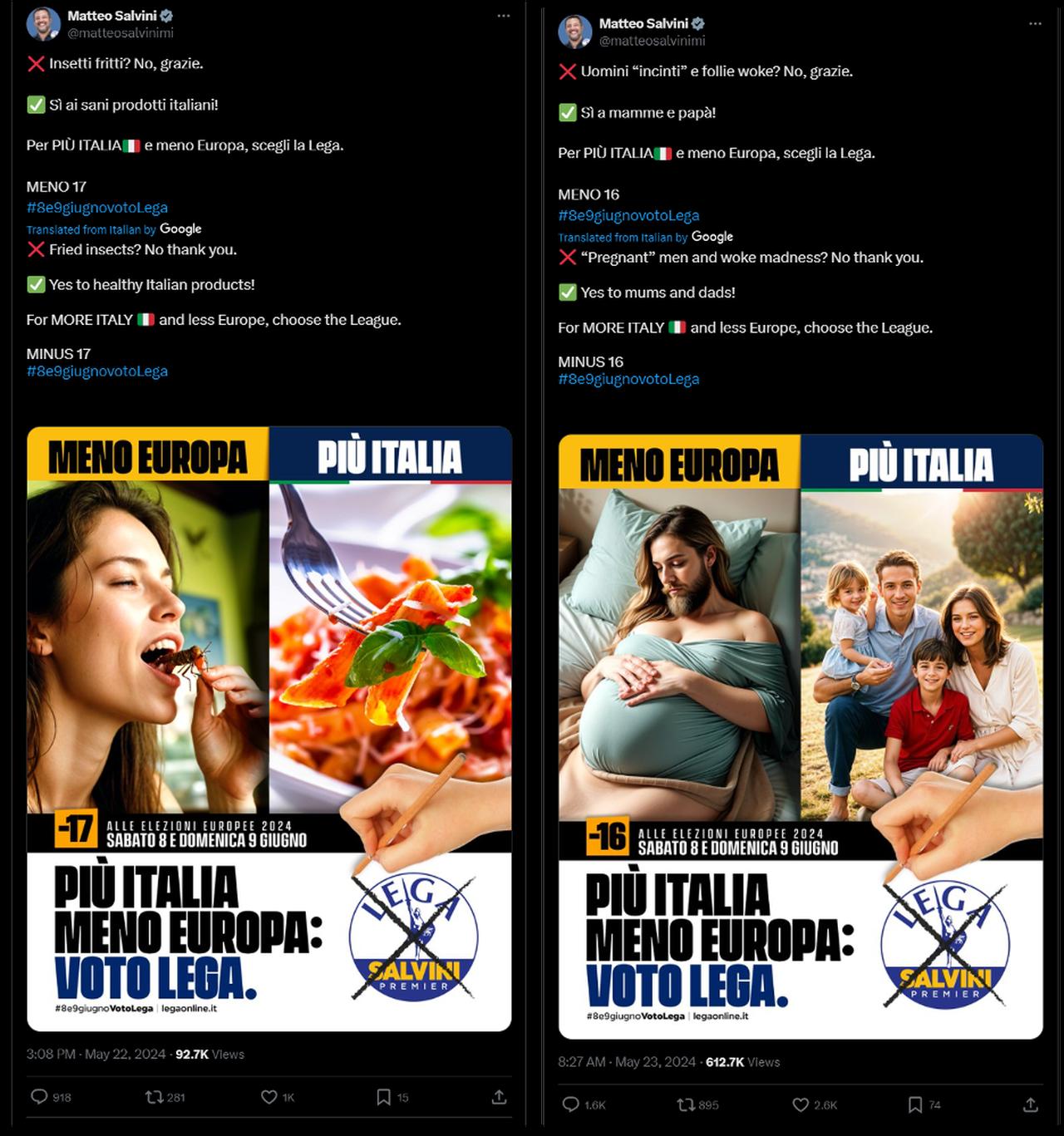
There is an ideological logic to the aesthetic, beyond mere convenience. Populist politics depends on the figure of the exceptional individual, a leader who stands apart from the corrupt establishment by virtue of superhuman qualities that the establishment, by definition, cannot recognize. This is difficult to photograph.
AI removes this constraint. It can manufacture, on demand, images of Trump descending from the heavens, of Milei commanding lions, of any leader with their hand outstretched over adoring multitudes. These images are not intended to be believed literally; they are designed to be felt emotionally. The excess is the point. The knowing implausibility of Rocky Balboa's physique grafted onto a septuagenarian real estate developer is not a flaw in the communication; it is the communication. It says: this man exists on a plane that ordinary documentary reality cannot capture.
Political theorists have a term for this aesthetic register: kitsch. It is the art of cheap transcendence, offering easy and immediate emotions through exaggeration. AI-generated political imagery is kitsch industrialized, delivering production at meme speed and sentiment at poster scale.
There is also a subtler ideological function at play. The far right has long positioned itself in opposition to "cultural elites," the educated and cosmopolitan professional class that controls the institutions of meaning-making, including the design industry. Artists and designers are, as it happens, overwhelmingly urban and predominantly left-leaning in their political sympathies.
AI circumvents them entirely. The movement that has spent two decades denouncing the gatekeepers of culture has found, in generative image tools, its own bypass surgery.

The genre has earned its own name: slopaganda. The term captures both the massive volume of production and a deliberate indifference to quality, creating a political aesthetic that weaponizes its own crudeness. The images are obviously artificial. The lighting is too perfect, the proportions are too heroic, and the textures are far too smooth. Yet, in a strange way, this fakeness is load-bearing.
The implausibility also offers a layer of deniability. When criticism hits, as it did when Trump posted the Jesus imagery, the defense is already waiting: it was just a meme or a joke, never meant to be taken literally. The content floats between sincerity and irony, serious enough to deliver its message but absurd enough to dodge accountability. It is propaganda that can always masquerade as a trashpost, and a trashpost that can always turn out to be propaganda.
The poster-makers of 1914 were craftsmen in the service of states. They viewed their medium as a form of serious communication, no matter how manipulative. In contrast, today's producers of slopaganda see their medium as something closer to the weather: continuous, ambient, and volumetric. Quality becomes irrelevant because quality implies scarcity, and scarcity is exactly what they have abolished.
There is a final irony in the comparison that deserves attention. The World War I posters, despite their role as propaganda, are now considered historical artifacts. They are exhibited in museums, studied in universities, and appreciated as documents of the ideological imagination of their era. Future historians will presumably make similar arrangements for the AI imagery of our own moment, preserving it in their glass cases and catalogs.
The question those historians will have to answer is not whether the imagery was believed. It rarely was, in the direct sense. The question is whether the accumulated weight of thousands of idealized, dehumanizing, kitsch images shifted the emotional landscape of democratic politics in ways that more sober forms of communication could not undo.


 Set as preferred source
 Set as preferred source


 4 min read