Newsletters


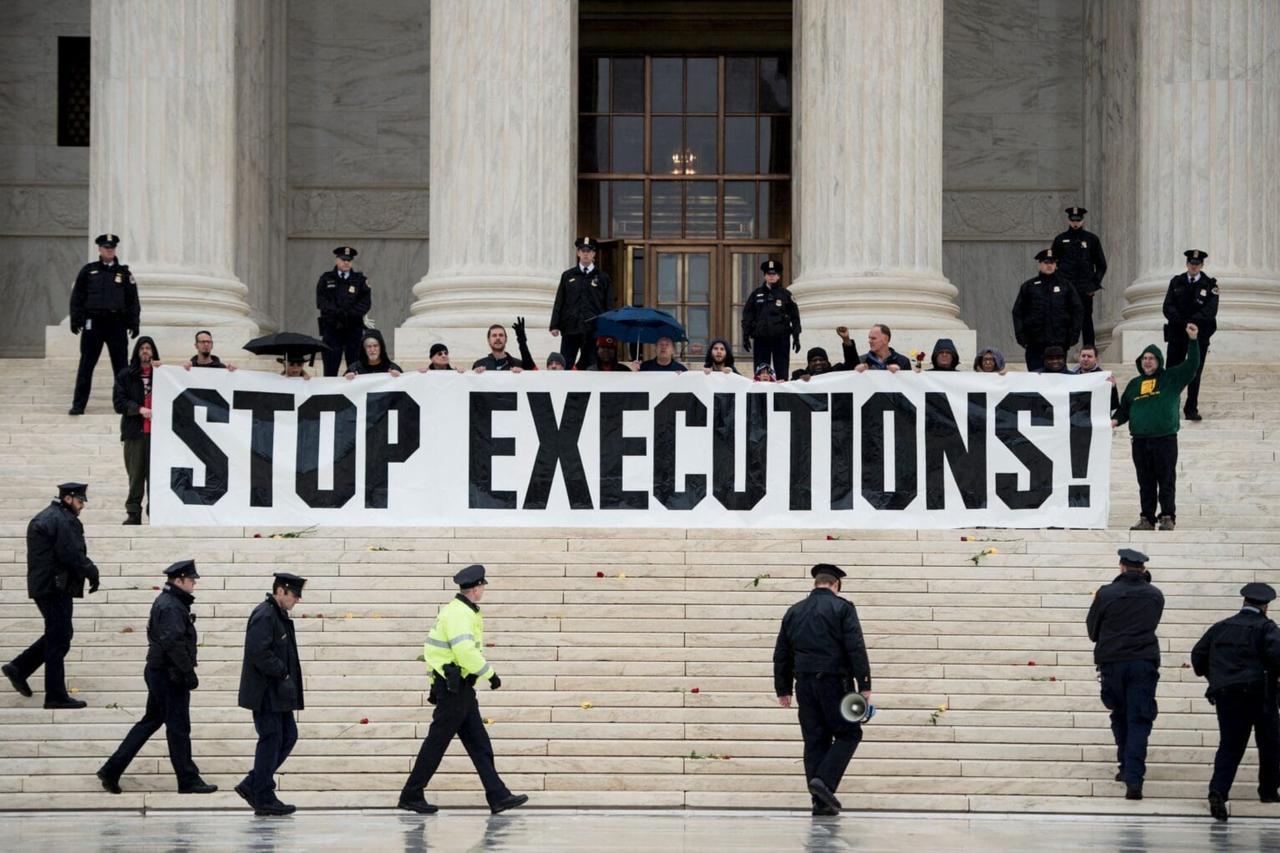


The failed execution of Christa Pike in Tennessee and the proposed livestream of Nidal Hasan’s execution have brought the death penalty back into focus in America.
One is Christa Pike, who was sentenced to death for the 1995 murder of her classmate Colleen Slemmer, committed when Pike was 18 years old. Her execution was scheduled for Sept. 30, and she would have been the first woman executed in Tennessee in more than two centuries.
Authorities gave her two doses of the execution drug pentobarbital, but the procedure failed. She lost consciousness for six days, survived the execution attempt on Oct. 6 and returned to prison on Oct. 10 for medical care, according to Türkiye Today.
The other case is Nidal Hasan, a former U.S. Army Major and psychiatrist who shot dead 13 unarmed U.S. soldiers at the Fort Hood military base in 2009. His execution is scheduled for Dec. 3. Secretary of Defense Pete Hegseth has proposed livestreaming it as a deterrent against future attacks.
The group consisting of 72 retired U.S. generals, admirals, and other high-ranking military officers moved to cancel the plans to livestream it. They wrote, “We ask the President, our Congressional representatives, and our fellow citizens to act to prevent this barbaric abuse of authority” in the letter they published on Oct. 14. They stated that this type of streaming might make Hasan a “martyr.”
Lastly, the U.S. President Donald Trump canceled plans to livestream the execution. Trump posted on Truth Social: "I think streaming the execution for all to see might have been a strong deterrent for the World to witness how America deals with Terrorists and SCUM like Hasan but, many very good and well meaning people would rather not watch him die, through streaming, or through any other visual device.” He added that the execution would still take place as scheduled by firing squad.
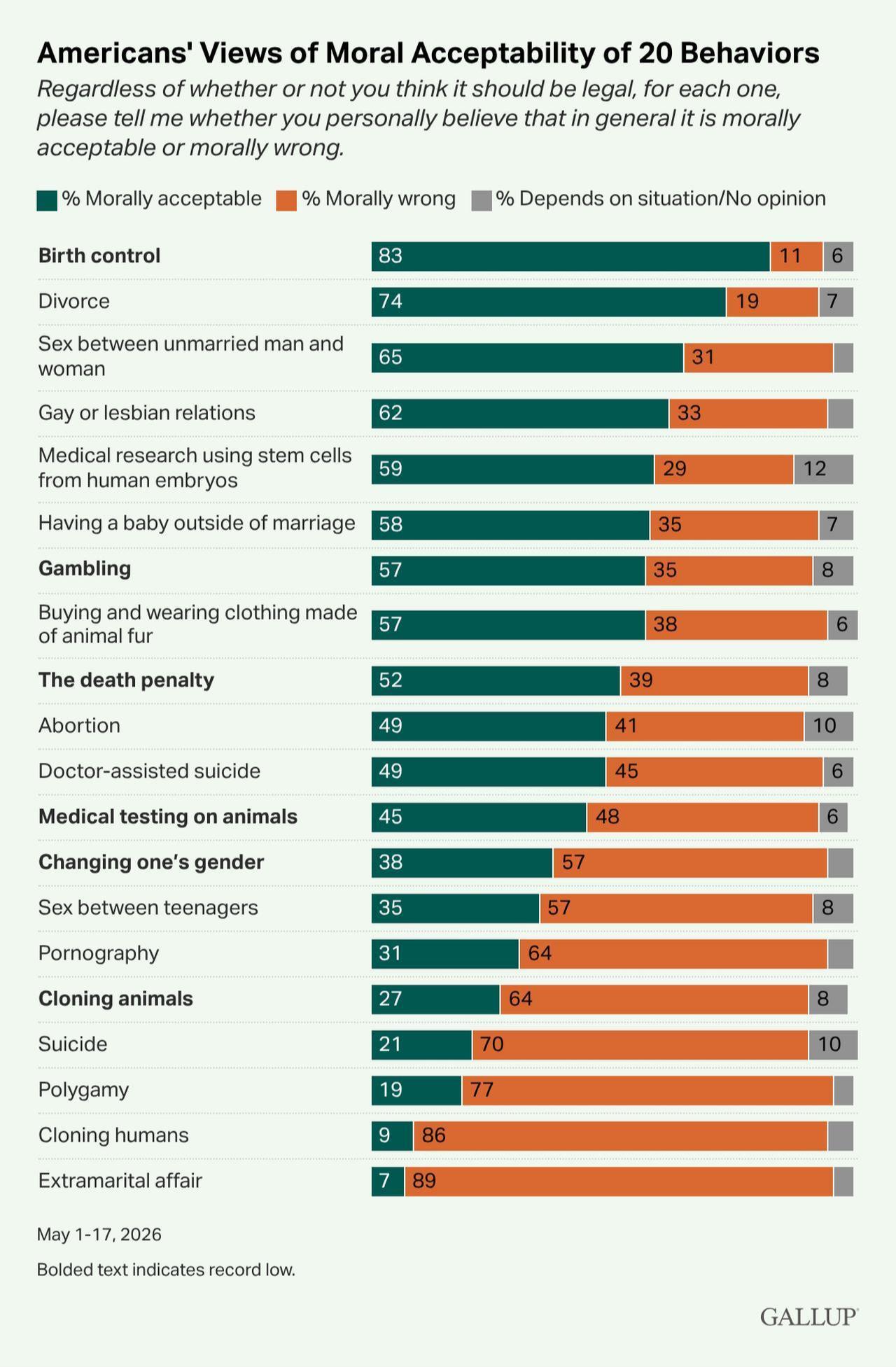

Americans’ opinion about the penalty has changed over the years. According to Gallup’s annual Values and Beliefs study, which was published on June 9, 2026, 52% of respondents find the death penalty morally acceptable, while 39% say it is morally wrong and 8% say it depends on the situation or have no opinion.
Support for the sentence dropped significantly from 71% in 2006. At the same time, the number of people saying it is morally unacceptable is one point below the record high (40%) set in 2020 and 2021, according to Death Penalty Information Center (DPIC).
Additionally, Republicans have the highest level of support at 76%. Independents (54%) and Democrats (33%) follow them.
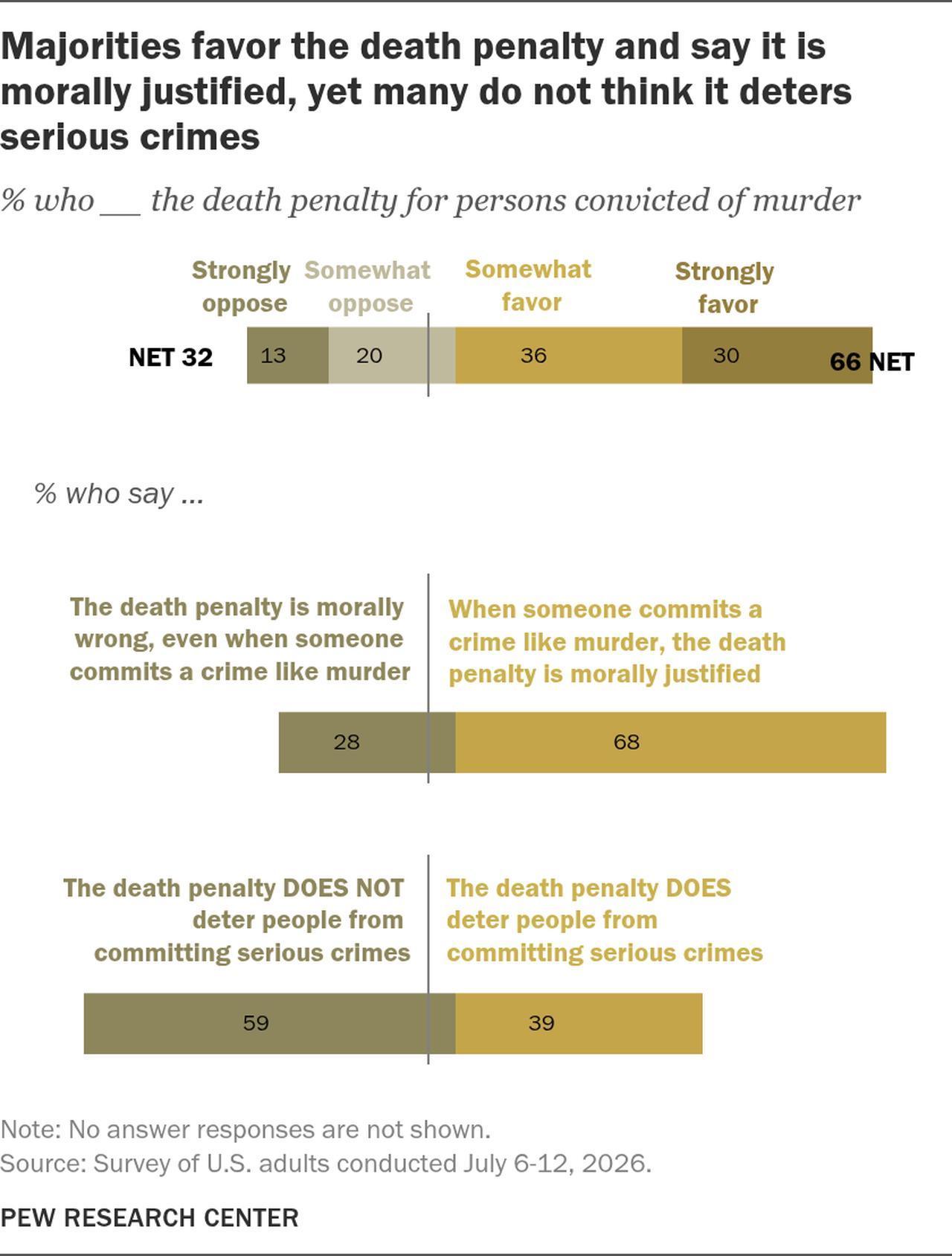
Another piece of research worth mentioning comes from the Pew Research Center, which was published on Aug. 6, 2026. The survey found that 59% of Americans say the death penalty is not a crime deterrent, while 39% say that it is.
On the other hand, 68% see the sentence as morally justified for those convicted of murder, while only 28% see it as morally wrong.
There is more: Most Americans (73%) say there is a risk that an innocent person could be sentenced to death, though a quarter say that there are enough safeguards to prevent this possibility.
There is a similar rate about race: 49% of Americans say Black people are more likely than White people to be sentenced to death for committing similar crimes, and 48% say this is not the case.
This division is also mirrored at the state level: while 27 states retain the death penalty, 23 states have abolished it. Four states, meanwhile, have the penalty but with an executive hold, according to DPIC.
 1 min read

As some people think the death penalty is not moral, others believe that some people deserve it. While the state tried to execute one person and she came back to life, the Secretary said the execution needs to be broadcast to prevent more crime and their own generals rejected and tried to prevent that proposal.
Americans have some confusion about the punishment, but while they are deciding, some people will lose their lives. When the public is confused, states generally take control, but that is also not possible for America.


 Set as preferred source
 Set as preferred source



 1 min read