Newsletters


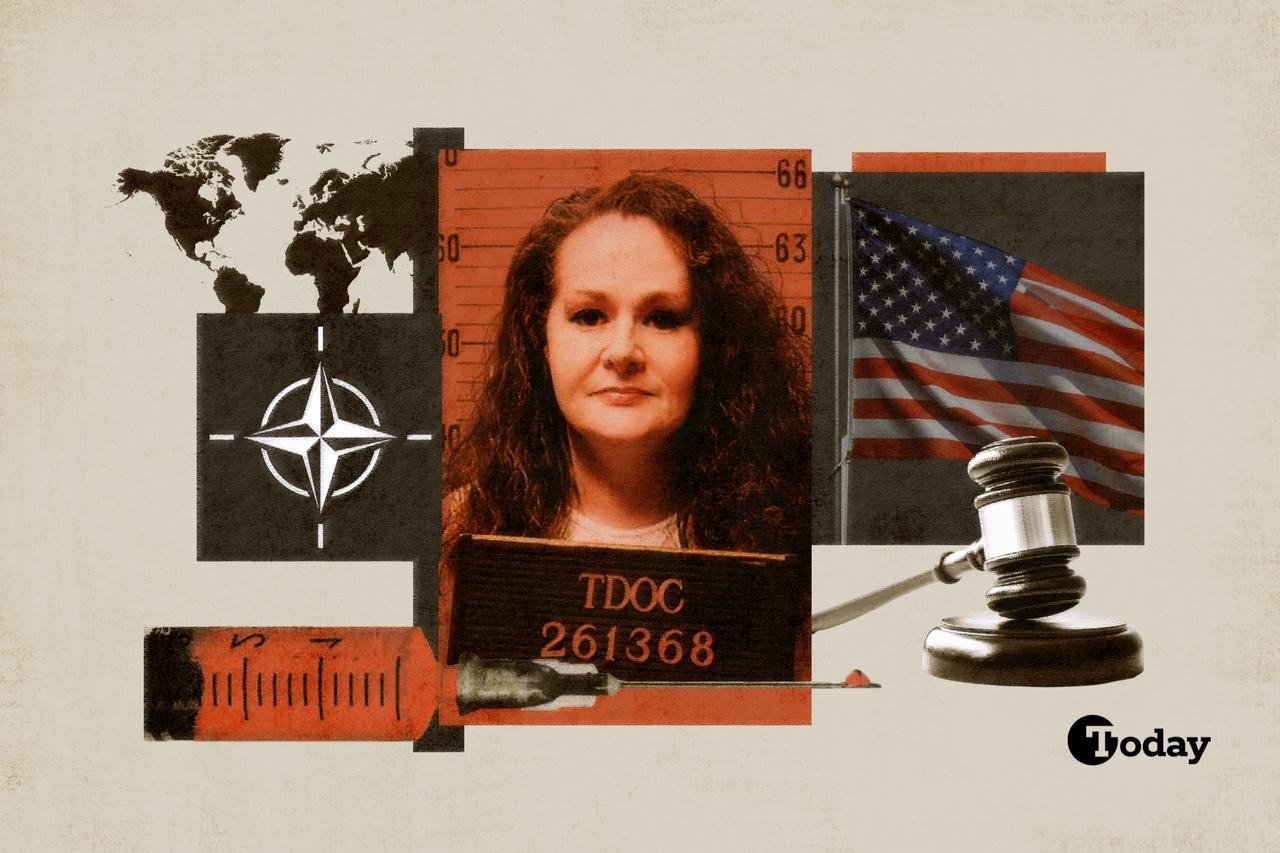


Of the 32 NATO member states, the United States is the only one that still practices capital punishment. So far this year, 29 executions have taken place across America.
Most occurred in the politically conservative, Christian-dominated Southern states, also known as the Bible Belt. Executions are so common there that abolitionists refer to the area as the “Death Belt.”
Christa Pike's execution was supposed to be the country's 30th of the year.
But Pike’s fate took an unprecedented turn when she survived her own execution in what both her legal team and activists are calling a “cruel and torturous punishment.” The events led Governor Bill Lee of Tennessee to halt all remaining executions for the rest of the year.
Religious leaders and Pike’s own attorneys have also asked the governor to grant Pike clemency.
The case has drawn international scrutiny to a facet of America’s criminal justice system that has kept the United States out of step with its allies and strategic partners.
The attention comes as other countries continue to move away from capital punishment. Lebanon, for example, abolished the death penalty in August, a step that the European Union called a “landmark legislation.”
“Our democratic allies view our retention of capital punishment not merely as a policy difference, but as a fundamental violation of human rights that undercuts our moral authority to lecture other nations,” argued former legal advisor to the U.S. State Department, Harold Hongju Koh, for The UC Davis Law Review.
America’s continued use of the death penalty makes it an outlier from the human rights standards of its European and NATO allies, potentially undermining its credibility on diplomatic and human rights-related issues.
In April of this year, Türkiye’s President Recep Tayyip Erdogan gave a scathing rebuke to Israel’s controversial new legislation known as the Death Penalty for Terrorist Law.
The legislation expanded Israel's capital punishment for the first time since 1962. Human rights bodies, including the U.N. Committee on the Elimination of Racial Discrimination, raised alarm that the bill weaponized capital punishment across ethnic lines by disproportionately targeting Arabs and Palestinians.
In April, Erdogan argued that the bill amounted to “racist fascism" adding that it was “a worse version of the apartheid regime that was overthrown in South Africa.”
NATO allies France, Germany, Italy and the United Kingdom also issued a joint statement arguing that the bill was “discriminatory” in nature, adding that “the rejection of the death penalty is a fundamental value that unites us.”
The same month that top strategic allies of the U.S. gave their rebukes, the United States carried out three executions.


These contrasts suggest the U.S. could benefit strategically from a capital punishment policy that keeps pace with the times.
The United States, which likes to be seen as a moral enforcer on the global stage, has allowed its continued use of the death penalty to become a vulnerability that its adversaries can exploit.
This aspect of the American justice system has allowed America’s detractors to challenge its credibility when it speaks on human rights abroad.
Every year, China publishes a report on human rights violations within the U.S. that routinely covers the death penalty. It often highlights cases where states have executed juveniles and prisoners with intellectual disabilities. Much like the case of Pike, whose own defense has argued she suffers from cognitive impairment, mental illness and PTSD.
Pike’s entry into the international debate over capital punishment began three decades ago, when she was just 18 years old and was handed a death sentence for the 1995 torture and murder of her classmate, Colleen Slemmer.
The trial had gained considerable attention for its exceptional brutality and ritualistic nature, which included Pike and her then 17-year-old boyfriend carving a pentagram into the victim's chest.
In 2026, as Pike sat as the only woman on death row in Tennessee, the case again entered the international discourse over the intended use of lethal injection, and the questionable reliability of the drug pentobarbital. In Pike’s case, it turned out not to be lethal.
“Lethal injection as a method is inherently broken,” argued Blaire Andres, a senior advisor at the American legal organization Reprieve in an appearance for TRT World.
Four months before Pike’s scheduled death date, Tony Carruthers also received a botched execution within the state of Tennessee when he was left partially paralyzed. In Carruthers’ case, the state had used the same drug, administered by the same doctor responsible for Pike’s failed execution.
In recent years, pharmaceutical companies that produce pentobarbital have become wary of allowing states to purchase their products for capital punishment. But this has not been a deterrent for pro-capital punishment states that instead have returned to firing squads, electrocutions and lethal gas chambers.
It would be politically unrealistic to view the U.S. as a country that completely abandons capital punishment, especially in regions like the Bible Belt, where the practice is deeply ingrained within regional culture.
But a restructuring of capital punishment standards could allow the U.S. to be in better lockstep with its allies and strategic partners on human rights standards while also helping strengthen America’s credibility when advocating for human rights abroad.


 Set as preferred source
 Set as preferred source



 7 min read