Newsletters




The United States provided intelligence support to the Mexican government in a major operation that killed Jalisco New Generation Cartel (CJNG) leader Nemesio "El Mencho" Oseguera Cervantes, the White House confirmed Monday.
"The United States provided intelligence support to the Mexican government in order to assist with an operation in Talpalpa, Jalisco, Mexico, in which Nemesio ‘El Mencho’ Oseguera Cervantes, an infamous drug lord and leader within the Jalisco New Generation Cartel, was eliminated," White House spokeswoman Karoline Leavitt said on the social media platform X.
"'El Mencho' was a top target for the Mexican and United States government as one of the top traffickers of fentanyl into our homeland," Leavitt added.
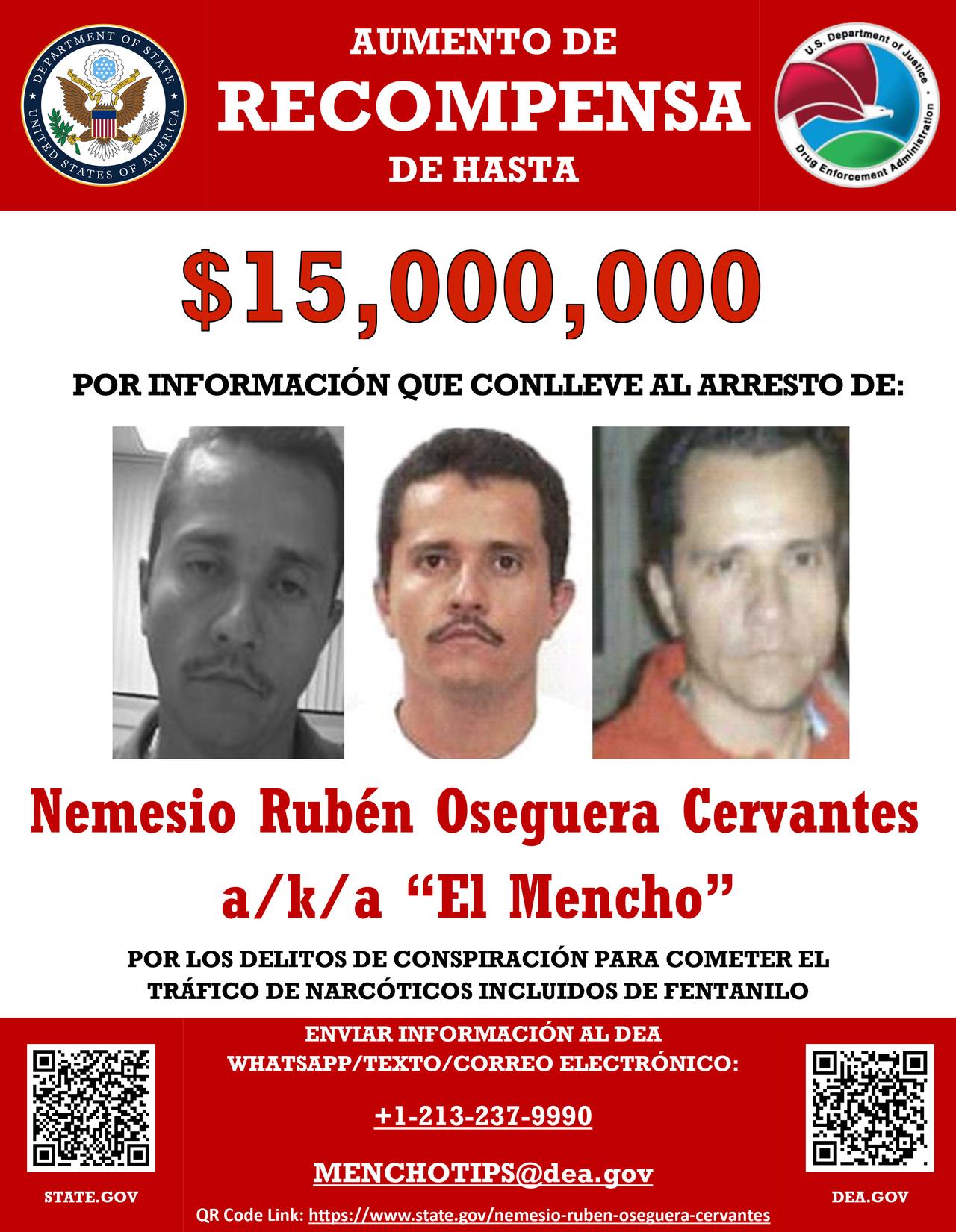

Leavitt said "El Mencho" was a "top target" for both Mexico and the U.S. as one of the top traffickers of fentanyl into the United States. She noted that President Donald Trump designated the CJNG as a foreign terrorist organization in January 2025.
"In this operation, three additional cartel members were killed, three were wounded, and two were arrested," she said.
Leavitt commended the Mexican military for their cooperation and successful execution of the operation.
The 59-year-old cartel leader was wounded in a clash with soldiers in the town of Tapalpa, in Jalisco state, and died while being flown to Mexico City, the Mexican army said in a statement.
He had a $15 million U.S. bounty on his head.
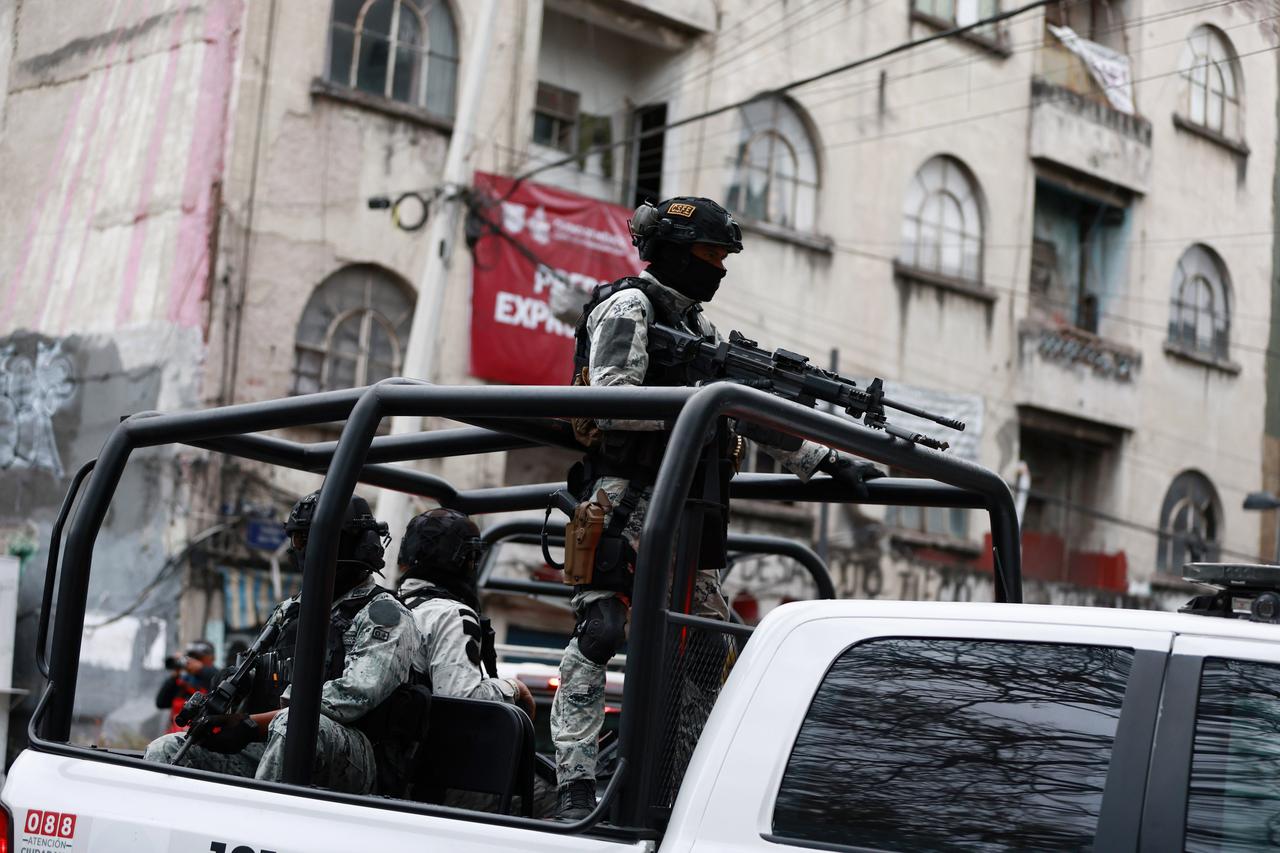
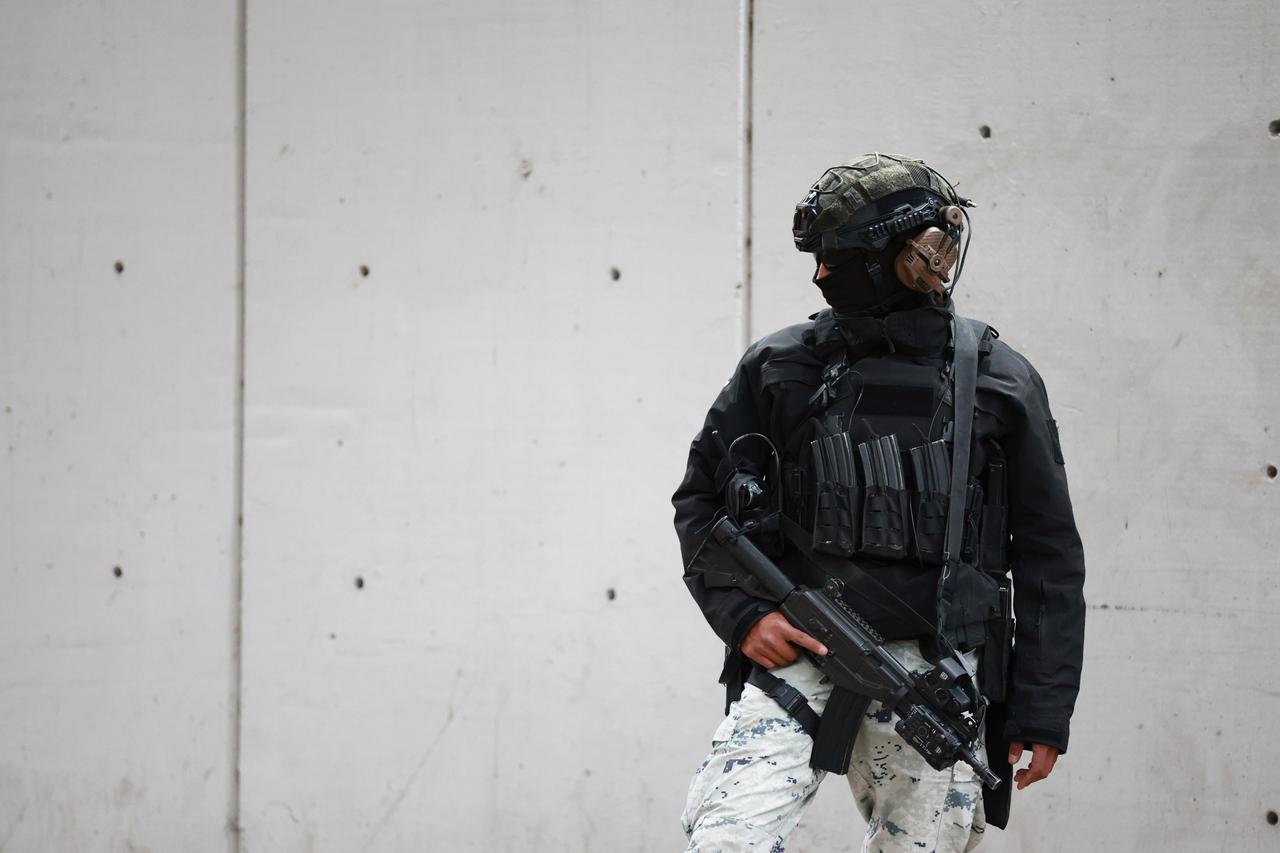
Mexico's Defense Ministry said Special Forces carried out the operation in Tapalpa, a known CJNG stronghold, with the aim of apprehending Oseguera.
"During this operation, Mexican military personnel were attacked, and in defense of their physical integrity, they repelled the aggression. This resulted in four members of the 'CJNG' criminal group dying at the scene and three others being severely wounded, who lost their lives during their airlift to Mexico City," the ministry said.
"Among the latter is Ruben 'N' (alias Mencho); however, the corresponding authorities will be in charge of the forensic activities to confirm his identification," it added.
Two cartel members were arrested and armored vehicles and various weapons were seized, including rocket launchers capable of shooting down aircraft, according to the ministry.
Six suspected cartel gunmen besides Oseguera were killed and three soldiers were wounded in total, the Mexican army said.
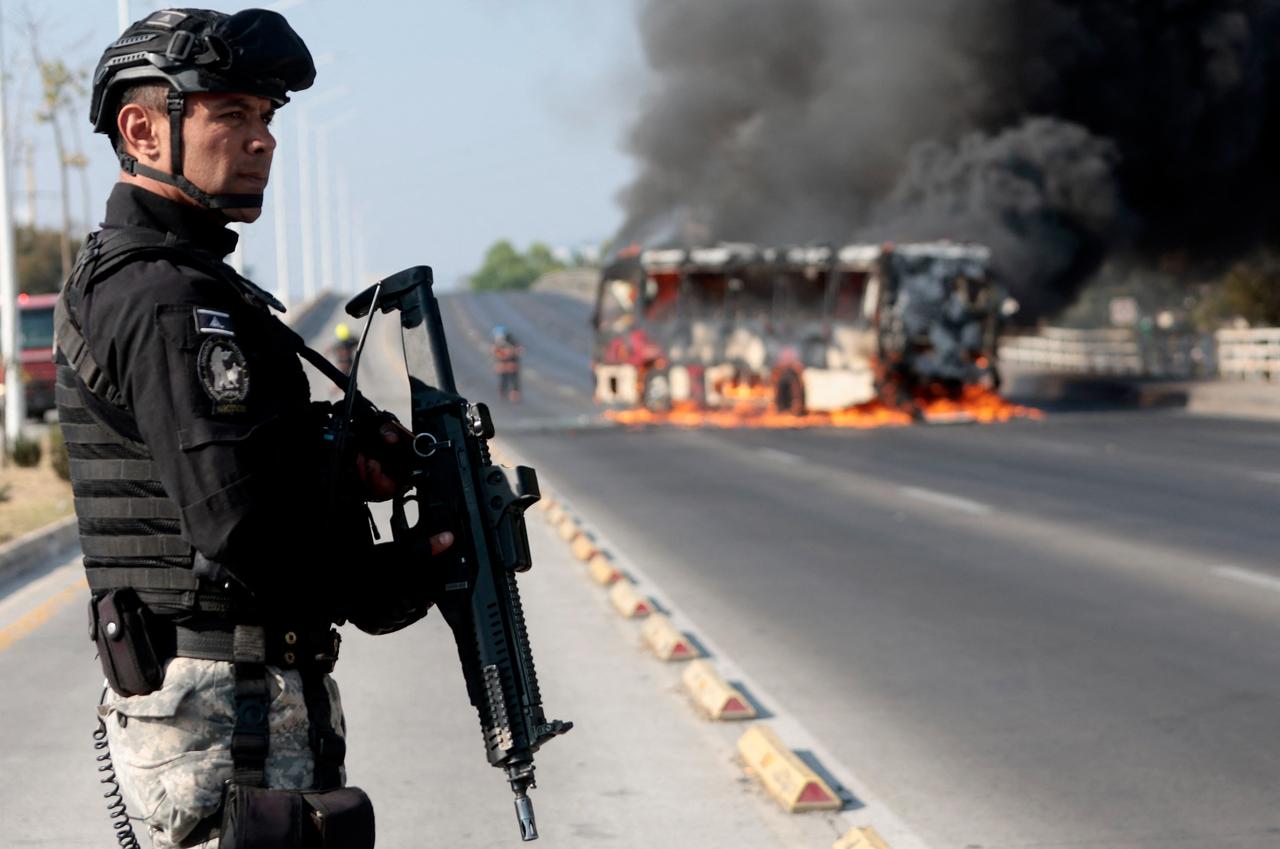
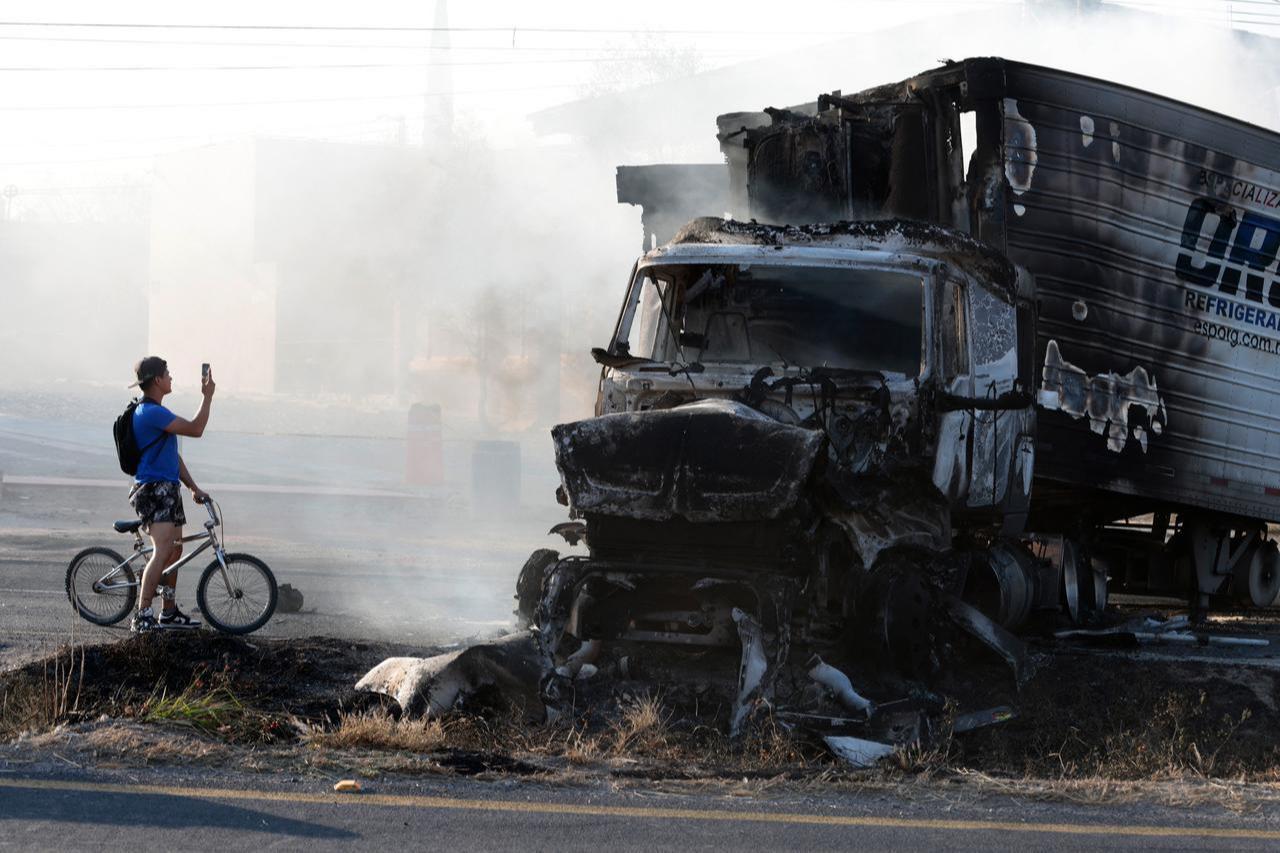
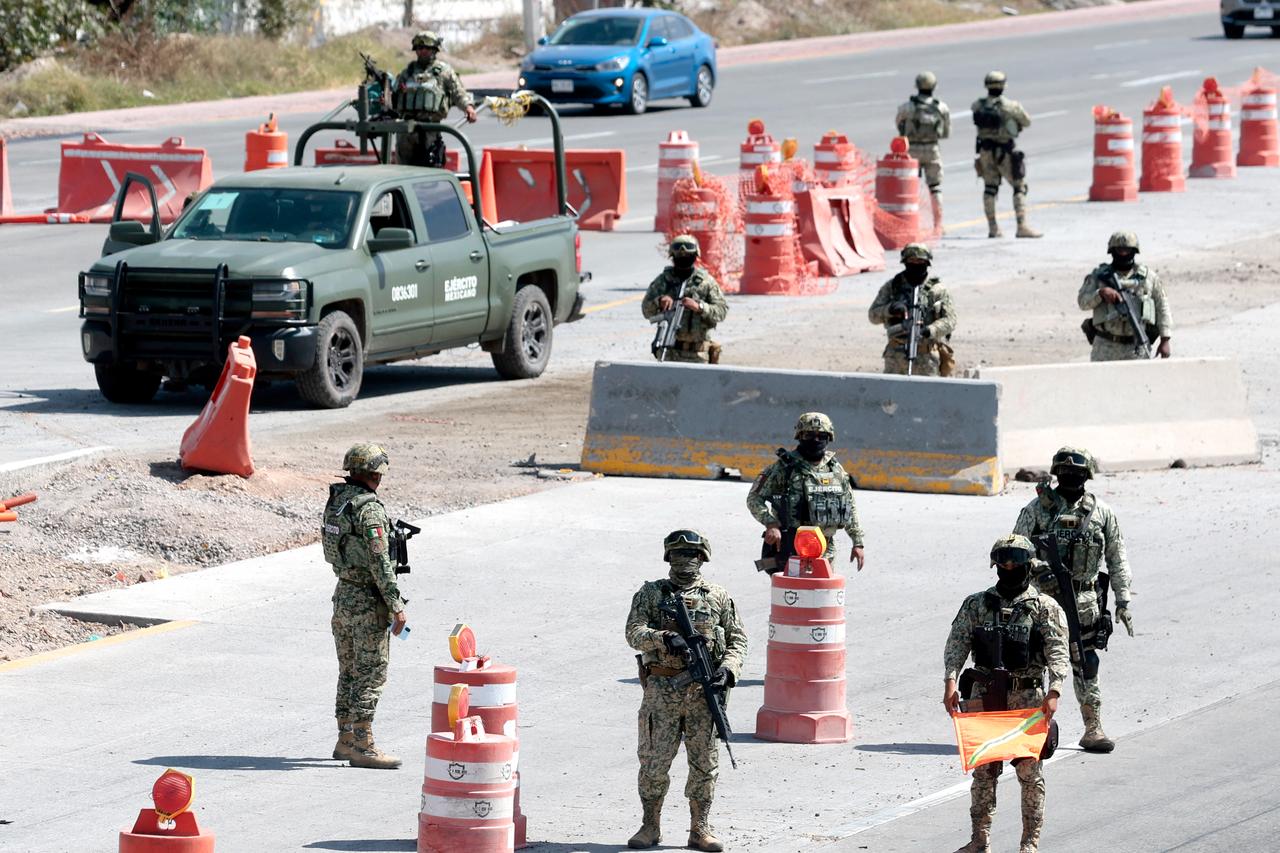
The killing triggered an immediate and widespread violent response, with road blockades, burning vehicles and armed clashes reported across multiple states where the CJNG operates, including Jalisco, Tamaulipas, Michoacan and Nayarit.
Gunmen retaliating for the raid blocked more than 20 roads in western Jalisco state, burning cars and trucks.
As violence spread across the country, at least eight states suspended in-person classes and the judiciary authorized judges to close courts where necessary.
Jalisco Governor Pablo Lemus Navarro issued a red alert and cancelled in-person classes at schools Monday.
Jalisco state, which is scheduled to host four World Cup games this summer, cancelled all events involving large crowds.
The streets of the state capital Guadalajara were almost empty as stores, pharmacies and gas stations shut down.
Maria Medina, who works in a gas station that was set on fire, said men with guns showed up and told everyone to get out. "I thought they were going to kidnap us. I ran to a taco stand to take cover with the people there," Medina told Agence France-Presse (AFP).
The violence spread to the neighboring state of Michoacan, where Oseguera's cartel also has a presence, and to the resort city of Puerto Vallarta.
Mexican President Claudia Sheinbaum called for calm following the operation.
"There is absolute coordination with the governments of all states; we must remain informed and calm," SheinSbaum said on the social media platform X, adding that "activities are proceeding normally throughout most of the country."
"We work every day for peace, security, justice, and the well-being of Mexico," she said.
The U.S. State Department urged American citizens in large parts of Mexico to "shelter in place until further notice."
"Due to ongoing, widespread security operations and related road blockages and criminal activity in many areas of Mexico, U.S. citizens should shelter in place until further notice," said a statement from the department's Consular Affairs section on X.
"Roadblocks have impacted airline operations, with some domestic and international flights canceled in both Guadalajara and Puerto Vallarta," it said.
Canada also issued a travel warning, advising Canadians in Mexico to "keep a low profile and follow advice of local authorities." It urged citizens in Michoacan, Guerrero and Jalisco states to shelter in place, citing "shootouts with security forces and explosions."
U.S. Deputy Secretary of State Christopher Landau, previously ambassador to Mexico, welcomed the operation and called Oseguera "one of the bloodiest and most ruthless drug kingpins."
"This is a great development for Mexico, the U.S., Latin America, and the world," Landau said.
Oseguera is one of the biggest Mexican drug lords to be taken down since the capture of the founders of the Sinaloa cartel, Joaquin "El Chapo" Guzman and Ismael Zambada.
Both are now serving time in the United States.
His cartel was formed in 2009 and became one of Mexico's most violent drug trafficking organizations, according to the U.S. Justice Department.
The United States has classified the CJNG as a terrorist organization and accuses it of sending cocaine, heroin, methamphetamine and fentanyl into the United States.


 Set as preferred source
 Set as preferred source


 4 min read