

 Newsletters


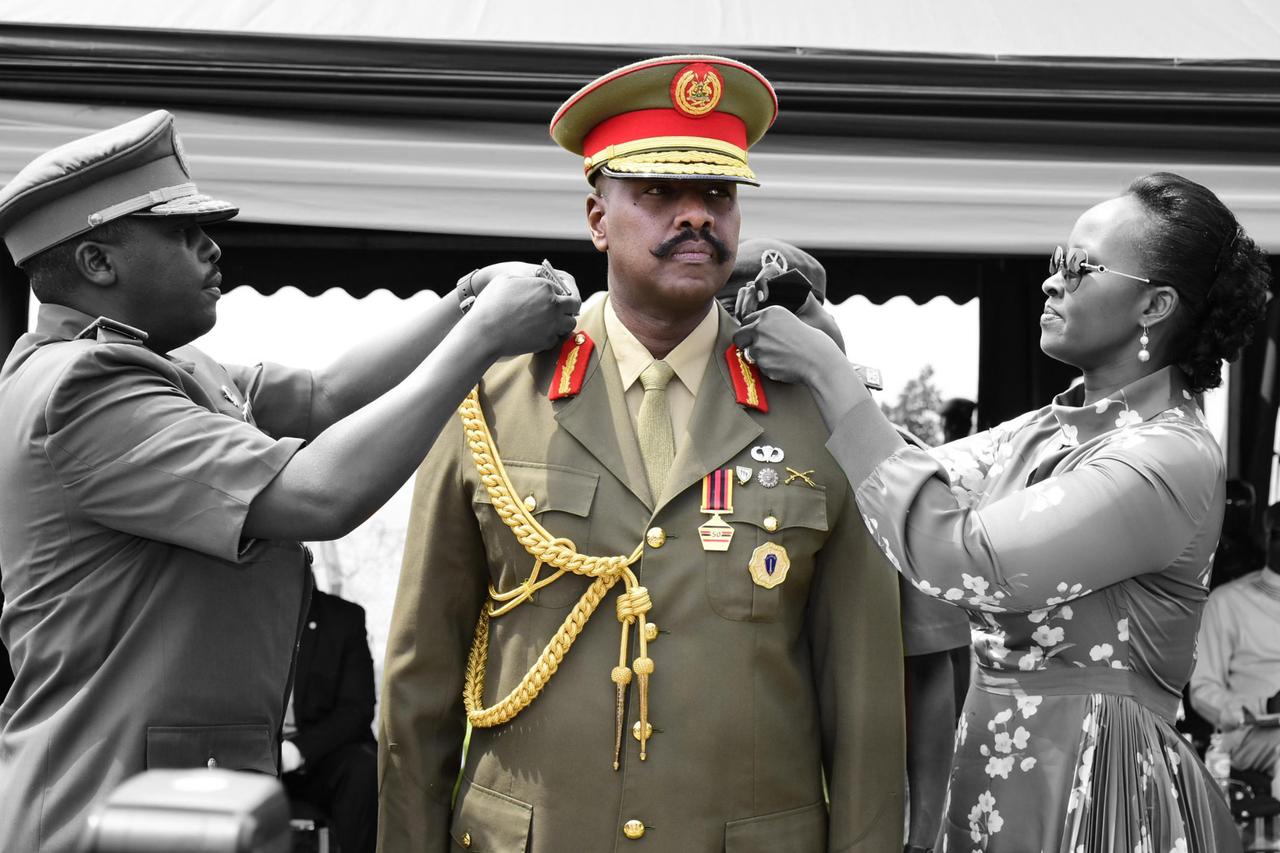


The Uganda People's Defence Forces (UPDF) has abruptly suspended all military and defense cooperation with Türkiye, sharply escalating a diplomatic showdown triggered by Ankara's refusal to extradite a prominent government critic.
According to the Ugandan press, the decision followed demonstrations outside the Turkish embassy in Kampala by supporters of the Patriotic League of Uganda (PLU), the movement chaired by Chief of Defence Forces General Muhoozi Kainerugaba.
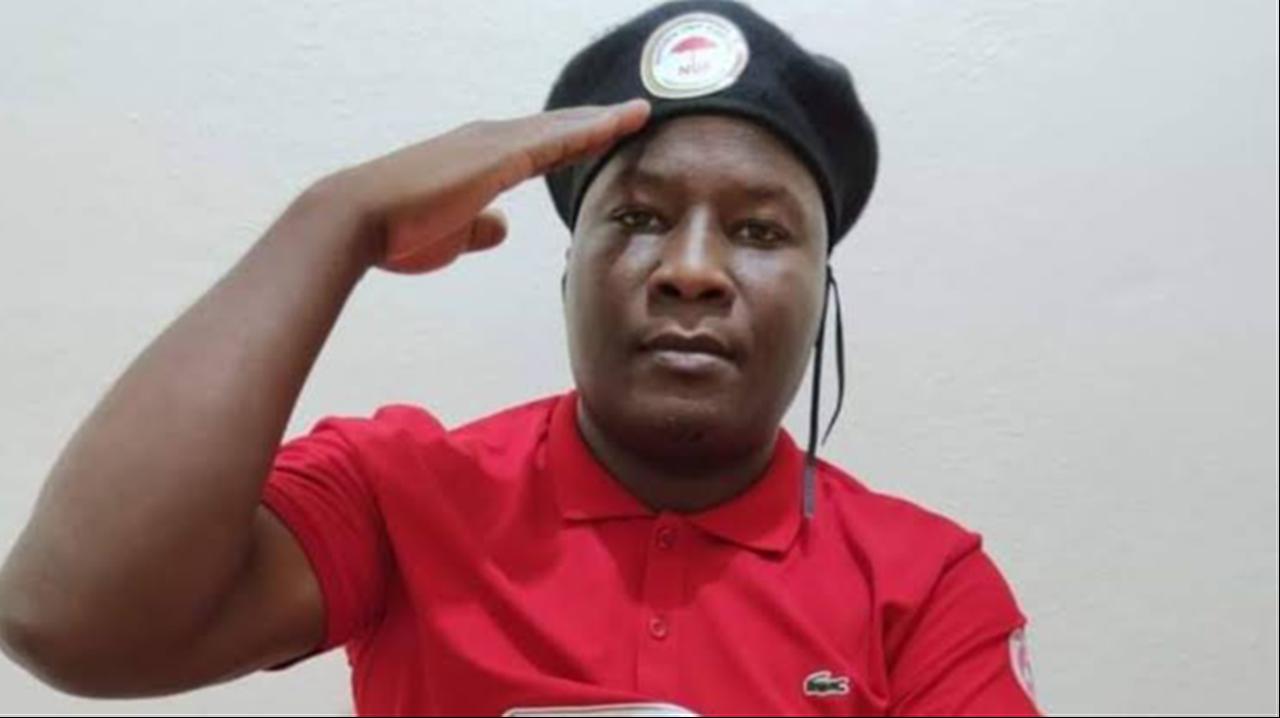
The protesters demanded the extradition of Fred Lumbuye, a dissident commentator living in Türkiye.
There is a problem with this narrative. Lumbuye has lived in Türkiye since 2013. For thirteen years, his presence was never a crisis in Ankara-Kampala relations. The reason it has suddenly grown large enough to justify suspending defence cooperation is not Lumbuye.
The reason becomes visible when one looks not at Türkiye but at Mogadishu: Uganda's military presence in Somalia is coming to an end, and with it the tens of millions of dollars that have flowed to Kampala for two decades.
The African Union's Somalia mission began in 2007 when Ugandan troops landed in Mogadishu. In those days, the transitional government barely held a few neighborhoods of the capital, and the Ugandan soldiers played a genuinely decisive role. Al-Shabab was driven out of the capital in 2011 and, over the course of the 2010s, dislodged from most urban centers in southern and central Somalia.
But the mission became a victim of its own success.
Uganda today has roughly 4,500 troops in Somalia under the African Union Support and Stabilization Mission in Somalia (AUSSOM) and about 2,000 more under a bilateral agreement. These troops, along with Burundian units, no longer conduct active operations against al-Shabab; they man checkpoints and bases.
It is the Somali army that leads the offensive at the front. When the United States informed the African Union in July that it would end payments to the U.N. Support Office in Somalia, which provides the mission's logistics, by year's end, it merely set a date on an era that was already closing.
The end of this era is no catastrophe for Somalia. Al-Shabab still controls large areas of the south and center, but it is largely confined to the countryside, a trend that has become pronounced since 2022. The government holds most urban centers, and security in Mogadishu has improved markedly.

Türkiye has been militarily active in Somalia since 2011. TURKSOM, opened in 2017, is Türkiye's largest overseas training base; by known figures, the Turkish military has trained more than 25,000 Somali soldiers in Mogadishu and at least 10,000 commandos in Türkiye. These are the Gorgor and Haramcad units that form the backbone of the Somali army.
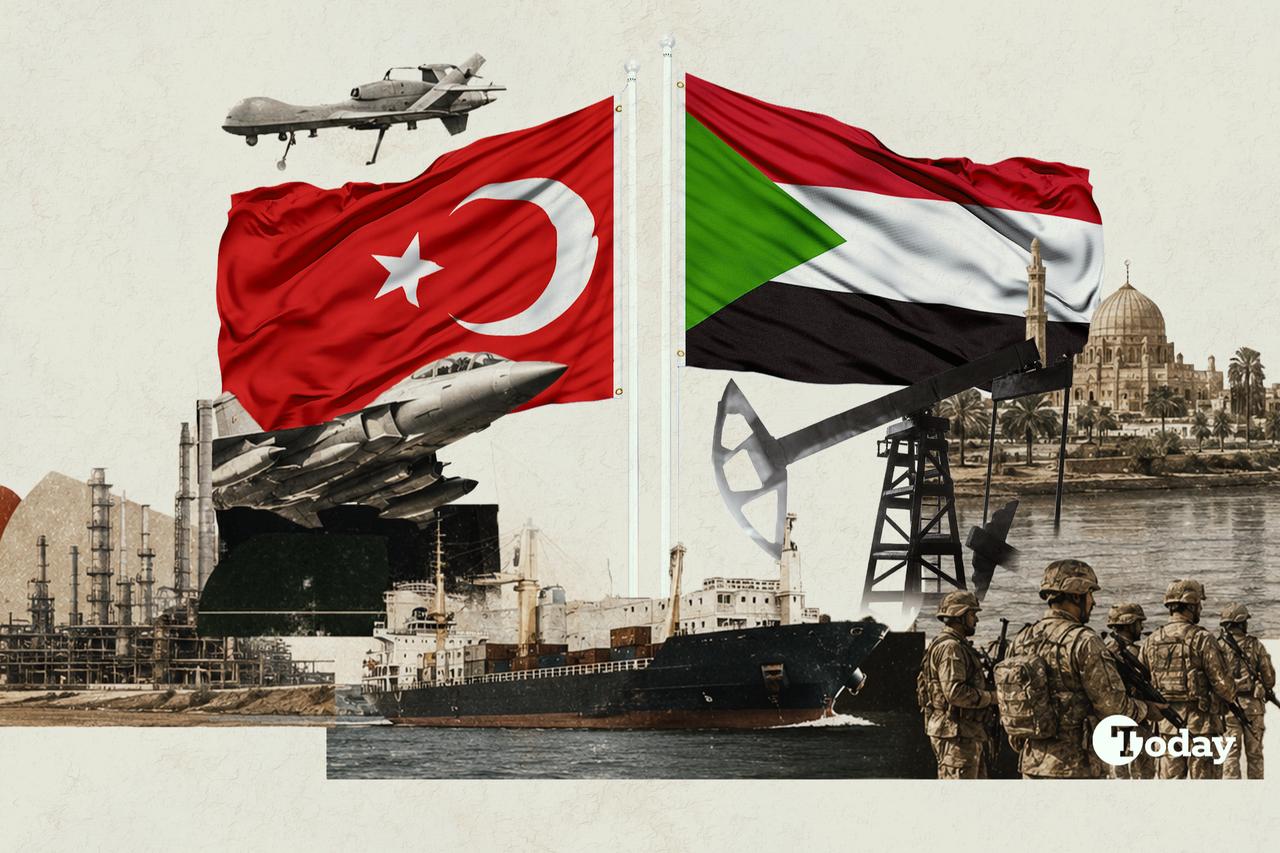
Training is only one dimension. Somalia today hosts Turkish F-16s, Akinci and TB2 drones, and armored vehicles. Under the framework defense agreement signed in 2024, Turkish naval vessels off Mogadishu carry out anti-piracy operations and help protect the Red Sea. In other words, a single foreign partner sustains Somalia's sea, air and ground forces, and that partner is not Uganda.
The Somali government is now able to secure its capital and surrounding regions on its own, and as state capacity grows it needs less outside support. A mission completing its task ought to count as a success for the countries that contributed troops. Kampala's reaction explains why it does not.
Every Ugandan soldier in Somalia earns Kampala at least $1,000 a month. How much of that per-soldier payment to the UPDF ends up in the soldier's pocket is a separate question. If the mission ends and the troops go home, the loss comes to $5–6 million a month, or $60–72 million a year.
The share that reaches the treasury is only half the story. There is also a network of interests that has fed on the same source for 20 years. Somalia hosted a war economy financed for years by the United States, the U.N. and the European Union, and Uganda was one of its partners.
It is no coincidence, then, that the bill is being sent to Türkiye. General Muhoozi regards Ankara as the principal stakeholder in Somali security and calculates that, pressed hard enough, it can get the decision in Mogadishu reversed. The demonstration outside the embassy was staged not to extradite a dissident but to manufacture a public pretext for this bargaining. Lumbuye's 13 years of exile were chosen as that pretext.
Nor was the demonstration as spontaneous as it looked. According to a Ugandan source, those who gathered outside the embassy were paid $5 a head by Muhoozi's political movement. Neither Muhoozi, nor Lumbuye, nor Somalia is of much concern to the ordinary Ugandan; the people in the street that day had come out to feed themselves.
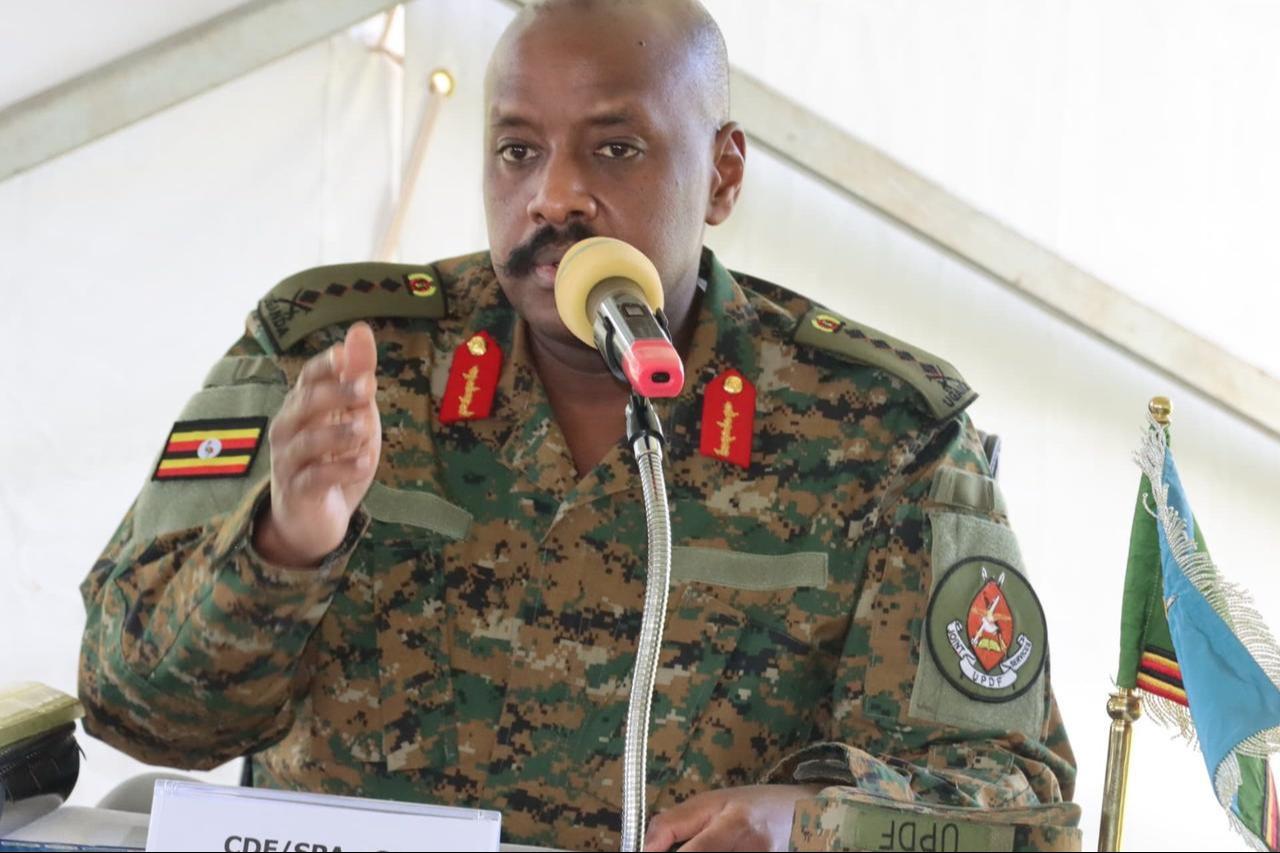
At the center of Muhoozi's rhetoric is a claim: Türkiye makes money from Somalia, so Ankara should cover Uganda's losses there. The $1 billion "security dividend" he demanded from Türkiye in April was the product of this logic.
Türkiye does not make money in Somalia from anything it has not invested in. Behind every revenue stands capital that was put in first.
Turkish companies rebuilt and now operate Mogadishu's Aden Adde airport; a Turkish company modernized and now runs the port of Mogadishu, with the bulk of the proceeds going to the Somali treasury. Turkish contractors built the capital's roads, its hospital and its government buildings.
Under the space agreement signed between Türkiye and Somalia, a launch site is planned on the Somali coast. With the 2024 hydrocarbons agreement, Turkish Petroleum began exploring for oil and gas off Somalia at its own risk, and the survey vessel Oruc Reis was sent to Somali waters for the purpose. The Turkish state built and runs TURKSOM; in training Somali soldiers, Ankara is the party that spends money, not the one that collects it.
All of this adds up to billions of dollars, and it shares a single feature: it was built first, operated second, and part of the income stayed in Somalia. Uganda's model is the reverse. Kampala built no port in Somalia, opened no hospital, trained no soldier.
It sent troops and collected a monthly fee per head. That was not an investment but a service contract, and when demand for the service ends, so does the payment. Muhoozi asking Ankara for compensation is like asking the company that built the construction site to keep paying the wages of the security firm whose contract has expired.


 Set as preferred source
 Set as preferred source


 1 min read
 1 min read


