Newsletters




There is a particular confidence that accompanies expensive systems. It is the confidence of glass towers, precision engineering, and the belief, never quite stated, that complexity itself is a form of protection. The higher the cost, the more reassuring the illusion.
And then, occasionally, someone arrives with wire cutters.
For decades, American military power has been built on a simple premise: technological superiority produces strategic advantage. From precision-guided munitions to satellite-enabled warfare, the United States has invested not just in better weapons, but in better ways of seeing, deciding and striking.
Artificial intelligence is the logical extension of this tradition.
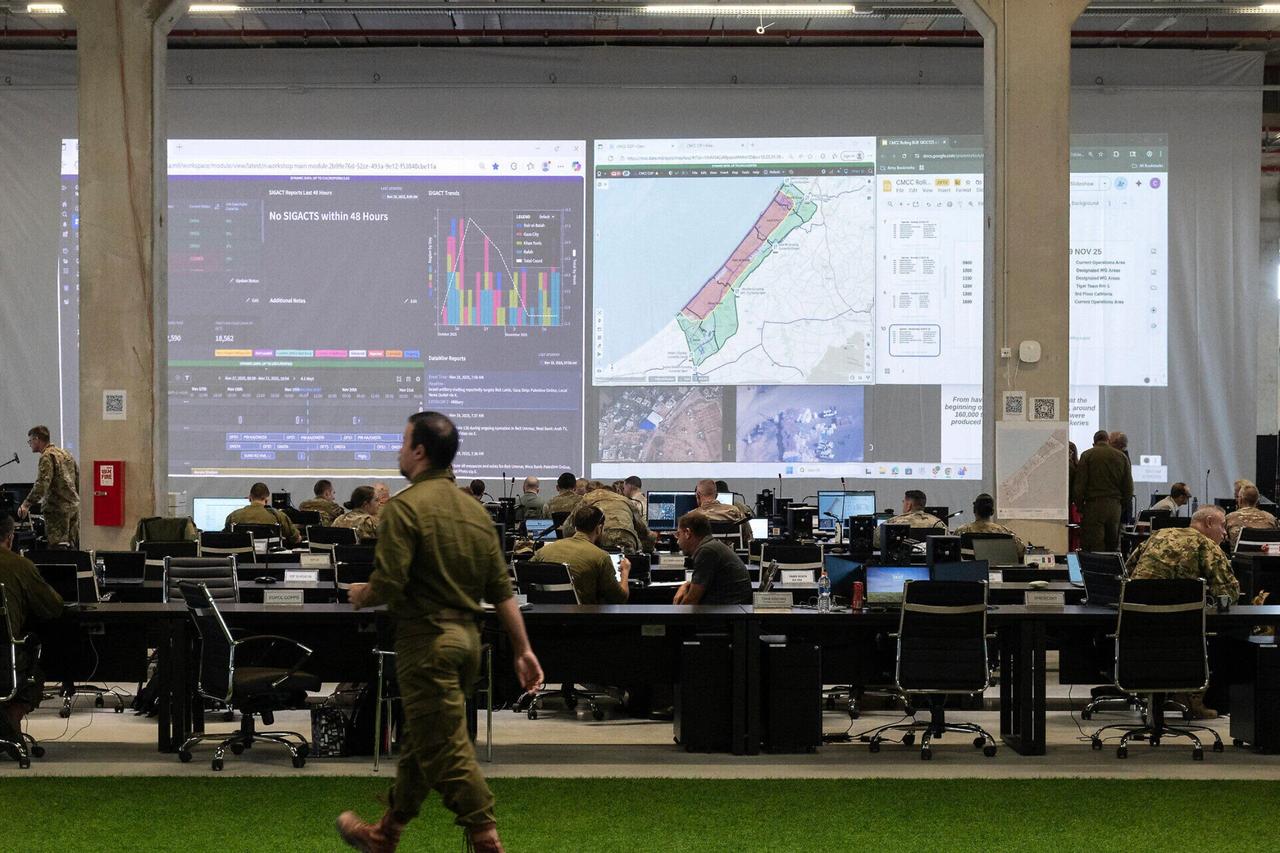
Systems developed by firms such as Palantir Technologies and programs like Project Maven, or Project ARIA promise something close to operational omniscience: the ability to ingest vast quantities of data, identify patterns invisible to human analysts, and present commanders with ranked, optimised options.
In offensive terms, this is transformative. Targets are found faster, tracked longer, and struck with increasing precision.
It is this asymmetry in the integration of artificial intelligence into the U.S. military that has created a vast gap between offense and defense in algorithmic warfare.
Struggling to keep pace with the rapid development of AI in offensive systems, the defensive side has been forced to rely on more primitive, improvised methods to counter drone and missile attacks.
The advantage is not merely accuracy, but tempo. Artificial intelligence compresses the decision cycle. What once required hours of intelligence synthesis can now be produced in minutes.
Surveillance, identification, and prioritisation each accelerate at each stage, creating a form of operational velocity that adversaries struggle to match.
As Salih Bicakci, a cybersecurity expert and professor of international relations at Kadir Has University, puts it, “these systems generate vast amounts of data and offer multiple operational options,” noting that they enable “much faster and more consistent decision making.”
Offense thrives in this environment. It only needs to be right once, and increasingly, it has multiple attempts.
Autonomous and semi-autonomous systems, most visibly drone swarms, extend this logic. They are relatively cheap, scalable, and critically expendable. Losing a single unit is irrelevant; the true objective is simply to overwhelm the system.
This is where the asymmetry begins to widen.
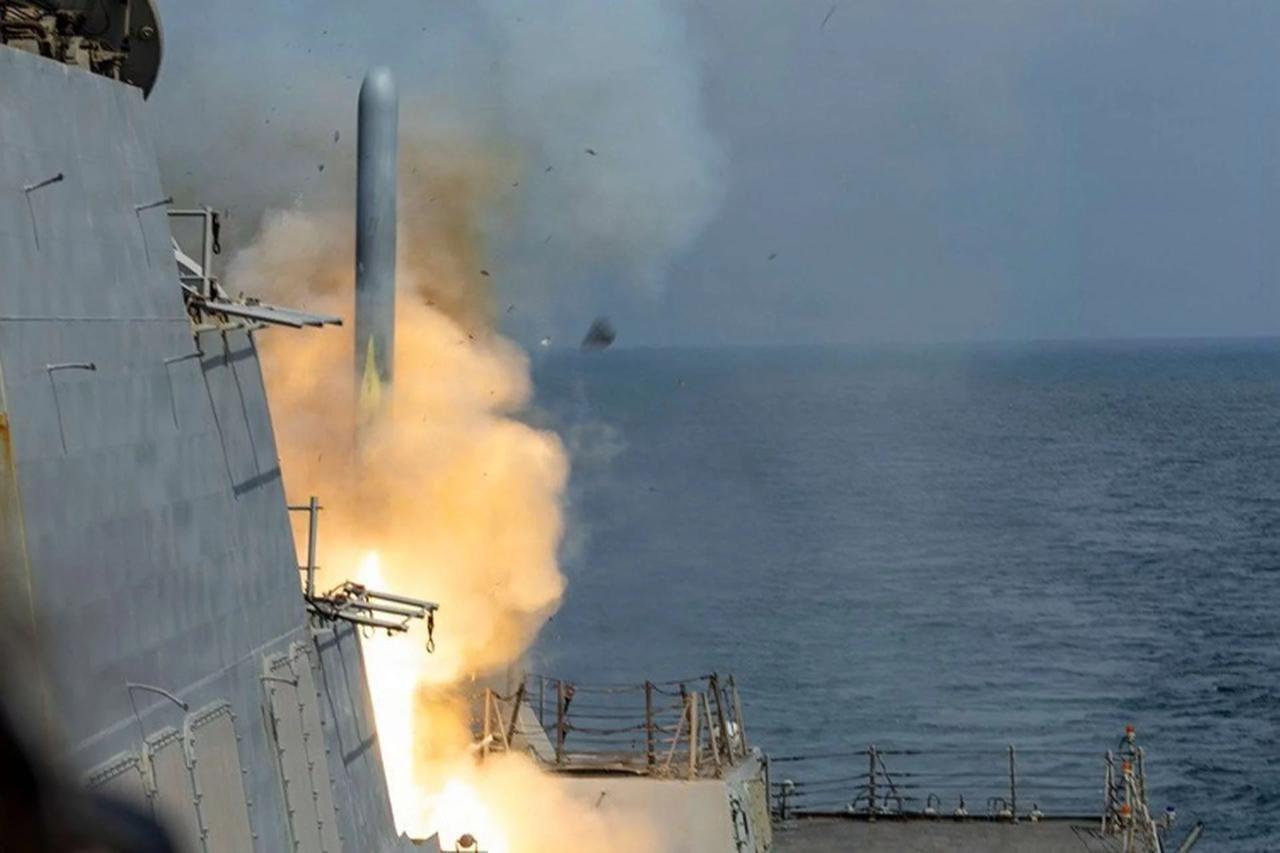

Defense, unlike offense, must be consistently successful.
A missile defense system, whether American or Israeli, is engineered around specific thresholds: how many incoming objects it can simultaneously detect, track, and intercept. These limits are purely mathematical.
Swarm attacks exploit them.
“Static defense has a defined capacity,” Bicakci notes. “Engineering calculates it. But once attacks reach saturation, that capacity is exceeded.”
A hundred low-cost drones can force a defender to expend far more expensive interceptors, or worse, saturate the system entirely. The imbalance is not just tactical but economic. It is cheaper to attack than to defend, and artificial intelligence amplifies this disparity by making coordination and targeting more efficient.
The result is a peculiar inversion: the most advanced military systems in the world can be challenged by some of the simplest.
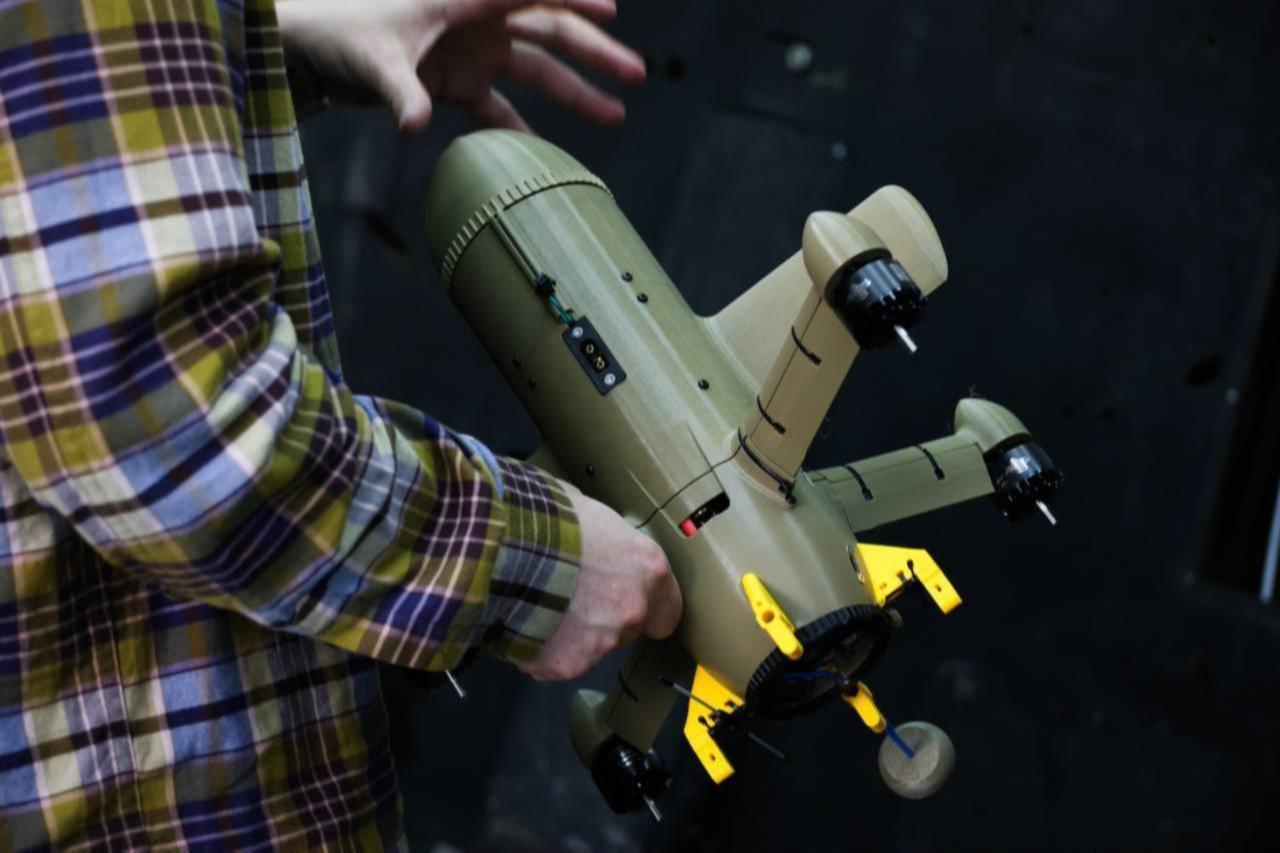
This is where the wire appears.
In Ukraine, and increasingly in other theaters, sophisticated drone threats have been met with solutions that would not look out of place in an earlier century: metal cages over vehicles, mesh nets stretched across defensive positions, improvised barriers designed not to defeat technology, but to obstruct it.
“As offensive capabilities powered by AI and automation increase, defence is pushed toward simpler solutions because advanced technological defence becomes too costly,” Bicakci points.
The logic is brutally practical. If a system cannot reliably intercept every incoming drone, it may be more effective to degrade the threat at the final moment in a way that is physical, mechanical, and inelegant.
It is not a failure of technology so much as a recognition of its limits.

The deeper issue lies in the nature of defense itself.
Offensive systems are dynamic. They choose the time, place and method of attack.
Defensive systems, by contrast, are inherently static. They must remain active, vigilant and effective at all times, across all scenarios.
Artificial intelligence enhances offense by increasing optionality. It complicates defense by multiplying variables.
A defender must anticipate not one attack, but thousands of permutations of different trajectories, timings, volumes and combinations of threats.
Even with advanced AI, this becomes a problem of scale. The system can process more data but it must still act within physical constraints: interceptor limits, sensor coverage and reaction times.
At some point, the system saturates.
There is a tendency, particularly in Washington, to view technological advancement as cumulative, as if each new layer merely reinforces an existing structure of dominance. In reality, it is often disruptive.
Artificial intelligence does not simply enhance existing systems; it changes the cost-benefit equation. It lowers the barrier to entry for offensive capabilities while raising the complexity and cost of defence.
This creates a strategic paradox.
The more effective offensive AI becomes, the less reliable traditional defensive architectures appear.
Even the most advanced systems begin to resemble what they were designed to replace. In a short while, today’s most advanced systems will look like fixed fortifications, vulnerable to being overwhelmed due to AI.
“We are moving from network-centric warfare toward algorithmic warfare,” the cyber security expert observes, “where decision making itself is increasingly shaped by artificial intelligence.”
None of this suggests that the United States is technologically outmatched. On the contrary, it remains at the forefront of AI-enabled warfare.
But leadership in offense does not guarantee resilience in defence.
This is why the challenge posed by Iranian drone swarms and missile strikes should not be read simply as systemic failure, even when they succeed in penetrating US defenses. The more revealing image is not that of collapse, but adaptation as the system rediscovers simplicity.
The asymmetry is unlikely to disappear.
If anything, it will deepen.
As artificial intelligence accelerates offensive capabilities through faster targeting, smarter swarms, and greater autonomy, defensive strategies will oscillate between two poles: increasingly complex interception systems and increasingly simple physical barriers.
Somewhere between them lies the future of warfare.
And perhaps the most uncomfortable truth is this: in an age of algorithmic conflict, the decisive advantage may not belong to the side with the most advanced systems, but to the one most willing to accept that sometimes a simple fence is enough to prevent being overjumped.


 Set as preferred source
 Set as preferred source


 4 min read