Newsletters


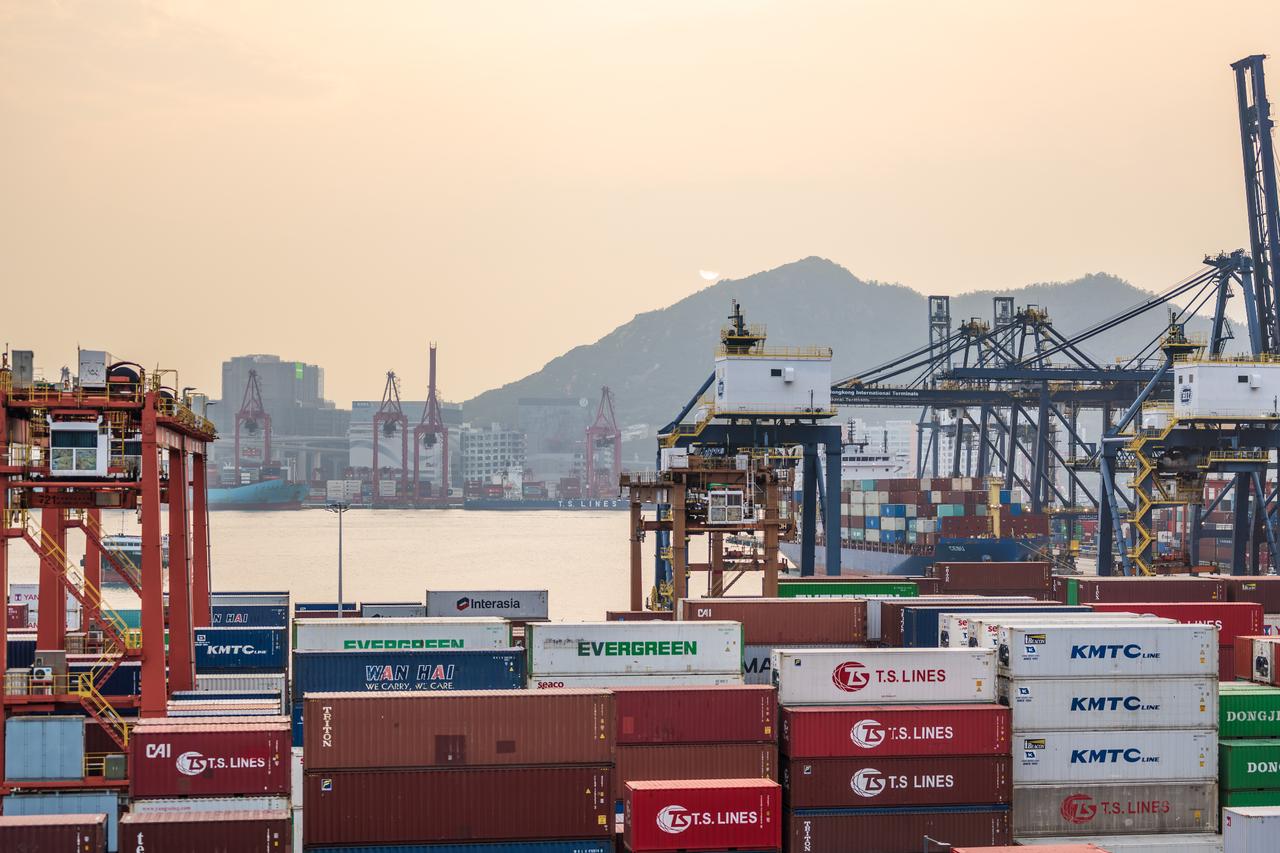


China shifted more of its exports toward alternative markets after U.S. tariffs reduced its shipments to the American market, increasing competitive pressure on Turkish exporters, Türkiye's trade board chief said.
Speaking at a briefing on a report examining changes in China's foreign trade after the tariffs, Olpak said China's retreat from the U.S. market had been offset by stronger exports to other regions.
"When access to a market becomes difficult, global trade does not disappear; it finds new routes, new countries and new partnerships," Olpak said.
The report found that China’s exports to the U.S. declined while overall exports continued to grow.
China’s share of total exports going to the U.S. fell from 14.68% in 2024 to 11.14% in 2025. U.S. imports from China also dropped from $462.63 billion to $327.49 billion, a 29.2% decline.
The shift followed a series of additional U.S. tariffs introduced in 2025, with duties on Chinese goods reaching 145% in April before the two countries agreed in May to temporarily reduce tariffs and later extended the trade truce through Jan. 10, 2027.
ASEAN emerged as a major destination for Chinese goods. Shipments to the region rose from $526.47 billion in 2023 to $586.23 billion in 2024, then climbed 13.6% to $666.2 billion in 2025.
Vietnam was China’s biggest ASEAN market in 2025 at $198.62 billion, followed by Malaysia at $103.78 billion and Thailand at $103.65 billion. Exports to Hong Kong also grew from $291.36 billion to $337.05 billion, with DEIK highlighting the territory’s role as a re-export hub for Chinese goods.
The report described the direct impact on Türkiye in ASEAN as limited because the region accounts for a relatively small share of Turkish exports.
The organization identified greater competitive risks in markets where Turkish companies already have a strong presence.
Chinese exports to Africa rose 25.9% in 2025 to $224.77 billion. In Nigeria, shipments jumped 31.8% to $24.91 billion.
Egypt is more significant for Turkish exporters. Chinese exports there reached $19.97 billion in 2025, compared with $4.07 billion from Türkiye, a gap DEIK linked to rising competition for Turkish companies.
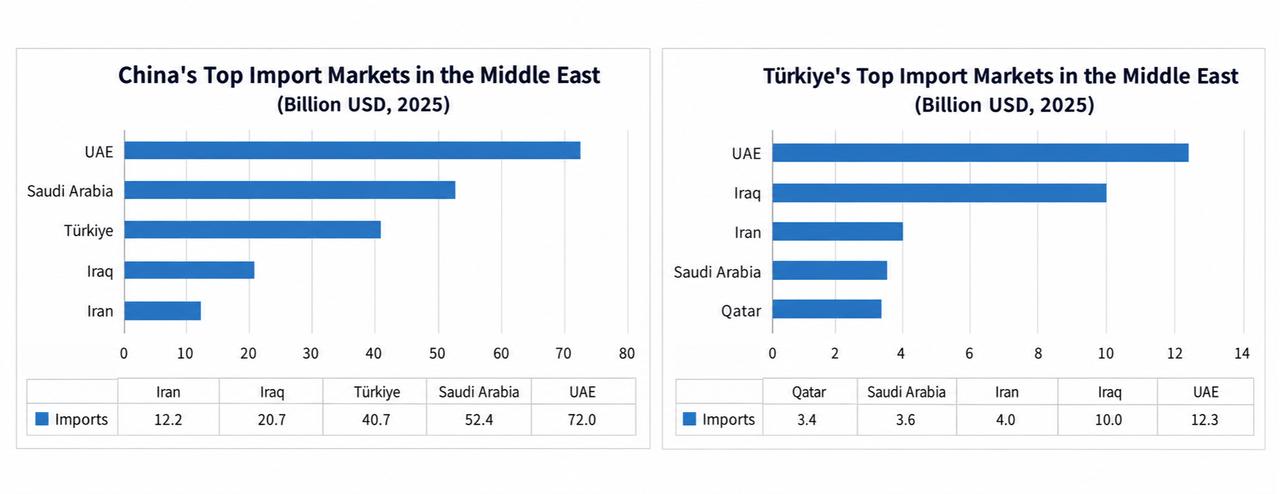

China also expanded its footprint in the Middle East, where exports increased 9.7% in 2025 to $258.71 billion. Shipments to the United Arab Emirates rose to $72.9 billion from $65.56 billion in 2024, while Türkiye’s exports to the UAE stood at $9.28 billion.
Europe also drew more Chinese goods, with exports to the EU rising 8.63% in 2025 to $560.77 billion.
China’s exports to Germany, its largest European market, rose 10.55% to $118.30 billion, while Türkiye exported $22.17 billion to Germany in 2025, making it also Türkiye’s top export destination.
However, the report said China’s growing presence in Germany did not yet pose a direct and clear risk to Turkish exporters.
Olpak stressed the need for Turkish exporters to focus more on technology and added value as competition intensifies.
"We need to talk more about not only how much we export to which country, but also which product we export, at what technology level and with what added value," he said.
"In markets where competition is intensifying, Türkiye’s response should be more added value, stronger brands, technology, innovation and lasting partnerships."
He also noted that competition is moving beyond price, with production security, faster market access, supply-chain diversification and predictable long-term partnerships gaining importance.
"The world is no longer asking only, ‘Where can I produce more cheaply?’" Olpak said, describing this broader shift as an increasingly important "competition for trust."
Olpak further noted that the Belt and Road Initiative could accelerate the flow of Chinese goods to Europe and weaken Türkiye’s logistics advantage, with current routes taking 30-45 days to reach Europe, while the project is expected to reduce transit times to as little as one week.


 Set as preferred source
 Set as preferred source


 1 min read

 1 min read