Newsletters




Markets are increasingly betting the Federal Reserve will leave interest rates unchanged at next week's policy meeting after June inflation eased more than expected, although renewed tensions in the Middle East and higher oil prices continue to cloud the outlook.
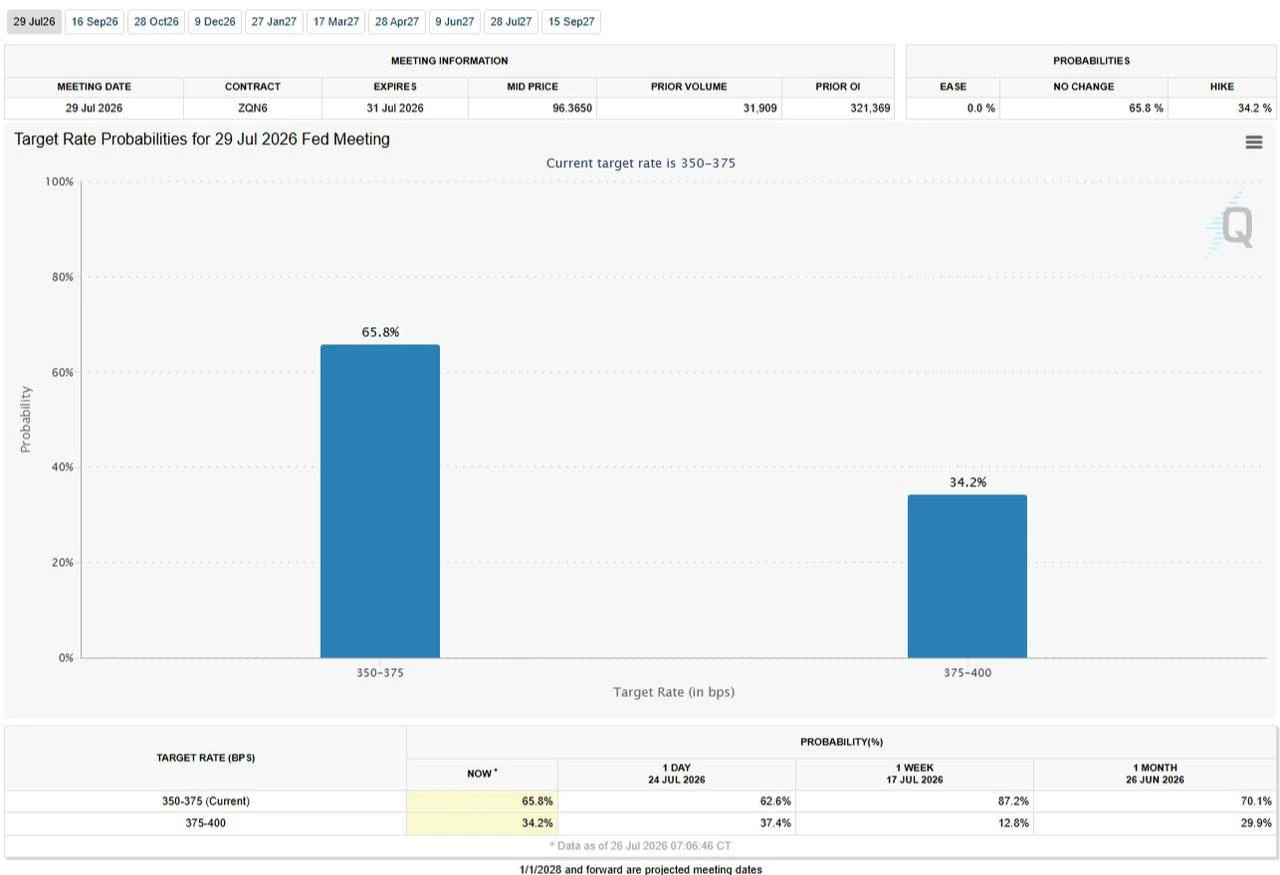
The Federal Open Market Committee is scheduled to meet on July 28-29, with investors assigning a 65.8% probability that policymakers will keep the benchmark rate in the 3.5%-3.75% range, according to CME Group's FedWatch Tool.
At the same time, markets still see a 34.2% chance of another rate increase as rising energy costs threaten to slow progress on inflation.
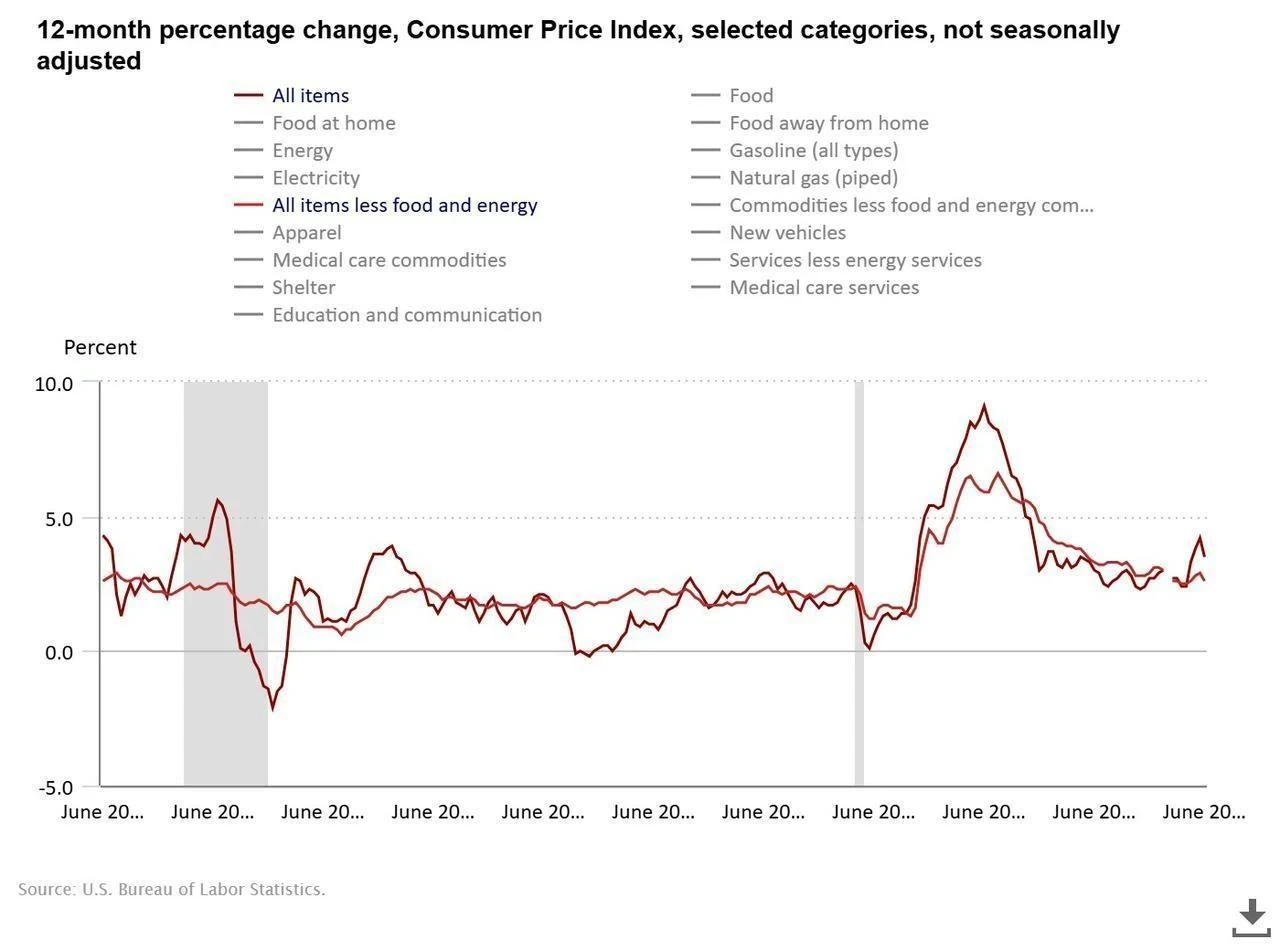
The Consumer Price Index fell 0.4% in June from the previous month while annual inflation slowed to 3.5%, below expectations, also reflecting the first monthly decline in the index since May 2020.
Core inflation, which excludes food and energy, was unchanged on a monthly basis and rose 2.6% from a year earlier. Producer prices also surprised to the downside, falling 0.3% in June while increasing 5.5% annually.
Meanwhile, nonfarm payrolls increased by 57,000, missing forecasts, while the unemployment rate edged down to 4.2%, suggesting the labor market remains broadly resilient despite slower hiring.
Despite softer inflation data, renewed conflict in the Middle East has pushed energy costs back into focus.
Brent crude climbed to $100 per barrel last week, while the U.S. national average gasoline price rose above $4 per gallon for the first time since June, reaching $4.10 as of July 24, according to the American Automobile Association.

Mark Zandi, chief economist at Moody's Analytics, expects the Fed to leave interest rates unchanged through this year and into next, arguing that inflation has likely peaked, inflation expectations remain well anchored and the labor market has softened.
Still, he warned that the outlook hinges on developments in the Iran conflict. "Having said this, risks are high that the war will continue, oil prices will remain high, and inflation will not recede," Zandi cautioned.
He added that if those conditions persisted, it would be "more likely than not" that the Fed would raise rates at its September meeting.
Olu Sonola, head of U.S. economic research at Fitch Ratings, also expects policymakers to leave rates unchanged next week but argued that recent inflation data provide little room for complacency.
He pointed to continued pressure in producer and import prices, warning that another surge in energy costs linked to Middle East tensions could force policymakers to tighten policy later this year.
Sonola added that markets would closely watch Warsh's comments for clues on what conditions might trigger another rate increase.
Steven Kamin, a senior fellow at the American Enterprise Institute, also expects June's inflation figures to keep the Fed on hold this month but believes the odds of additional tightening remain high if oil prices continue climbing.
"That's especially the case since inflation has exceeded the Fed's target for several years and Warsh wants to burnish his anti-inflationary credentials," Kamin said.
Nancy Vanden Houten, lead US economist at Oxford Economics, took a more dovish view, saying her firm does not expect another rate increase. Instead, she forecasts the Fed will keep policy unchanged until September next year, when inflation is expected to slow enough to justify a rate cut.
"I expect Warsh will acknowledge recent better-than-expected inflation data, while acknowledging the upside risk to inflation from the renewed hostilities between the U.S. and Iran," Houten said.
Since taking over as Fed chair in May, Warsh has consistently emphasized restoring price stability as the central bank's top priority.
Warsh's first policy meeting in June left the federal funds rate unchanged at 3.5%-3.75% while ending the Fed's long-standing practice of forward guidance, signaling that future policy decisions would depend on incoming economic data.


 Set as preferred source
 Set as preferred source


 1 min read

 1 min read