Newsletters





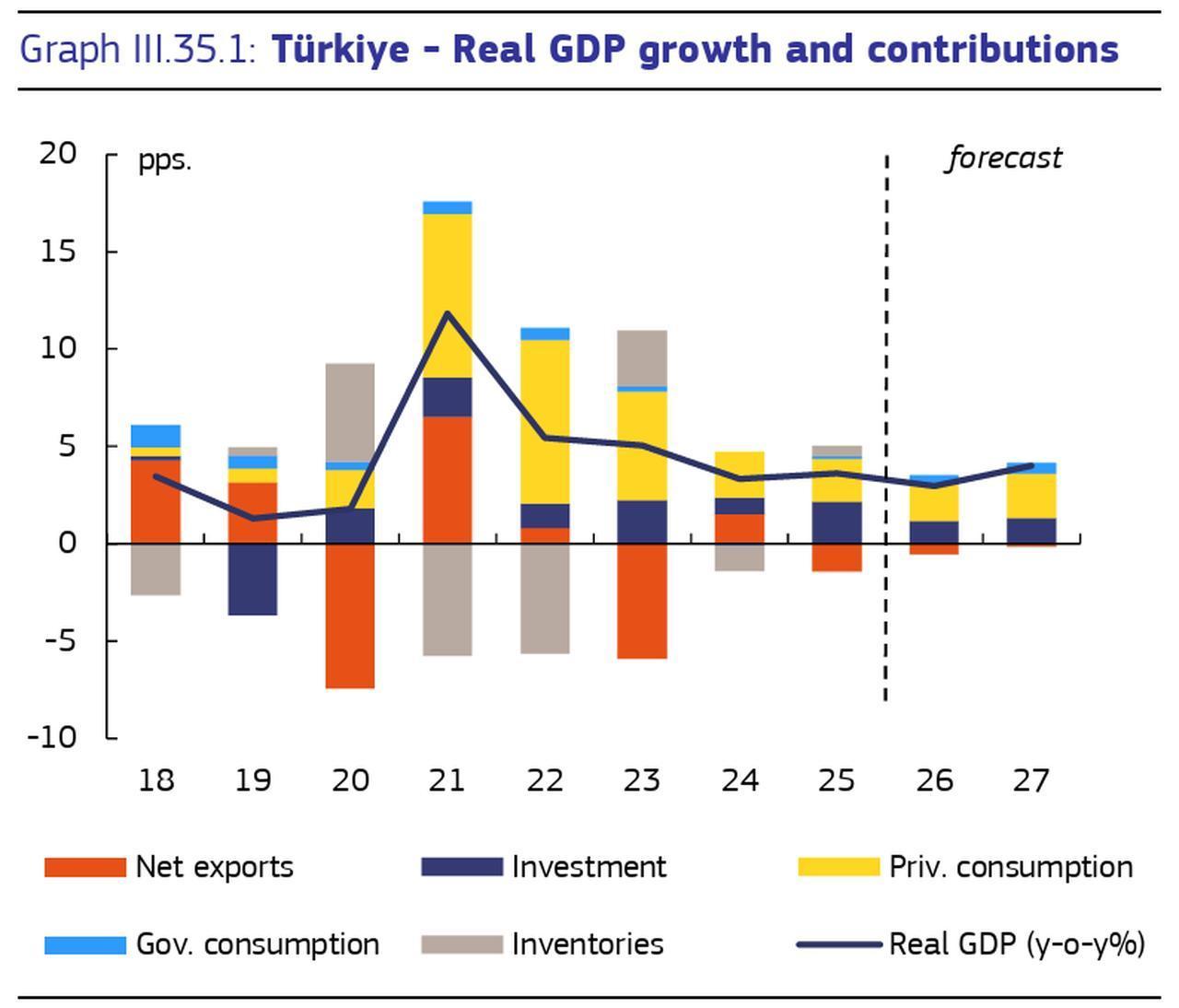
The European Commission lowered its growth forecast for Türkiye’s economy to 3% in 2026 from 3.4% while keeping its 2027 outlook unchanged at 4%, warning that higher energy prices and regional instability stemming from the Iran war could slow disinflation and widen external imbalances.
In its "European Economic Forecast Spring 2026" report, the commission identified international oil prices as the main channel through which the Iran conflict is affecting the Turkish economy, noting that the latest energy shock is spreading across globally traded commodities such as oil and liquefied natural gas (LNG).
Despite Türkiye’s tight monetary policy stance, the commission expects the energy supply shock to widen the current account deficit and slow the disinflation process.
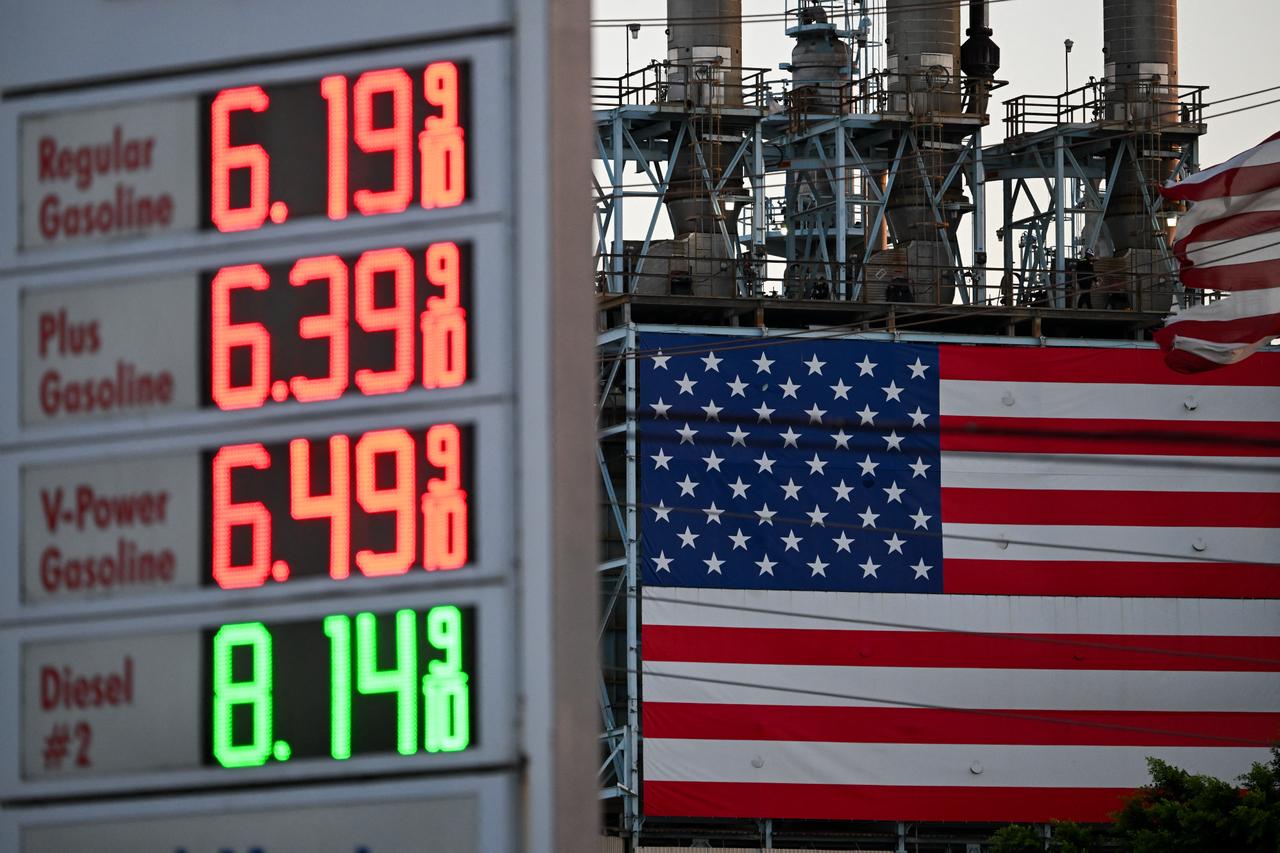
As shipping through the Strait of Hormuz, which normally handles around one-fifth of global oil flows, has remained restricted since the start of the Iran war, international oil and European gas prices are staying roughly 50% above pre-war levels, putting pressure on the balance sheets of energy-importing countries and feeding inflation.
In April, Türkiye’s annual inflation rose to 32.4%, driven by a monthly jump over 12% in energy costs, while the central bank kept its policy rate unchanged at 37% and continued funding markets through its 40% overnight lending rate.
The country’s current account deficit widened to a three-year high of around $9.7 billion in March, pushing the annualized gap to $39.7 billion amid weakening exports and rising imports.
The commission anticipated private consumption would remain the main driver of growth despite weaker household purchasing power. Investment is also projected to support growth, although tighter financing conditions and uncertainty are likely to slow activity.
Exports are forecast to remain stagnant in 2026 as weaker external demand weighs on tourism and transport services, while rebounding imports are set to keep pressure on the trade and current account deficits.
The report also noted that disinflation stalled in the first quarter of 2026, while inflation is expected to ease gradually to an average of 28.3% in 2026 and 20.1% in 2027.

The commission also trimmed its growth forecast for the eurozone to 0.9% in 2026 from 1.2%, while the broader EU economy is forecast to expand by 1.1% next year. Growth projections for 2027 are also revised down to 1.2% for the eurozone and 1.4% for the EU.
Among major economies, Germany’s growth forecast for 2026 stood at 0.6%, France at 0.8%, and Italy at 0.5%, while Spain remained one of the bloc’s strongest performers with projected growth of 2.4%.
EU inflation is forecast to rise to 3.1% in 2026, up sharply from previous estimates, before easing to 2.4% in 2027. In the eurozone, inflation is seen averaging 3% next year and 2.3% in 2027.
Energy inflation across the EU is forecast to remain above 10% for most of 2026 before easing in 2027, while rising costs are likely to gradually spill over from fuel and electricity into food, transportation and broader services prices.
The commission also warned that prolonged supply disruptions could generate stronger inflationary pressures and weaker growth than currently forecast, particularly if energy markets fail to normalize quickly.
Beyond energy markets, Brussels flagged risks tied to disruptions in helium and fertilizer supplies from the Gulf region, warning they could hit global supply chains, including semiconductor manufacturing and food production.


 Set as preferred source
 Set as preferred source


 1 min read
 1 min read