Sign in
 Newsletters




Fitch Ratings does not expect September's fund scandal to have a direct or short-term impact on the country's sovereign credit rating, although the agency is closely monitoring its potential consequences for foreign exchange reserves and inflation.
Speaking to CNBC-e on Tuesday, Fitch Ratings Senior Director Erich Arispe Morales said the turmoil had created challenges for the government's economic program but had not derailed its overall direction.
"The fund crisis creates some challenges but does not derail the program," Morales noted, adding that Fitch's main concern was whether the fallout could put pressure on international reserves or trigger another rise in inflation.
Fitch last affirmed Türkiye's long-term foreign-currency sovereign credit rating at BB- with a stable outlook in April, reversing an earlier positive outlook as declining foreign exchange reserves and external financing risks weighed on the country's credit profile.
The agency is also monitoring whether the scandal could undermine investor confidence and trigger a shift away from Turkish lira assets.
So far, there has been no clear indication that investors holding lira positions have broadly converted their assets into foreign currencies, Morales said. However, he cautioned that it was too early to assess whether the turmoil had damaged foreign investors' confidence in Türkiye.
The potential impact on foreign exchange reserves remains a key concern for Fitch. A renewed loss of confidence could put further pressure on the lira, drive up demand for foreign currency and make it harder for the central bank to bring inflation under control.
Morales also pointed to the risk of Türkiye losing its emerging market classification in Morgan Stanley Capital International's (MSCI) equity index system, saying such a move could create uncertainty.
The prospect adds to concerns over foreign portfolio flows as international investors weigh Türkiye's regulatory and supervisory framework alongside the authorities' handling of the fund scandal.
MSCI has given Türkiye until June 2027 to address its concerns over market regulations and supervision.
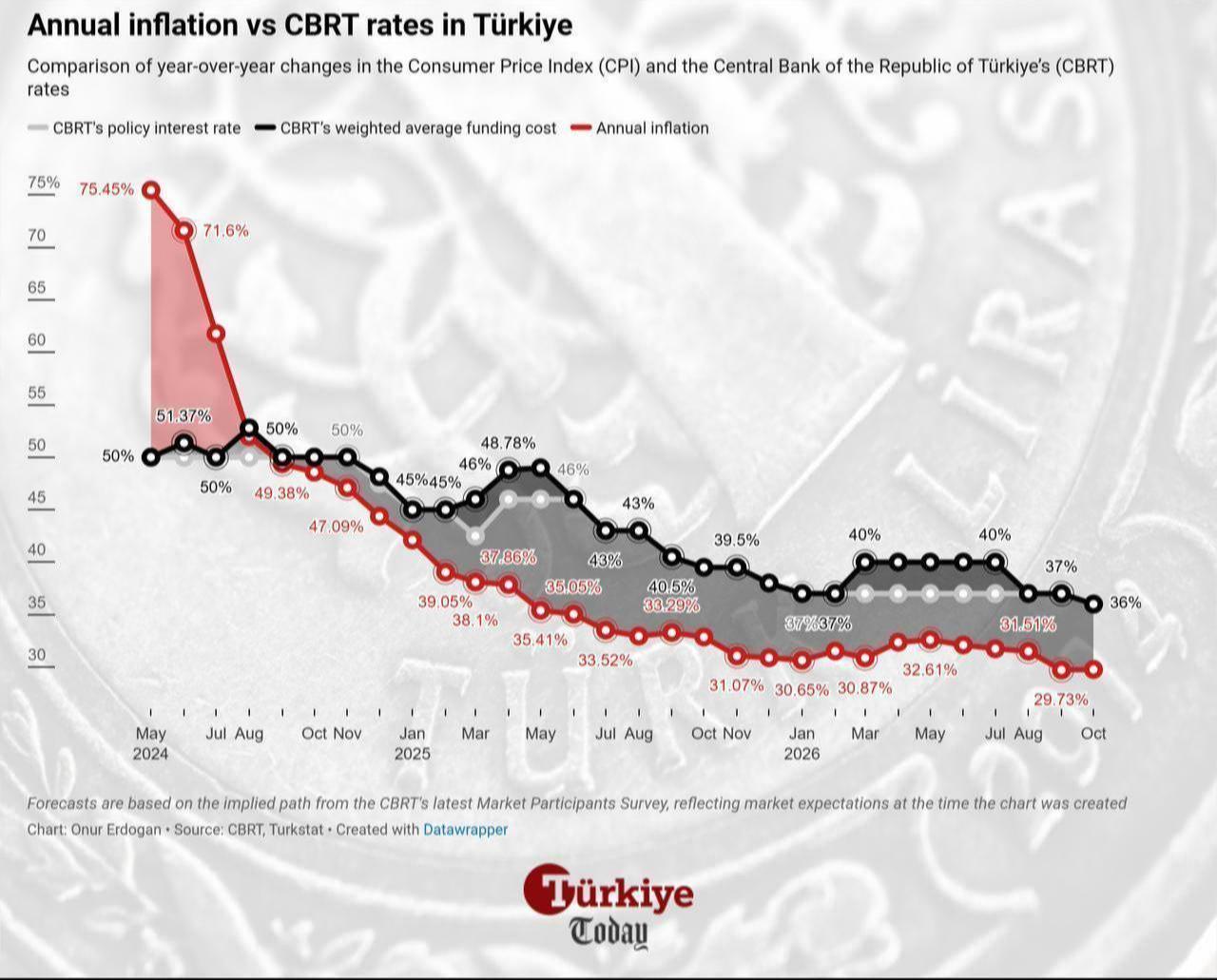

On monetary policy, Morales indicated that Fitch expects the Central Bank of the Republic of Türkiye (TCMB) to deliver another interest rate cut toward the end of the year.
He pointed to recent signals from the central bank suggesting that further monetary easing remains possible.
At its latest meeting on Oct. 22, the TCMB cut its benchmark one-week repo rate by 100 basis points to 36%, resuming its easing cycle after holding rates steady at 37% in September. It also lowered its overnight lending rate to 39% from 40% and its overnight borrowing rate to 34.5% from 35.5%.
In its accompanying statement, the central bank cited weak domestic demand and a slowdown in underlying inflation but warned that elevated energy prices and geopolitical tensions continued to pose upside risks.
It reiterated its commitment to maintaining tight monetary conditions until price stability is achieved, adding that future rate decisions would depend on inflation developments and be taken on a meeting-by-meeting basis.
While underlying inflation has continued to ease, annual inflation remains stubbornly high, Morales noted. Fitch plans to update its year-end inflation and interest rate forecasts in early December.


 Set as preferred source
 Set as preferred source


 1 min read
 1 min read