Newsletters


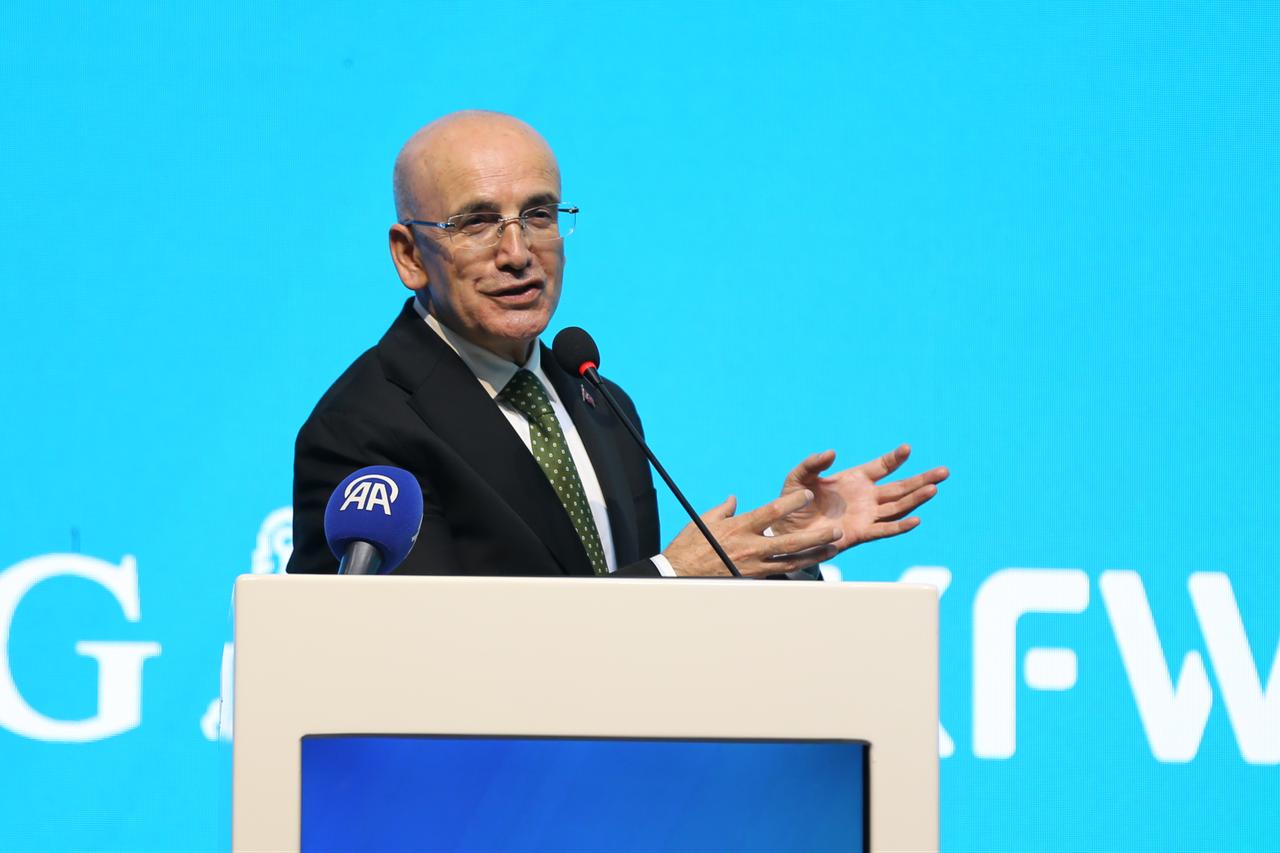


The Turkish economy team will meet with senior executives from global index provider Morgan Stanley Capital International (MSCI) in December to address concerns about a major investment fund scandal, Finance Minister Mehmet Simsek announced on Sunday.
Simsek said he would hold talks with MSCI executives during his visit to the U.S. for the G20 Leaders' Summit on Dec. 14-15. The discussions will also involve domestic and international investors who have raised concerns about the developments in Türkiye's capital markets.
The scandal erupted in mid-September after several investment funds managed by Tera Portfoy and Pusula Portfoy failed to meet investor redemption requests, triggering a wave of selling across the market.
The Capital Markets Board (SPK) subsequently ordered the liquidation of 131 distressed funds managed by seven portfolio management companies over six months. The move affected 455,000 investors, with the funds holding an estimated ₺936.3 billion ($19.1 billion) in combined assets at the time.
The investigation has also widened, with authorities detaining more than 120 people out of 464 identified suspects over alleged market manipulation, insider trading and irregular financial transactions.
Justice Minister Akin Gurlek has described the case as an organized financial crime network allegedly involving market manipulators, stock exchange officials and media figures, as well as bribery intended to weaken regulatory oversight.
The scandal has also drawn scrutiny from global index provider MSCI, which froze certain changes to its Türkiye equity indexes on Oct. 15, citing concerns over market integrity and suspected coordinated trading through investment funds.
While acknowledging initial regulatory steps, MSCI warned that insufficient progress by June 2027 could prompt consultations on reclassifying Türkiye from an emerging market to a frontier or standalone market.
Simsek referred to MSCI's October statement on the developments, describing it as "highly reasonable and constructive."
He noted that Türkiye had already published a fund guide in August, redefining fund-related transactions and concentration risks to improve transparency.
The minister pledged further action against those who harm investors through market manipulation, stressing that authorities would pursue suspects regardless of their positions, titles, or connections.
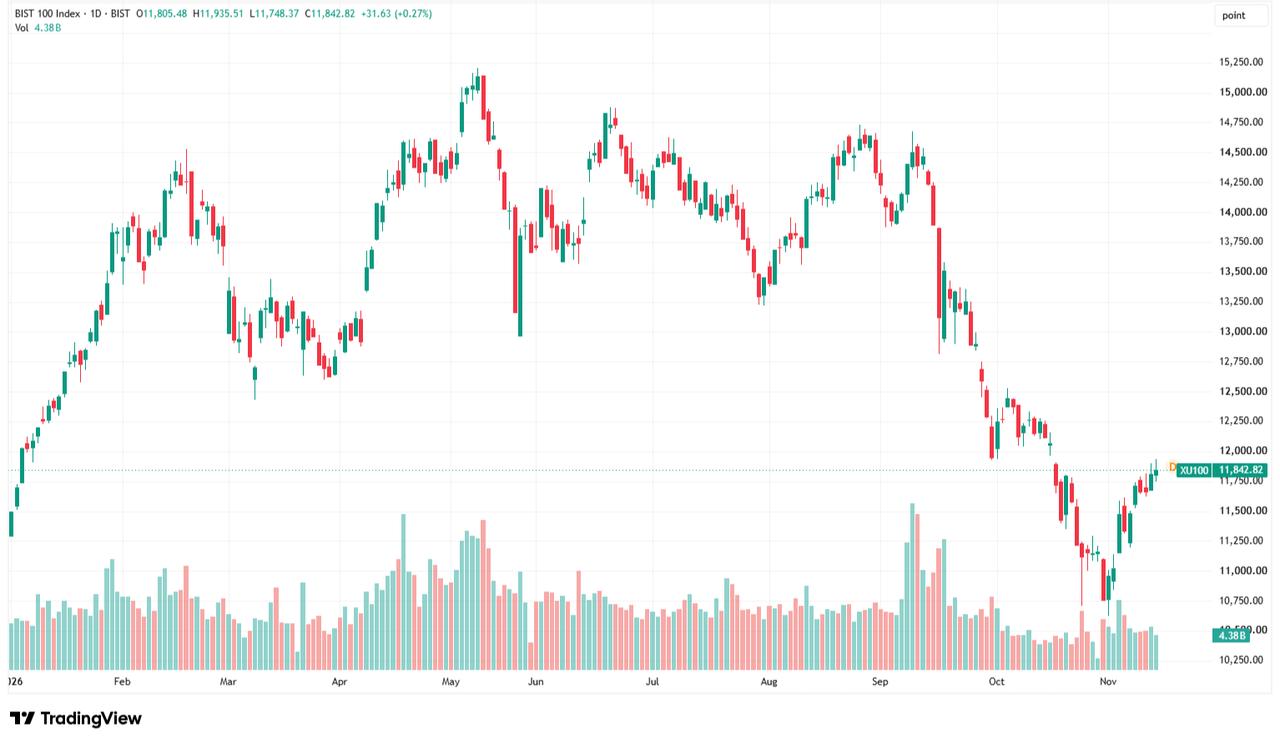

Simsek identified falling asset values and restricted access to savings as the two main channels through which the fund crisis could affect the economy. He noted that Türkiye's stock market fell 9% between Sept. 16 and Nov. 13, compared with an average 8% decline across emerging markets. South Korea recorded the steepest drop at 21%, followed by Indonesia at 17% and Egypt at 10%.
Despite the losses, Simsek said Turkish equities could return to their Sept. 16 levels within three to five months if uncertainty subsided. "Uncertainties will decrease, and they will. The Turkish stock market could even return to its Sept. 16 levels within three to five months," he said.
He also acknowledged that some investors struggled to access savings held in money market funds and equities, potentially weighing on consumption, but said interim payments helped limit the impact.
Simsek ruled out the crisis spreading to the banking sector, citing banks' limited direct exposure to the affected funds. Banks have approximately ₺56 trillion ($1.1 trillion) in total assets, while their direct exposure stands at just ₺1.3 billion ($25.8 billion).
Addressing claims that ₺401 billion left the financial system between Sept. 1 and Sept. 16, Simsek said MASAK calculations based on MKK data attributed ₺306 billion to transactions between funds and affiliated companies.
The remaining approximately ₺95 billion is under investigation by prosecutors and relevant institutions, while recovered amounts are being transferred to TMSF's Voluntary Return and Recovery Account, a fund established to receive assets voluntarily returned or recovered as part of the investigation.
On the regulatory front, Simsek said a draft bill to overhaul capital markets rules was largely complete and would soon be submitted to Parliament. The proposed framework includes tougher penalties for coordinated transactions and fund-based manipulation, treating such offenses under organized crime provisions.
"We will increase penalties, treating coordinated transactions and manipulation through funds as organized crime. I believe a permanent reform will take shape by mid-December," he said.
Authorities are also working with Türkiye's Scientific and Technological Research Council (TUBITAK) to develop algorithms that would monitor markets in real time and flag manipulation, insider trading and other disruptive activities at an early stage.
Simsek stressed that investigations would continue regardless of suspects' positions, titles or connections. "We are not looking at anyone's position, title or connections. Whoever they are, we will pursue them," he said, adding that authorities would continue taking precautionary measures against suspects' assets.


 Set as preferred source
 Set as preferred source


 1 min read
 1 min read