Newsletters


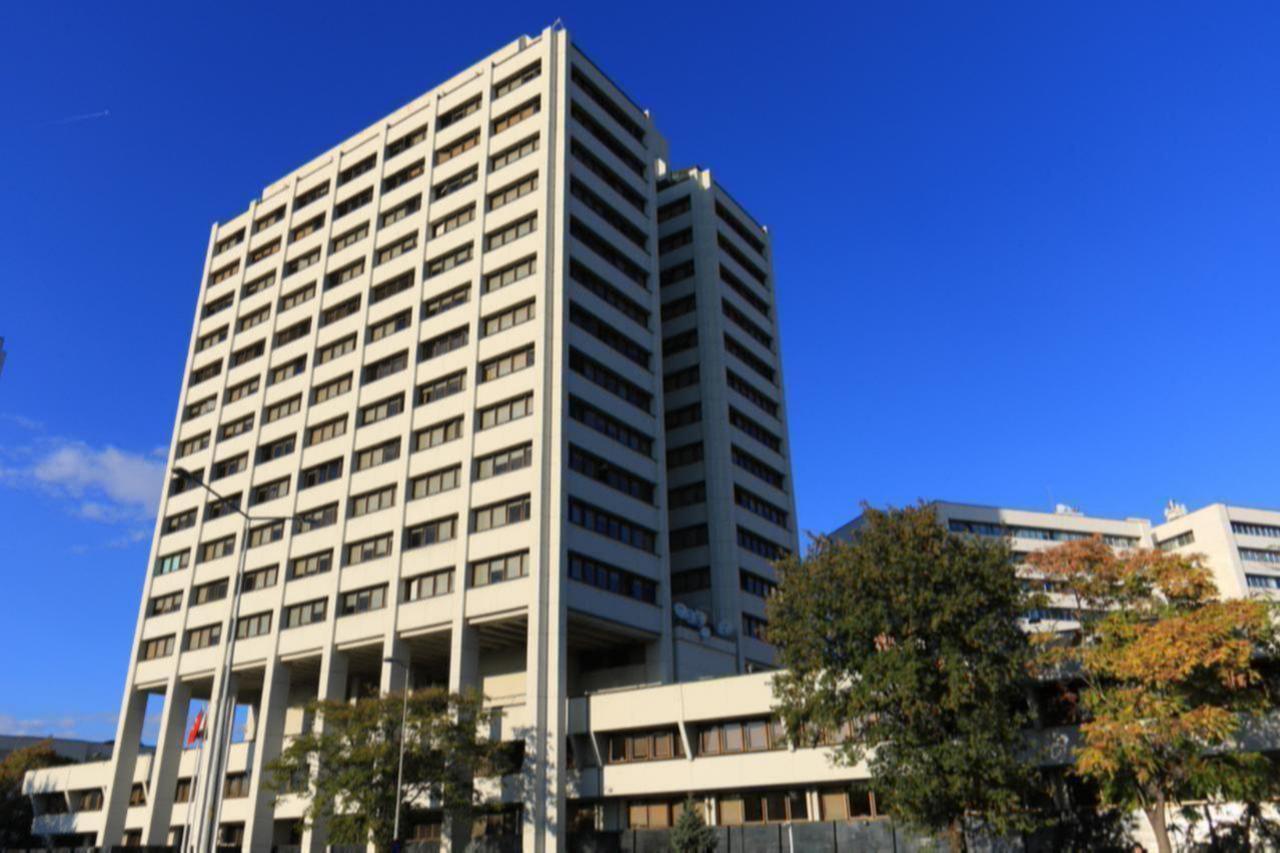


U.S. investment banks largely expect the Central Bank of the Republic of Türkiye (CBRT) to leave its benchmark interest rate unchanged at 37% at June’s Monetary Policy Committee (MPC) meeting on Thursday, arguing that slowing domestic demand supports a cautious approach despite persistent inflationary pressures.
Analysts broadly believe policymakers will prefer to maintain tight financial conditions and monitor the impact of recent inflation developments, geopolitical tensions and global energy market volatility before considering any policy shift.
Morgan Stanley sees the CBRT holding its policy rate unchanged at 37% while maintaining a tightening bias. In a recent note, the bank's economists pointed to signs of slowing economic activity since the central bank's April meeting.
The bank highlighted flat private consumption in first-quarter growth data, which showed Türkiye's GDP growth slowed to 2.5% year over year, alongside weaker exports and high-frequency indicators pointing to cooling demand for durable goods. Despite elevated energy prices and continued market volatility, Morgan Stanley believes policymakers can afford to remain patient and preserve their current stance.
The bank forecasts headline inflation will ease in the fourth quarter of 2026, paving the way for the CBRT to restart a cautious easing cycle and lower the policy rate by 200 basis points to 35%. Under its baseline scenario, rates would continue declining gradually to 27.5% by the end of 2027.

While the bank's base case remains a hold this week, it noted that a move closer to 40% could provide policymakers with greater flexibility in managing inflation and future policy decisions should price pressures prove more persistent than anticipated.
Goldman Sachs likewise sees policymakers leaving rates unchanged at this week's meeting. In a note, the bank argued that the CBRT is more likely to rely on regulatory measures aimed at controlling credit growth rather than raising interest rates further to tighten financial conditions.
It also suggested that only a significant increase in dollarization pressure would push the central bank toward another rate hike. Until then, policymakers are likely to focus on preserving restrictive financial conditions through existing policy tools.

Bank of America sees the CBRT keeping its benchmark one-week repo rate unchanged while maintaining an effective funding cost around 40%.
Noting that annual inflation rose to 32.6% for a second consecutive month, driven in part by pressures in core inflation, the bank argued that inflation remains stubborn and that inflation expectations continue to run well above the central bank's revised targets, despite the absence of broad second-round effects from higher energy prices.
According to the bank, this environment supports maintaining a restrictive monetary stance despite signs that domestic demand is slowing. Bank of America also pointed to market expectations that uncertainty surrounding Iran could ease relatively quickly, allowing policymakers to reassess conditions once there is greater clarity on the economic outlook.
The lender maintained its year-end inflation forecast of 30%, its policy rate forecast of 37% and its 2026 growth projection of 2.8%. At the same time, the report noted that a rate increase to 40% cannot be ruled out given inflation's continued divergence from official targets and ongoing pressure on reserves stemming from geopolitical and domestic developments.
Citigroup also sees the CBRT leaving rates unchanged at Thursday's meeting, but warned that the disinflation process is progressing more slowly than previously anticipated. The bank noted that although the policy rate stands at 37%, average funding costs have been running closer to 40% since tensions between Iran and Israel escalated, effectively tightening monetary conditions beyond the benchmark rate.
Citi acknowledged that current economic conditions could justify both a currency adjustment and an additional rate increase. Even so, the bank believes policymakers will leave the benchmark rate unchanged while maintaining a restrictive stance.
The bank also pointed to the CBRT's recent upward revisions to its inflation forecasts as a signal that authorities are prepared to keep policy tight for longer.
While market consensus anticipates deeper rate cuts later this year, Citi argued that expectations may be overly optimistic, projecting the policy rate will reach 35% only by the end of 2026, considerably higher than prevailing market forecasts.
The outlook from major U.S. banks broadly mirrors expectations in Türkiye, where economists also largely anticipate the central bank will leave rates unchanged at next week's meeting despite lingering inflation concerns.
A recent survey conducted by financial data provider Matriks found that 27 of 33 economists expect the CBRT to keep its policy rate at 37% when the Monetary Policy Committee meets on June 11. The remaining six economists forecast a 300-basis-point increase, which would lift the benchmark rate to 40%.
The results are also consistent with the CBRT's May Market Participants Survey, which showed expectations for the policy rate remaining at 37% over the next two meetings. While monthly inflation slowed to 1.7% in May from the previous month's 4.2%, the rising annual rate keeps risks over underlying price pressures alive.
The CBRT has left rates unchanged at 37% in its last two meetings, citing heightened external risks linked to the Iran-Israel conflict, particularly capital outflows and rising energy prices. In May, policymakers raised their year-end inflation forecast to 26% from 18% and increased their interim inflation target to 24% from 16%, signaling that tight monetary conditions are likely to remain in place for longer.


 Set as preferred source
 Set as preferred source


 1 min read
 1 min read