Newsletters


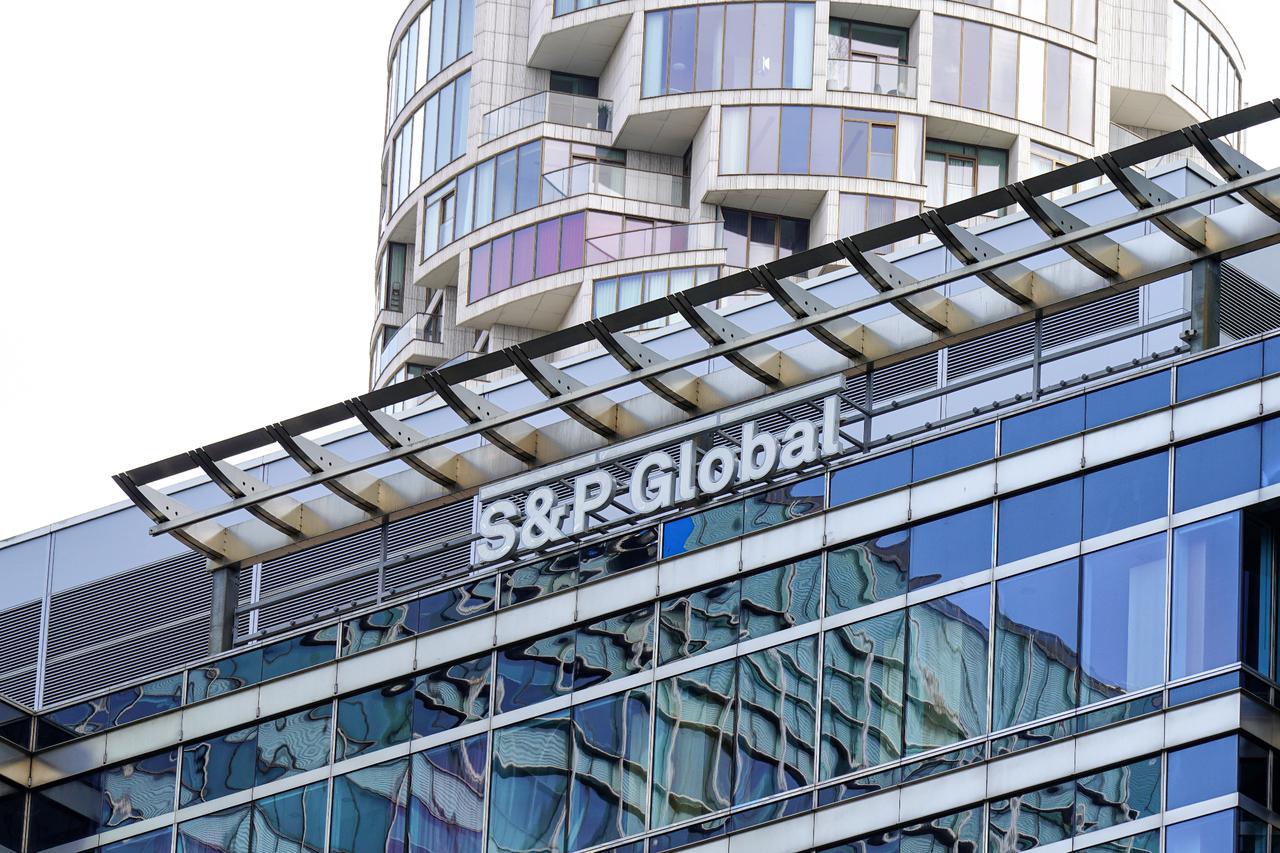


S&P Global Ratings expects Türkiye’s disinflation process to continue but identifies further progress in curbing inflation, stronger foreign exchange reserves and sustained confidence in the Turkish lira as the three key factors for a potential credit rating upgrade after skipping its expected rating update on Oct. 16.
Türkiye’s rating remains at "BB-/B" with a stable outlook, as confirmed in the agency’s latest formal review in April. In an analysis published Monday, the ratings agency updated its economic forecasts without announcing a rating decision, concluding that its existing baseline scenario for Türkiye remains valid.
Karen Vartapetov, S&P Global Ratings’ director for Central and Eastern Europe and the Commonwealth of Independent States and lead analyst for Türkiye, explained that the agency sometimes delays announcements when no rating action is planned to avoid confusing markets.
Vartapetov said the agency expects disinflation to continue, adding that faster-than-expected progress could support an upgrade. However, he stressed that the Central Bank of the Republic of Türkiye (CBRT) must continue rebuilding international reserves while maintaining households’ confidence in lira-denominated assets.
The CBRT’s gross reserves rose by $4.2 billion to $171.6 billion in the week ending Oct. 9, recovering after six consecutive weeks of declines. Net international reserves climbed by nearly $4 billion to $57.8 billion, while net reserves excluding swaps increased by $6.4 billion to $44.2 billion.
"A single-digit inflation target may be somewhat ambitious, but I think low double-digit levels would be more realistic," Vartapetov told Anadolu Agency. Still, he cautioned that inflation expectations would take time to stabilize because businesses and consumers continue to base pricing decisions partly on past inflation.
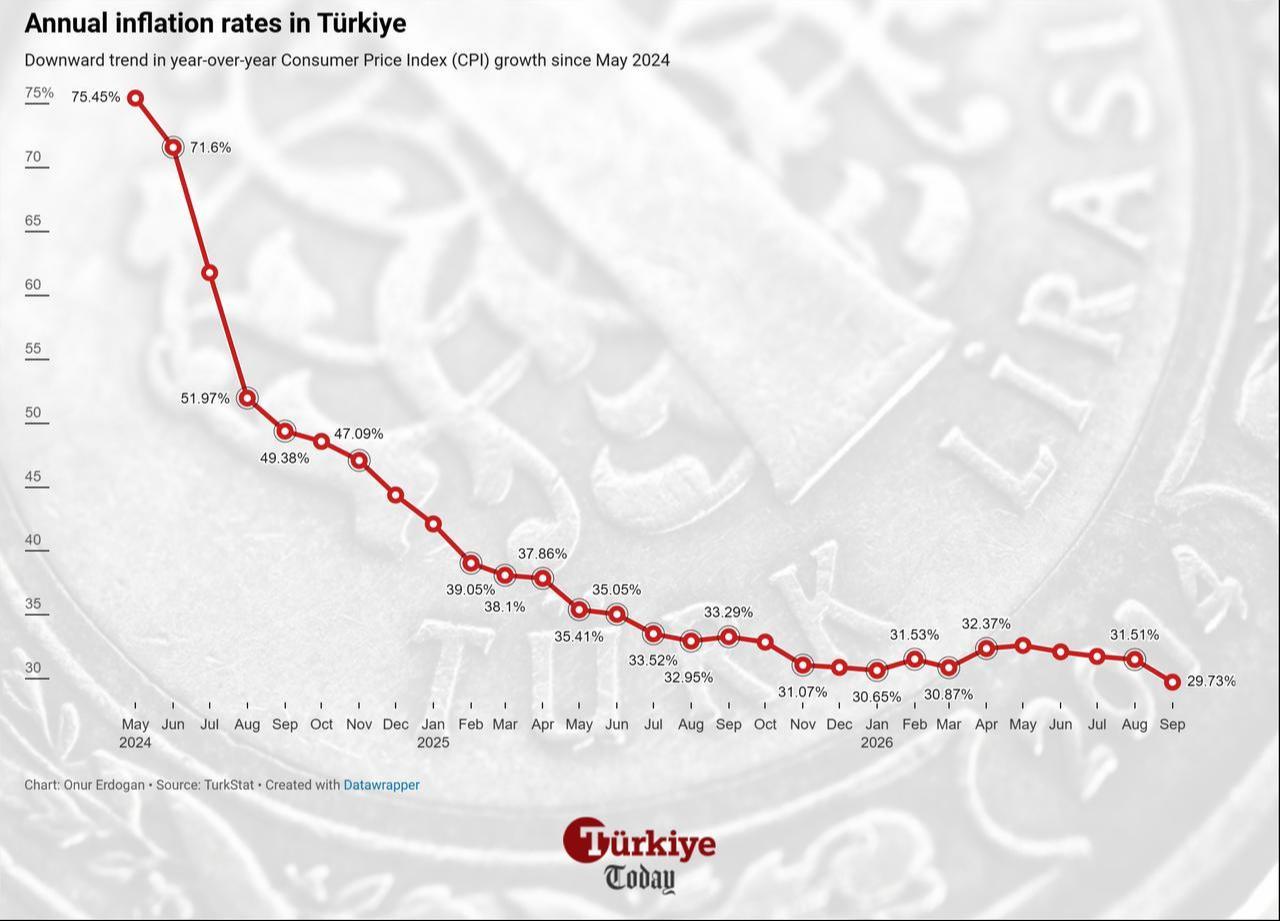
The agency expects Türkiye’s inflation to average 30.9% this year before easing to 21.7% in 2027. Annual consumer inflation fell to 29.7% in September, slipping below 30% for the first time since November 2021.
The war in the Middle East has pushed up energy prices, adding roughly 7 percentage points to Türkiye’s projected headline inflation, according to Vartapetov. Yet the impact of these higher costs on broader price-setting has remained relatively limited as domestic demand cools.
"We see strong evidence that domestic demand is weakening, which makes it harder for companies to pass on higher costs to consumers," he noted.

S&P also assessed the fallout from a market rout that erupted after defaults at several investment funds in September, concluding that the episode has so far had a limited impact on the broader economy.
Vartapetov said there was no strong evidence that the episode had undermined confidence in the Turkish lira. Instead, money leaving the affected asset class largely moved into lira-denominated bank deposits.
"We do not see strong evidence that a problem in a narrow asset class has spread to broader financial markets or affected confidence in the Turkish lira," he said.
He cautioned, however, that the investigation remains ongoing and its ultimate consequences are not yet clear. Investors’ confidence could come under pressure depending on how the government handles unresolved fund liquidations and compensation for losses.
"The risks remain. But so far, the effects have been relatively limited," Vartapetov added, describing the authorities’ initial response as timely and swift.
Vartapetov added that monetary policy was beginning to show results in the underlying inflation trend, although volatile global commodity and energy markets continue to complicate the CBRT’s efforts. The central bank may need to remain cautious to keep inflation expectations anchored.
S&P’s baseline scenario allows for interest rate cuts by the end of this year, with the policy rate projected to stand at at least 35% at year-end. The agency also expects cuts to continue next year, depending largely on the trajectory of oil and other energy prices.
S&P’s stable outlook reflects its assessment that Türkiye can withstand the ongoing energy shock if policymakers maintain tight monetary and wage-setting policies without further depleting foreign exchange reserves.
Vartapetov warned that a deterioration in the balance of payments could weigh on the country’s credit rating. Such pressure could widen the current account deficit and push households back toward dollar-denominated savings.
S&P expects Türkiye’s economy to grow by 3% this year, down from 3.7% in 2025. The forecast is 0.4 percentage points below the agency’s previous projection, reflecting the impact of the war in the Middle East. Growth is expected to pick up to 3.7% in 2027.


 Set as preferred source
 Set as preferred source


 2 min read
 1 min read