Newsletters





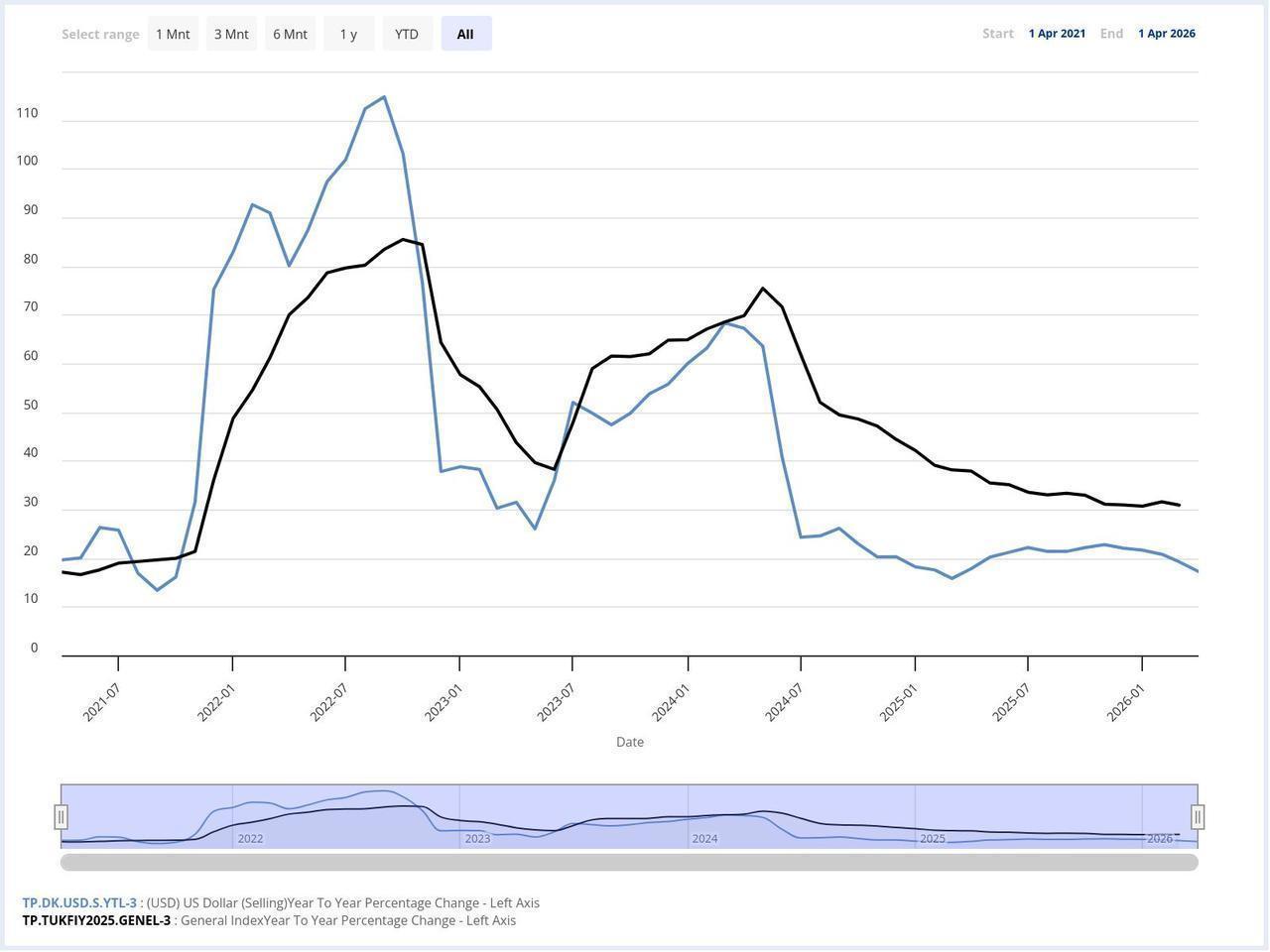
The Central Bank of the Republic of Türkiye (CBRT) is positioning currency stability as one of the key pillars of its disinflation strategy, Governor Fatih Karahan stated on Monday, flagging the Turkish lira’s steady course as a key factor in limiting cost pressures.
Karahan pointed to the lira’s role while addressing the bank’s 94th General Assembly, noting that recent global shocks have tested price dynamics but have not fully spilled over, thanks to stable exchange-rate conditions.
Cost pressures picked up in early 2026 as energy and commodity prices rose amid geopolitical tensions in the Middle East that began in late February. That surge fed into transportation costs and broader input prices.
Still, the relatively stable lira helped keep those pressures from passing through more sharply into consumer inflation. "The Turkish lira’s stable course has been one of the factors limiting cost pressures during this period," Karahan noted.
A sliding-scale tariff system on fuel prices also helped contain the impact, limiting how much of the increase in crude oil prices was filtered into domestic inflation, he added.
Annual consumer inflation came in at 30.9% in March, with food prices standing out due to weather conditions and Ramadan-related factors.
At the same time, easing rigidity in rent and education prices supported the disinflation process. More moderate adjustments in administered prices and fixed taxes compared to previous years added to that trend.
Karahan pointed out that demand indicators in the first quarter of 2026 continued to support disinflation, even as economic activity showed signs of slowing.

The CBRT cut its policy rate by 100 basis points to 37% in January, then shifted to a more cautious stance, keeping rates unchanged in March and April as risks to the inflation outlook increased.
To manage volatility, the bank paused one-week repo auctions starting March 2 and guided the average funding cost to 40%. It also launched lira-settled forward foreign exchange sales to support currency markets and balance FX liquidity.
"These steps, which we took promptly, were effective in keeping market volatility limited," Karahan noted, pointing to the immediate impact of the measures.
He added that policy decisions continue to follow a cautious, meeting-by-meeting approach centered on inflation dynamics, with monetary tightening maintained to support disinflation and financial stability.
"If there is a significant and persistent deterioration in the inflation outlook due to recent geopolitical developments, we will tighten our monetary policy stance," Karahan said.
Karahan also emphasized that monetary policy actions have been backed by macroprudential steps aimed at strengthening transmission and reinforcing stability, including tighter credit growth limits, updated lira deposit targets and the phase-out of FX-protected deposit accounts.


 Set as preferred source
 Set as preferred source


 1 min read

 1 min read