Newsletters


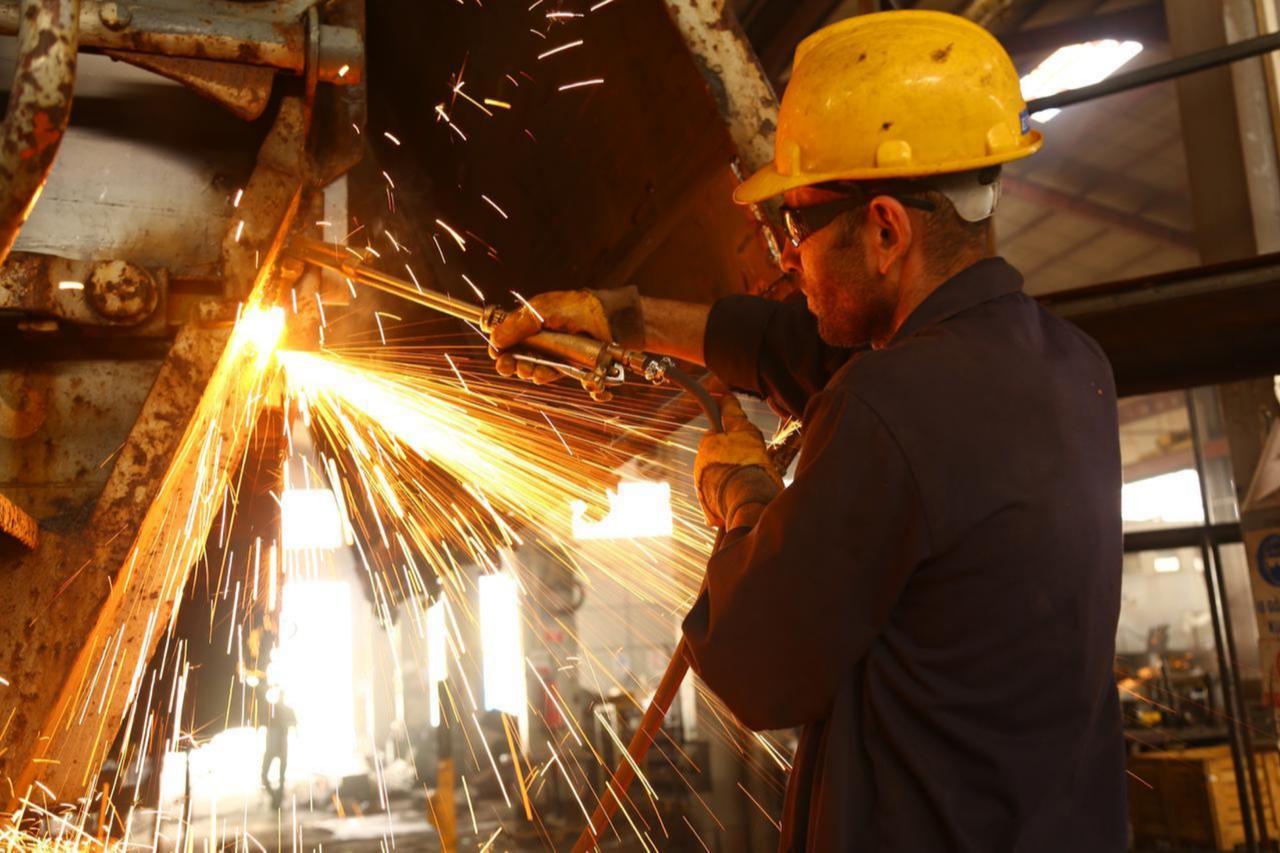


Türkiye’s industrial production contracted further in August, with the three-month trend pointing to a deeper downturn and manufacturing output leading the decline, according to data released by the Turkish Statistical Institute (TurkStat).
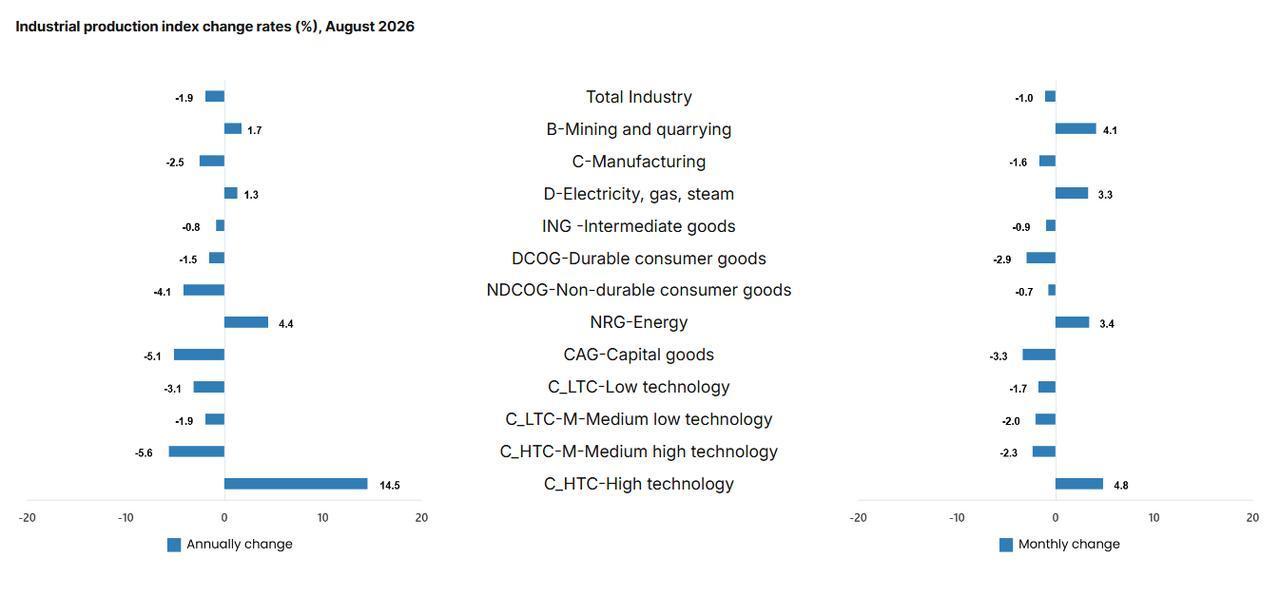
Calendar-adjusted industrial output fell 1.9% from a year earlier, while seasonally and calendar-adjusted production dropped 1% from July. The figures pointed to a deeper contraction in the country’s industrial sector as the third quarter progressed.
Manufacturing recorded the steepest annual decline among the main industrial sectors, with output falling 2.5% in August from a year earlier. Mining and quarrying output rose 1.7%, while electricity and gas production increased 1.3%.
Among industrial groups, capital goods production fell 5.1% year over year, while medium-high-technology manufacturing declined 5.6%. Non-durable consumer goods output dropped 4.1%.
In contrast, high-technology production surged 14.5%, while energy output rose 4.4%. Intermediate goods production fell 0.8%, pointing to weaker demand for inputs used in manufacturing.
On a monthly basis, manufacturing output fell 1.6% from July, while mining and quarrying grew 4.1% and electricity and gas production rose 3.3%.
Capital goods output declined 3.3%, while durable consumer goods production fell 2.9%. High-technology production and energy output provided some support, rising 4.8% and 3.4%, respectively.

In a report on the data, Garanti BBVA Yatirim said the annual contraction in the three-month industrial production trend widened to 1.1% in August from 0.5% in July. The trend’s monthly contraction also deepened to 1.7% from 1.2%.
The report identified clothing, metal products, and machinery and equipment as the weakest-performing industrial segments in August, while mining and automotive showed the strongest trends.
It also flagged slowing intermediate goods production as a negative signal for third-quarter industrial activity. Output in the category fell 0.8% year over year and 0.9% month over month in August.
Garanti BBVA Yatirim said leading indicators pointed to continued weakness in economic growth in the second half of 2026, with geopolitical developments since March posing additional downside risks.
The report added that the regional conflict's impact on tourism remained limited, but weaker domestic demand and investment continued to weigh on economic activity.
It projected Türkiye’s economy to grow 3% in 2026, below the government’s 3.3% forecast in its Medium-Term Program.


 Set as preferred source
 Set as preferred source


 1 min read
 1 min read