Newsletters





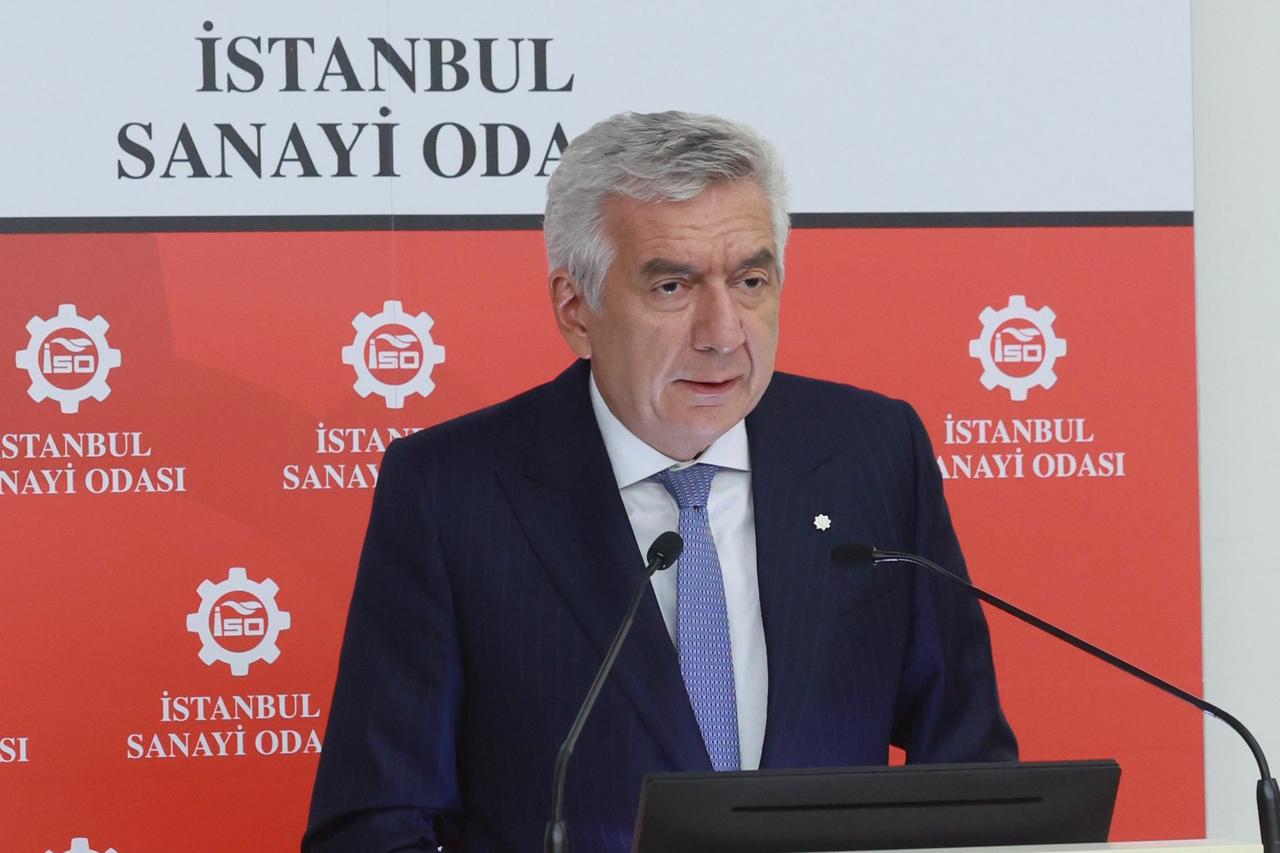
Istanbul Chamber of Industry (ISO) Chairman Erdal Bahcivan called Wednesday for a broader discussion on the role of the state in Türkiye's economy as artificial intelligence and rapid technological change reshape production.
Speaking at the chamber’s August assembly meeting in Istanbul on Wednesday, Bahcivan argued that the rapid changes brought by information technology and AI made it essential to challenge established assumptions and rethink how the state and private sector work together.
The meeting focused on whether economic and production planning remained necessary and explored the concepts of an entrepreneurial state and a new-generation State Planning Organization, according to a statement from the chamber.
Bahcivan pointed to the 2008 financial crisis, the COVID-19 pandemic, supply shocks and geopolitical risks as developments that had brought an end to the era of "hyper-globalization" and the idea of keeping the state largely out of the economy. Technological advances had also accelerated that shift, he highlighted.
"The AI transformation carries a national security dimension for countries, while the massive investments required to build such an ecosystem impose critical responsibilities on states, such as planning and developing new-generation financing and incentive systems," he explained.
He argued that the changing global economic landscape was also placing greater emphasis on industrial and foreign trade policies, with governments increasingly required to weigh strategic investments, sector priorities and public-private partnerships alongside traditional market mechanisms.
These areas were becoming more important not only for maintaining competitiveness but also for addressing growing security concerns, Bahcivan advocated.

Bahcivan pointed to the "entrepreneurial state" as a model in which the public sector took a more active role in expanding markets, improving supply chains and strengthening the private sector’s competitiveness and capacity to innovate.
"We are moving away from the dominant paradigm of the 1980s and 1990s that the state should stand on the sidelines as a passive player with only a regulatory role in the economy," the ISO chief said.
"This process does not mean returning to the rigid statist and centralized planning approach of the post-World War II period. The change perhaps finds its clearest expression in the concept of the entrepreneurial state."
Bahcivan also acknowledged the limits of leaving economic development entirely to market forces. "What we mean by planning is based on the public sector taking a more proactive role in line with long-term development goals," he remarked.
Türkiye therefore needs a "new culture of cooperation between the public and private sectors" to meet increasingly difficult global competition conditions, he added.
Bahcivan also raised concerns over the risk of premature deindustrialization in Türkiye, one of the chamber’s key criticisms of the ongoing economic program, arguing that the program should be strengthened to better protect industry.
“We believe the current economic program needs to be strengthened with a comprehensive roadmap that protects our industry's productive capacity, reduces its vulnerabilities and supports its technological transformation,” Bahcivan said.
Türkiye’s economic administration is now preparing to roll out a new Medium Term Program (MTP) for 2027-2029, with the three-year roadmap expected to be unveiled in the first week of September.
While Turkish business circles have repeatedly criticized MTPs since 2023 over tight monetary conditions that have restricted access to financing as part of the disinflation process, price stability remains the government’s primary economic priority, while officials also aim to support growth, employment and investment, Vice President Cevdet Yilmaz has said.
Against this backdrop, Bahcivan reiterated the chamber’s long-standing call for reform in development banking, describing financing as one of the main pillars of an entrepreneurial state and new-generation planning.
"If we are talking about an entrepreneurial state and a new-generation planning approach, one of its most important pillars is financing," Bahcivan said. "There is a limit to pursuing the industrial policies needed in the artificial intelligence revolution through traditional commercial bank loans."


 Set as preferred source
 Set as preferred source


 1 min read

 1 min read