Newsletters


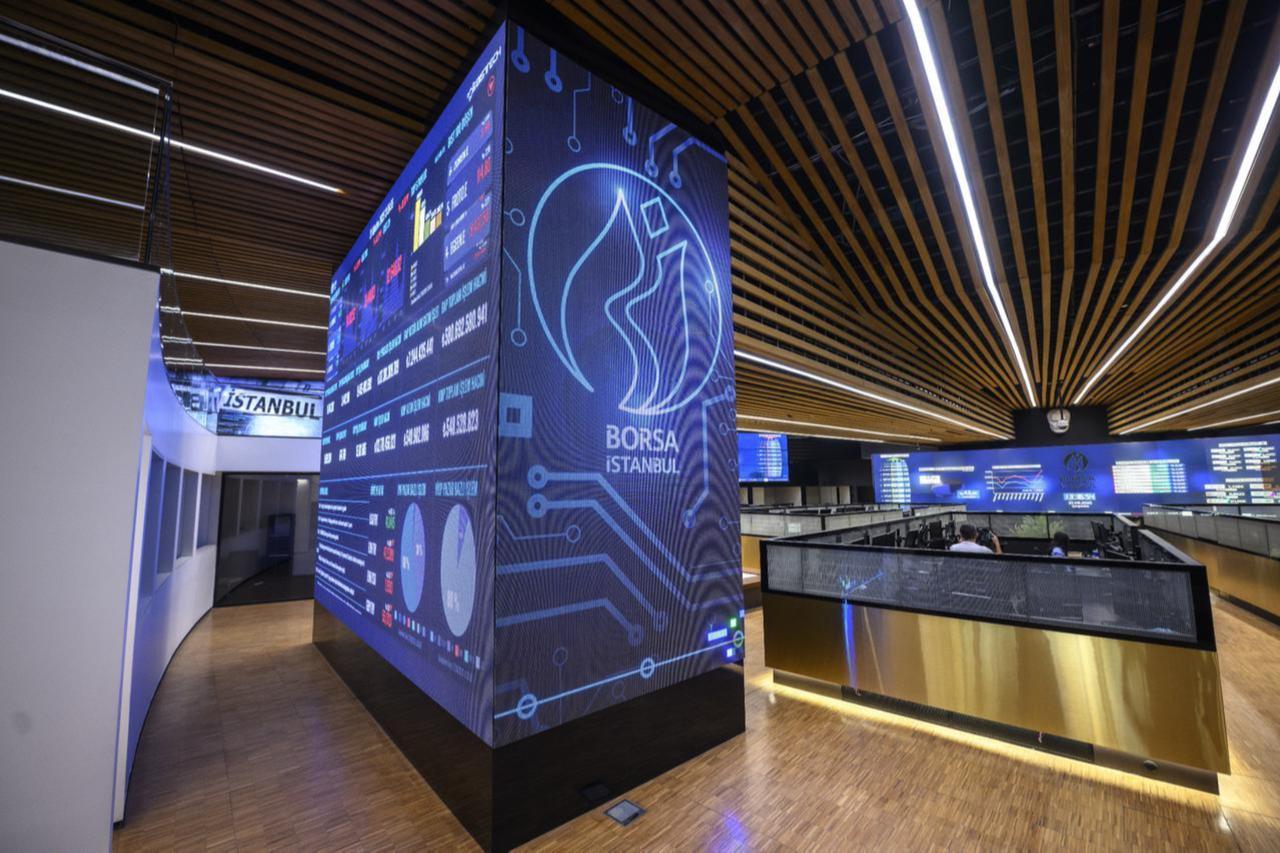


Turkish investment funds placed under liquidation after September’s market rout hold ₺333.9 billion ($6.8 billion) in potentially illiquid assets, accounting for more than half of the total assets held by the affected funds, according to a report by local brokerage Gedik Yatirim.
Based on calculations covering 129 of the 131 funds ordered into liquidation by the Capital Markets Board (CMB), the funds for which data is available through the Turkish Electronic Fund Trading Platform (TEFAS) include 15 money market funds and 114 other types of funds.
As of Sept. 30, the funds under liquidation total ₺652.3 billion ($13.3 billion), with money market funds accounting for ₺305.1 billion and other funds holding ₺347.2 billion, the brokerage said in a report.
The brokerage analyzed 48 funds with accessible portfolio data, representing ₺569.9 billion, or about 87% of total assets under liquidation. It examined 1,339 positions and estimated that potentially illiquid assets accounted for 58.6% of the portfolios, worth about ₺333.9 billion.
The report stressed that limited liquidity did not mean the assets were worthless, but rather that selling them quickly without affecting market prices could be difficult.
Six funds managed by Tera Portfoy accounted for 76.5% of the total assets under liquidation, while two of them alone made up 72%, with assets of ₺243.6 billion and ₺224.4 billion, respectively.
Liquidity risk was also heavily concentrated in three large Tera Portfoy funds. Excluding them, the share of potentially illiquid assets fell from 58.6% to 23.2%, according to the report.
The brokerage also noted that the CMB’s latest decision on Sept. 30 to make interim payments to investors, capped at ₺1 million per investor for each fund, covers 65 of the 131 funds, representing about ₺605 billion, or 93% of the assets under liquidation.
The liquidation process, which was initially set at three months but later extended to six months, should focus on maximizing the cash recovered for investors without disrupting markets rather than simply ending as quickly as possible, the brokerage added.

Another report by Bank of America (BofA) noted that the fund turmoil had increased downside risks to economic activity but did not yet warrant faster or stronger monetary easing.
The bank said efforts to accelerate repayments and recent measures aimed at easing pressure on liquidity and credit could help contain some of the downside risks.
"The size of the impact will depend on the extent to which final collections are realized, how persistent the pressures in the equity market are, and how these are reflected through balance sheets and confidence channels," the report said.
BofA expects the Central Bank of the Republic of Türkiye (CBRT) to balance weaker demand with the need to preserve confidence in the lira and financial system.
The bank maintained its expectation for a 100-basis-point rate cut in October, subject to external conditions and developments in reserves. It also kept its forecast for interest rates to remain unchanged in December, citing the global interest-rate environment and continuing supply-side inflationary pressures.
However, BofA noted that a second consecutive rate cut could come into play if downside risks to economic activity materialize.
The CBRT kept its policy rate unchanged at 37% at its September meeting, with its next Monetary Policy Committee (MPC) meeting scheduled for Oct. 22.


 Set as preferred source
 Set as preferred source


 1 min read

 1 min read